Can VW's GTI-inspired Transporter deliver true performance without sacrificing practicality? Read our hands-on review, specs, and verdict - learn more now.
In this article
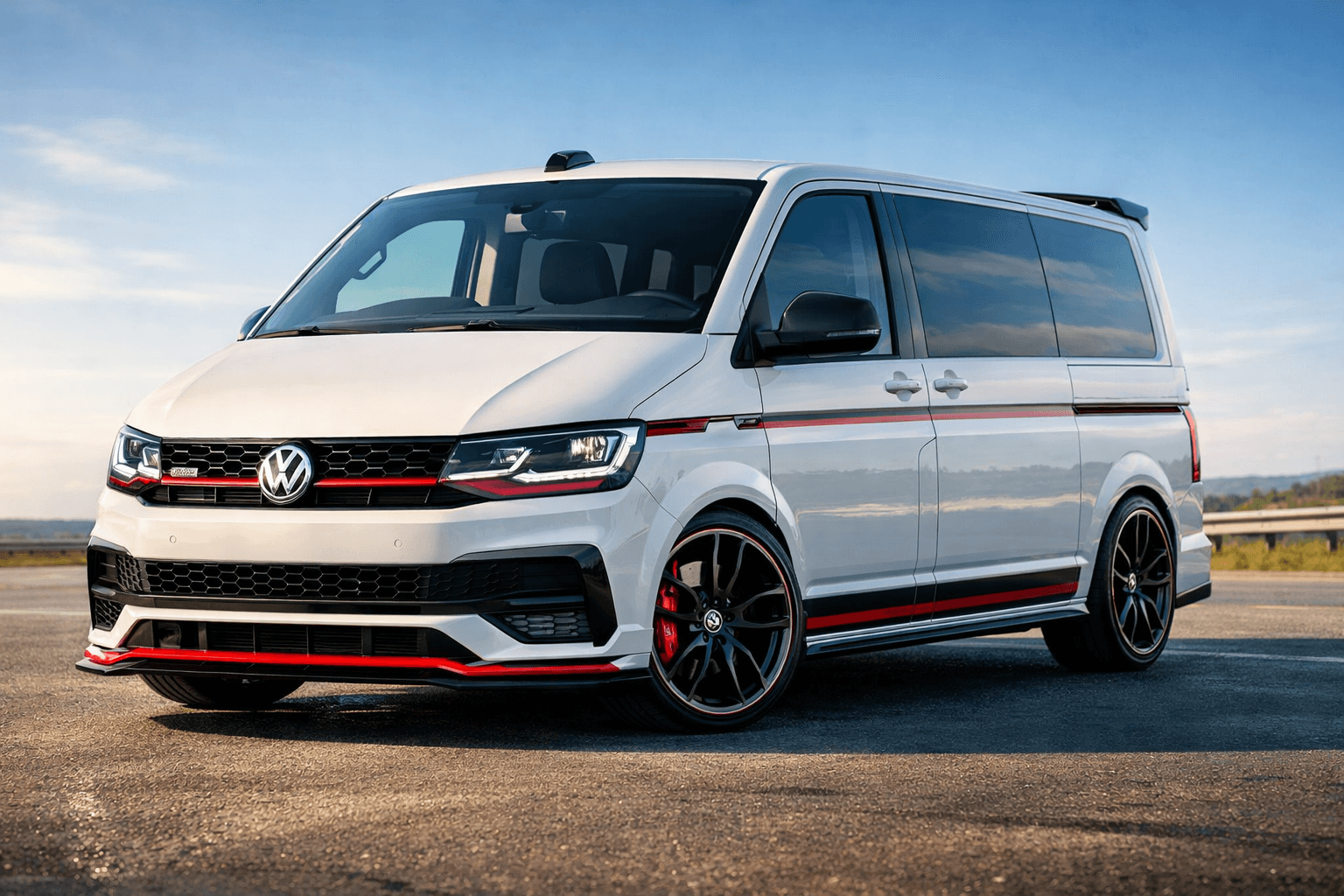
Volkswagen wants to turn a loaf of bread into a hot hatch, and honestly, I’m not mad about it. The idea of a VW Transporter GTI sounds like something cooked up after three pints and a late-night YouTube binge of old Top Gear clips, yet here we are with Volkswagen news hinting at exactly that. A performance van in 2026 isn’t just funny; it’s a genuine question about whether speed and steering feel belong in something designed to haul ladders.
The VW Transporter GTI matters right now because vans aren’t just workhorses anymore. Camper conversions, lifestyle vans, and family shuttles are booming, while everything else gets heavier, softer, and more digital. If VW can inject proper GTI DNA into a Transporter, it could either be genius or the most expensive irony purchase since the BMW XM.
I’ve driven dozens of SUVs and vans pretending to be sporty, from AMG-badged boxes to ST-Line Fords, and most are frauds. But Volkswagen has history here, and if you’ve read our take on VW hot hatches after 2030, you know this brand still understands enthusiast credibility. The question is whether that credibility survives contact with a sliding door.
Quick Specs
Starting Price: approximately $55,000 (check manufacturer website for latest pricing)
Engine: 2.0L turbocharged inline-4
Power: around 300 hp / 295 lb-ft
0-60 mph: approximately 5.5 seconds
Fuel Economy: roughly 20 city / 25 highway mpg
VW Transporter GTI: Why Volkswagen Is Even Considering This
Volkswagen isn’t bored; it’s defensive. Ford has the Transit Sport in Europe, Mercedes sells AMG-flavored vans, and Hyundai’s N division has proven that enthusiasts will buy anything with a diff and a red stripe. The Transporter GTI is VW saying, “We still know how to have fun,” while accountants nervously clutch spreadsheets.
Design & First Impressions
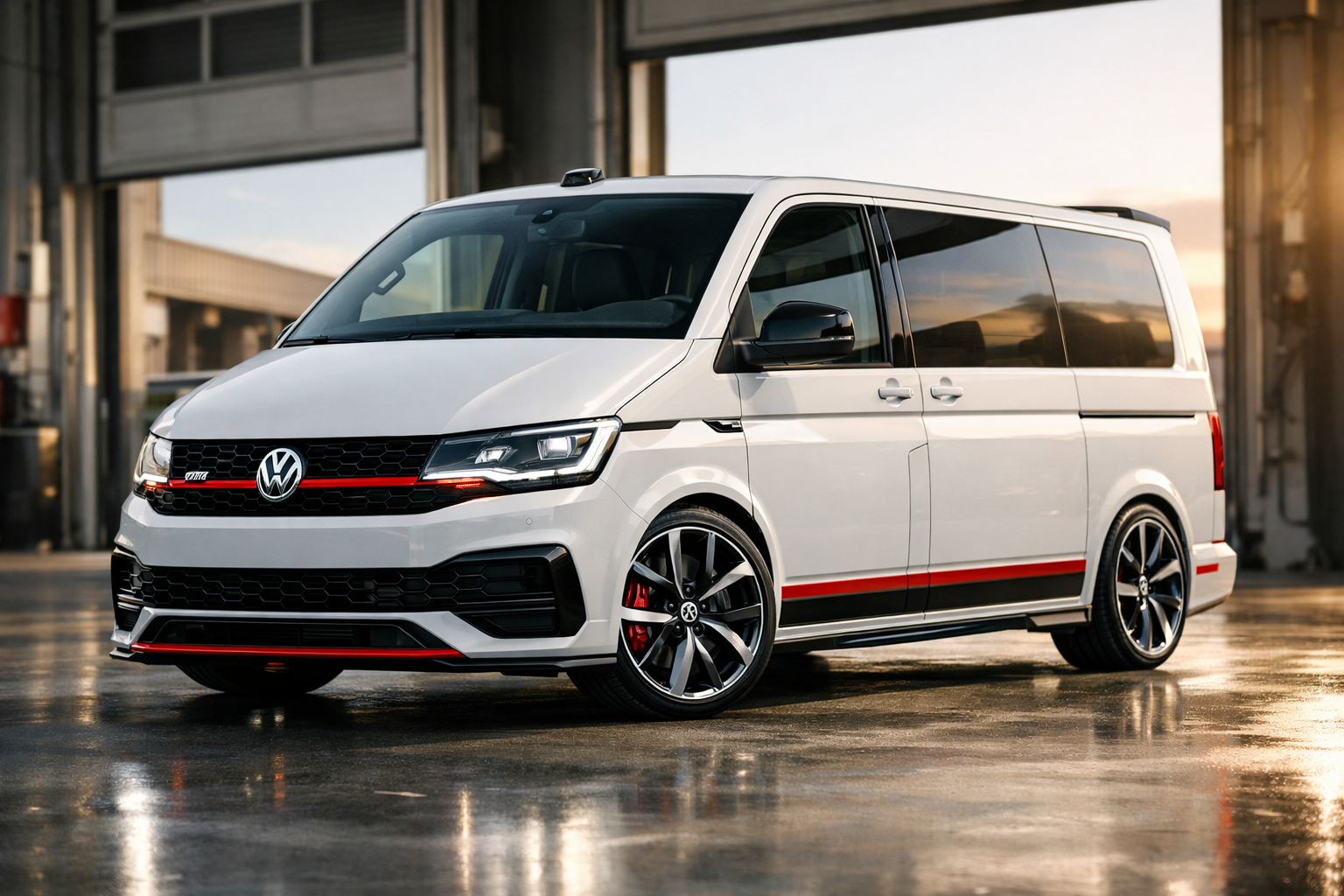
Expect red GTI accents, a honeycomb grille, bigger wheels, and a stance that screams “track day” while parked outside a Home Depot. It’ll still look like a Transporter, because aerodynamics and packaging don’t care about your feelings. Hot take: that’s good, because fake aggression on vans is worse than blank steel wheels.
Interior & Tech
Advertisement
Inside, it’s classic modern VW: digital dash, big touchscreen, and materials that look premium until you touch them. You’ll likely get tartan-inspired seats because GTI branding law demands it, plus configurable cargo space that still works for real life. If VW screws this up with laggy software, Doug DeMuro will roast it mercilessly.
Driving Experience: Can a Van Actually Be Fun?
This is where the Transporter GTI either becomes a legend or a meme. With roughly 300 hp and adaptive dampers, it should hustle, but physics is still undefeated. Compared to a Ford Transit Sport, Mercedes V-Class AMG Line, or even a Toyota HiAce GR Sport overseas, the VW should feel sharper, but don’t expect Golf R magic.
I’m predicting strong midrange shove, decent steering, and body roll that’s controlled but never eliminated. If VW fits a proper limited-slip differential, I’ll applaud; if it relies on brake-based torque vectoring, I’ll sigh loudly at the pub.
Fuel Economy & Running Costs
No one buys a performance van for MPG bragging rights. Still, mid-20s highway mpg would be respectable, and maintenance should mirror other EA888-powered VWs. Check FuelEconomy.gov for official EPA data once finalized.
Practicality: Still a Proper Van
This is where the Transporter GTI destroys hot hatch logic. You get sliding doors, massive cargo volume, and the ability to outrun traffic while carrying bikes, dogs, or drywall. It’s hilariously more useful than a Civic Type R, and yes, that’s a controversial compliment.
Value vs Competitors
At around $55,000, it’s not cheap, but neither is a loaded Ford Transit or Mercedes V-Class. Compared to lifestyle SUVs like the Kia Telluride, Hyundai Palisade, or even a BMW X5, the VW offers uniqueness and utility. If brand loyalty matters to you, our piece on how brand loyalty shapes buying explains why some people will buy this instantly.
Pros
Genuine performance credentials
Massive practicality with GTI flair
Distinctive alternative to boring SUVs
Strong engine shared with proven VW models
Cons
Price will scare traditional van buyers
Physics limits ultimate handling
VW infotainment reliability concerns
RevvedUpCars Rating: 8/10
Best for: Enthusiasts who need space but refuse to drive something dull.
The VW Transporter GTI shouldn’t exist, which is exactly why it should. It’s a middle finger to bland crossovers and a reminder that performance isn’t about body style, it’s about intent. If Volkswagen delivers on the promise, this might be the most lovable performance van since engineers stopped caring what marketing thought.
Frequently Asked Questions
Is the VW Transporter GTI actually coming to the US?
Volkswagen hasn’t confirmed US availability yet. It’s more likely for Europe first, with global expansion depending on demand.
How fast is the VW Transporter GTI?
Early estimates suggest around 5.5 seconds from 0-60 mph with roughly 300 horsepower.
How much will a performance van like this cost?
Expect pricing to start around $55,000, depending on market and options.
Is the VW Transporter GTI practical for daily use?
Yes, it retains full cargo space and seating flexibility, making it more practical than most performance SUVs.
Disclosure: This article may contain affiliate links. If you make a purchase through these links, we may earn a small commission at no extra cost to you. This helps support RevvedUpCars.com. Learn more.
The VW Transporter GTI shouldn’t exist, which is exactly why it should.
Affiliate disclosure: some links on this page earn us a commission at no extra cost to you.
Alex Torque is a lifelong gearhead who grew up in Detroit with motor oil in his veins. After a decade as a performance driving instructor at Laguna Seca and the Nurburgring, he traded his racing helmet for a keyboard—though he still logs track days whenever possible. Alex specializes in sports cars, supercars, and anything with forced induction. His reviews blend technical precision with the visceral thrill of pushing machines to their limits. When he’s not testing the latest performance machines, you’ll find him restoring his 1973 Datsun 240Z or arguing about optimal tire pressures. Alex believes that driving should be an event, not a commute.
Get the latest car reviews in your inbox
Join thousands of car enthusiasts. No spam, unsubscribe any time.



Comments
Leave a comment