Ferrari finally names its first EV, the Luce, arriving May 2026 and challenging supercar norms—can five seats and pure electric still feel Ferrari?
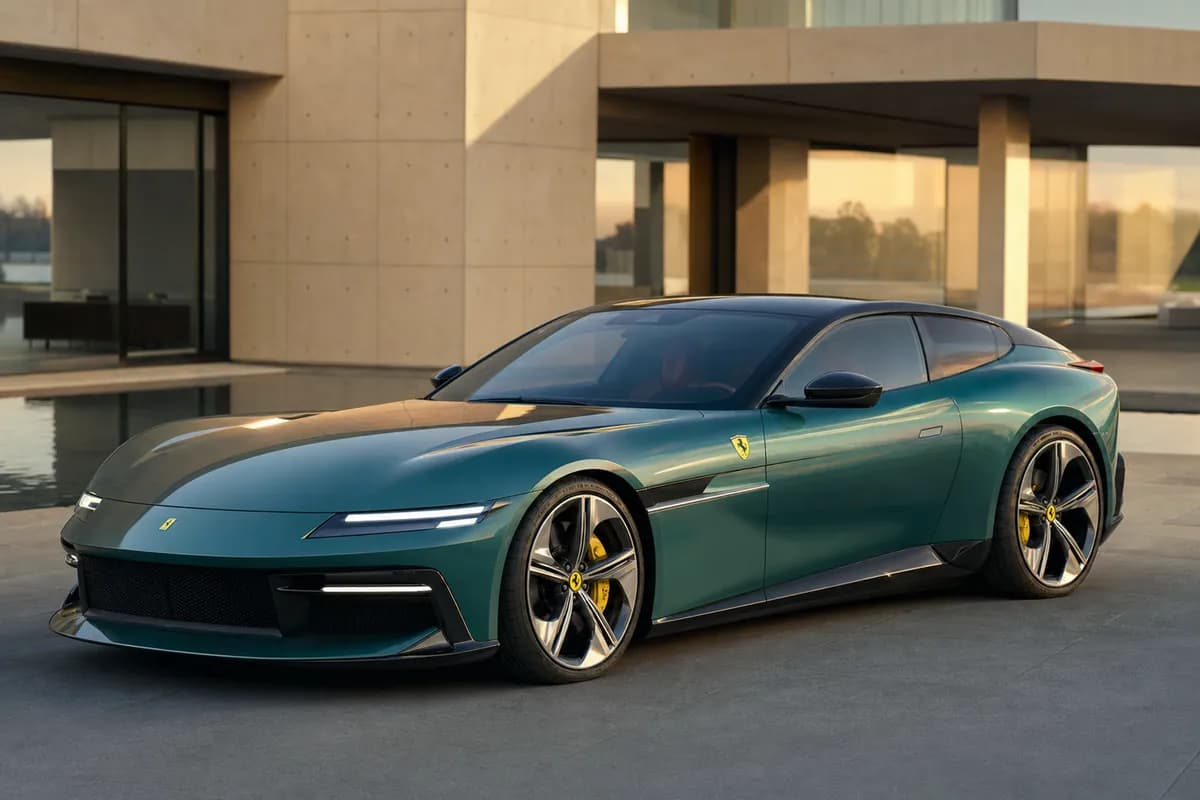
Ferrari has finally named its first EV. The Ferrari Luce, due to arrive in May 2026, is more than a new model launch. It is a test of whether the world’s most tradition-bound performance brand can make electricity feel exclusive, desirable, and unmistakably Ferrari.
Ferrari Luce is the brand’s biggest modern gamble
For years, Ferrari has eased buyers toward electrification through hybrids like the SF90 Stradale, 296 GTB, and 296 GTS. Those cars proved that battery assistance can sharpen performance without stripping away the brand’s core appeal. The Luce goes much further, because it removes the combustion engine entirely.
That makes the Ferrari EV 2026 launch one of the most significant product events in the high-end car market. Ferrari is not a startup chasing volume. It is a company built on scarcity, emotion, and a soundtrack buyers have historically treated as part of the product.
The Luce also appears set to expand what a Ferrari can be. Early positioning points to a five-seat Ferrari with more day-to-day usability than the brand’s mid-engine supercars, placing it closer in concept to the Purosangue than to an SF90. That matters, because Ferrari is not simply building an electric halo car. It is trying to create a new kind of Ferrari customer.
Ferrari has already spent heavily to prepare for this moment. The company opened its e-building in Maranello to support production of internal-combustion, hybrid, and electric models under one roof. That flexible approach is a sign of caution as much as ambition. Ferrari wants the ability to scale EV output carefully, not bet the brand on a sudden switch.
What the Luce means for 2027 electric performance cars
The Luce arrives into a market that will look different by 2027. The first wave of premium EVs proved that instant torque sells, but also showed the limits of excess weight, repeatability issues, and fast depreciation in some segments. The next generation of 2027 electric performance cars will have to do more than launch hard from 0-60 mph.
Ferrari’s role here is important because legacy performance brands still shape buyer expectations. If Ferrari can deliver steering feel, brake consistency, thermal management, and emotional appeal in an EV, rivals will be pushed to raise their game. If it cannot, skepticism around electric supercars and high-end electric GTs will harden.
The likely industry impact falls into a few clear areas:
- Performance repeatability: Buyers at this price level expect the same pace on the third run as the first.
- Weight management: Large battery packs remain the enemy of agility, tire life, and braking feel.
- Charging experience: Premium customers may tolerate high prices, but not inconvenience.
- Software and sound: EVs need a convincing emotional layer without resorting to gimmicks.
- Brand identity: Ferrari must make the Luce feel like a Ferrari, not simply an expensive fast EV.
Ferrari’s timing is also strategic. By 2027, stricter emissions rules in Europe and China will continue to reshape product plans across the luxury market. An EV launched in 2026 gives Ferrari time to learn from real-world customer use before the decade’s regulatory pressure tightens further.
Porsche Taycan and Lotus Emeya are the obvious benchmarks
The Luce will not enter an empty segment. The clearest reference points are the Porsche Taycan and Lotus Emeya, two cars that already frame the premium electric performance conversation in very different ways. That makes the Ferrari an immediate Porsche Taycan rival, even if Ferrari prices and positions it above most Taycan variants.
The Taycan remains the benchmark for driving polish among premium EVs. In top forms such as the Taycan Turbo GT, Porsche has shown that an electric performance car can still feel engineered around lap-to-lap consistency, high-speed stability, and real driver confidence. Its 800-volt architecture and strong charging performance have also helped it age well against newer rivals.
The Lotus Emeya, meanwhile, is aimed more directly at the electric GT and four-door super-saloon space. It offers huge output, aggressive styling, and a more dramatic cabin experience. But Lotus is still building brand trust in the ultra-premium EV market, where Ferrari starts with a major image advantage.
Other rivals are relevant too, especially as buyers cross-shop broadly at this end of the market:
- Porsche Taycan Turbo GT: Track credibility, 800V charging, established customer base.
- Lotus Emeya R: High power, sharp dynamics promises, more niche brand position.
- Audi e-tron GT: Strong design and comfort, though less focused than Porsche.
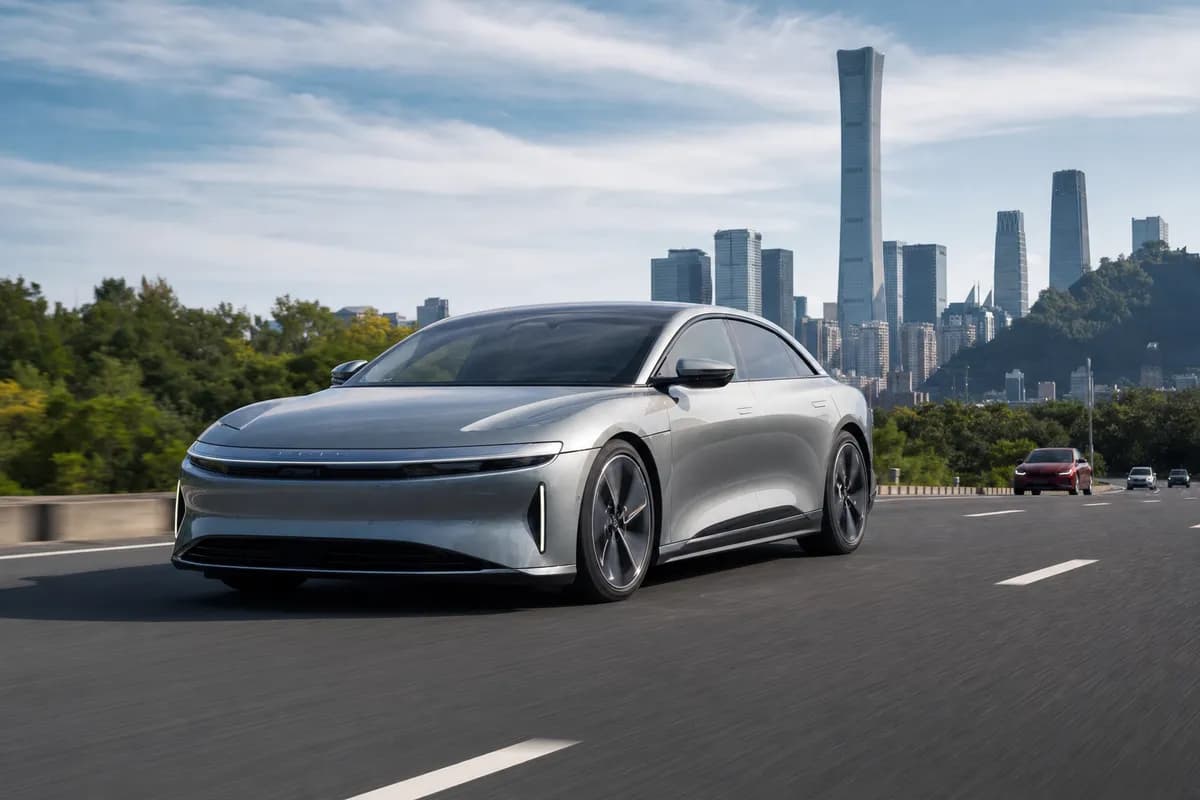
- Lucid Air Sapphire: Massive straight-line pace, less heritage-driven than Ferrari.
- Maserati GranTurismo Folgore: Italian badge appeal, but weaker market pull than Ferrari.
Ferrari’s challenge is that rivals already cover many EV basics well. Straight-line acceleration will not be enough. The Luce must justify what will almost certainly be a major price premium with a deeper sense of occasion, a stronger brand narrative, and better dynamic character than the current field.
Can a five-seat Ferrari really work?
This may be the most interesting question of all. A five-seat Ferrari sounds like a contradiction to traditionalists, but Ferrari has been here before in spirit. The GTC4Lusso and now the Purosangue already showed that the brand can stretch beyond the classic two-seat supercar template without losing demand.
That is why the Luce’s seating layout matters less than its execution. High-net-worth buyers increasingly want one car that can handle family use, commuting, and long-distance travel without giving up speed or status. In that sense, a practical Ferrari EV may be better aligned with modern luxury habits than a low-volume electric supercar.
There are also clear reasons Ferrari may see an opening here:
- Daily usability: EV packaging can free up cabin room and make a premium GT-style Ferrari easier to live with.
- Urban relevance: Zero-emission driving matters more in cities where wealthy buyers spend much of their time.
- New customers: Some buyers want a Ferrari badge but have no interest in a loud V8 or V12.
- Market resilience: Broader usability can support demand even if pure supercar EV appetite stays limited.
The risk is obvious too. Ferrari’s brand power depends on desire, and desire is tightly linked to image. If the Luce feels too rational, too heavy, or too detached, it could be respected without being truly wanted. That would be a dangerous outcome for a company that depends on emotional pricing power.
What buyers need to see before they commit
Ferrari customers are not anti-technology. The success of Ferrari’s hybrid models proved that. But a full EV asks them to accept different trade-offs, and buyers at this level will judge the Luce against both other EVs and Ferrari’s own combustion history.
The checklist is short but demanding:
- Range that matches the badge: Real motorway range matters more than optimistic test-cycle claims.
- Fast charging without drama: Premium buyers expect seamless long-distance use.
- Ferrari-grade dynamics: Steering, body control, and brake feel must stand out.
- Distinctive design: The car needs presence without looking like a generic aero-led EV.
- A reason to choose it over a hybrid Ferrari: That may be refinement, performance, exclusivity, or all three.
Pricing will also be crucial. Ferrari can charge more than Porsche or Lotus, but not without a clear story. If the Luce lands too close to the Purosangue in price, some buyers may still choose the V12 for its emotional certainty and collector appeal.
Residual values are another factor. Ferrari usually benefits from strong brand support and controlled supply, but the luxury EV market has been less predictable than the brand’s traditional segments. Managing production tightly could be as important as the product itself.
Verdict: the Luce is bigger than one new Ferrari
The Ferrari Luce is not just another premium EV launch. It is one of the clearest signals yet that electrification has reached the top tier of performance branding, where heritage matters as much as hardware. That makes the Ferrari EV 2026 rollout a real industry test, not a symbolic one.
If Ferrari gets the Luce right, it will validate the next wave of 2027 electric performance cars and prove that legacy brands can bring emotion and exclusivity into the EV era. If it misses, rivals will not just gain a sales opportunity. They will gain an argument that some parts of the luxury performance market still belong to combustion.
Supercar buyers may not have been asking for a five-seat Ferrari a decade ago. In 2026, they may be ready to pay heavily for one, provided it still feels special. That is Ferrari’s real task with the Luce: not simply to build an electric car, but to make buyers believe that electric can still be Ferrari.
Affiliate disclosure: This article contains affiliate links. RevvedUpCars may earn a small commission on qualifying purchases at no extra cost to you.