China’s EV and plug-in hybrid share hit 62.9% in May 2026. Here’s what BYD, Geely, Tesla, Volkswagen, and Toyota must do next.
China’s auto market has crossed another line. In May 2026, electric vehicles and plug-in hybrids reached 62.9% market share, turning what was once a transition story into a new baseline. For automakers still treating gasoline demand as the default, 2027 now looks much closer than planned.
China’s 62.9% EV share changes the planning horizon
The headline number matters because China is not a niche EV market. It is the world’s largest auto market, the center of global battery supply chains, and the place where volume strategies are tested first. When China EV market share in May 2026 nears two-thirds, product cycles built around steady internal-combustion demand start to look outdated.
The market has been moving in this direction for years, but the latest jump raises the pressure on every major brand. A plug-in share above 60% suggests the debate is no longer whether electrification wins in China, but how quickly pure gasoline vehicles lose relevance in mainstream segments. That is a very different operating environment for 2027.
It also sharpens the significance of BYD’s long-stated trajectory. The company has argued that new-energy vehicles could account for roughly 80% of China’s market in the next stage of adoption. Whether that exact number lands in 2027 or just after, May’s result makes the forecast look less aggressive than it once did.
BYD is setting the pace, and rivals are still reacting
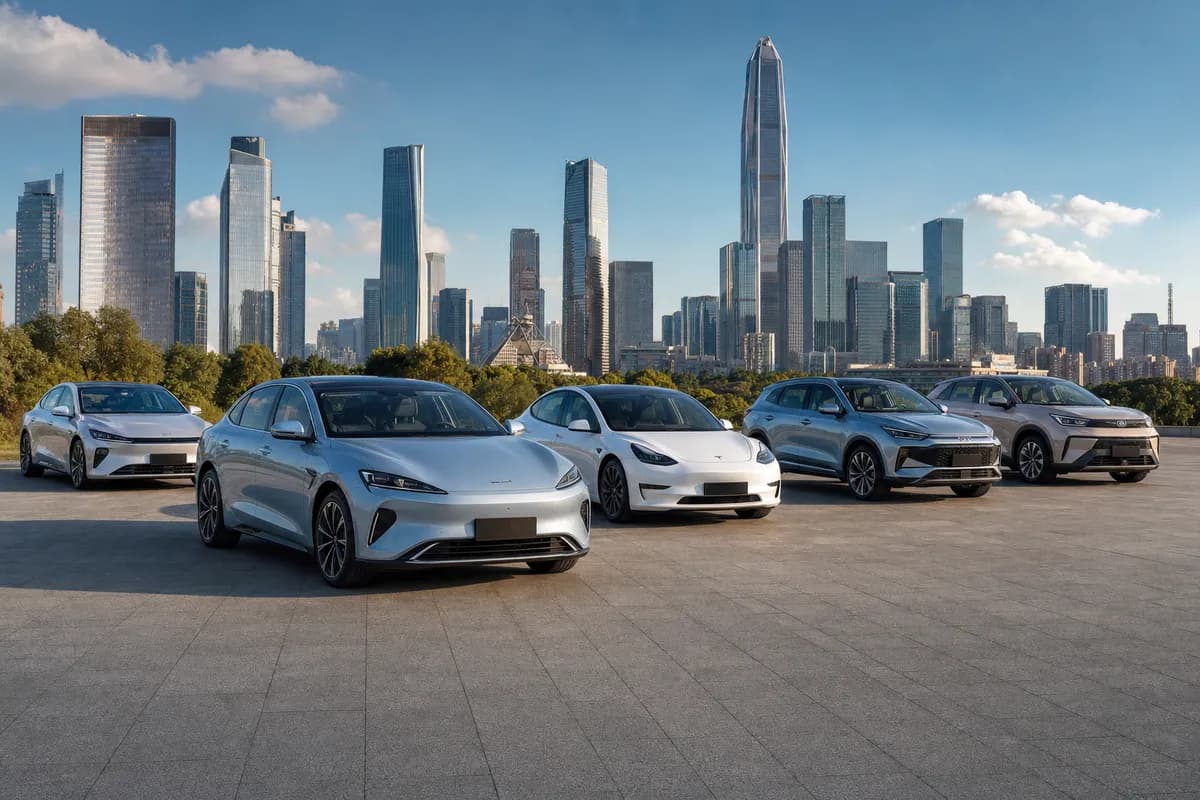
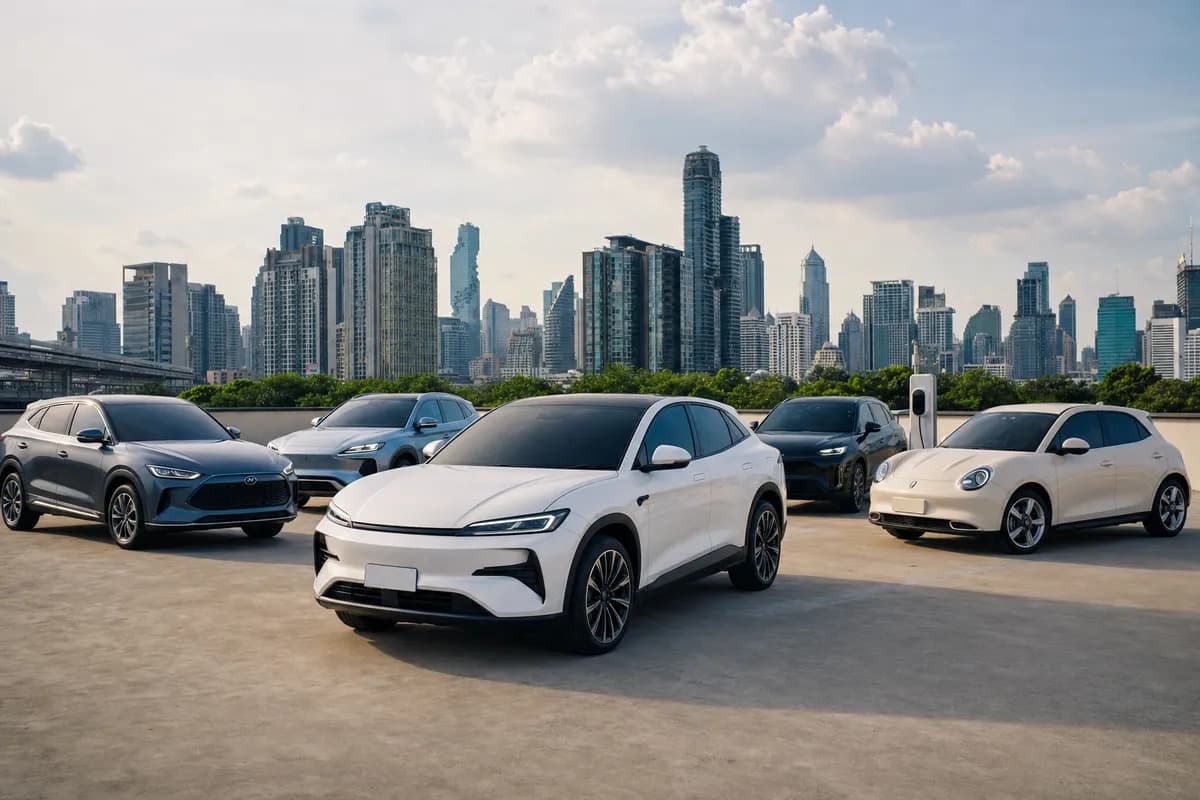
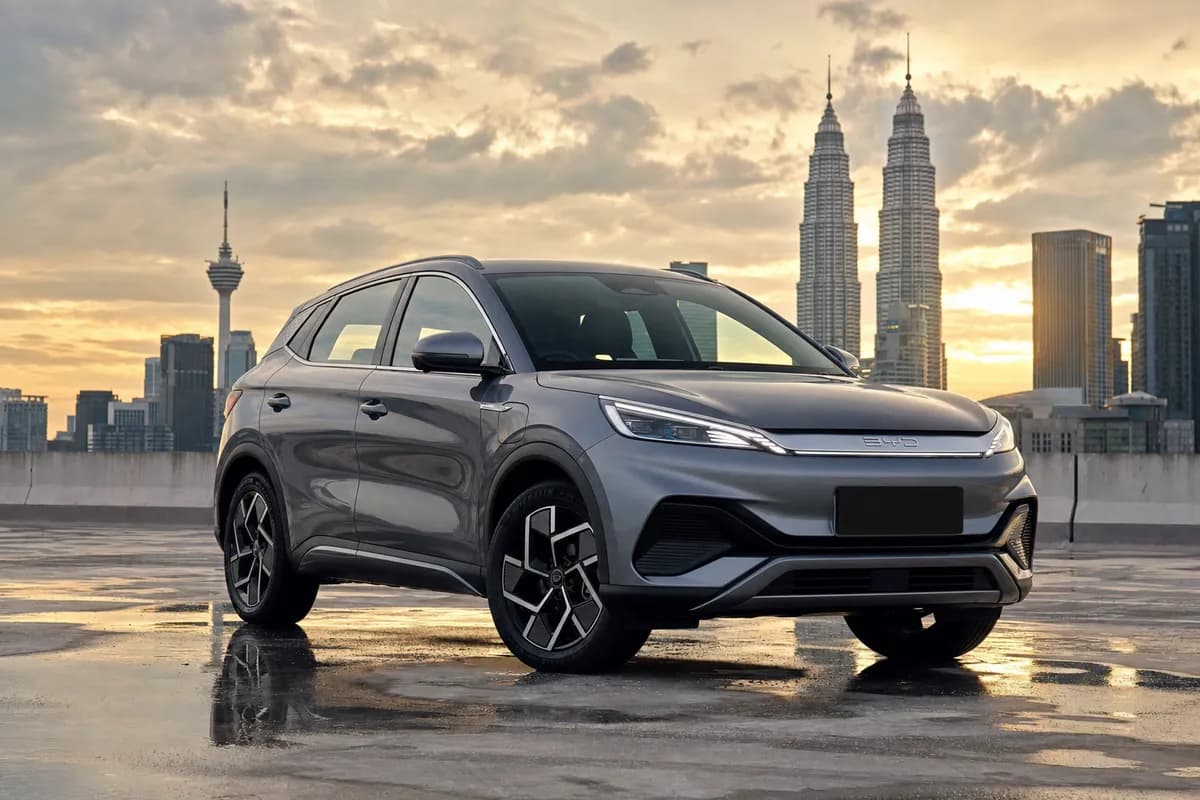
BYD electric car sales are not just strong in absolute terms. They are strategically broad. The company sells across price points, body styles, and brands, from mass-market BYD models like the Seagull, Dolphin, Qin, Song, and Seal to premium products under Denza, Fang Cheng Bao, and Yangwang.
That range matters because China’s electrification is no longer limited to small urban cars or premium early adopters. Buyers can now choose a plug-in hatchback, sedan, SUV, MPV, or off-road model without paying a meaningful convenience penalty. BYD has built scale where rivals still rely on isolated hits.
It also helps that BYD controls more of its own stack than many competitors. Batteries, power electronics, software integration, and aggressive pricing have allowed it to move faster when the market turns. In a market where cost, charging speed, cabin tech, and driver-assist features increasingly decide the sale, that vertical integration is proving hard to match.
For 2027, BYD’s task is not simply to grow. It is to defend margin and brand clarity while moving from domestic dominance to a more balanced global position. In China, though, it already looks like the company most aligned with where demand is headed.
Geely, Tesla, Volkswagen, and Toyota face very different tests
The big strategic mistake now would be to treat all legacy and EV-era competitors as if they face the same problem. They do not. Geely, Tesla, Volkswagen, and Toyota in China each enter this next phase with different strengths, and different gaps.
Geely: Broad portfolio, but execution must stay sharp
Geely is one of the best-positioned domestic groups outside BYD. Its portfolio spans Geely Galaxy, Zeekr, Lynk & Co, and Volvo-related technology links, giving it reach from value-focused buyers to premium EV shoppers. Models such as the Geely Galaxy E5 and Zeekr’s upscale lineup show it can compete on both price and perceived technology.
The challenge is complexity. Geely needs to avoid overlapping brands and internal competition while keeping software, battery sourcing, and manufacturing efficiency aligned. In a market moving this fast, too many sub-brands can dilute momentum as easily as they can capture demand.
Tesla: Still influential, but no longer setting the whole agenda
Tesla remains a major force in China through the Model 3 and Model Y, and its Shanghai plant is still one of the company’s most important assets. But China’s market has evolved around Tesla. Buyers now expect rapid feature updates, local digital ecosystems, and a wider spread of price points than Tesla currently offers.
Tesla’s problem is not irrelevance. It is narrowing strategic flexibility. If 2027 gas car demand in China weakens faster than expected, Tesla benefits from being pure EV, but that alone is not enough when local rivals are moving quicker on in-car tech, model refresh timing, and value positioning.
What Tesla must do next is straightforward:
- Refresh the core lineup faster in China
- Localize software and cabin features more deeply
- Add lower-cost products without damaging brand strength
- Keep production efficiency as a weapon against price wars
Volkswagen: Scale helps, but speed is the real issue
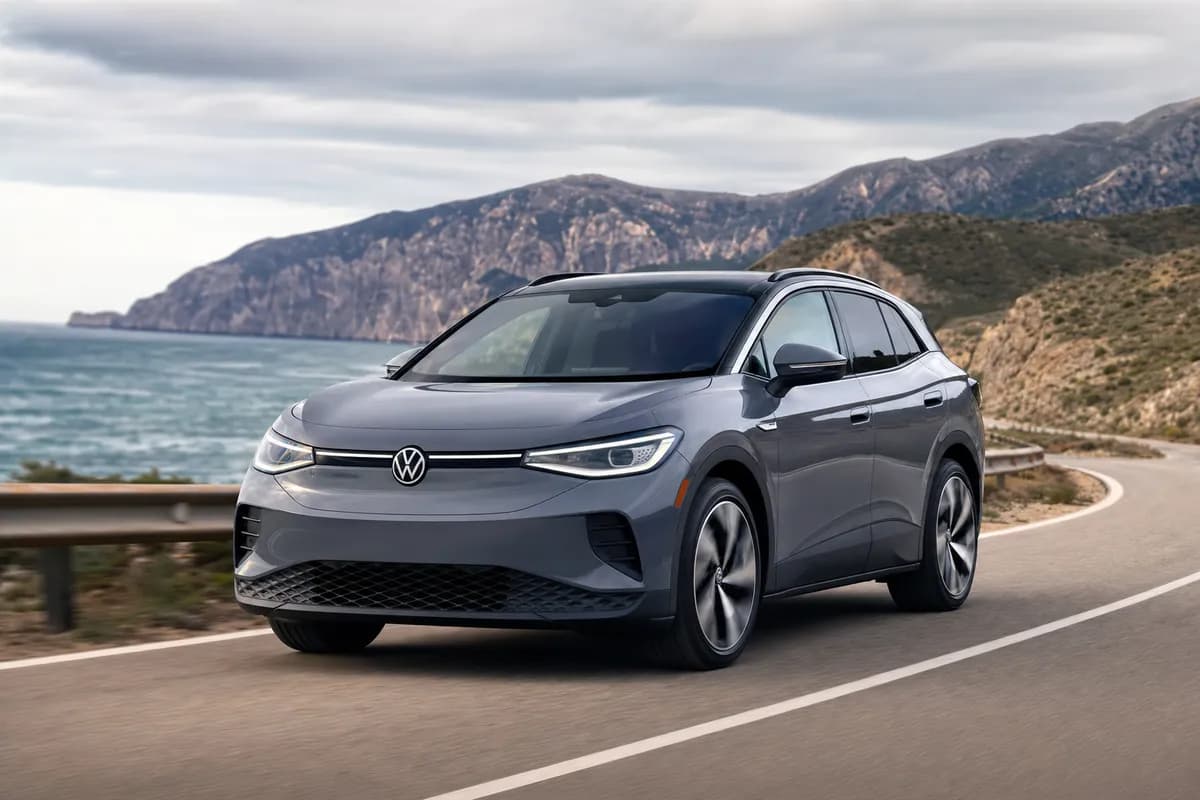
Volkswagen still has one of the strongest structural positions in China because of its joint ventures, manufacturing base, and dealer footprint. But scale built in the ICE era does not automatically convert into EV leadership. The company’s ID.3, ID.4, and related models have gained traction, yet Volkswagen has often looked slower than local rivals in software integration and product localization.
That matters more now than it did two years ago. China’s EV market is not rewarding brand familiarity alone. It is rewarding fast iteration, strong connectivity, competitive assisted-driving features, and aggressive pricing discipline.
Volkswagen’s next moves need to be more China-specific than globally standardized:
- Shorter development cycles for China-market EVs
- Stronger local software partnerships
- Cleaner separation between ICE cash-cow strategy and EV growth strategy
- More compelling products below the premium import-equivalent price band
Toyota: Hybrid strength may not be enough anymore
Toyota has long benefited from hybrid credibility, strong quality perceptions, and conservative execution. In an earlier phase of China auto market electrification, that offered a useful bridge. But as plug-in vehicles take nearly two-thirds share, the bridge starts looking like a delay.
Toyota is not absent. It has been expanding battery-electric efforts and local partnerships, and models such as the bZ3 show a clearer attempt to address Chinese buyer expectations. Still, Toyota’s biggest risk is ending up overexposed to a shrinking pool of conventional ICE demand while domestic brands redefine the mass market around EVs and EREVs.
For Toyota, the strategic shift must be sharper than incremental:
- Move from hybrid-led messaging to full plug-in competitiveness
- Accelerate dedicated EV launches in core sedan and SUV segments
- Use local engineering and supplier ecosystems more aggressively
- Prepare for a 2027 market where non-plug-in gasoline vehicles are no longer the safe-volume play
Why 2027 gas-car demand in China may weaken faster than expected
There are several reasons the old demand curve may break sooner rather than later. First, EV prices have fallen as battery costs, scale, and local competition improve. Second, charging access and consumer familiarity are much better than they were even a few years ago.
Third, the value case for gasoline cars is getting worse in many segments. A buyer comparing a compact sedan or family SUV in 2027 may see an EV or plug-in hybrid with lower running costs, stronger software, a quieter cabin, and more standard features for similar money. That makes the ICE option harder to justify as the default choice.
The pressure is especially intense in these areas:
- Compact sedans: once an ICE stronghold, now increasingly vulnerable to low-cost EVs
- Family SUVs: a core battleground where plug-in hybrids and EREVs are gaining fast
- Urban fleets and ride-hailing: economics strongly favor electrified vehicles
- Entry luxury: local EV brands now challenge foreign badges on tech and performance
That does not mean gasoline cars disappear in 2027. Rural demand, long-distance use cases, and some lower-infrastructure regions will still support ICE sales. But the key shift is that ICE may no longer anchor the market’s center of gravity.
Verdict: the winners will treat 2027 as a product deadline, not a forecast
May 2026’s 62.9% EV share in China is more than a monthly headline. It is a warning that planning assumptions built around resilient gasoline demand are expiring faster than many global automakers expected. BYD is already operating as if the market is headed toward 80% electrified share. Others are still reorganizing around that possibility.
The clearest near-term winner is BYD, with Geely in the strongest chasing position among major domestic groups. Tesla remains highly relevant, but it must localize and broaden faster. Volkswagen has the scale to stay in the fight, yet needs much more China-specific speed. Toyota may face the hardest adjustment if hybrid caution gives way too slowly to full plug-in urgency.
The real takeaway is simple: in China, the question for 2027 is no longer who can sell EVs. It is who can survive a market where selling mostly gasoline cars stops being a dependable business model.
Affiliate disclosure: This article contains affiliate links. RevvedUpCars may earn a small commission on qualifying purchases at no extra cost to you.