Rivian’s new compact SUV aims for mainstream success—find out how the R2 stacks up on range, space, and adventure-ready practicality.
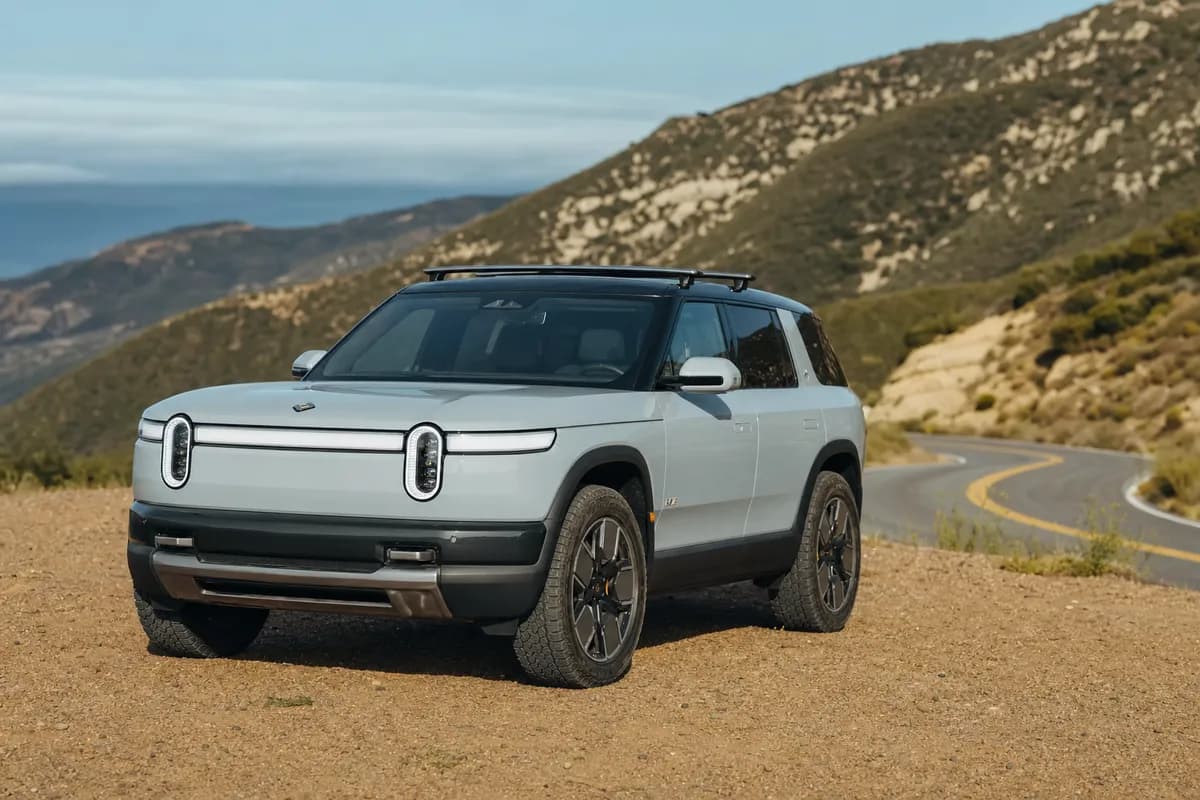
Rivian built its name on pricey, rugged EVs for people who own climbing ropes and probably a dog named Summit. The 2027 Rivian R2 is the company’s shot at something much bigger: the mainstream compact electric SUV market. And after first-drive impressions, this looks less like a cute little brother to the R1S and more like a serious threat to the Tesla Model Y, Hyundai Ioniq 5, and Volvo EX30.
This is the Rivian that has to matter. It needs range, usable space, sane pricing, and enough daily charm to win over buyers who want adventure styling without living on a trailhead. Happily for Rivian, the R2 gets a lot right.
A Smaller Rivian, But Not a Cheapened One
The basic formula is obvious. The 2027 Rivian R2 shrinks the design language of the R1S into a more city-friendly footprint, targeting the heart of the best electric SUV 2026 conversation rather than the expensive fringe. Expect dimensions roughly in line with a Tesla Model Y and Hyundai Ioniq 5, which is exactly where Rivian needed to be.
Styling is familiar Rivian: oval headlights, clean surfacing, upright glass, and a squared-off stance that says “weekend gear” more than “software subscription.” It looks good without trying too hard. That alone makes it more tasteful than the bulbous Model Y and less fashion-victim than some overstyled EV crossovers chasing TikTok attention.
Inside, the R2 follows the modern EV template with a large central display, minimal switchgear, and a clean dashboard. The difference is that Rivian still seems to understand that people use vehicles for stuff. Storage is clever, materials look durable, and the cabin feels designed for actual ownership rather than a lease-cycle photo shoot.
How the R2 Drives: Composed, Quick, and More Mature Than Expected
If you came here for a 2027 Rivian R2 first drive review verdict, here’s the headline: the R2 does not drive like a compromised budget Rivian. It feels solid, planted, and surprisingly refined for a vehicle meant to open the brand to a much larger audience. The steering is clean, body control is tidy, and the ride appears to split the difference between sporty and livable better than most compact EVs.
That matters because rivals often pick a side and overdo it. The Tesla Model Y still feels fast and direct, but also busy and occasionally brittle over rough pavement. The Hyundai Ioniq 5 is more relaxed and airy, yet it can feel softer and less tied down when pushed. Early impressions suggest the R2 lands in the sweet spot.
Performance should be strong across the lineup, with single-, dual-, and tri-motor configurations expected. Rivian has indicated 0-60 mph times as quick as under 3.0 seconds for top trims, which is absurd in a compact family SUV and entirely unnecessary in the best way. More relevant will be the mid-range models, where buyers care less about drag-strip bragging and more about easy passing, smooth throttle tuning, and confidence in bad weather.
On that front, Rivian’s software-controlled all-wheel-drive systems have already proven excellent in the R1T and R1S. If the R2 inherits even 80 percent of that polish, it should be one of the most confidence-inspiring EVs in the segment. That’s a bigger deal than headline horsepower.
Rivian R2 Range and Practicality: The Make-or-Break Stuff
Here is where the R2 has to earn its keep. Buyers shopping this class are not looking for a halo toy. They want something that commutes efficiently, road-trips without drama, and swallows strollers, camping gear, and flat-pack furniture without a tantrum.
Rivian has targeted more than 300 miles of range for certain versions of the R2, which puts it squarely in the fight. That estimated figure is competitive, though not class-dominating. A Tesla Model Y Long Range currently sits around 310 to 330 miles depending on version and market spec, while the Hyundai Ioniq 5 typically lands lower, around the 260- to 303-mile window depending on battery and drivetrain. The Volvo EX30, by contrast, generally trails on outright range despite its appealing size and price.
- Rivian R2: targeting over 300 miles on select trims
- Tesla Model Y Long Range: roughly 310-330 miles
- Hyundai Ioniq 5: roughly 260-303 miles
- Volvo EX30: typically lower than the class leaders, depending on spec
Charging speed also matters, and Rivian knows it. The company says the R2 can add around 140 miles of range in 20 minutes on DC fast charging. That is competitive, though Hyundai’s E-GMP products remain the benchmark for repeatable fast-charge performance thanks to their 800-volt architecture. The Ioniq 5 still feels like the road-trip nerd’s choice if charging curve charts make you feel alive.
Practicality, though, may be the R2’s killer app. Rivian is leaning into clever packaging, split-folding seats, a usable hatch area, and thoughtful storage solutions. It looks less cavernous than an Ioniq 5 in pure visual openness, but more purpose-built for messy real life. If Tesla treats cargo space as a numerical flex, Rivian treats it like an invitation to throw muddy boots and duffel bags inside and get on with it.
The R2’s biggest advantage may be that it feels designed by people who’ve actually packed a car for a weekend away.
Rivian R2 vs Tesla Model Y, Hyundai Ioniq 5, and Volvo EX30
The obvious benchmark is the Tesla Model Y because everything in this segment eventually gets measured against it. Tesla still offers excellent efficiency, strong real-world range, quick acceleration, and access to the best charging ecosystem. But the Model Y is aging, its cabin quality remains hit-and-miss, and its ride comfort can be annoying on broken roads. It wins on infrastructure and software integration, but not on warmth, charm, or sense of occasion.
Against the Hyundai Ioniq 5, the R2 faces a different challenge. Hyundai’s retro-modern design still looks fresh, the interior is roomy, and charging performance is outstanding. But the Ioniq 5 is more style object than adventure tool. The Rivian feels more authentic in its outdoorsy mission, and likely more premium in lower-trim details.
The Volvo EX30 attacks from below with a smaller footprint and sharp design. It’s appealing, urban-friendly, and likely good enough for plenty of drivers. But it’s also tighter inside, less versatile, and not as convincing if you want one EV to do absolutely everything. The EX30 is a clever small crossover. The R2 feels more like a shrunken Swiss Army knife.
- Buy the Model Y if charging access and efficiency matter most.
- Buy the Ioniq 5 if you want standout design and top-tier charging speeds.
- Buy the EX30 if city-friendly size and value are your priorities.
- Buy the R2 if you want the broadest blend of utility, personality, and real-world versatility.
Pricing, Market Position, and the Real Verdict
Rivian has said the R2 will start around $45,000, and that number is crucial. If it lands there with solid standard equipment, useful range, and Rivian’s distinct design, it will be one of the most compelling new EVs in America. If transaction prices bloat into the mid-$50,000 range too quickly, then the value case gets murkier fast.
That said, this first impression is encouraging because the R2 does not seem to rely on one gimmick. It isn’t just the fastest, cheapest, or weirdest option. It’s aiming to be the most complete option, and that usually matters more once the honeymoon period wears off.
So, can Rivian’s smaller electric SUV beat the established leaders? Mostly, yes. In this early form, the R2 looks like a more desirable everyday EV than the Tesla Model Y, a more cohesive all-rounder than the Hyundai Ioniq 5, and a more useful family machine than the Volvo EX30.
The final judgment still depends on production quality, real EPA numbers, and whether Rivian can actually build them at scale without turning launch logistics into performance art. But based on these first-drive impressions, the Rivian R2 review story is simple: this is not a side project. It is Rivian’s best shot yet at building the electric SUV normal people will actually buy, and one of the strongest candidates for best electric SUV 2026 status.
If Rivian delivers the promised range, practicality, and price, the R2 won’t just join the class. It could reset it.
Affiliate disclosure: This article contains affiliate links. RevvedUpCars may earn a small commission on qualifying purchases at no extra cost to you.