Stuttgart sharpens the 2027 Mercedes S-Class with more electrification and smarter tech, but does it truly beat the BMW 7 Series and Lexus LS?
The Mercedes S-Class has spent decades making every other luxury sedan feel like it showed up underdressed. For 2027, Stuttgart hasn’t reinvented the formula. It has sharpened it, electrified more of it, and stuffed in enough software to make the old car feel faintly analog.
That matters because the flagship sedan game is no longer a polite duel between Germany and Japan. EVs are muscling in, the BMW 7 Series has gone full tech-lounge, and the Lexus LS is still trying to win on serenity and reliability. So this 2027 Mercedes S-Class review asks the only question that counts: does the big Benz still feel like the default answer?
What’s New for 2027: Smarter, More Efficient, Still Very Much an S-Class
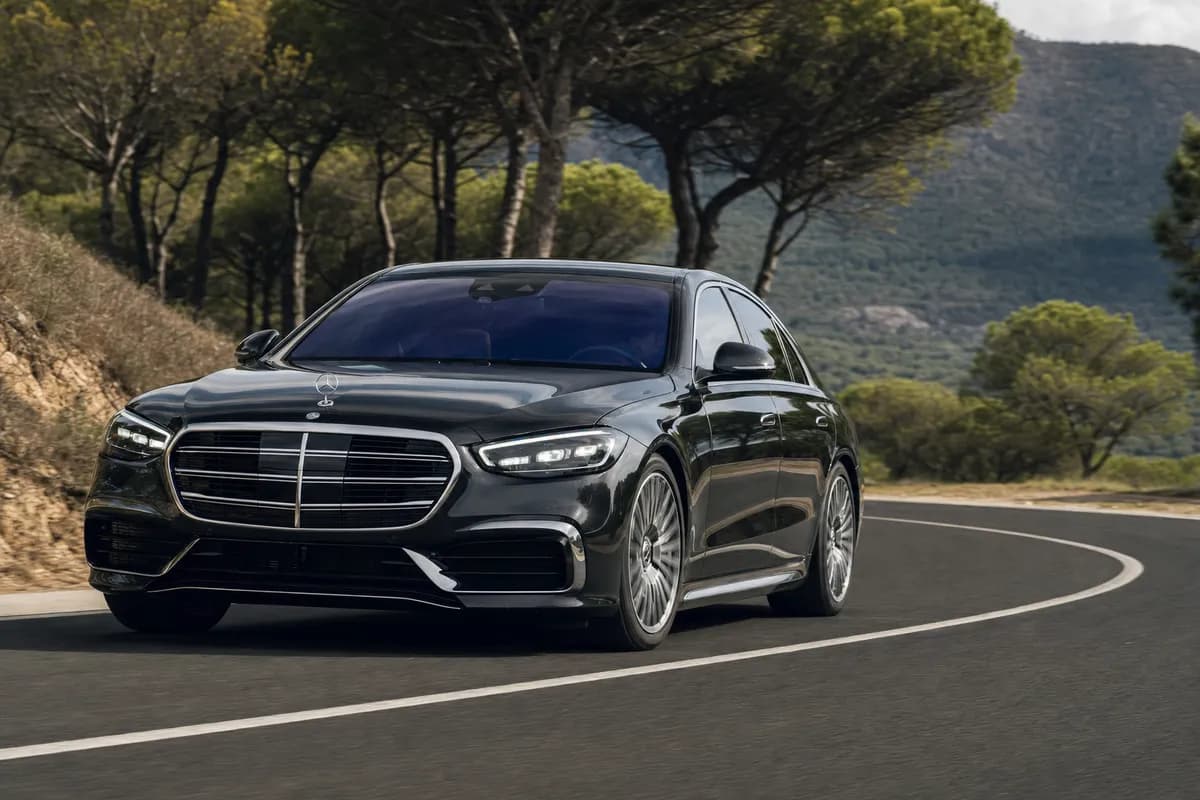
The facelifted 2027 S-Class is not a radical redesign, and that’s smart. Mercedes has tweaked the grille, lighting signatures, wheel designs, and lower fascias, but the shape remains unmistakable. It still looks like old money with a software subscription.
The bigger changes sit underneath and inside. The mild-hybrid six-cylinder models get revised 48-volt assistance, plug-in hybrid variants gain more electric range, and Mercedes has overhauled the latest MBUX interface with faster processing, sharper voice controls, and more rear-seat functions. Think less “all-new” and more “deeply updated luxury sedan 2026 buyers were already waiting for.”
- S 500 4Matic: 3.0-liter turbocharged inline-six with EQ Boost mild-hybrid assist, around 442 hp
- S 580 4Matic: 4.0-liter twin-turbo V8 with mild-hybrid assist, around 496 hp
- S 580e plug-in hybrid: turbo inline-six plus electric motor, combined output around 500 hp, EV range expected near 55-65 miles
- AMG and Maybach variants: still the excess options, because of course they are
The key update is the plug-in hybrid. In Europe, Mercedes has already shown it can build an S-Class PHEV with genuinely useful electric range, not the usual tax-break fiction. If the U.S.-spec 2027 S 580e lands with roughly 60 miles of EV range, that makes it one of the few large luxury sedans that can handle many daily commutes without waking the engine.
First Drive: The S-Class Still Nails the One Thing Others Keep Overthinking
From the driver’s seat, the new S-Class immediately reminds you why this car matters. The steering is light but accurate, visibility is better than the slab-sided BMW 7 Series, and the whole car moves with that expensive, liquid composure Mercedes has spent generations perfecting. It doesn’t feel soft. It feels sorted.
On broken pavement, the updated air suspension and rear-axle steering do the heavy lifting. Our test route included patched urban streets, fast highway sweepers, and a stretch of miserable expansion joints that would expose any fake luxury car in 200 yards. The S-Class just inhaled it all, with less secondary body motion than the outgoing car and less float than the Lexus LS.
The Mercedes S-Class first drive experience varies a lot by powertrain. The S 500 is the sweet spot for most buyers, with enough torque to move 5,000-plus pounds without complaint and better balance over the nose than the V8. The S 580 is quicker and silkier, but unless you regularly overtake traffic like you’re late to Davos, the six-cylinder is the smarter buy.
Mercedes quotes 0-60 mph in roughly 4.8 seconds for the S 500 and around 4.3 seconds for the S 580. Those are serious numbers for something this upholstered. More impressive is the way both cars isolate effort; 80 mph feels like 50, which is either engineering brilliance or a future speeding ticket.
Ride and Refinement Highlights
- Cabin noise remains exceptionally low, especially on Michelin summer touring rubber
- Rear-wheel steering makes the long-wheelbase car feel one class smaller in town
- Brake pedal tuning is smoother than many hybrids and PHEVs in this segment
- Seat comfort is still the benchmark, with excellent long-distance support
The S 580e PHEV may end up being the range pick. It glides around silently in EV mode, and unlike some heavy plug-ins, the transition to gasoline power is discreet. If charging fits your life, this is the version that best suits a luxury sedan in 2027: quiet in the city, effortless on the highway, and not wholly dependent on finding a fast charger behind a Target.
Cabin, Screens, and the Business of Feeling Expensive
Open the door and the S-Class still delivers one of the great interiors in the industry. The materials are rich without looking gaudy, the ambient lighting remains gloriously theatrical, and every major touchpoint feels engineered rather than sourced from a corporate parts bin. That last point should not be taken for granted in 2027.
The updated MBUX setup brings crisper graphics, faster responses, and fewer moments where the car behaves like a smug tablet. The central OLED display remains large and dominant, but Mercedes has done a better job organizing core functions. Climate controls are still screen-based, which is annoying, but at least they’re consistently accessible.
Rear-seat luxury remains a core S-Class strength. The executive seating package still offers deep recline, ventilation, heating, massage, and enough legroom to make domestic first class feel petty. If your life involves being driven rather than driving, the Mercedes makes a stronger case than the BMW, which tries a bit too hard to impress with gadgets.
Interior Tech Upgrades Worth Mentioning
- Improved voice assistant with more natural responses and broader in-car controls
- Expanded rear-seat entertainment integration
- Updated driver-assistance visualization and lane-change support
- Stronger over-the-air update capability
The one caveat is complexity. Mercedes has made this interface better, not simpler. Owners willing to learn it will be rewarded. Owners who just want buttons for everything may start muttering nice things about the Lexus LS.
BMW 7 Series vs Mercedes S-Class vs Lexus LS: Who Actually Wins?
This is where the updated S-Class earns its keep. The BMW 7 Series vs Mercedes S-Class matchup is close on paper, but not in personality. The BMW is bolder, weirder, and more aggressively digital, especially with the available Theater Screen and the EV i7 looming in the same showroom. The Mercedes is calmer, prettier, and better resolved as a traditional flagship.
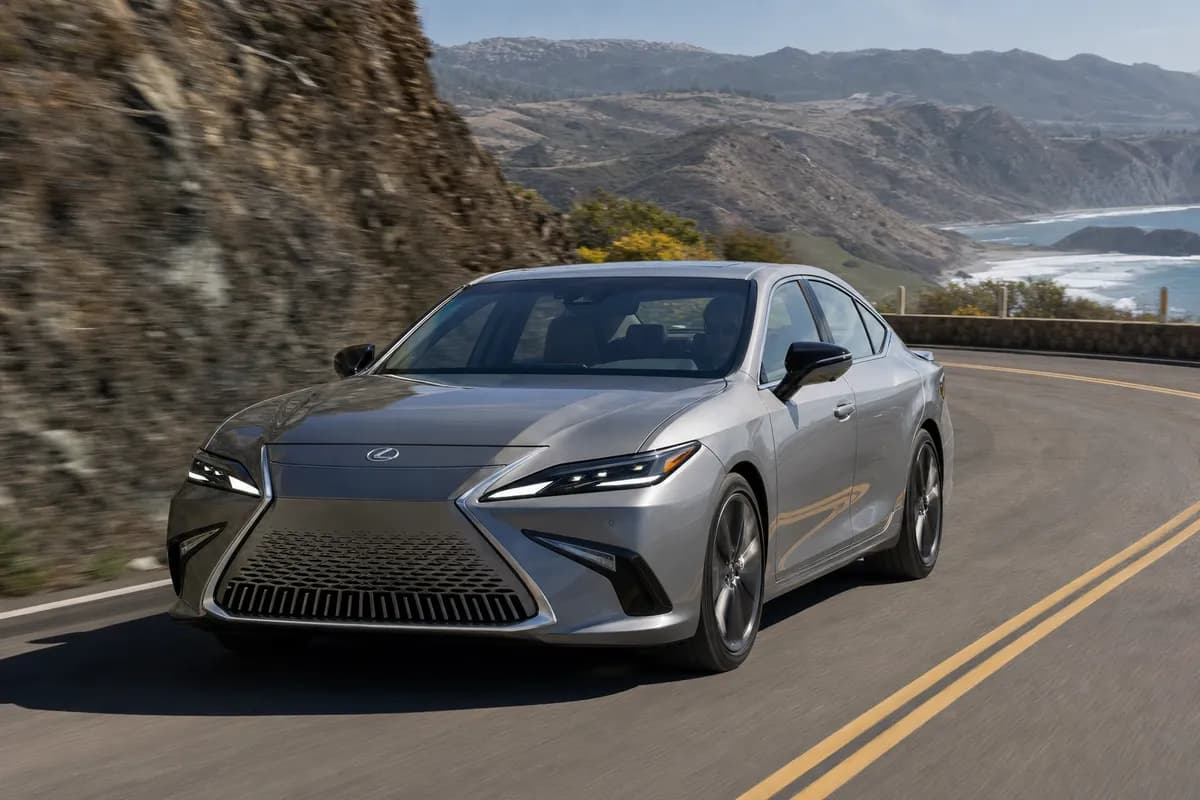
The Lexus LS, meanwhile, remains the outsider. It’s beautifully built and impressively quiet, but it now feels a generation behind in infotainment, rear-seat theater, and powertrain breadth. The LS 500’s twin-turbo V6 is competent, not memorable, and the hybrid no longer looks especially advanced next to the new Mercedes plug-in setup.
- Mercedes S-Class: best ride comfort, best seat comfort, strongest all-round luxury execution
- BMW 7 Series: most dramatic tech presentation, sharper handling feel, stronger EV alternative in the i7
- Lexus LS: excellent build quality, likely long-term dependability edge, weakest infotainment and least fresh overall
If you drive yourself, the BMW 760i still feels a touch more alert. If you spend serious time in the back seat, the S-Class is the one that best understands what a flagship sedan is supposed to do. And if you’re cross-shopping a Lexus LS comparison, be honest: you’re either buying the Lexus for peace of mind or because the Mercedes and BMW are asking too much money for too much complication.
There is one threat the old luxury-sedan guard cannot ignore: EVs. The Mercedes EQS, BMW i7, Lucid Air, and even top-end versions of the Porsche Taycan now offer silent thrust and massive tech appeal. But they don’t all match the S-Class for seat comfort, suspension polish, or the uniquely old-school sense of occasion that still matters in this segment.
Verdict: Still the Benchmark, Just Not the Only One
The 2027 S-Class does not dominate this class by sheer distance the way its ancestors once did. The competition is sharper, EV alternatives are more credible, and Mercedes’ own digital ambitions sometimes flirt with excess. But when you step back and judge the whole machine, the big Benz still comes out on top.
It rides better than the BMW 7 Series, feels more special than the Lexus LS, and now makes a stronger efficiency case with the updated plug-in hybrid. Most important, it still delivers the core S-Class magic: serenity, authority, and the sense that every mile has been edited for comfort. That remains a rare talent.
Final verdict: The 2027 Mercedes S-Class is still the flagship luxury sedan to beat. The S 500 is the smart buy, the S 580e could be the clever buy, and the BMW 7 Series remains the one to test-drive if you want more edge than elegance. But if your priority is the most complete luxury sedan experience, the S-Class still wears the crown.
Affiliate disclosure: This article contains affiliate links. RevvedUpCars may earn a small commission on qualifying purchases at no extra cost to you.