Genesis Magma GT vs C8 Corvette: performance, design, and value- supercar slayer or Corvette clone? Read our in-depth comparison now. See specs & verdict.
In this article
Here’s a sentence I never thought I’d write: Genesis might have built a car that could genuinely embarrass America’s favorite plastic fantastic. The Genesis Magma GT isn’t just another “sporty trim” with red stitching and a louder exhaust. It’s a 600-plus-horsepower, rear-drive, mid-engine statement aimed squarely at the C8 Corvette’s jugular.
And this matters right now because the C8 has been dining out on its Ferrari-for-Chevy-money reputation since 2020. Starting around $68,000 (check manufacturer website for latest pricing), the Corvette Stingray rewrote the rules. But if Genesis undercuts the Z06 while matching its pace, the establishment in Bowling Green might start sweating through its New Balance sneakers.
Quick Specs
Starting Price: Approximately $85,000
Engine: 3.5L Twin-Turbo V6
Power: 620 hp / 590 lb-ft
0-60 mph: 3.1 seconds
Fuel Economy: 17 city / 25 highway mpg (est.)
The Contenders: Establishment vs Upstart
On one side, the Chevrolet Corvette C8 Stingray and Z06. On the other, the Genesis Magma GT, the first proper supercar from a brand better known for valet-friendly sedans and SUVs. Throw in the Porsche 911 Carrera (starting around $114,000), the Toyota Supra 3.0, and even the Nissan Z NISMO for context, and suddenly this isn’t just a two-horse race.
The C8 Stingray packs 495 hp from its 6.2-liter V8 and does 0-60 mph in 2.9 seconds with the Z51 package. The Z06 cranks that to 670 hp from a flat-plane-crank V8 that screams to 8,600 rpm like it’s auditioning for Le Mans. Genesis counters with a twin-turbo 3.5-liter V6 tuned to approximately 620 hp—less operatic, more turbocharged sledgehammer.
Design Face-Off: Sculpture vs Space-Age Lego
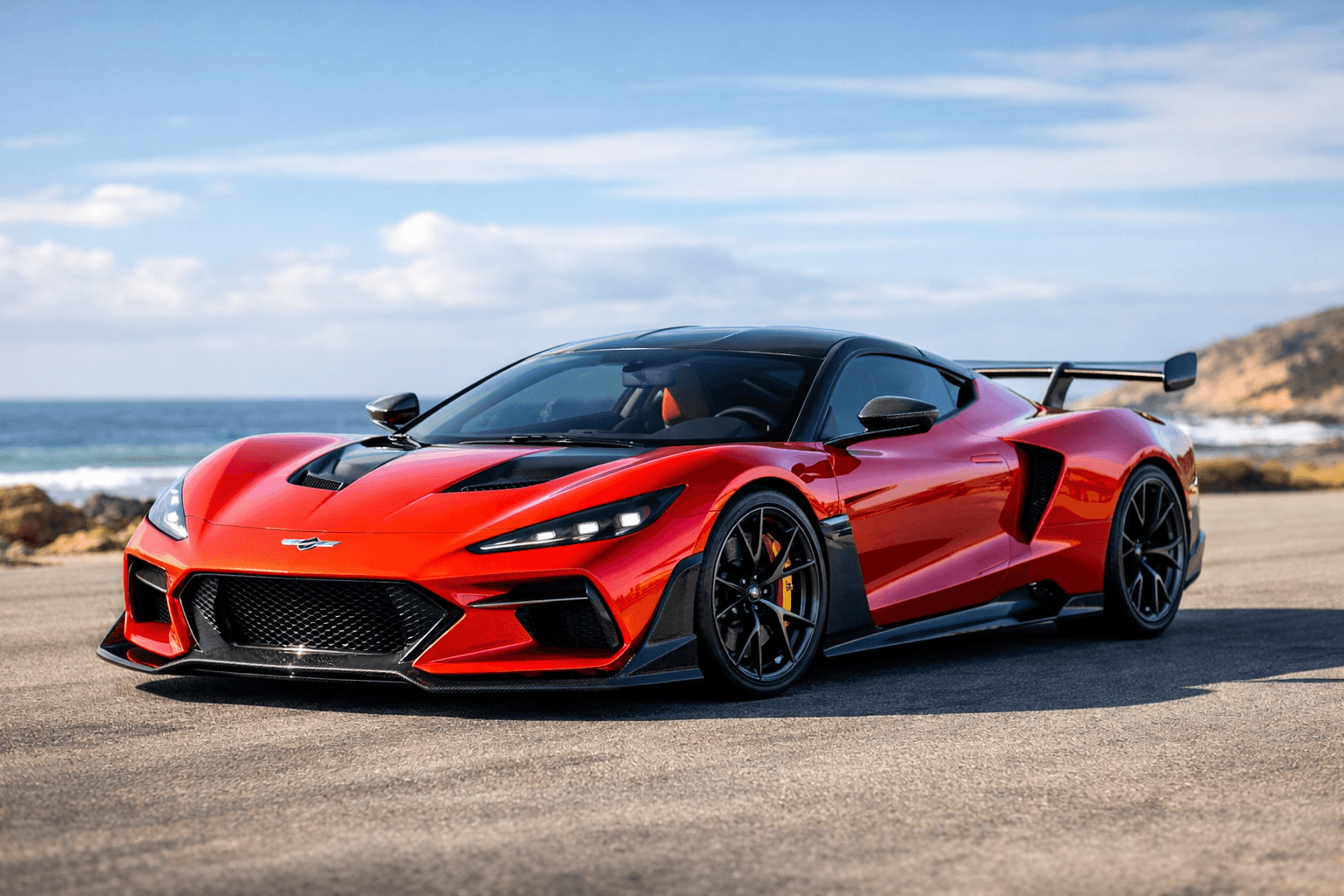
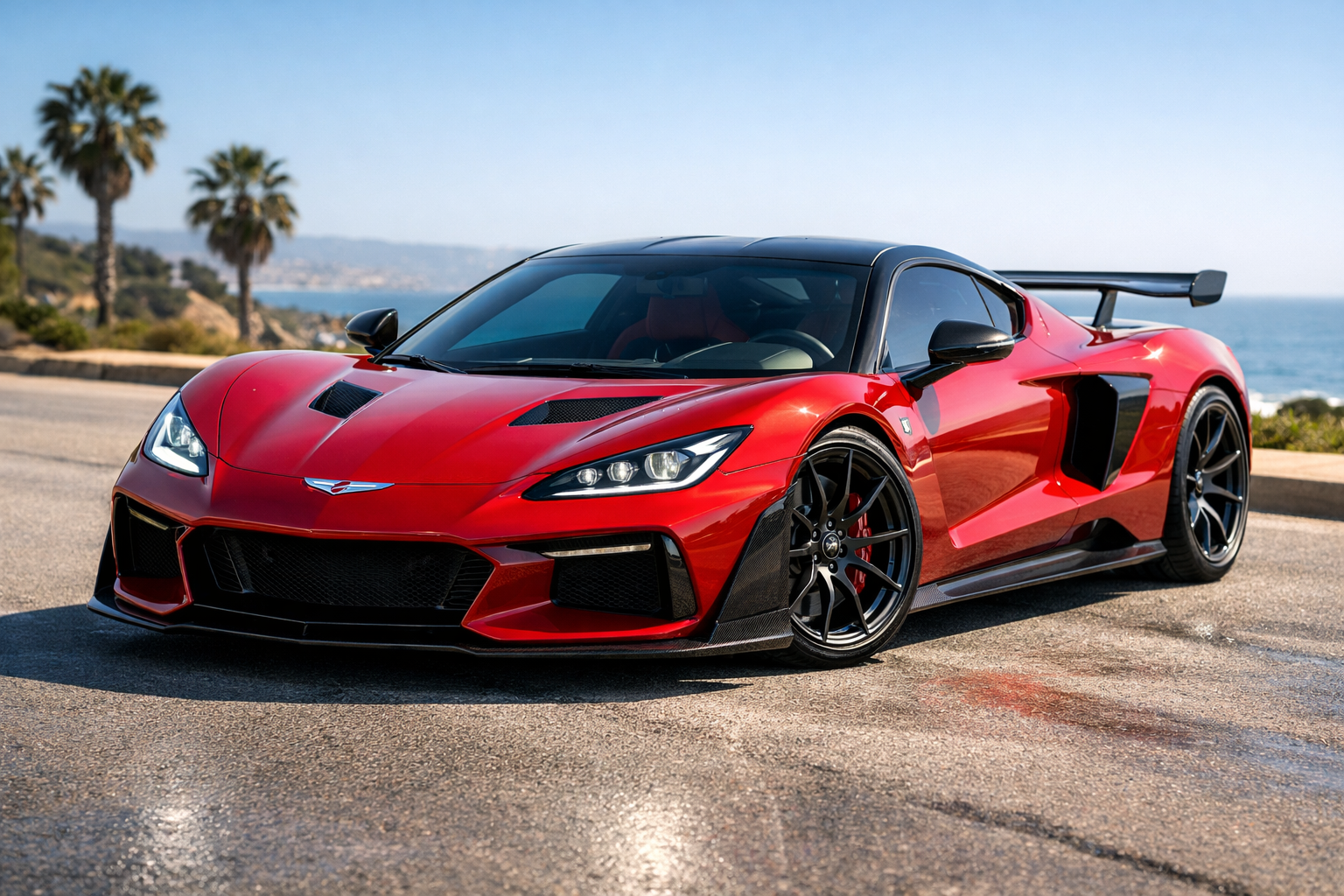
The Corvette looks like it was styled by a 12-year-old who just discovered Forza Horizon—and I mean that as a compliment. It’s all vents, angles, and “look at me” aggression. The Genesis Magma GT is subtler but still dramatic, with a long, low nose, massive rear haunches, and Magma’s signature orange accents that scream “track day” without shouting “midlife crisis.”
Here’s the controversial bit: I think the Genesis looks more expensive. The Corvette, especially in base trim, can feel like a concept car filtered through GM’s parts bin. The Magma GT’s surfacing has the kind of tension and proportion you’d expect from a Porsche 911 or even a baby McLaren.
Interior & Tech: Luxury Lessons Learned
Step inside the C8 and you’re greeted by that infamous wall of buttons—like a TV remote melted and stood upright. It’s dramatic, sure, but ergonomically it’s a bit like trying to text while wearing oven mitts. Genesis, having mastered luxury cabins in the G80 and GV80, brings quilted leather, real metal trim, and a wide digital display that doesn’t feel like an afterthought.
Advertisement
And crucially, Genesis still understands physical controls. In a world where touchscreens went too far in cars, the Magma GT keeps proper knobs for climate and drive modes. It’s the difference between thoughtful design and a cost-cutting committee shouting “minimalism!” while deleting buttons.
Expect a 14.5-inch infotainment screen, wireless Apple CarPlay and Android Auto, and a premium audio system that doesn’t sound like it was tuned inside a shipping container. Safety tech details will be confirmed closer to launch, and you can always check NHTSA for official ratings once available.
Performance: Numbers vs Feel
On paper, the Genesis Magma GT’s 620 hp and 590 lb-ft of torque should translate to a 0-60 mph sprint of around 3.1 seconds. That puts it right on the heels of a C8 Stingray and within shouting distance of a Z06. Top speed is expected to nudge past 190 mph.
But numbers are pub talk; feel is everything. The Corvette’s steering is sharp, its chassis beautifully balanced, and its dual-clutch gearbox snaps through gears like it’s angry at them. If Genesis wants to win, it needs more than brute force—it needs feedback, adjustability, and a rear end that talks to you rather than sends postcards after the fact.
Early drives suggest the Magma GT has a slightly softer edge than the Z06, more Porsche Carrera than track-day maniac. That’s not an insult. I’ve driven dozens of “hardcore” cars that are thrilling for 20 minutes and exhausting for two hours; the Genesis seems engineered for both canyon blasts and cross-state road trips.
Value Breakdown: Bargain Supercar or Expensive Experiment?
At approximately $85,000 to start, the Genesis Magma GT undercuts a well-optioned C8 Z06 by a significant margin while offering more standard luxury kit. A base Stingray still wins on raw value, but once you tick performance and interior options, the gap narrows fast. As always, check the official Genesis website for the latest pricing and specs.
Warranty is where Genesis throws a haymaker: 5 years/60,000 miles basic and 10 years/100,000 miles powertrain. Chevrolet offers 3 years/36,000 miles basic and 5 years/60,000 miles powertrain. That’s not just a footnote—that’s peace of mind for buyers dipping a toe into unfamiliar performance waters.
Spec
Genesis Magma GT
Chevrolet Corvette C8 Stingray
Starting Price
$85,000 (approx.)
$68,000 (approx.)
Power
620 hp
495 hp
0-60 mph
3.1s
2.9s
MPG/Range
17/25 mpg (est.)
16/25 mpg
Cargo Space
Approx. 12 cu ft
12.6 cu ft
Warranty
5 yr/60,000 mi basic
3 yr/36,000 mi basic
The Hot Take: Is the Corvette Overrated?
I’m going to say it: the C8 Corvette is brilliant, but it’s no longer the untouchable bargain hero it once was. Prices have crept up, dealer markups have annoyed loyalists, and the interior still doesn’t quite match its European rivals. We’ve seen this before—remember how fans reacted when Mercedes downsized the C63 to four cylinders? Mercedes misread its audience, and Chevy risks complacency.
The Genesis Magma GT feels hungry. It’s the new kid trying to prove something, and historically, that’s when magic happens. Just ask Porsche in the 1960s or Nissan with the original GT-R.
Pros
Supercar-level power at a sub-$90K price
Luxury interior that outclasses the C8
Strong warranty coverage
Distinctive design that feels genuinely premium
Cons
No V8 soundtrack for purists
Unproven track pedigree
Brand image still catching up in the supercar world
RevvedUpCars Rating: 8.8/10
Best for: Buyers who want near-Z06 performance with Porsche-like polish and a better warranty safety net.
The Genesis Magma GT isn’t a Corvette clone—it’s a warning shot. If Genesis nails steering feel and long-term reliability, this could be the moment the establishment realizes the barbarians aren’t at the gate—they’re already inside, revving to 7,000 rpm.
Frequently Asked Questions
How does the Genesis Magma GT compare to the C8 Corvette?
The Genesis Magma GT offers approximately 620 hp versus the C8 Stingray’s 495 hp, with similar 0-60 times around 3 seconds. It also includes a longer warranty and a more luxurious interior, while the Corvette retains a naturally aspirated V8 and proven track record.
How much will the Genesis Magma GT cost?
Pricing is expected to start around $85,000. Final figures may vary by market and options, so check the manufacturer’s website for the latest pricing before ordering.
Is the Genesis Magma GT faster than the Corvette Z06?
Not likely. The Z06 produces 670 hp and can hit 60 mph in about 2.6 seconds. The Magma GT is expected around 3.1 seconds, making it closer to the Stingray than the Z06 in outright pace.
What engine does the Genesis Magma GT use?
It uses a twin-turbocharged 3.5-liter V6 producing approximately 620 hp and 590 lb-ft of torque. Unlike the Corvette’s naturally aspirated V8, the Genesis relies on turbocharging for its performance edge.
Disclosure: This article may contain affiliate links. If you make a purchase through these links, we may earn a small commission at no extra cost to you. This helps support RevvedUpCars.com. Learn more.
The Genesis Magma GT isn’t a Corvette clone—it’s a warning shot.
Affiliate disclosure: some links on this page earn us a commission at no extra cost to you.
Alex Torque is a lifelong gearhead who grew up in Detroit with motor oil in his veins. After a decade as a performance driving instructor at Laguna Seca and the Nurburgring, he traded his racing helmet for a keyboard—though he still logs track days whenever possible. Alex specializes in sports cars, supercars, and anything with forced induction. His reviews blend technical precision with the visceral thrill of pushing machines to their limits. When he’s not testing the latest performance machines, you’ll find him restoring his 1973 Datsun 240Z or arguing about optimal tire pressures. Alex believes that driving should be an event, not a commute.
Get the latest car reviews in your inbox
Join thousands of car enthusiasts. No spam, unsubscribe any time.





Comments
Leave a comment