June 2026 trade pressure could reshape the EV map, opening paths for BYD, MG, and Geely to reach the U.S. by 2027.
Chinese EVs still look locked out of the U.S. on paper. But by June 2026, the real question is no longer whether brands like BYD, MG, and Geely want in. It is how they might try to get there anyway, and what that could mean for affordable electric cars 2027 buyers have been waiting for.
June 2026 trade pressure has changed the conversation
The direct route into the U.S. remains the hardest one. The Biden administration’s 2024 tariff action sharply raised duties on Chinese-made EVs, pushing the effective tariff rate to more than 100% for passenger EV imports from China. By mid-2026, that policy framework still stands, and neither Congress nor the White House has shown much appetite for a broad rollback.
That matters because it makes a straight China-to-U.S. export program commercially unrealistic for mainstream brands. A low-cost EV that works in Europe or Latin America can lose its price advantage almost instantly once those tariff costs land. For companies built around scale and aggressive pricing, that is a dead end unless they can build, source, or partner their way around it.
The June 2026 pressure point is broader than tariffs alone. U.S. rules tied to IRA tax credits, battery sourcing, connected-vehicle security reviews, and rising scrutiny of Chinese software and electronics are all pushing automakers to rethink supply chains. The result is a more complicated map for Chinese EVs in the US 2027 than the old question of “Can they import cars?”
- Direct imports from China: still heavily blocked by tariffs and politics.
- Mexico production: possible in theory, but politically sensitive and not guaranteed to bypass scrutiny.
- European-brand channels: useful for testing the market, though sourcing rules still matter.
- New partnerships or joint ventures: increasingly the most realistic path.
BYD’s Mexico strategy is the most watched route, but it is not simple
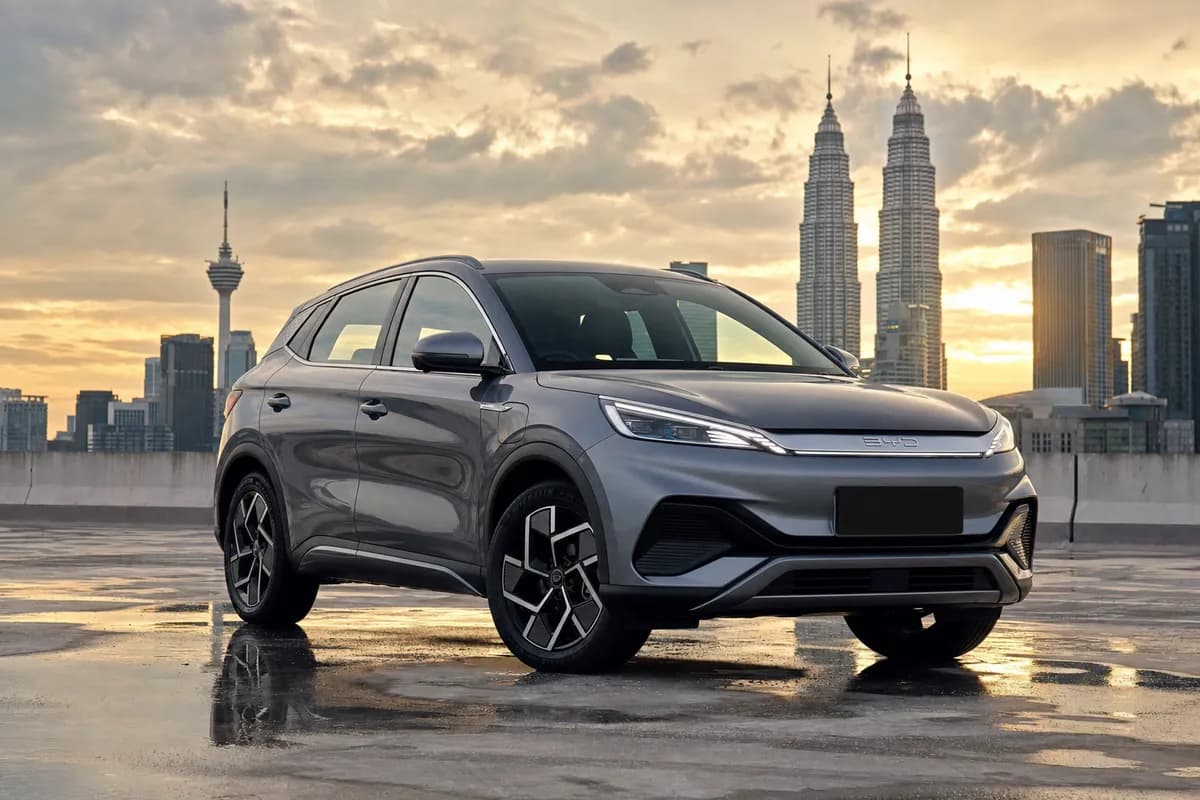
No company sits closer to this story than BYD. It is already one of the world’s largest EV and plug-in hybrid makers, with products ranging from the Dolphin hatchback and Atto 3 crossover to the Seal sedan and Seagull city EV. In global markets, BYD’s appeal is simple: strong vertical integration, in-house batteries, and pricing that traditional automakers struggle to match.
That is why the BYD Mexico EV strategy keeps drawing attention. Mexico has become a critical North American automotive base, with established supplier networks, lower manufacturing costs than the U.S., and USMCA trade links. If BYD or another Chinese automaker could assemble vehicles there with enough regional content, it could create a pathway to sell into North America that looks very different from a direct China export model.
But there are major catches. First, U.S. policymakers have become more vocal about preventing Chinese automakers from using Mexico as a back door into the American market. Second, local assembly alone does not solve battery sourcing, software-security concerns, or political opposition. Third, any plant decision takes time, and a 2027 sales launch would require fast execution.
BYD has signaled long-term interest in manufacturing expansion outside China, and Mexico remains strategically logical. Still, a Mexican-made BYD sold openly in U.S. dealerships by 2027 is far from certain. The more realistic near-term outcome may be Mexico serving local and Latin American demand first, while BYD studies whether the U.S. climate becomes more workable.
If BYD did reach U.S. buyers, the pricing impact could be dramatic. In overseas markets, cars like the Dolphin and Atto 3 have often undercut rivals from Volkswagen, Hyundai, and Tesla on equipment-per-dollar. That is exactly why legacy automakers and trade officials are paying so much attention.
MG and Geely have other options: Europe, legacy brands, and brand camouflage
BYD is not the only company with a route map. The more interesting question for MG and Geely US entry is whether brand structure gives them flexibility that pure-play Chinese nameplates lack. In some cases, it does.
MG is owned by SAIC, but the badge still carries historic recognition in Western markets. Today’s MG lineup in Europe includes EVs like the MG4, one of the more credible affordable electric hatchbacks outside the U.S. market. The MG4 has earned attention for delivering useful range, modern packaging, and competitive pricing in a segment where American buyers still have limited low-cost options.
That does not mean the MG badge can simply walk back into the U.S. as if trade barriers do not exist. If the vehicle is made in China, the tariff problem remains. But MG illustrates how a familiar non-Chinese-facing brand could be used in a future entry strategy if manufacturing shifts to a friendlier location or if a U.S. partnership emerges.
Geely has even more pieces on the board. It controls or holds major stakes in brands and platforms tied to Volvo, Polestar, Lotus, Zeekr, and Lynk & Co in various global arrangements. That gives Geely multiple ways to place technology, vehicles, or architectures into Western markets without always leading with a Chinese domestic brand identity.
- MG / SAIC: strongest play is an affordable mainstream EV brand if manufacturing can move or localize.
- Geely: strongest play is platform-sharing, licensing, or using affiliated brands already known in the U.S.
- BYD: strongest play is scale and cost leadership, especially if assembly outside China becomes viable.
Polestar is a useful example of how this can work in practice, even if it is not a template every automaker can copy. The company has shifted some production strategy toward the U.S. and South Korea to reduce exposure to trade friction. That does not erase every policy risk, but it shows that manufacturing location now matters as much as brand origin.
Why partnerships may be more likely than a direct Chinese-brand launch
The least dramatic route may also be the most plausible one. Instead of opening hundreds of U.S. dealers under a Chinese marque, an automaker could supply a vehicle platform, battery system, or complete vehicle to a Western partner. American buyers might end up driving Chinese-developed EV hardware without seeing a Chinese badge on the hood.
This would not be unprecedented. The global auto industry already relies on contract manufacturing, shared platforms, and cross-border component sourcing. In an EV market under cost pressure, a legacy automaker with a weak small-car business could see value in licensing a ready-made low-cost architecture rather than spending billions to develop one alone.
That is where 2026 EV tariffs and trade policy become less about one border and more about industrial strategy. Washington wants domestic and allied-country manufacturing growth, but automakers want cheaper EVs fast. Those two goals can align if Chinese firms supply know-how or components indirectly, though that path will face its own regulatory review.
Watch for these signals over the next 12 months:
- Mexico plant commitments from Chinese automakers or suppliers.
- Joint-venture announcements with established U.S. or European brands.
- Battery licensing deals that separate cell chemistry from vehicle branding.
- Production shifts to Europe, Mexico, Southeast Asia, or North America.
- U.S. policy updates on connected vehicles, software, and origin rules.
What this could mean for affordable electric cars in 2027
For consumers, the appeal is obvious. The U.S. still has a glaring shortage of truly affordable EVs. In June 2026, buyers looking below roughly $30,000 before incentives still face thin choices, limited inventory, or models with compromises on charging speed, size, or range.
That is where Chinese automakers could be disruptive if they find a compliant path in. Overseas, companies such as BYD, SAIC/MG, and Geely-linked brands have shown they can build EVs that feel mainstream rather than stripped-down. In other words, the value story is not just low price. It is low price with acceptable range, modern interiors, and competitive tech.
Consider the gap in the current U.S. market. The Chevrolet Equinox EV has pushed lower-price messaging, and Tesla has cut prices repeatedly, but the sub-$25,000 EV promised for the mass market still remains elusive. Models like the BYD Seagull or MG4 are exactly the kind of vehicles that would reset expectations if they could be sold here at anything close to their global-market positioning.
If Chinese EV makers reach the U.S. by 2027, the biggest change may not be brand prestige. It will be price pressure on every automaker trying to sell entry-level EVs.
That does not mean American buyers should expect a flood of bargain imports next year. The likely first wave, if it comes, will be narrow and selective. Think pilot programs, partner-branded vehicles, localized assembly, or premium-adjacent entries from Geely-linked brands before a true low-cost invasion.
Verdict: 2027 is possible, but not through the front door
The headline answer is yes, Chinese EVs in the US 2027 is a realistic possibility. But not in the simple way many shoppers imagine. June 2026 trade pressure has made direct imports from China commercially and politically toxic, so the path now runs through Mexico, non-Chinese brand umbrellas, localized production, or deep partnerships.
BYD remains the company to watch because of its scale and cost advantage. MG has brand familiarity and an affordable EV lineup that fits a gap in the U.S. market. Geely may have the most flexible toolkit of all thanks to its global brand network and platform reach.
For buyers, the takeaway is straightforward. If these companies break through, they could bring the strongest competitive push yet for affordable electric cars 2027. If they do not, U.S. shoppers will likely keep waiting longer than expected for the low-cost EV market to become truly mainstream.
Affiliate disclosure: This article contains affiliate links. RevvedUpCars may earn a small commission on qualifying purchases at no extra cost to you.