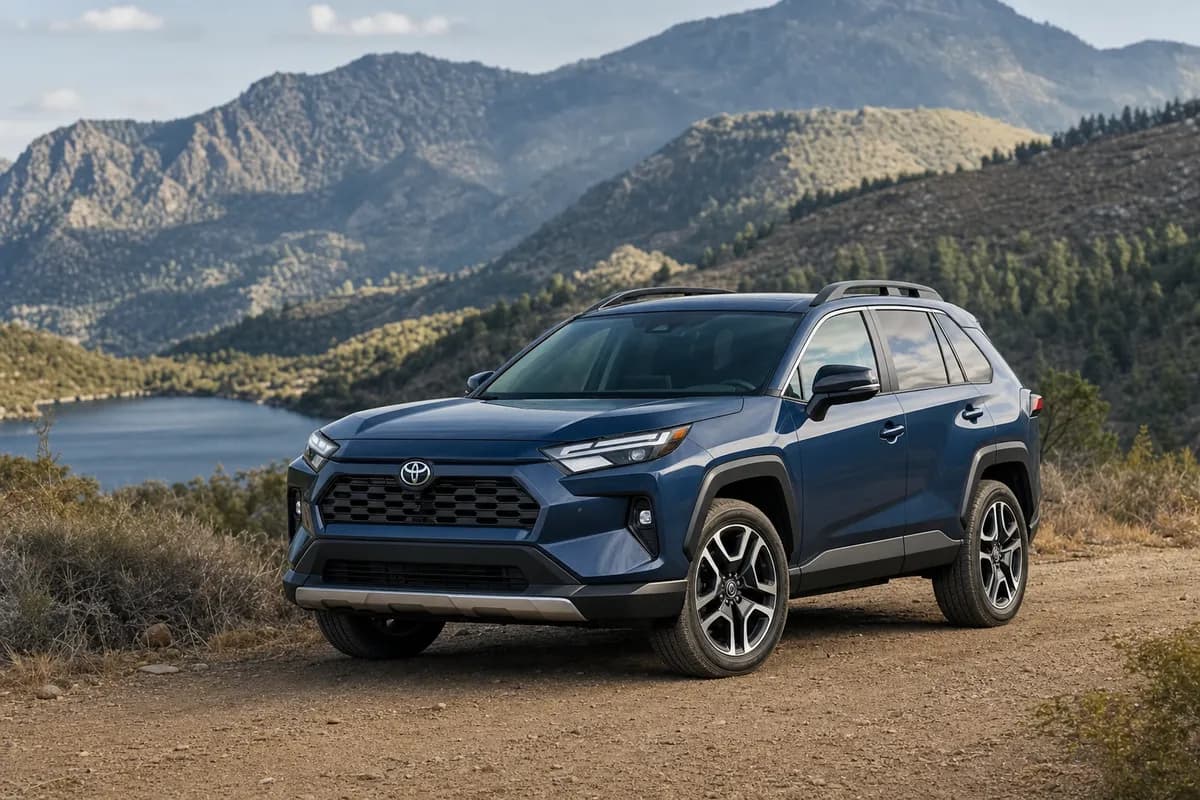
The 2026 Toyota RAV4 tightens the formula with a new standard hybrid, smarter tech, and fresh safety upgrades. Here’s what that means versus CR-V Hybrid and CX-5.
Toyota didn’t reinvent the RAV4 for 2026. It did something smarter: it tightened the screws on the best-selling compact SUV in America and attacked the exact areas where rivals were gaining ground. The question is whether standard hybrid power, better tech, and upgraded safety are enough to keep the 2026 Toyota RAV4 on top against a sharper Honda CR-V Hybrid and a more premium-feeling Mazda CX-5.
The Big Change: Hybrid Power Goes Mainstream
The headline for this 2026 Toyota RAV4 first drive is simple: Toyota has made electrification the center of the lineup, not a niche trim for mileage obsessives. In a segment where buyers want lower fuel bills without the hassle of plugging in, that matters more than another fake skid plate package.
The standard setup is now Toyota’s latest hybrid system, built around a 2.5-liter four-cylinder and electric motor assist. Output lands around the 230-hp mark depending on drivetrain, which puts the Toyota RAV4 hybrid 2026 right in the thick of the class. That is enough muscle for easy merging and relaxed passing, and it avoids the rubber-band misery that still infects some hybrid crossovers.
On the road, the RAV4’s hybrid calibration feels more polished than before. Throttle response is cleaner off the line, the engine doesn’t flare as obnoxiously under load, and low-speed transitions between gas and electric operation are smoother. It still won’t fool anyone into thinking it’s a turbocharged German wagon, but it no longer feels like the powertrain is arguing with itself.
Toyota’s estimated fuel economy should keep the RAV4 near the top of the segment. Expect figures in the neighborhood of the outgoing hybrid’s 39 mpg combined, which gives it a real-world edge over many non-hybrid compact SUVs and keeps pressure on the CR-V Hybrid, which currently sits at up to 40 mpg combined in front-drive form. The difference is that Toyota is making hybrid efficiency the default answer, not the upsell.
- 2026 Toyota RAV4 Hybrid: about 230 hp, roughly high-30s mpg combined
- Honda CR-V Hybrid: 204 hp, up to 40 mpg combined
- Mazda CX-5: naturally aspirated 187 hp or turbo 256 hp on premium fuel, with lower fuel economy
If your priority is punchy acceleration, the turbocharged CX-5 still has a stronger right hook. If your priority is balanced, everyday efficiency with zero drama, the RAV4 remains the smarter buy.
How It Drives: Better Manners, Same No-Nonsense Character
The RAV4 has never been the class poet. It has been the class appliance, and I mean that as praise. For 2026, Toyota hasn’t transformed it into a canyon carver, but it has made the chassis feel tidier and more composed in the places owners actually notice.
Ride quality is improved over broken pavement, with less thump over sharp edges and a calmer body over expansion joints. Steering remains light and accurate rather than rich with feedback, but that suits the mission. You point it, it goes there, and it doesn’t ask for applause.
Noise isolation is also better, which matters because the outgoing RAV4 could sound cheap on coarse highway surfaces. The new one does a better job muting tire roar and engine racket, especially when the hybrid system is loafing around town. It still isn’t as hushed or as polished as a top-trim CR-V Hybrid, but the gap is smaller now.
This is also where the RAV4 vs Mazda CX-5 fight gets interesting. The Mazda is still the driver’s choice, with more communicative steering and a richer cabin feel. But the Toyota counters with more usable interior packaging, a more efficient standard powertrain, and controls that don’t feel like they were designed to win a minimalist art prize.
Infotainment Finally Feels Current
The old RAV4’s cabin worked well enough, but its tech started to feel like Toyota was coasting on reputation. For 2026, the new infotainment system is one of the most meaningful upgrades. The interface is faster, the graphics are cleaner, and the menu structure finally makes sense without requiring a blood oath.
A larger central touchscreen is now the focal point, and wireless Apple CarPlay and Android Auto are integrated cleanly. Voice commands respond quicker, over-the-air updates keep the system fresh, and the available digital instrument cluster does a much better job surfacing navigation, energy-flow, and safety data. It’s not revolutionary, but it is no longer behind the class.
Crucially, Toyota has not deleted usability in the name of trendiness. Physical controls remain for the functions people use constantly, like climate adjustments and drive-related settings. That alone gives the RAV4 a practical edge over rivals that insist every task should involve poking a glossy screen while bouncing over potholes.
- What’s improved for 2026:
- Faster infotainment responses
- Larger touchscreen and available upgraded digital cluster
- Cleaner wireless smartphone integration
- Better voice control and over-the-air update capability
- Retention of key physical controls
Against the Honda CR-V Hybrid, Toyota’s new software closes an important gap. Honda’s cabin has been one of the most user-friendly in the segment, but the updated RAV4 now feels more modern without becoming annoying. That is harder than it sounds.
Safety and Space: Toyota Tightens the Family-SUV Brief
Toyota knows exactly why people buy RAV4s. They buy them because they want one car to handle school runs, Costco raids, road trips, bad weather, and the occasional dirt parking lot without complaint. So the 2026 updates also lean hard into safety and family usability.
The latest Toyota Safety Sense suite brings better detection for pedestrians and cyclists, more natural lane-centering behavior, improved adaptive cruise control, and quicker warning logic in dense traffic. These systems matter less in a spec sheet than in real life, where clumsy calibration can make a car feel like it’s being supervised by an anxious intern. The new setup feels smoother and less intrusive.
Interior space remains one of the RAV4’s quiet strengths. Rear-seat room is competitive, cargo space is generous, and the boxy profile still pays off when you’re loading strollers, luggage, or flat-packed furniture. The Mazda CX-5 simply can’t match the Toyota here, and while the CR-V remains a packaging champ, the RAV4 is right in the fight.
Material quality has also improved, though not enough to dethrone Mazda for cabin richness. The RAV4’s interior still favors durability over elegance, and frankly that’s the correct call for this audience. If you want your crossover to feel like a boutique hotel lobby, buy the Mazda. If you want it to survive children, dogs, and daily life, the Toyota makes a stronger case.
RAV4 vs Honda CR-V Hybrid vs Mazda CX-5: Which One Should You Buy?
This is the heart of the 2026 Toyota RAV4 review. The compact SUV class is no longer full of soft targets. The CR-V Hybrid is refined, spacious, and impressively efficient. The CX-5 is still the one enthusiasts recommend when they’re trying to sneak a little joy into a practical purchase.
But the updated RAV4 threads the middle better than either of them. It is more efficient than the Mazda, more rugged in character than the Honda, and now much closer to both in tech and refinement. That balance is exactly why Toyota sells these things by the truckload.
- Buy the 2026 Toyota RAV4 if: you want the best all-around blend of efficiency, practicality, resale value, and easy ownership.
- Buy the Honda CR-V Hybrid if: you prioritize ride polish, a particularly airy cabin, and a slightly more refined on-road feel.
- Buy the Mazda CX-5 if: you care most about steering feel, upscale ambiance, and available turbo punch over fuel economy.
The verdict is blunt: yes, these updates keep the RAV4 ahead. Not because it suddenly became exciting, but because Toyota fixed the exact weak spots that gave rivals an opening. The 2026 Toyota RAV4 first drive shows a compact SUV that is smarter, slicker, and more convincing where mainstream buyers actually live.
No, it still isn’t the most fun option. No, it still won’t charm you like a Mazda or soothe you like a Honda. But as a complete package, the Toyota RAV4 hybrid 2026 remains the one to beat, and that should worry every other brand in the segment.
Affiliate disclosure: This article contains affiliate links. RevvedUpCars may earn a small commission on qualifying purchases at no extra cost to you.