Midsize Raptor, ZR2, and TRD Pro owners are building street-friendly trail rigs with smarter tires, skid plates, and suspension upgrades.
The hottest truck scene right now is not built around giant lifts, 40-inch tires, or rooftop tents stacked to the moon. It is built around midsize pickups that can hit a rocky trail on Saturday, then cruise to work Monday without droning tires, blinding lights, or a sketchy alignment.
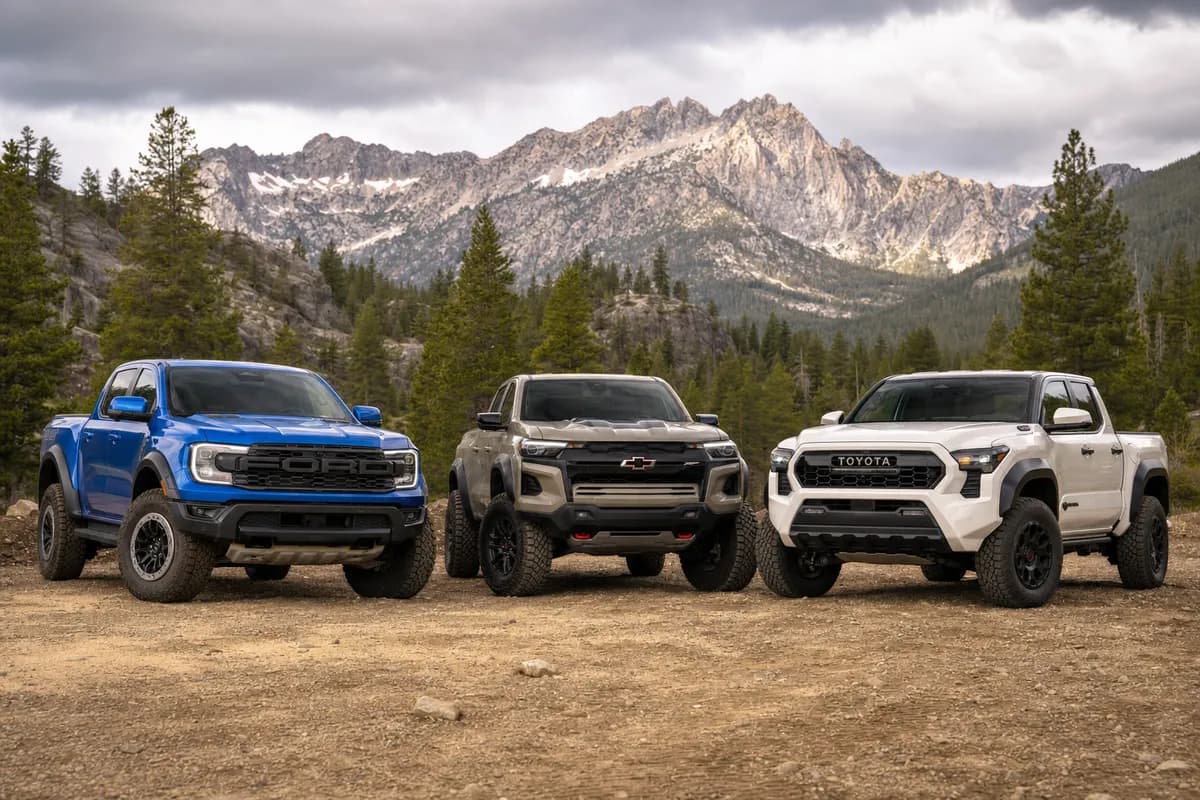
That shift is why owners of the 2026 Ford Ranger Raptor, 2027 Chevrolet Colorado ZR2, and 2026 Toyota Tacoma TRD Pro are forming a new kind of midsize off-road truck community. These are drivers who want capable, legal, DIY-friendly upgrades and the satisfaction of doing their own maintenance at home.
Why the Midsize Crowd Is Growing Fast
There is a practical reason these trucks are connecting with enthusiasts. Modern midsize off-road trims now come from the factory with the expensive hard parts already handled: locking differentials, serious dampers, underbody protection, terrain modes, and usable tire clearance.
The 2026 Ford Ranger Raptor rolls in with a twin-turbo 3.0-liter EcoBoost V6, Fox Live Valve shocks, and a wide-track setup that used to require deep aftermarket money. The 2027 Chevrolet Colorado ZR2 keeps its reputation for balanced trail performance with Multimatic DSSV dampers, front and rear lockers, and strong underbody protection. The 2026 Toyota Tacoma TRD Pro brings the latest hybridized powertrain, upgraded suspension, and Toyota’s massive owner support network into the mix.
That factory capability changes the mod culture. Instead of starting from a basic truck and trying to fix everything, owners are fine-tuning an already excellent package. That leads to smarter upgrades, fewer bad ideas, and more driveway wrenching.
- Lower buy-in than full-size builds: tires, brakes, and suspension parts usually cost less.
- Better daily manners: easier to park, lighter on fuel, and less cumbersome in town.
- Less pressure to go extreme: owners can stay street-friendly and still be trail-capable.
- DIY access: these trucks still reward basic hand tools, jack stands, and a scan tool.
Tires, Skid Plates, and Suspension: The New Smart Upgrade Path
If you spend any time around owners discussing 2026 Ford Ranger Raptor mods or 2026 Toyota Tacoma TRD Pro upgrades, the conversation usually starts with tires. Not giant tires. Better tires.
The sweet spot for many of these trucks is still a 33-inch all-terrain, with some owners stepping to a mild 34 depending on wheel offset and trimming requirements. A quality all-terrain with a severe-snow rating gives better dirt traction, keeps road noise in check, and avoids the vague steering and fuel economy hit that comes from jumping too far into mud-terrain territory.
- Best street-friendly tire strategy: stick with an LT or reinforced P-metric all-terrain from proven lines like BFGoodrich KO3, Falken Wildpeak A/T4W, Nitto Ridge Grappler, or Toyo Open Country A/T III.
- Avoid oversized wheel trends: 17-inch wheels usually offer better sidewall and trail compliance than larger-diameter show setups.
- Watch load ratings: heavy E-load tires can make a midsize truck ride harsh if you do not need that casing strength.
Skid plates are another area where this new community is getting smarter. Factory protection on the Ranger Raptor, ZR2, and TRD Pro is already decent, but owners are filling gaps rather than replacing everything for social media points. Transmission skids, transfer case protection, and fuel tank armor make more sense than bolting 300 pounds of steel under a truck that mainly sees forest roads.
Suspension upgrades have also matured. Instead of chasing six inches of lift, many owners are doing mild leveling, spring-rate tuning, or shock upgrades that preserve CV angles, steering feel, and factory calibration. A truck that tracks straight at 75 mph and still flexes on trail is worth more than one that looks aggressive in a parking lot.
The smartest builds are not the tallest builds. They are the ones that let the truck do what it was already engineered to do, just a little better.
How the Big Three Compare for DIY-Friendly Modding
- 2026 Ford Ranger Raptor: already highly developed from the factory, so the best mods are usually tires, recovery gear, lighting that stays legal, and targeted armor.
- 2027 Chevrolet Colorado ZR2: an excellent platform for incremental suspension tuning and protection upgrades, with strong enthusiasm around 2027 Chevrolet Colorado ZR2 DIY maintenance.
- 2026 Toyota Tacoma TRD Pro: likely the broadest aftermarket support, with owners leaning into practical accessories, onboard air, mild tire upgrades, and service-friendly add-ons.
Home Maintenance Is Becoming Part of the Culture Again
This is the part I like most. The new midsize truck crowd is not just buying parts. They are learning how to maintain the trucks they already have.
That matters because modern off-road trucks work hard. Even a stock weekend rig sees extra strain on tires, suspension bushings, brake components, and driveline fluids once dirt, water crossings, and washboard roads become part of the routine.
Basic home maintenance now sits right next to modification in the ownership conversation. Owners are sharing torque specs, alignment settings, scan-tool recommendations, and service intervals just as often as wheel-and-tire photos.
High-Value DIY Jobs for Weekend Trail Trucks
- Tire rotations every 5,000 to 7,500 miles
Aggressive all-terrains can cup fast on trucks with soft off-road suspension. Regular rotations protect your investment and preserve road manners.
- Frequent underbody inspections
After trail use, check skids, brake lines, shock mounts, sway bar links, and inner sidewalls. A five-minute inspection can catch expensive damage early.
- Differential, transfer case, and transmission fluid checks
If the truck sees towing, deep dust, or water, shorten your fluid service mindset. “Lifetime fluid” sounds great until you price a transfer case.
- Air filter and cabin filter service
Dusty trails load filters quickly. A restricted engine air filter hurts performance, while a packed cabin filter makes daily driving miserable.
- Alignment checks after tire or suspension changes
One of the biggest killers of street-friendly overlanding mods is a truck that wanders or chews the outer shoulder off a new tire set.
The good news is that these jobs are well within reach for most owners. With ramps, jack stands, a decent torque wrench, and a bidirectional scan tool, you can handle a surprising amount in the garage without turning the truck into a long-term project.
The New Rules: Legal, Useful, and Not Embarrassing
There is a clear enthusiast shift happening in 2026. Truck owners are getting tired of mods that look dramatic but make the vehicle worse to drive, harder to insure, and more likely to attract the wrong kind of attention.
That is why street-friendly overlanding mods are winning. The new goal is simple: improve function without ruining reliability, safety systems, or day-to-day usability.
- Keep lighting legal: use proper auxiliary light aiming and covers where required. Nobody wants to be that guy on a two-lane road.
- Respect suspension geometry: mild lifts and quality components beat stacked spacers and maxed-out angles.
- Choose real recovery gear: rated shackles, recovery boards, a compressor, and a full-size spare are more useful than cosmetic accessories.
- Skip fake beadlocks and ultra-low offsets: they add scrub radius, stress wheel bearings, and often create rubbing headaches.
- Protect payload and braking: every steel bumper, skid, rack, and drawer system adds up fast on a midsize truck.
That more disciplined approach is also building a better community. Owners are less focused on out-flexing each other online and more interested in sharing a tire size that does not rub, a skid plate that installs cleanly, or a maintenance tip that prevents a ruined weekend.
Verdict: These Trucks Are Creating a Better Kind of Enthusiast Scene
The Ranger Raptor, Colorado ZR2, and Tacoma TRD Pro hit a sweet spot that the truck world needed. They are capable enough from the factory to avoid the usual spiral into expensive, poorly planned mods, yet still open enough to reward thoughtful customization.
That is why this new midsize off-road truck community feels different. It is less about image and more about use. More driveway maintenance, fewer mall-crawler clichés. More carefully chosen tires, targeted skid plates, and suspension tuning that keeps the truck pleasant on pavement.
If you are shopping this segment or already own one of these rigs, the formula is pretty clear. Start with tires. Add protection where your trails demand it. Maintain it like you plan to keep it. That is how the best 2026 Ford Ranger Raptor mods, 2027 Chevrolet Colorado ZR2 DIY maintenance habits, and 2026 Toyota Tacoma TRD Pro upgrades are coming together right now.
And honestly, that is a healthier truck culture. The builds are more useful, the trucks stay more reliable, and the people behind them are getting their hands dirty again for the right reasons.
Affiliate disclosure: This article contains affiliate links. RevvedUpCars may earn a small commission on qualifying purchases at no extra cost to you.