Drivers are rejecting endless touchscreens—physical controls are returning to EV cabins for better usability, safety, and tactile feedback. Read why.
In this article
Here’s a wild thought: the hottest new feature in electric cars isn’t a 1,000-horsepower tri-motor setup or a 350 kW charging curve. It’s a volume knob.
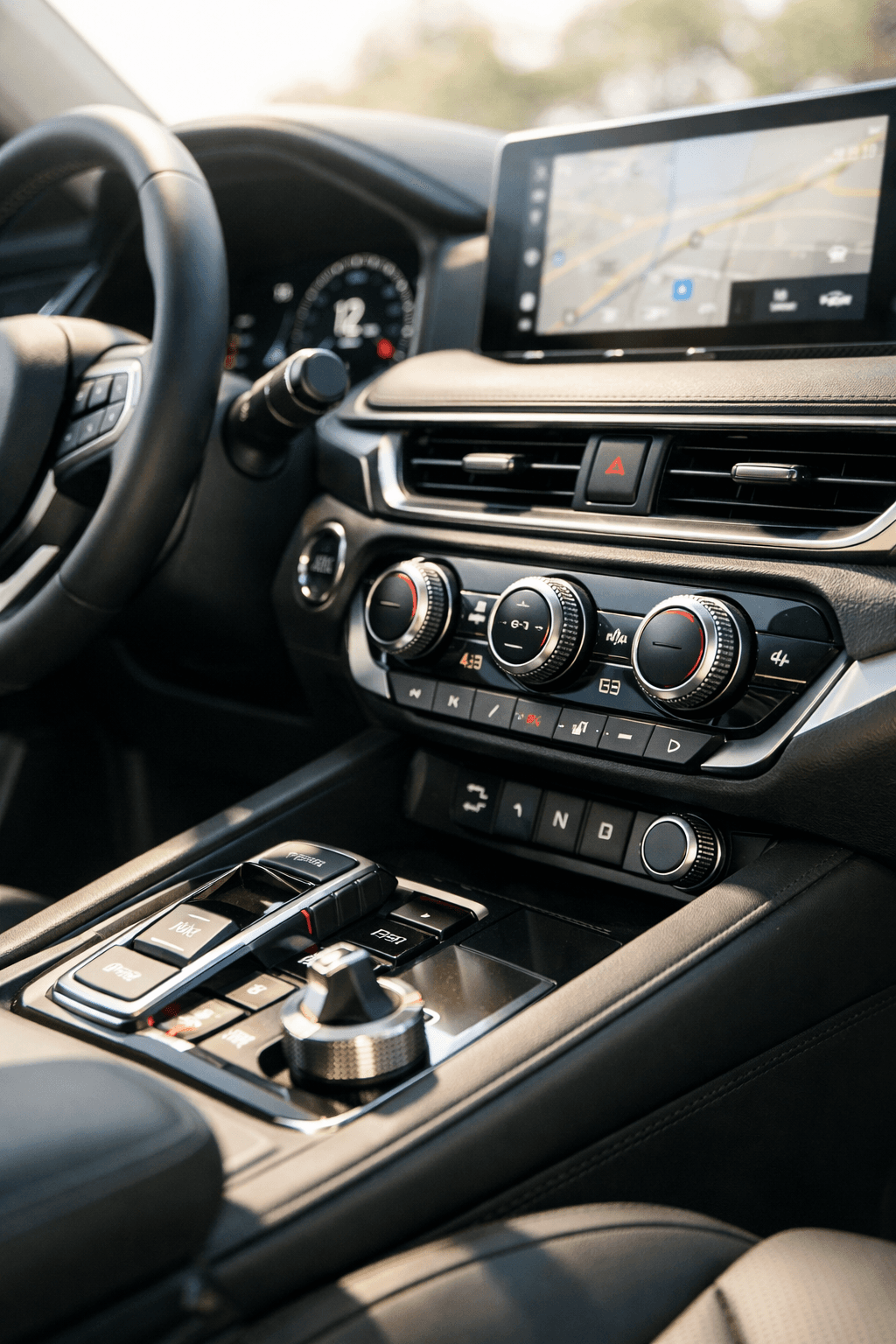
After a decade of glass slabs and haptic nonsense, EV interior buttons are making a comeback—and not quietly. Hyundai is adding them back. Volkswagen admitted it got it wrong. Even Tesla, the patron saint of the touchscreen backlash, has started sneaking in stalks and shortcuts again. Turns out, when you’re barreling down the motorway at 70 mph, you’d quite like to adjust the climate control without diving through three menus like you’re updating your iPhone.
This matters right now because 2025 and 2026 EVs—from the $38,000 Hyundai Ioniq 5 (check Hyundai’s official site for latest pricing) to the approximately $79,990 Tesla Model S—are redefining how we interact with cars. And buyers are voting with their fingers. They want tactility back.
The Touchscreen Backlash Is Real
We’ve been here before. Carmakers decided minimalism meant “delete every button and stick it in a screen.” It looked futuristic in the showroom, like something out of a concept car—because it was. But as we explored in Why Touchscreens Went Too Far in Cars, living with it daily is another story.
Volkswagen’s CEO publicly admitted customers hated the haptic sliders in the ID.4 and ID.3. Volvo, Mercedes, and even Ford have quietly reintroduced physical controls for key functions in their 2025 refreshes. When German executives start apologizing, you know something’s gone wrong.
And it’s not just grumpy journalists moaning into a pint. Euro NCAP now factors physical controls into safety scoring, penalizing overly screen-dependent interiors. The message is clear: if adjusting your heated seats requires a software update, you’ve lost the plot.
Why EV Interior Buttons Actually Make Sense
Here’s the irony: electric cars are technologically complex but mechanically simple. That should free designers to focus on ergonomics. Instead, they gave us dashboards that look like a misplaced iPad from 2014.
Physical buttons work because humans have muscle memory. You can adjust fan speed by feel. You can stab the demister without looking down. Throttle response might be instant in a 516-hp Kia EV6 GT (0–60 mph in 3.4 seconds), but your reaction time shouldn’t be slowed by menu hunting.
I’ve driven dozens of EVs over the past five years, from the Ford Mustang Mach-E (starting around $42,000) to the BMW i4 (approximately $52,000). The cars I remember fondly aren’t just the fastest—they’re the ones where I didn’t have to swipe left to turn on the fog lights.
Safety Isn’t a Buzzword—It’s Physics
At 60 mph, you’re covering 88 feet per second. Take your eyes off the road for two seconds to adjust the climate on a touchscreen, and you’ve traveled the length of a basketball court blind. That’s not “user experience optimization.” That’s basic physics.
Advertisement
The NHTSA has long warned about distracted driving, and while they don’t ban big screens, the industry knows the scrutiny is increasing. Carmakers can either preempt regulation with sensible design—or wait for a mandate.
Hot take: the obsession with all-screen interiors was never about safety or innovation. It was about cost-cutting. One big display is cheaper than dozens of switches, wiring, and validation cycles. Minimalism just happened to be a convenient marketing story.
Software Fatigue and the Tesla Effect
Tesla proved you could control nearly everything through a central screen. The Model 3, starting around $40,000, made it feel cool and disruptive. But even Tesla owners have grumbled about buried functions and phantom updates that move icons around like musical chairs.
We’ve already seen how software overreach can bite back in EV Software Recalls: The New Normal?. When your windshield wipers depend on code rather than a stalk, a glitch isn’t annoying—it’s dangerous.
Other brands followed Tesla like lemmings. Mercedes’ Hyperscreen looks spectacular in the 2026 AMG electric SUV (1,000+ hp and starting well north of $120,000), but even there, engineers have reinstated physical shortcuts for core functions. Because no one wants to reboot their car to adjust the mirrors.
Drivers Are Voting With Their Wallets
Look at the 2025 Hyundai Ioniq 5, Kia EV9 (starting around $56,000), and even the updated VW ID.4 (approximately $41,000). All have restored proper buttons for climate and audio. Sales have remained strong, and customer satisfaction scores improved after mid-cycle interior tweaks.
Meanwhile, brands that doubled down on screen-only interfaces are facing louder criticism on YouTube. Watch any Doug DeMuro quirks-and-features tour and count how often he says, “You have to go into the screen for that.” It’s never a compliment.
This isn’t nostalgia. It’s usability. The same way enthusiasts revolted against the four-cylinder C63—something we covered in Mercedes Misread Fans—buyers are pushing back on tech that feels clever in a boardroom but clumsy on the road.
The Middle Ground: Smart Hybrid Interfaces
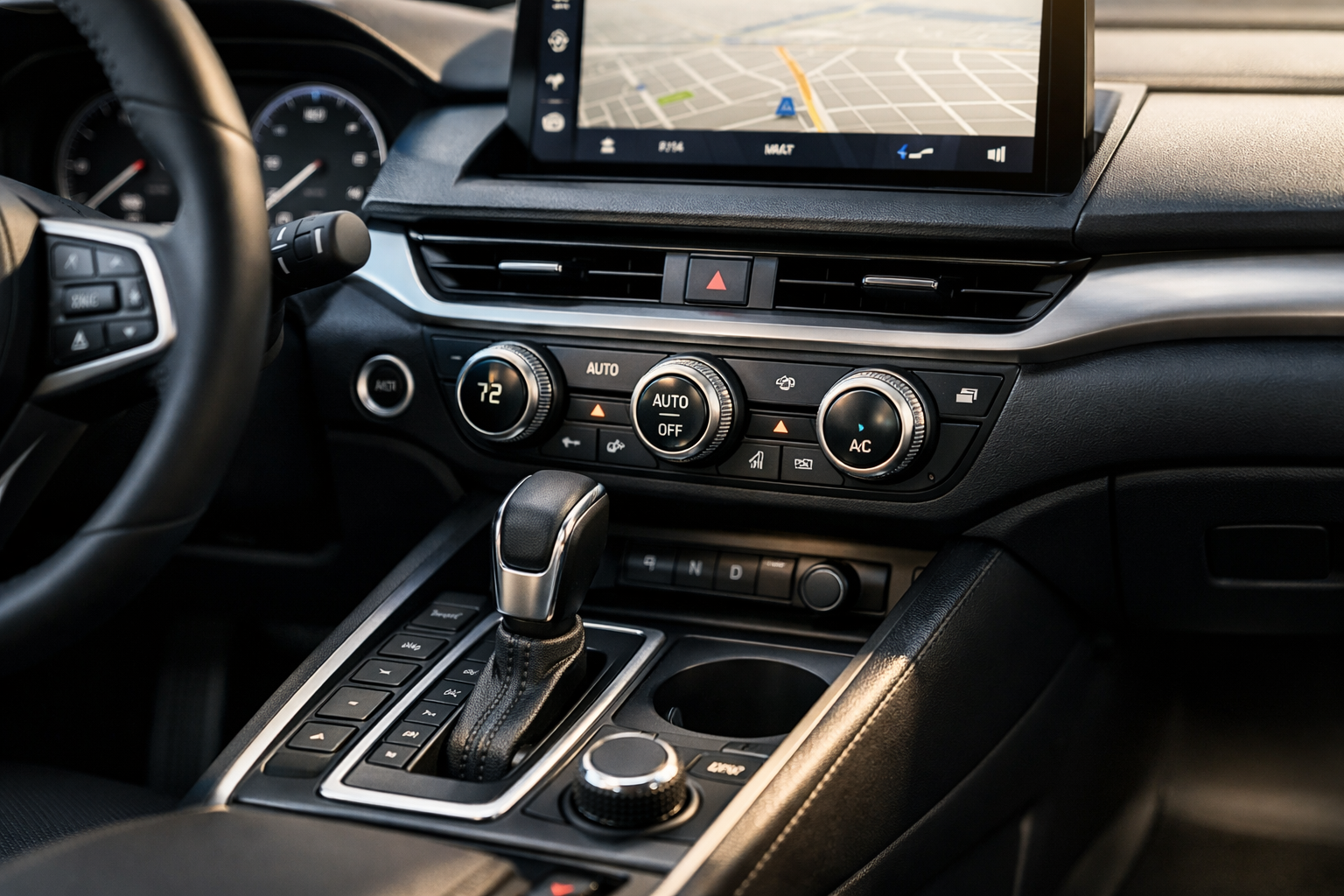
The best 2026 interiors blend digital flexibility with analog certainty. Think rotary volume knobs, physical temperature toggles, and programmable shortcut keys beneath a crisp 12- to 15-inch display. It’s not anti-tech; it’s pro-human.
Ferrari’s new EV interior direction—even in the wild Luce—keeps key tactile elements despite its Apple-inspired aesthetic. Because when you’re piloting 800+ horsepower, you need confidence, not a software tutorial.
And here’s the controversial bit: entry-level EVs need EV interior buttons even more than luxury ones. When you’re targeting first-time buyers at $35,000 to $45,000, the last thing they want is a learning curve that feels like setting up a smart fridge.
Cost, Complexity, and the Myth of “Premium” Screens
Carmakers sold us on the idea that bigger screens equal luxury. But a 17-inch display doesn’t make a car premium any more than a massive TV makes your living room classy. Materials, ergonomics, and feedback do.
Physical switches add marginal cost—yes. But they also add perceived quality and long-term durability. Capacitive sliders age like milk. A solid, damped rotary knob? That ages like a Porsche 911.
And let’s not ignore resale value. As EVs mature, buyers will differentiate between well-thought-out cabins and ones that feel like beta software. The touchscreen backlash isn’t a trend; it’s a correction.
Pros
Improved safety through reduced driver distraction
Better ergonomics and muscle memory
Higher perceived quality and durability
Greater accessibility for older or less tech-savvy drivers
Cons
Slightly higher manufacturing costs
Less “futuristic” showroom wow-factor
Potential clutter if poorly designed
RevvedUpCars Rating: 8.5/10
Best for: Drivers who actually drive and want their car to work with them, not against them.
The return of EV interior buttons isn’t regression—it’s evolution. The industry sprinted toward full digital minimalism and discovered the obvious: humans still have fingers. The winners in 2026 won’t be the brands with the biggest screens, but the ones that remember a car is a machine first and a tablet second.
Frequently Asked Questions
Why are EV interior buttons coming back?
Automakers found that full touchscreen controls increased driver distraction and frustrated owners. Brands like Volkswagen and Hyundai reintroduced physical controls in 2025–2026 models to improve safety and usability.
Are touchscreens less safe than physical buttons?
Touchscreens can require drivers to look away from the road longer. At 60 mph, two seconds of distraction equals 176 feet traveled. Physical buttons allow adjustments by feel, reducing visual distraction.
Which EVs still rely mostly on touchscreens?
Tesla models like the Model 3 and Model S still centralize most functions in a large screen, though recent updates have restored some physical controls such as stalks in certain markets.
Will physical controls increase EV prices?
Physical switches add some cost, but the impact is relatively small compared to battery and software expenses. Many EVs starting between $38,000 and $45,000 now include both screens and dedicated buttons.
Disclosure: This article may contain affiliate links. If you make a purchase through these links, we may earn a small commission at no extra cost to you. This helps support RevvedUpCars.com. Learn more.
The winners in 2026 won’t be the brands with the biggest screens, but the ones that remember a car is a machine first and a tablet second.
Affiliate disclosure: some links on this page earn us a commission at no extra cost to you.
Alex Torque is a lifelong gearhead who grew up in Detroit with motor oil in his veins. After a decade as a performance driving instructor at Laguna Seca and the Nurburgring, he traded his racing helmet for a keyboard—though he still logs track days whenever possible. Alex specializes in sports cars, supercars, and anything with forced induction. His reviews blend technical precision with the visceral thrill of pushing machines to their limits. When he’s not testing the latest performance machines, you’ll find him restoring his 1973 Datsun 240Z or arguing about optimal tire pressures. Alex believes that driving should be an event, not a commute.
Get the latest car reviews in your inbox
Join thousands of car enthusiasts. No spam, unsubscribe any time.




Comments
Leave a comment