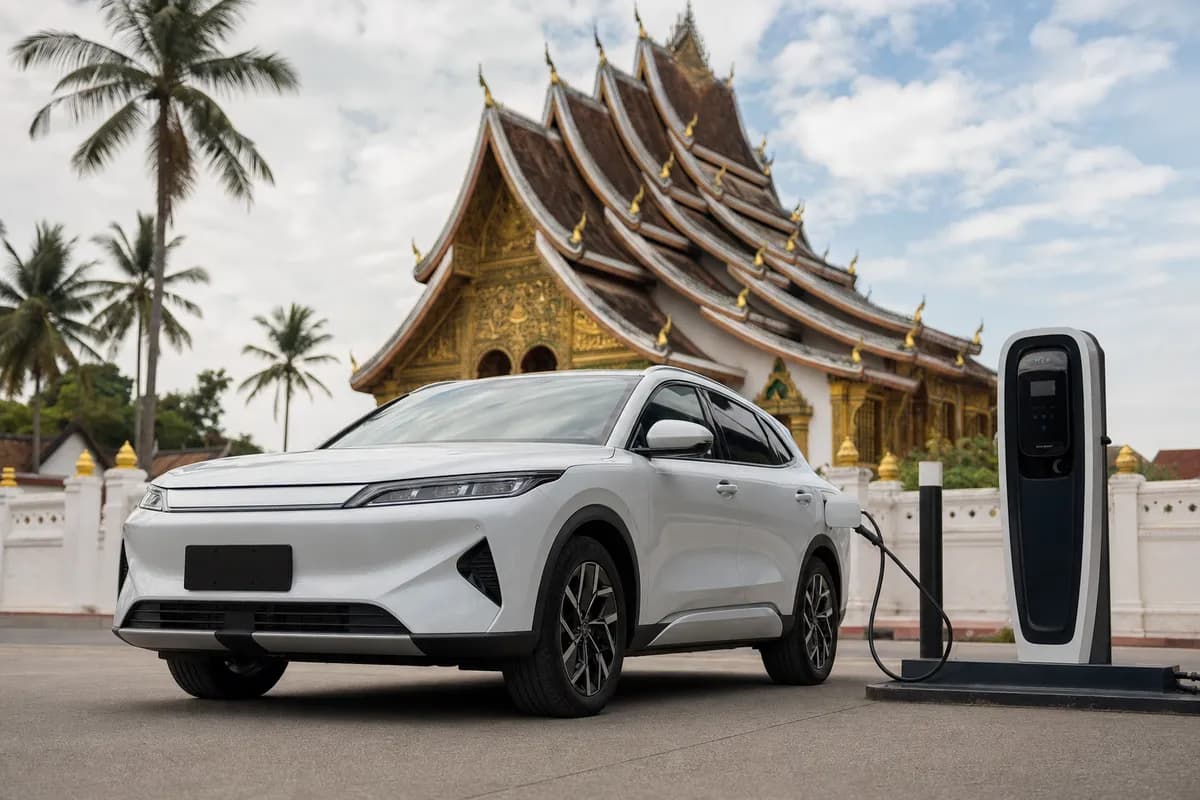
Laos suddenly stops new gas and diesel imports in May 2026—shaking Southeast Asia’s auto market and accelerating EV growth.
Laos has abruptly suspended imports of new gasoline- and diesel-powered vehicles in May 2026. For a small auto market, that might sound local. It is not.
The move lands at a moment when Chinese EV brands are pushing deeper into ASEAN, Japanese incumbents are defending hybrid-heavy lineups, and governments across Southeast Asia are trying to cut fuel-import bills. Laos may be small, but this Laos vehicle import ban 2026 could become a live test of how fast emerging market electrification can move once policy turns hard.
Why Laos’s import suspension matters beyond its size
Laos is not Thailand or Indonesia. It does not have the sales volume, factory base, or policy heft of ASEAN’s biggest auto markets. But that is exactly why the decision stands out: smaller markets are often expected to move slowly on electrification, not leap ahead by restricting new internal-combustion imports outright.
The policy, framed around suspending new gas and diesel vehicle imports, changes the market in one stroke. It does not instantly eliminate the existing fleet, and it does not mean all transport goes electric overnight. But it does tilt the economics of the new-vehicle market toward battery EVs, plug-in models, and possibly hybrids if exemptions are allowed under later guidance.
That matters because Laos shares several traits with other fuel-import-dependent emerging markets. High exposure to oil-price swings, limited foreign-exchange flexibility, and concentrated urban demand can make EV policy attractive faster than analysts expect. In that context, the gas diesel import suspension Laos is less an isolated rule and more a signal.
For automakers, the message is simple: waiting for large-market mandates is no longer enough. Smaller ASEAN markets may start using trade and import tools to force a faster product shift.
Who stands to gain and lose in 2026–2027
The immediate winners are brands with a ready EV supply pipeline into Southeast Asia. That starts with BYD and MG, two companies that have already shown they can scale quickly in price-sensitive ASEAN markets with compact crossovers and city-focused EVs.
BYD’s regional lineup gives it several angles. The Dolphin and Atto 3 fit urban and near-urban buyers, while the Seal and Sealion expand the brand upward where charging access is stronger and early adopters are willing to pay more. If Laos maintains its suspension through 2027, BYD is well placed to convert policy shock into share gains.
MG is similarly positioned. In Thailand, the MG4 Electric has helped establish the brand as a mainstream EV name rather than a niche player. If MG can replicate that formula in frontier ASEAN markets, the company could benefit disproportionately from the next round of policy-led demand.
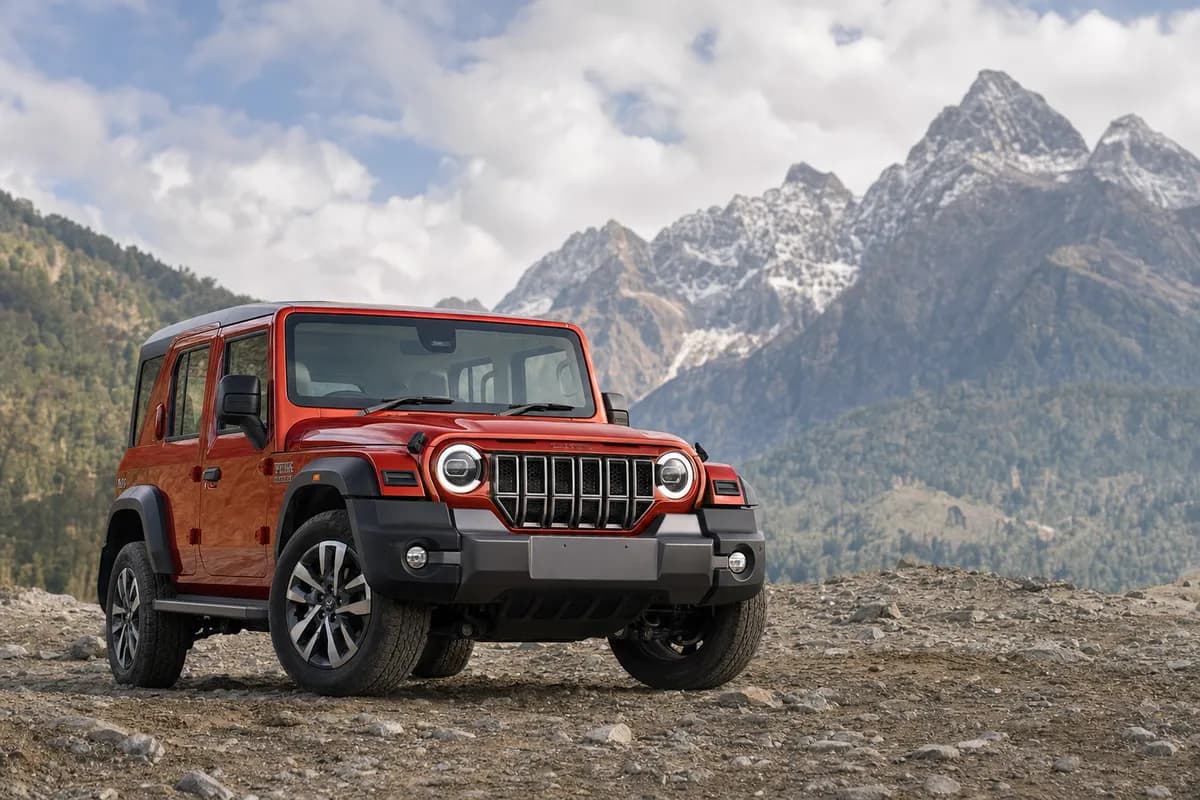
Japanese and U.S. legacy brands face a more complicated picture. Toyota, Isuzu, and Ford remain strong in pickup trucks, ladder-frame SUVs, and commercial vehicles across the region. Those are segments where full battery EV offerings remain limited, expensive, or poorly matched to rough-road and long-haul use cases.
- BYD: Best positioned if Laos prioritizes pure EV imports and keeps pricing competitive.
- MG: Strong chance to gain share with compact EVs if dealer support and charging confidence improve.
- Toyota: Well placed only if hybrids or plug-in hybrids receive favorable treatment; weaker if the policy remains strict on combustion-heavy imports.
- Isuzu: Most exposed in diesel pickup and commercial segments unless electric light-commercial products arrive quickly.
- Ford: Faces similar pressure in Ranger-led markets if EV truck supply into ASEAN stays limited.
That is why the 2026–2027 period matters so much for 2027 BYD MG sales ASEAN forecasts. If Laos proves that hard policy can shift demand even in a small, lower-income market, investors and planners will start asking which country could be next. Cambodia, Myanmar’s eventual post-crisis market, and smaller island economies would all come into view.
The charging question: can infrastructure keep up?
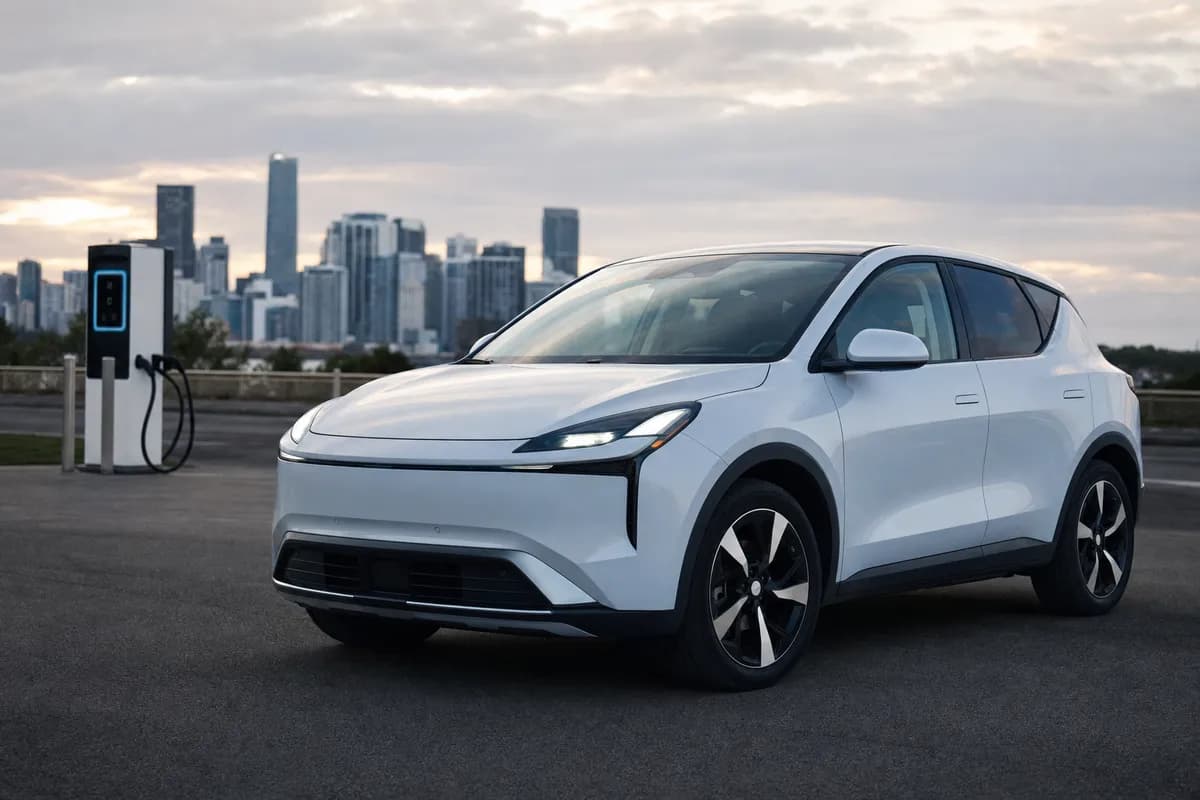
A policy shock only works if drivers can actually use the vehicles. Charging is the obvious constraint in Laos, where infrastructure is much thinner than in Thailand, Singapore, or Malaysia. But here again, the story is less straightforward than old assumptions suggest.
Laos has one structural advantage: its power system is closely tied to hydropower. That does not solve charger deployment, grid quality, or payment systems. It does, however, give the country a stronger low-carbon electricity story than many first-time EV markets can claim.
The near-term charging buildout is likely to follow predictable patterns. Capital will go first to the capital region, dealer sites, retail centers, hotels, and highway corridors with clear traffic demand. Fleet charging for taxis, delivery vans, and government vehicles could follow if procurement policy aligns with the import rules.
Across ASEAN, that could support a second-order effect. Infrastructure companies, utilities, and charging operators may start treating smaller markets as viable earlier-stage bets, especially if governments offer land access, import-duty relief on equipment, or utility-rate support.
- Urban AC charging will likely expand first because it is cheaper and easier to install.
- DC fast charging will matter most for intercity confidence and tourism flows.
- Dealer-backed charging could become the main trust-building tool in markets where public networks are still sparse.
- Fleet depots may electrify faster than private households because usage is predictable and economics are easier to model.
This is where Southeast Asia EV policy becomes more than vehicle regulation. It becomes an industrial and infrastructure signal. Once governments show they are serious, private capital often moves faster than expected.
What this means for automaker strategy across ASEAN
For automakers, Laos adds urgency to an existing regional split. Chinese brands are pushing battery EVs now, often with aggressive pricing and simpler messaging. Japanese incumbents still argue that hybrids, plug-in hybrids, and multi-pathway decarbonization better fit ASEAN’s uneven infrastructure.
In large markets, that debate can run for years. In a smaller market using import restrictions, the debate gets compressed. Product planning, homologation, dealer training, and spare-parts support all have to move faster because policy can suddenly pull forward the EV market by two or three years.
That creates three immediate strategic pressures. First, brands that lack affordable EVs undercut their own dealer networks. Second, brands with only premium EVs miss the mass market. Third, brands that rely too heavily on diesel pickups and SUVs risk losing relevance if similar rules spread.
- Accelerate low-cost EV launches: Compact hatchbacks and small crossovers are the easiest way into newly restricted markets.
- Localize or regionalize supply: Thailand, Indonesia, and eventually Vietnam become more important as export hubs for ASEAN EV demand.
- Protect commercial segments: Electric vans, small trucks, and work-focused pickups will become a priority if policymakers target fuel imports rather than emissions alone.
Toyota remains the most interesting company to watch. It has enormous brand trust across ASEAN and deep experience in hybrids, but a slower battery EV rollout than BYD or MG. If Laos-style measures spread, Toyota may need to adapt from a gradual transition story to a much more market-specific response.
Isuzu and Ford face an even sharper challenge because their regional strength is tied so closely to diesel utility vehicles. They still have time, especially if exemptions for commercial use emerge. But they no longer have the luxury of assuming small ASEAN markets will stay combustion-friendly by default.
Verdict: a small market just delivered a big warning
Laos alone will not decide the future of the ASEAN auto industry. Its market is too small for that. But the Laos vehicle import ban 2026 shows how quickly the rules can change when governments see electrification as an energy-security tool, not just a climate policy.
That distinction matters. In emerging markets, cutting fuel-import exposure can be a stronger political driver than emissions targets. Once that logic takes hold, EV adoption can jump ahead of income levels, charging maturity, and old industry forecasts.
The brands best positioned for 2026–2027 are the ones already selling credible, relatively affordable EVs into Southeast Asia. Right now, that favors BYD and MG. Toyota can still defend ground if policy leaves room for hybrids and if its EV rollout speeds up, while Isuzu and Ford look more vulnerable unless commercial electrification arrives quickly.
The broader lesson is clear: emerging market electrification is no longer a slow, linear story. Laos may be the latest example, but it is unlikely to be the last. For automakers planning ASEAN strategy, the next policy shock could come from another small market — and it may come sooner than expected.
Affiliate disclosure: This article contains affiliate links. RevvedUpCars may earn a small commission on qualifying purchases at no extra cost to you.