Buying 2026–2027 EVs now hinges on app experience, and JD Power’s satisfaction scores reveal who’s winning for Tesla, Rivian, Ford, Hyundai, and GM.
EV buying used to be a simpler math problem. Range, price, tax credits, and charging speed carried most of the decision. For 2026, that is changing fast, and JD Power’s latest owner-satisfaction data shows why.
The new battleground is the phone app, the charging stack behind it, and the software features owners use every day. That matters for buyers cross-shopping Tesla, Rivian, Ford, Hyundai, and GM vehicles for 2026 and 2027, because the best electric car is no longer just the one with the best spec sheet.
JD Power’s EV app scores show software is becoming a real purchase factor
JD Power’s 2026 U.S. OEM EV App Report found owner satisfaction rising across the industry, with the overall score climbing to 752 on a 1,000-point scale, up from 724 a year earlier. That is a meaningful jump. It suggests automakers are closing obvious gaps in mobile software, even if the leaders still hold a clear edge.
Tesla ranked first at 864, followed by Rivian at 865 in some reported breakdowns depending on category timing, with both brands well ahead of the mainstream field. In the broader competitive set, Hyundai scored 820, Kia 808, BMW 801, Mercedes-Benz 798, and Ford 790. GM’s brand-level results varied by division, but Chevrolet and Cadillac continued improving as Ultium-based vehicles expanded and app functionality matured.
The key point is not just who finished first. It is that JD Power EV app satisfaction 2026 data now tracks something buyers feel every day: whether the vehicle fits smoothly into their routine or adds friction to it.
That routine includes basics like checking state of charge, starting climate control, locating chargers, and confirming whether the vehicle is actually charging. Those tasks sound minor until one fails on a cold morning, during a road trip stop, or when the car is parked away from home.
Why the EV ownership experience now depends on the app as much as the car
Legacy automakers spent the first phase of the EV transition trying to catch up on battery range, DC fast-charging speed, and dedicated platforms. For 2026, many of those hardware gaps have narrowed enough that software quality now stands out more clearly. Buyers notice the rough edges faster because the expectations are higher.
The modern 2026 EV ownership experience is shaped by a handful of software jobs that happen constantly. If an automaker gets them right, ownership feels easy. If not, even a technically strong vehicle can feel unfinished.
- Remote charging controls: Start, stop, schedule, and monitor charging reliably.
- Route planning: Predict charging stops, battery arrival state, and charger availability with accuracy.
- Plug-and-charge integration: Reduce app switching and payment confusion at public chargers.
- Preconditioning: Warm or cool the battery before fast charging and the cabin before departure.
- Notifications: Alert owners when charging stops unexpectedly or when a target state of charge is reached.
- Vehicle status: Show locked/unlocked state, tire pressure, location, and software update progress.
This is where Tesla and Rivian built an early lead. Their apps generally feel like extensions of the vehicle, not separate utilities. Owners can handle core tasks quickly, and the link between route planning, charging, and energy prediction is usually tighter than what mainstream rivals have delivered.
Ford, Hyundai, and GM have improved, but they are still battling perception as much as software bugs. Buyers who had mixed experiences with earlier versions of FordPass, MyHyundai, or GM’s brand apps may not realize how much better these systems have become. That makes fresh owner-satisfaction data more relevant than old reputation.
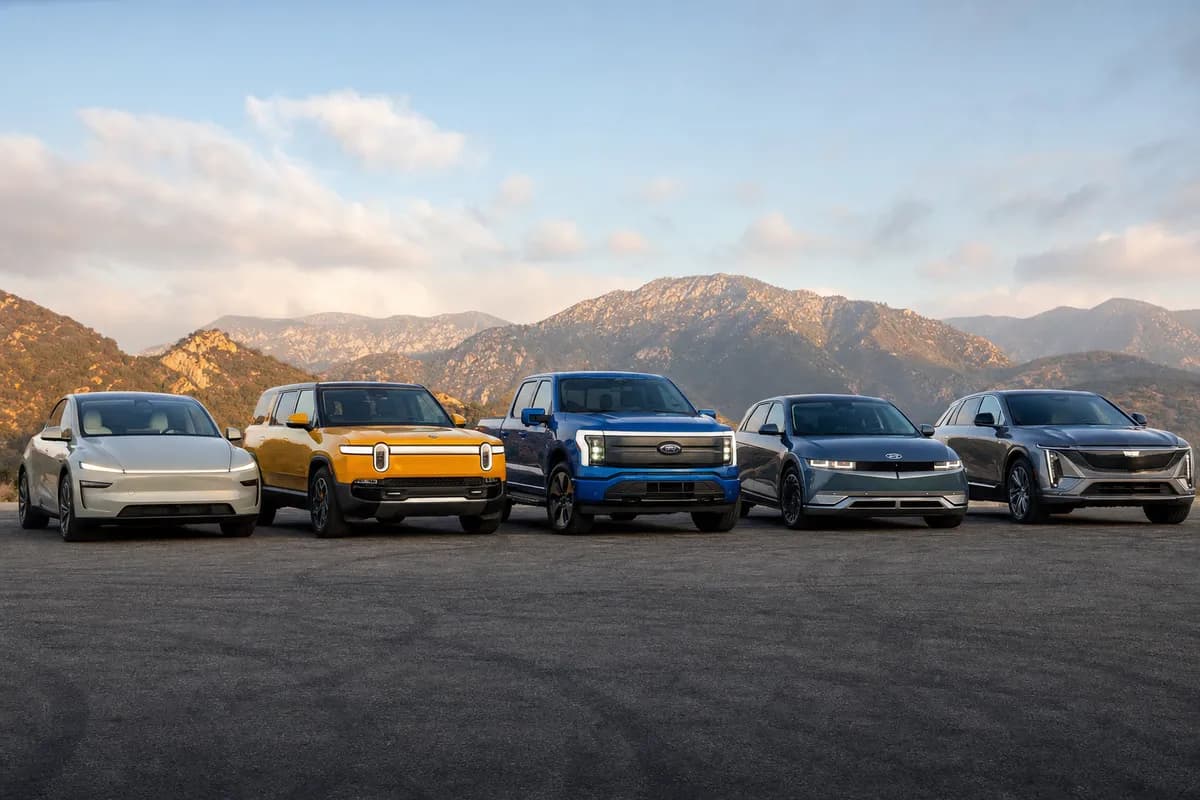
Tesla, Rivian, Ford, Hyundai, and GM: what buyers should watch in 2026–2027
For shoppers searching best EV apps Tesla Rivian Ford Hyundai GM, the answer depends on what matters most: polish, charging integration, or feature breadth. The leaders still look familiar, but the middle of the pack is getting more competitive.
Tesla
Tesla remains the benchmark for software cohesion. The app, in-car navigation, charger network integration, remote climate, live charging status, and over-the-air updates work as one system more often than not. For buyers considering a Model 3, Model Y, or refreshed Model S and Model X, that consistency is still a major ownership advantage.
Tesla’s real edge is not one feature. It is the low-friction way everything connects, especially around road-trip charging and energy forecasting. That matters more now that competitors can match or beat Tesla on individual hardware metrics in some segments.
Rivian
Rivian has become Tesla’s closest software peer in owner sentiment. Buyers looking at the R1T, R1S, and the incoming R2 are responding to a clean app experience, strong remote functions, and thoughtful energy planning. Rivian’s software reputation helps justify its premium positioning even as the wider market gets more crowded.
The challenge for Rivian is scale. Maintaining a high-satisfaction experience while expanding volume and product lines is harder than achieving it with a smaller installed base.
Ford
Ford is one of the most important brands to watch because it sells EVs into the mainstream, not just the premium niche. Mustang Mach-E and F-150 Lightning buyers rely heavily on FordPass for remote access, charging status, and trip support. The good news for Ford is that its software and charging experience have become materially better, particularly with broader access to Tesla’s Supercharger network via NACS adapters and future native ports.
The remaining issue is consistency. Ford can deliver a very good experience when route planning, charger compatibility, and app performance align. Buyers still report more variation than Tesla or Rivian owners do, and that gap matters.
Hyundai
Hyundai has some of the strongest EV hardware in the market, including the Ioniq 5, Ioniq 6, and upcoming larger electric crossovers on its E-GMP architecture. Fast charging and efficiency are real strengths. But for many buyers, the mobile app and connected services have lagged behind the quality of the vehicles themselves.
If Hyundai keeps lifting app usability, it could turn one of its weak points into a competitive asset by 2027. That is especially important because the company already has the ingredients buyers want: attractive designs, strong efficiency, and rapid DC charging.
GM
GM’s EV portfolio is broadening quickly with the Chevrolet Equinox EV, Blazer EV, Silverado EV, Cadillac Lyriq, Optiq, and Escalade IQ. That puts more pressure on the software stack to serve very different buyers at very different price points. A premium Cadillac owner and a value-focused Chevrolet owner both expect remote controls and charging guidance that work every time.
GM’s app experience has improved, and Google-based in-car software helps on navigation and voice functions. But the company still needs to prove that its full EV app remote charging and route planning experience feels seamless across brands, not just acceptable in isolated cases.
Charging integration is now the software feature that matters most
The most important electric car software features 2027 may not be flashy at all. They will be the ones that reduce uncertainty at public chargers. Owners do not just want a map of stations. They want confidence that the car can get there, that a charger is likely to work, and that billing will happen without extra steps.
This is why access to Tesla’s Supercharger network is only part of the story for Ford, GM, Hyundai, and others. Physical access helps. But the ownership experience depends on how well the app and the vehicle handle station discovery, battery preconditioning, live stall status, payment, and rerouting when a site is busy or offline.
JD Power’s data matters because it captures the customer side of that equation. A company can announce charging deals, adapters, and new digital features all year long. If owners still find the app confusing, unreliable, or slow, satisfaction scores will reflect it.
The EV leaders for 2026 are not just building better batteries. They are building better routines.
Verdict: buyers should treat app quality like a core spec
For 2026 and 2027 EV shoppers, the takeaway is simple: evaluate the app and software experience the same way you evaluate range, lease price, or cargo room. Test the remote features. Ask about route planning. Check how charging sessions are monitored and how often owners report failed commands or inaccurate battery estimates.
Tesla and Rivian still set the pace on software-led ownership satisfaction. Ford, Hyundai, and GM are improving and have a real chance to narrow the gap as charging integration gets better and apps become more mature. But the days when buyers could ignore the digital side of an EV are over.
The next phase of EV competition will be won in the quiet moments. Preheating the cabin from your phone. Finding a working fast charger on the first try. Getting home without wondering whether the route planner got the math wrong. That is why rising JD Power app scores matter, and why software now belongs near the top of every EV shopping checklist.
Affiliate disclosure: This article contains affiliate links. RevvedUpCars may earn a small commission on qualifying purchases at no extra cost to you.