Explore how community college auto programs train skilled technicians, support local garages, and fuel automotive careers. Learn how to enroll — read more.
In this article
The dirtiest secret in modern car culture isn’t that touchscreens are awful or that subscriptions are creeping into seat heaters—it’s that auto shop classes at community colleges are quietly saving your 2016 Civic from an early grave. While TikTok argues about fake exhaust notes, these programs are producing technicians who can actually diagnose a CAN bus fault without throwing parts at it like confetti. I’ve driven dozens of press cars that would be dead in a week without these people.
This matters right now because the average vehicle on U.S. roads is about 12.6 years old, repair costs are up roughly 20% since 2021, and dealerships are booked out like a Michelin-starred restaurant. If you like owning cars past the warranty—or heaven forbid, wrenching on them yourself—community college programs are the lifeline. And yes, they’re often better than the shiny manufacturer “academies” with more branding than substance.
Here’s the hot take: if automakers spent half as much money supporting community college labs as they do on ambient lighting, we’d have fewer unreliable cars and fewer angry owners. That’s not nostalgia talking; that’s hard-earned realism from watching techs fix problems engineers pretended wouldn’t exist.
Why Auto Shop Classes Matter More Than Ever
Auto shop classes aren’t about carburetors and grease-stained coveralls anymore; they’re about high-voltage safety, ADAS calibration, and software diagnostics. Modern cars from Toyota, Ford, and BMW are rolling data centers, and someone has to understand both the wrench and the laptop. Community colleges bridge that gap better than most private trade schools charging $40,000.
I’ve chatted with instructors who’ve worked on everything from a 2026 Silverado’s 6.2L V8 to Tesla drive units, and they’ll tell you the same thing: fundamentals beat buzzwords. When a YouTube creator like South Main Auto tears down a misdiagnosed problem, that mindset comes straight out of proper education. These programs teach thinking, not just tool usage.
Real-World Training Beats Corporate PowerPoints
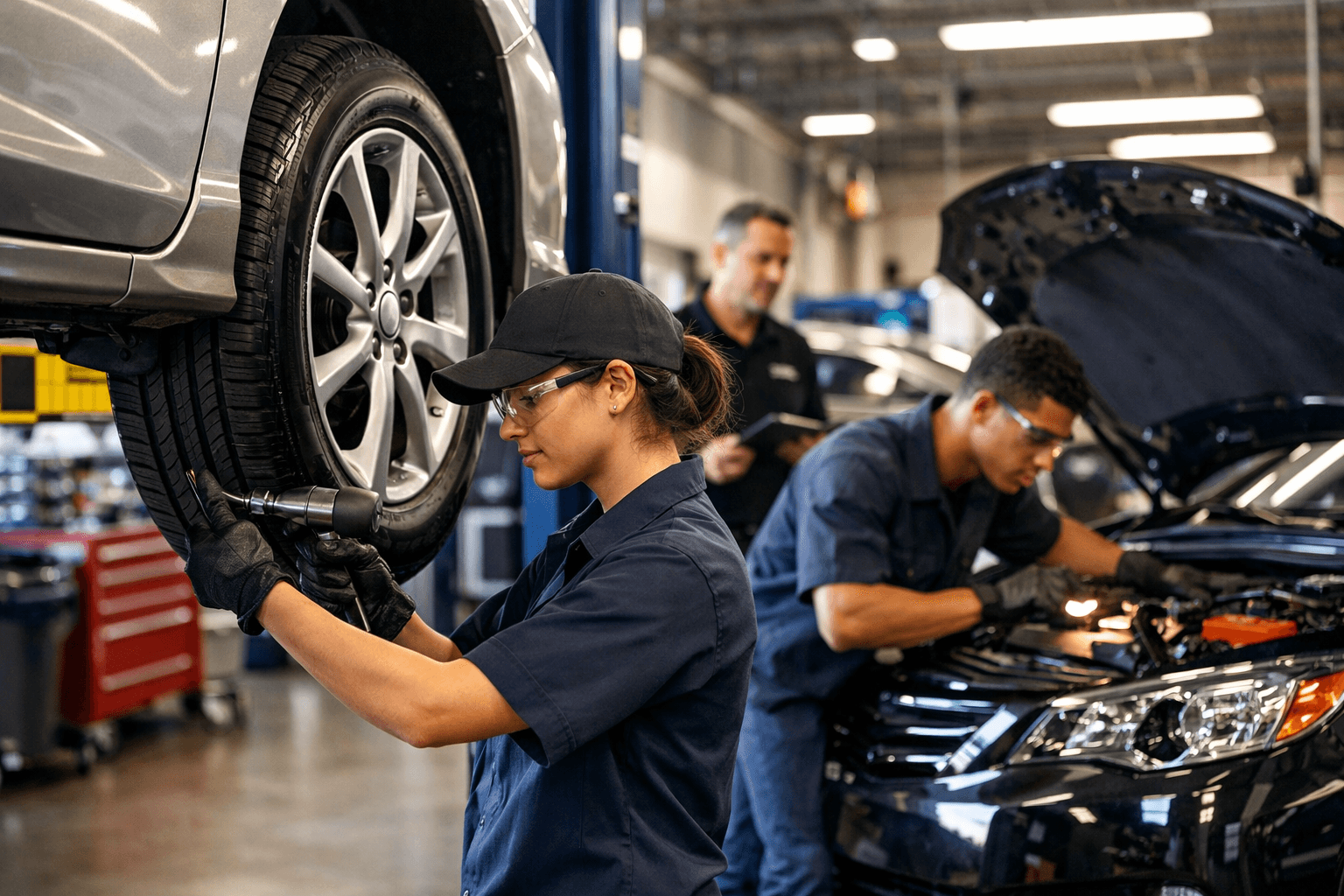
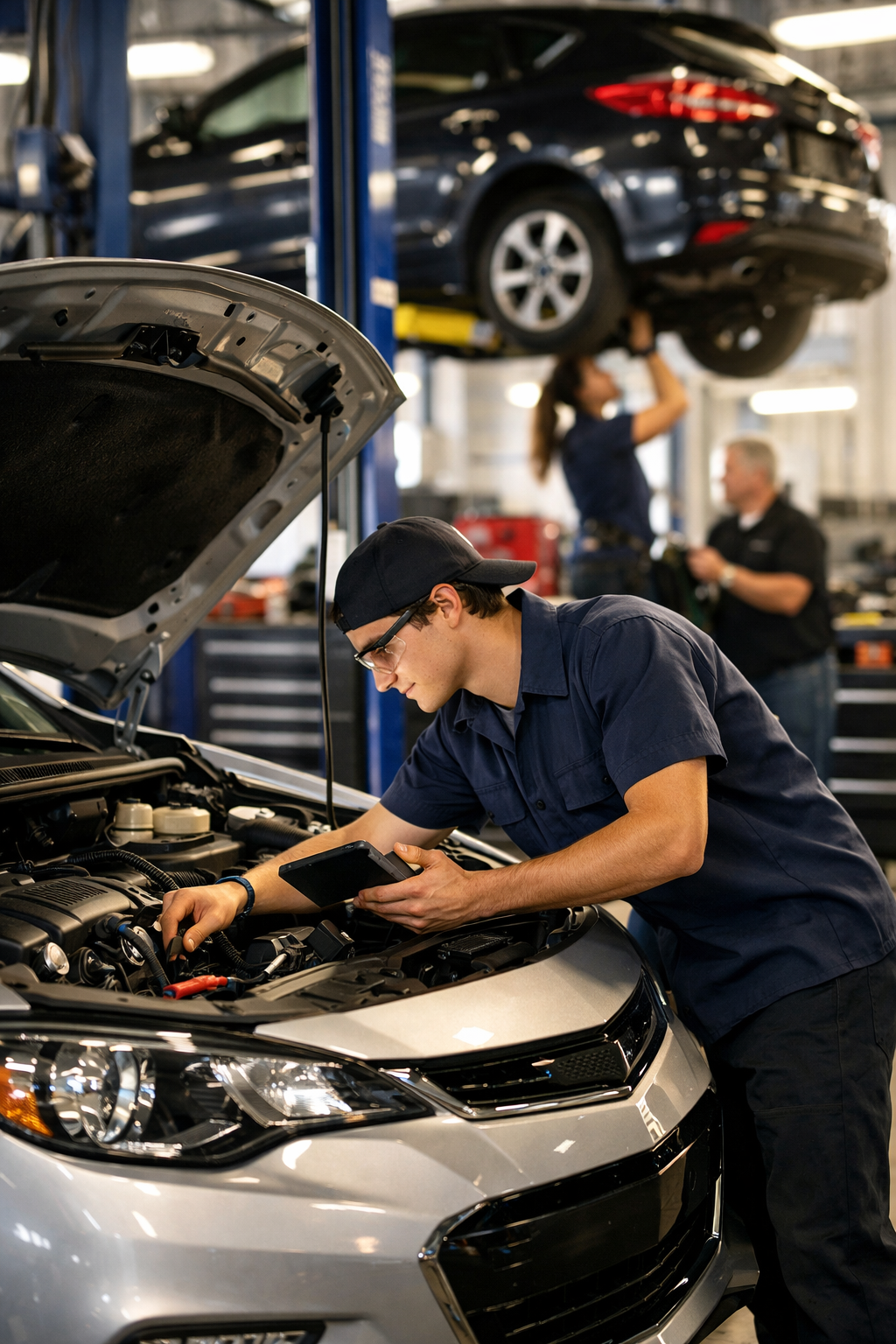
Walk into a good community college shop and you’ll see 2015–2025 vehicles with real problems, not sanitized training modules. Students are diagnosing misfires on a Hyundai Tucson, recalibrating radar on a Honda CR-V, and chasing parasitic drains on a BMW 3 Series. That’s infinitely more valuable than memorizing brand slogans.
Compare that to some manufacturer pipelines where everything is perfect until it isn’t, and suddenly the tech is lost. It’s the same corporate laziness I’ve criticized in our piece on how luxury creep hurts enthusiasts. Education should be robust, not curated for marketing.
Affordable Education, Serious Career Upside
Most community college automotive programs cost approximately $5,000–$10,000 total, depending on state subsidies and tools. That’s laughably cheap compared to private institutes, especially when entry-level techs can start around $45,000 a year and experienced diagnosticians clear $70,000–$90,000. Show me another two-year path with that ROI.
This is where automotive careers get interesting. Dealerships, independents, fleet services, and even OEM R&D departments are hiring from these programs. I’ve met grads who now work on prototype EVs while their friends are still paying off degrees that don’t lead anywhere.
Advertisement
Keeping Manuals, Old Cars, and Enthusiasm Alive
Here’s a controversial one: community college techs are the reason manuals haven’t completely died. Someone has to understand clutches, linkages, and human-controlled drivetrains, which we discussed in why manual trucks still matter. Without that knowledge base, everything becomes disposable.
If you own an older Subaru, Miata, or GTI, these graduates are your heroes. They’re the ones who won’t laugh when you ask to keep your 200,000-mile car alive because you actually like driving it. That passion feeds the enthusiast ecosystem more than any influencer giveaway.
The EV and Hybrid Reality Check
EVs didn’t kill car repair education; they made it smarter. Community colleges now teach high-voltage systems, battery diagnostics, and thermal management alongside traditional engines. That’s crucial when a used EV battery replacement can run $12,000–$20,000 if misdiagnosed.
OEMs love to pretend EVs are maintenance-free appliances, but talk to any real tech and they’ll laugh into their insulated gloves. Education keeps ownership affordable and safe, which is something glossy ads never mention.
Local Impact You Can Actually Feel
These programs don’t just create jobs; they stabilize local economies. Independent shops staffed by trained grads keep money in the community instead of funneling it to mega-dealer groups. It’s the same grassroots logic behind why we highlighted community college auto shop programs thriving nationwide.
As a car enthusiast, I care because it means better repairs, fairer prices, and fewer horror stories. As a human, I care because it’s education that works.
How to Spot a Good Program
Not all programs are equal, so do your homework. Look for ASE-aligned curricula, modern diagnostic equipment, and instructors with recent industry experience. If the shop floor looks frozen in 1998, walk away.
Check partnerships with local dealers or fleets, graduation placement rates above 70%, and tool access programs. For accreditation standards, ASE is the gold reference, while labor outlook data from the U.S. Bureau of Labor Statistics confirms demand isn’t slowing.
The Bottom Line for Enthusiasts
Auto shop classes at community colleges are the unsexy backbone of car culture. They keep your daily driver affordable, your project car alive, and the industry honest. Ignore them, and we end up with disposable cars serviced by undertrained hands.
Support them, enroll in them, or at least respect the techs who came through them. Without this pipeline, the future of driving enthusiasm is as bleak as a CVT pretending to be sporty.
Pros
Affordable education with strong job placement
Hands-on training with real vehicles and faults
Supports both ICE and EV expertise
Keeps local repair ecosystems healthy
Cons
Program quality varies by location
Facilities can lag without funding
Less marketing flash than private schools
RevvedUpCars Rating: 9/10
Best for: Anyone who wants affordable, practical car repair education that leads to real automotive careers.
Frequently Asked Questions
Are auto shop classes at community colleges worth it?
Yes. Programs typically cost $5,000–$10,000 and lead to jobs paying $45,000–$90,000 annually, depending on experience and specialization.
Do community college programs teach EV repair?
Most modern programs include high-voltage safety, hybrid systems, and EV diagnostics, covering vehicles from 2015–2026 model years.
How long does car repair education take?
Certificates can take 12 months, while associate degrees typically take about 2 years, often with paid internships.
Can auto shop classes lead to long-term automotive careers?
Absolutely. Graduates work in dealerships, independent shops, fleets, and OEM engineering support roles nationwide.
Disclosure: This article may contain affiliate links. If you make a purchase through these links, we may earn a small commission at no extra cost to you. This helps support RevvedUpCars.com. Learn more.
Auto shop classes at community colleges are quietly saving your 2016 Civic from an early grave.
Affiliate disclosure: some links on this page earn us a commission at no extra cost to you.
Mike Wrenchworth is the guy you call when something breaks, rattles, or makes a noise it shouldn’t. With 20 years as an ASE-certified master technician and a decade running his own independent shop in Austin, Texas, Mike has seen every automotive disaster imaginable—and fixed most of them. Now he shares his hard-won wisdom with RevvedUpCars readers, covering everything from basic maintenance to weekend restoration projects. Mike believes in doing it right the first time, buying quality tools, and never skipping the torque wrench. His garage currently houses a work-in-progress 1969 Camaro, a bulletproof Toyota Land Cruiser, and whatever his wife is driving this week. Mike’s philosophy: every car can be a great car with proper maintenance and a little mechanical sympathy.
Get the latest car reviews in your inbox
Join thousands of car enthusiasts. No spam, unsubscribe any time.




Comments
Leave a comment