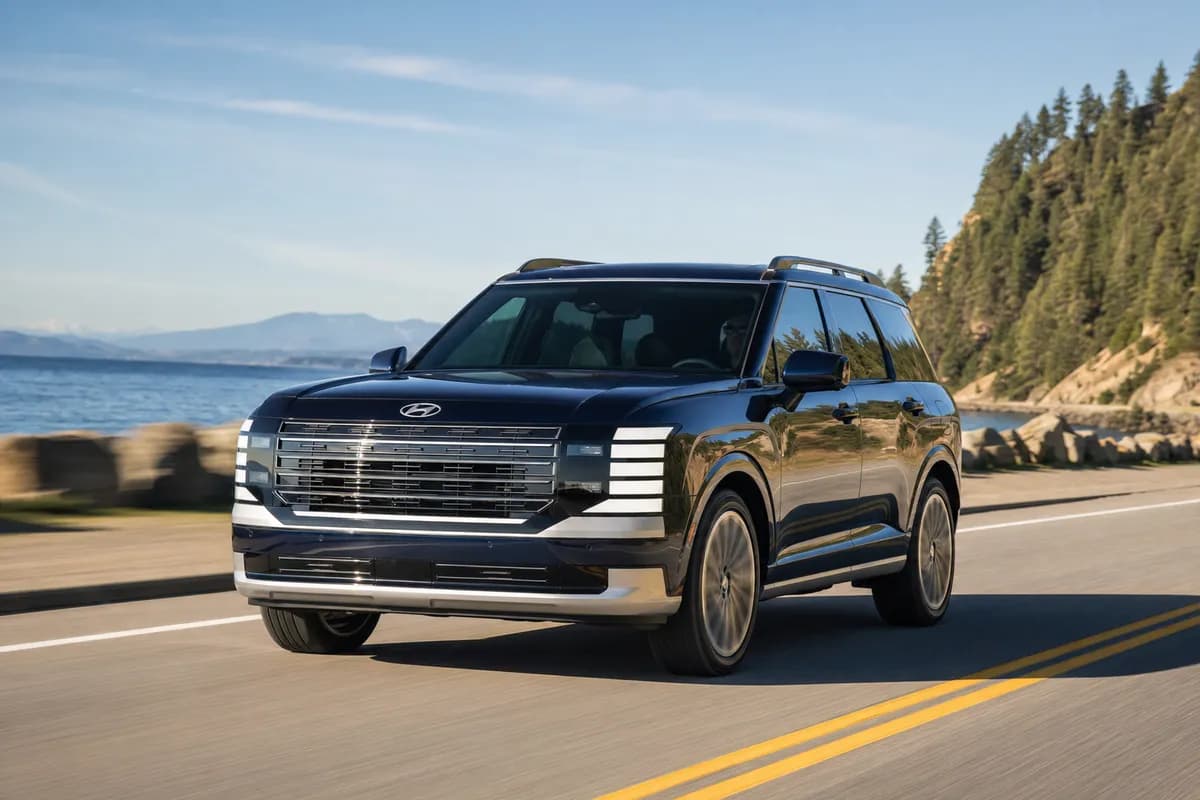
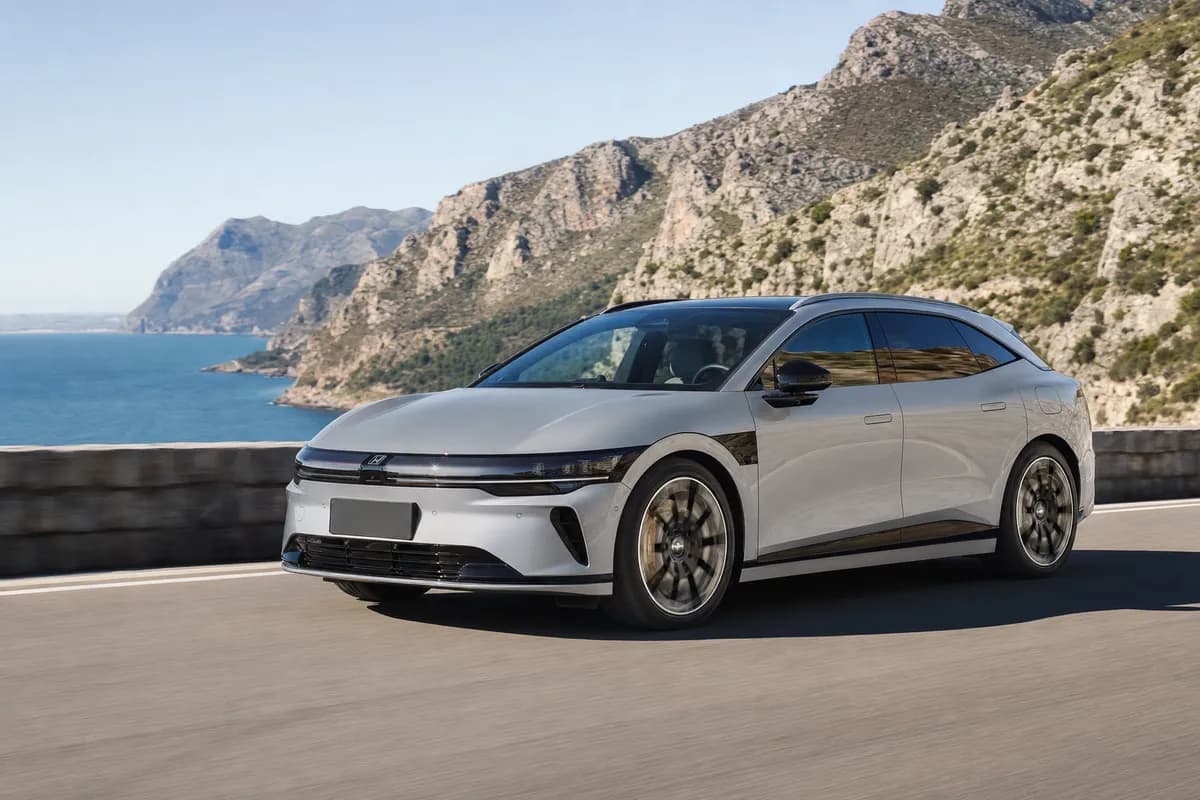
Hyundai aims to end the three-row tradeoff with the 2027 Palisade Hybrid, and our first drive checks efficiency, space, and road-trip comfort.
Three-row family SUVs used to force a miserable choice: good fuel economy or enough room for actual humans. The 2027 Hyundai Palisade Hybrid is Hyundai’s latest attempt to kill that compromise. After a first drive, the answer looks promising.
A Hybrid Palisade That Finally Targets the Right Enemy
The old Palisade was easy to like but thirsty, especially next to newer electrified rivals. This new one fixes the obvious problem by adding a hybrid powertrain to Hyundai’s biggest family hauler, aiming squarely at the Toyota Grand Highlander Hybrid and, indirectly, its own corporate cousin in the Kia Telluride vs Hyundai Palisade showdown.
Hyundai says the 2027 Palisade Hybrid uses a turbocharged 2.5-liter four-cylinder paired with electric assist, producing a combined 329 horsepower. More important than the headline power figure is the efficiency claim: up to 34 mpg highway. In this class, that number matters more than another 0.2 seconds in a stoplight drag race.
That puts the Palisade Hybrid in the heart of the fight for best three-row hybrid SUV 2026 honors. Toyota has owned the “smart choice” badge for years, while the Telluride has been the style-and-value darling. Hyundai wants both crowns, and for once that ambition doesn’t sound like press-release cosplay.
Powertrain, Performance, and Why This One Doesn’t Feel Like a Penalty Box
On the road, the hybrid system feels better integrated than many large-family-SUV setups. The electric motor fills in the low-end torque gap cleanly, so the Palisade Hybrid pulls away with less strain than you’d expect from a boosted four-cylinder hauling three rows and a week’s worth of road-trip junk.
Hyundai quotes a 0-62 mph time of 7.8 seconds, which is perfectly respectable for something this big. More important, it doesn’t feel wheezy when merging or passing. That matters because family SUVs spend their lives loaded with children, coolers, backpacks, and the creeping regret of youth sports scheduling.
The six-cylinder smoothness of older big SUVs is still missing, and if you’re expecting a luxury-grade soundtrack, keep dreaming. Push hard and the 2.5-liter gets vocal. But unlike some hybrid three-rows, the noise isn’t paired with a total lack of forward motion, which already makes it less annoying than several competitors.
The chassis is also better sorted than the segment average. Steering is light but accurate, body control is tidy, and highway tracking is calm. No, this is not a canyon carver, but it doesn’t flop around like a discount cruise ship either.
Key powertrain figures
- Engine: Turbocharged 2.5-liter four-cylinder hybrid
- Combined output: 329 hp
- Claimed acceleration: 0-62 mph in 7.8 seconds
- Claimed efficiency: Up to 34 mpg highway
- Drivetrain: Available all-wheel drive
Efficiency and the Toyota Grand Highlander Hybrid Comparison
This is where the Hyundai has to land a clean punch. The Toyota Grand Highlander Hybrid comparison is unavoidable because Toyota built its reputation on making sensible family transport that sips fuel while everyone else chugs it.
On paper, the Palisade Hybrid’s up-to-34-mpg highway figure is a strong opening move. The Grand Highlander Hybrid remains the benchmark for buyers who obsess over fuel receipts, especially in lower-output forms tuned for maximum economy. But Hyundai’s trick is offering efficiency without making the vehicle feel like an appliance assembled by accountants.
There’s also a meaningful difference in character. The Toyota tends to prioritize smooth, detached operation and straightforward utility. The Hyundai feels a bit richer inside, a bit more resolved in ride quality, and a bit less like a rolling spreadsheet.
Against the non-hybrid Kia Telluride, the Palisade Hybrid has an easier job. The Telluride is still excellent, but unless Kia answers with its own electrified version, Hyundai now owns the efficiency argument outright. For road-tripping families staring down long interstate slogs, that is not a small win.
How the Palisade Hybrid stacks up
- 2027 Hyundai Palisade Hybrid: Strong claimed highway efficiency, 329 hp, upscale cabin feel
- Toyota Grand Highlander Hybrid: Efficiency benchmark, proven hybrid reputation, more utilitarian vibe
- Kia Telluride: Still stylish and roomy, but lacks the hybrid advantage if fuel economy is the priority
Space, Third-Row Usefulness, and Road-Trip Comfort
A three-row SUV lives or dies by packaging, not brochure poetry. The good news is that Hyundai didn’t bolt in a hybrid badge and forget the family mission. The cabin is roomy, access is straightforward, and the third row is actually usable by real people rather than just flexible yoga enthusiasts and very forgiving relatives.
Second-row comfort is a highlight, especially in higher trims with upgraded seating and nicer materials. The front seats are properly long-haul friendly, and the overall seating position is relaxed without feeling bus-like. That sounds minor until you’ve spent six hours on the interstate with a bad seat and two children asking whether they are “basically there.”
Hyundai also seems to understand what road-trip comfort actually means. A quiet cabin, well-damped suspension, logical storage, and clean infotainment matter more than fake sportiness. The Palisade Hybrid delivers the calm, low-stress demeanor buyers want from a family hauler, and that gives it a real edge.
Cargo space remains competitive for the class, though the exact numbers will matter once full specs are finalized market by market. What matters from the driver’s seat is this: the Palisade Hybrid still feels like a true three-row utility vehicle, not a compromised hybrid experiment with a cramped back half.
What families will like most
- Comfortable first- and second-row seating
- Usable third row for more than emergency duty
- Road-trip-friendly ride quality and cabin isolation
- Practical storage and family-focused packaging
Interior Quality, Tech, and the Telluride Problem
Hyundai and Kia have spent the past few years making mainstream rivals look lazy inside, and this new Palisade keeps that streak alive. Material quality is impressive for the segment, design is clean without being sterile, and the controls are mostly intuitive. That last point deserves applause because too many brands now confuse “modern” with “needlessly irritating.”
The Palisade also feels more premium than many buyers will expect at this price point. It doesn’t quite turn into a Genesis in disguise, but it gets closer than the badge might suggest. That matters because family buyers increasingly want one vehicle to do everything: commute, road trip, school run, airport shuttle, and occasional ego maintenance.
The challenge is internal as much as external. The Kia Telluride vs Hyundai Palisade debate has always been messy because these two share a lot of DNA while appealing to slightly different tastes. The Telluride often wins on rugged-image swagger, but this hybrid Palisade now has the more convincing future-proof powertrain.
If your decision comes down to vibe, the Telluride is still the cooler jacket. If it comes down to logic, comfort, and fuel economy, the Hyundai now makes the stronger case. That is a problem for Kia, and a good day for Hyundai dealers.
Verdict: Is the 2027 Hyundai Palisade Hybrid the New Default Family SUV?
The Hyundai Palisade Hybrid first drive suggests Hyundai has done exactly what it needed to do. It took an already competitive three-row SUV, fixed the biggest weakness, and didn’t ruin the rest in the process. That sounds simple, but the industry is full of hybrids that improve one column of the spec sheet while making the actual driving experience worse.
Here, the payoff looks real. You get meaningful efficiency, strong everyday performance, genuine family space, and the kind of long-distance comfort that matters more than splashy launch-event gimmicks. It may not beat the Toyota Grand Highlander Hybrid on every mpg-related argument, but it counters with a more upscale feel and a more rounded personality.
So, can it beat the Toyota and the Telluride on efficiency, space, and road-trip comfort? Mostly, yes. The Toyota still has hybrid credibility and likely keeps some hard-core economy shoppers in its camp, while the Telluride remains hugely appealing if style is your top priority.
But if you want one answer to the family-SUV question in 2026 and beyond, the 2027 Hyundai Palisade Hybrid is suddenly the one to beat. It is not just a smarter Palisade. It might be the new default choice for buyers hunting the best three-row hybrid SUV 2026 has to offer.
Affiliate disclosure: This article contains affiliate links. RevvedUpCars may earn a small commission on qualifying purchases at no extra cost to you.