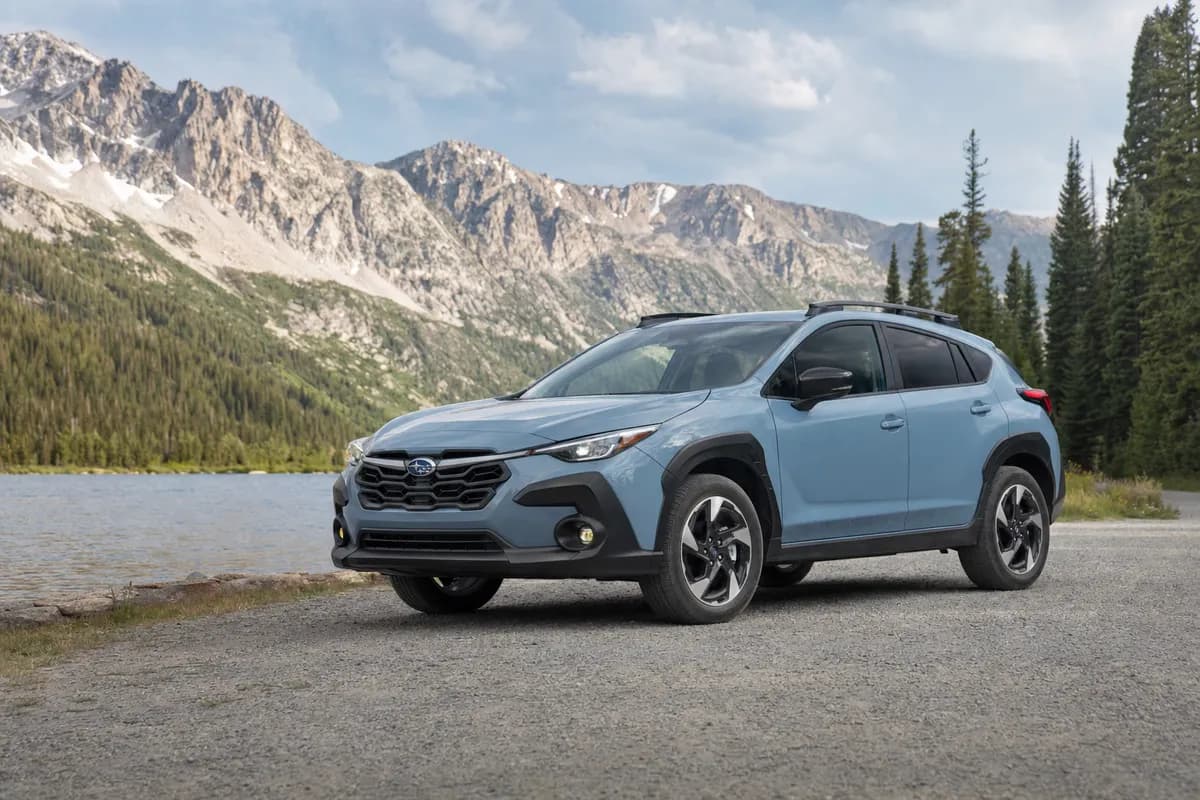
We drive the 2026 Subaru Crosstrek to see if the new chassis and tech—and rumored hybrid—can beat the Corolla Cross Hybrid and CX-30.
The Subaru Crosstrek has long been the default answer for people who want one car to do everything badly weathered life can throw at it. But 2026 is a tougher year to stay on top. The Toyota Corolla Cross Hybrid is chasing efficiency, and the Mazda CX-30 is still the class snob with a genuinely good chassis.
So this 2026 Subaru Crosstrek first drive matters more than a mild-update spin usually would. Subaru has fiddled with the suspension, sharpened the software, and kept the formula intact while whispers of a proper hybrid grow louder.
What’s New for 2026: Small Changes, Smart Targets
The 2026 Crosstrek does not reinvent itself. Good. Subaru’s compact crossover was already one of the most coherent packages in the segment, so the job here was to sand off rough edges rather than chase some marketing department fever dream.
For 2026, Subaru focuses on chassis tuning, NVH improvements, and updated in-car tech. Depending on trim, buyers still get the familiar 2.0-liter flat-four or the stronger 2.5-liter boxer, both paired with a CVT and standard Symmetrical All-Wheel Drive.
- Base engine: 2.0-liter flat-four, 152 hp, 145 lb-ft
- Upgraded engine: 2.5-liter flat-four, 182 hp, 178 lb-ft
- Transmission: Lineartronic CVT
- Drivetrain: Standard AWD on every trim
- Ground clearance: 8.7 inches
That last number still matters. The Crosstrek’s 8.7 inches of clearance remains one of its best party tricks, because this thing can clear rutted fire roads and deep snow that make many cute-ute rivals nervously clench their plastic lower cladding.
The rumored hybrid deserves mention because it hangs over the whole car. Subaru has signaled broader electrification plans, and a Crosstrek hybrid comeback feels inevitable, but for now this 2026 Subaru Crosstrek review is about the gas model you can actually buy, not the one forum detectives are manifesting into existence.
On the Road: Better Composure, Still Not Fast
The Crosstrek’s biggest dynamic improvement for 2026 is composure. Revised dampers and subtle steering calibration changes make it feel less choppy over broken pavement and a touch more settled in quick transitions, especially in Sport and Wilderness-adjacent trims with the 2.5-liter engine.
No, it still is not quick. With the 2.0-liter, the Crosstrek remains a patient person’s crossover, taking roughly the high-8-second range to reach 60 mph. The 2.5-liter trims are much more acceptable, clipping that to around 7.5 to 8.0 seconds depending on conditions and tire choice.
The good news is that the Subaru now feels more expensive than its price suggests when the road gets ugly. Impacts are rounded off better, body motions are tidier, and the steering has slightly more consistency off-center, even if it still cannot match the Mazda CX-30 for feel.
And yes, the CVT is still the least lovable part of the experience. Subaru has done its usual programming tricks to fake stepped ratios under hard throttle, but a fake shift is still fake, like adding engine noise through the speakers and pretending anyone asked for that.
Where the Crosstrek continues to earn its keep is confidence. In rain, slush, gravel, and fast two-lane sweepers, it feels planted and honest. That matters more in daily life than shaving three-tenths off a magazine slalom test.
Interior and Tech: More Polished, Still Practical First
The cabin remains straightforward and useful, which is praise. Subaru’s upright glassy design gives the Crosstrek excellent outward visibility, and that alone makes it easier to live with than many rivals that confuse style with hiding the world behind thick pillars.
Material quality is solid rather than luxurious. The Mazda CX-30 still wins for richness, design flair, and general “I moved up in the world” vibes, but the Subaru counters with better space efficiency and less pretension.
The latest infotainment software is faster and less glitch-prone than before, especially on the large center touchscreen. Wireless Apple CarPlay and Android Auto integration are now table stakes, and Subaru finally feels less like it is asking you to beta-test your dashboard every morning.
- Crosstrek strengths inside: visibility, easy controls, durable materials, usable rear seat
- Crosstrek weaknesses inside: some hard plastics, merely average cargo room, touchscreen-dependent climate functions on some trims
- Standout safety tech: updated EyeSight driver-assistance suite, adaptive cruise, lane centering, pre-collision braking
Rear-seat room remains competitive, and cargo space is serviceable if not class-leading. This is still a compact crossover, not a magician’s hat. But the shape of the hatch area and low liftover height make it more practical than some rivals with better brochure measurements.
Subaru Crosstrek vs Toyota Corolla Cross Hybrid and Mazda CX-30
This is where the 2026 Crosstrek faces its real test. The segment has split into two camps: efficient appliances and stylish near-premium runabouts. Subaru tries to sit in the middle while also being the one you’d trust on an icy mountain road.
In a straight 2026 compact crossover comparison, the Toyota Corolla Cross Hybrid is the efficiency champ. Its 2.0-liter hybrid setup makes 196 horsepower, reaches 60 mph in roughly 7.3 seconds, and returns around 42 mpg combined. That is a brutal advantage over the Crosstrek’s gas-only reality, which sits closer to the upper-20s or low-30s combined depending on engine and trim.
But the Toyota gives back plenty. Its cabin is less inviting, its road manners are less composed on rough surfaces, and its AWD system does not inspire the same confidence when conditions turn properly nasty. The Corolla Cross Hybrid is the rational pick for commuters. The Crosstrek is for people whose commute sometimes ends where the pavement does.
The Subaru Crosstrek vs Toyota Corolla Cross Hybrid fight really comes down to priorities:
- Choose the Toyota if fuel economy is your top concern
- Choose the Subaru if standard AWD capability, ride quality, and foul-weather confidence matter more
- Choose the Subaru 2.5 if you do any highway driving and value your sanity
Then there is the Mazda CX-30, which remains the driver’s choice in the class if your definition of driving means steering feel and a premium cabin. Its available 2.5-liter naturally aspirated engine makes 191 hp, while the turbo can crank out up to 250 hp and 320 lb-ft on premium fuel. The problem is obvious: a loaded turbo CX-30 gets expensive fast, and rear-seat packaging is mediocre.
In the Subaru Crosstrek vs Mazda CX-30 matchup, Subaru wins on utility, ride comfort over rough surfaces, visibility, and genuine all-weather usability. Mazda wins on cabin ambiance, powertrain polish, and on-road engagement. If you spend your weekends bombing back roads, buy the Mazda. If you spend them camping, skiing, or surviving January, buy the Subaru.
The Crosstrek is still the class’s best realistic adventure tool, even if it is no longer the obvious all-around winner on paper.
Should You Wait for a Hybrid?
If the hybrid rumors are what brought you here, here is the blunt answer: wait only if fuel economy is the deal-breaker. Subaru needs a serious hybrid Crosstrek to answer Toyota properly, because a gas-only lineup is becoming harder to defend in this part of the market.
That said, waiting for an unconfirmed future model can be a silly game. The current 2026 Crosstrek is here, improved, and easy to recommend in 2.5-liter form. A future hybrid may be more efficient, but it will not magically make the current car worse at being tough, practical, and composed.
Verdict: Still the Benchmark for a Specific Buyer
The updated Crosstrek does not dominate every category anymore. The Toyota Corolla Cross Hybrid is cheaper to run, and the Mazda CX-30 is more upscale and more fun on a smooth road. Segment competition has finally caught up to Subaru’s old habit of winning by default.
Even so, this 2026 Subaru Crosstrek review ends with a clear verdict: Subaru still builds the most convincing affordable all-weather compact crossover for people who actually use the crossover part of the brief. The chassis tweaks make it calmer and more polished, the tech is less annoying, and the 2.5-liter engine remains the one to get.
If you want the smartest spreadsheet answer, buy the Toyota hybrid. If you want the prettiest interior and sharper handling, buy the Mazda. If you want the one that feels ready for real life, bad roads, and ugly weather every single day, the 2026 Subaru Crosstrek is still the one to beat.
Affiliate disclosure: This article contains affiliate links. RevvedUpCars may earn a small commission on qualifying purchases at no extra cost to you.