Corvette, Porsche, and AMG owners share DIY hybrid know-how—brakes, tire strategy, and 12-volt/high-voltage awareness for track-ready electric thrills.
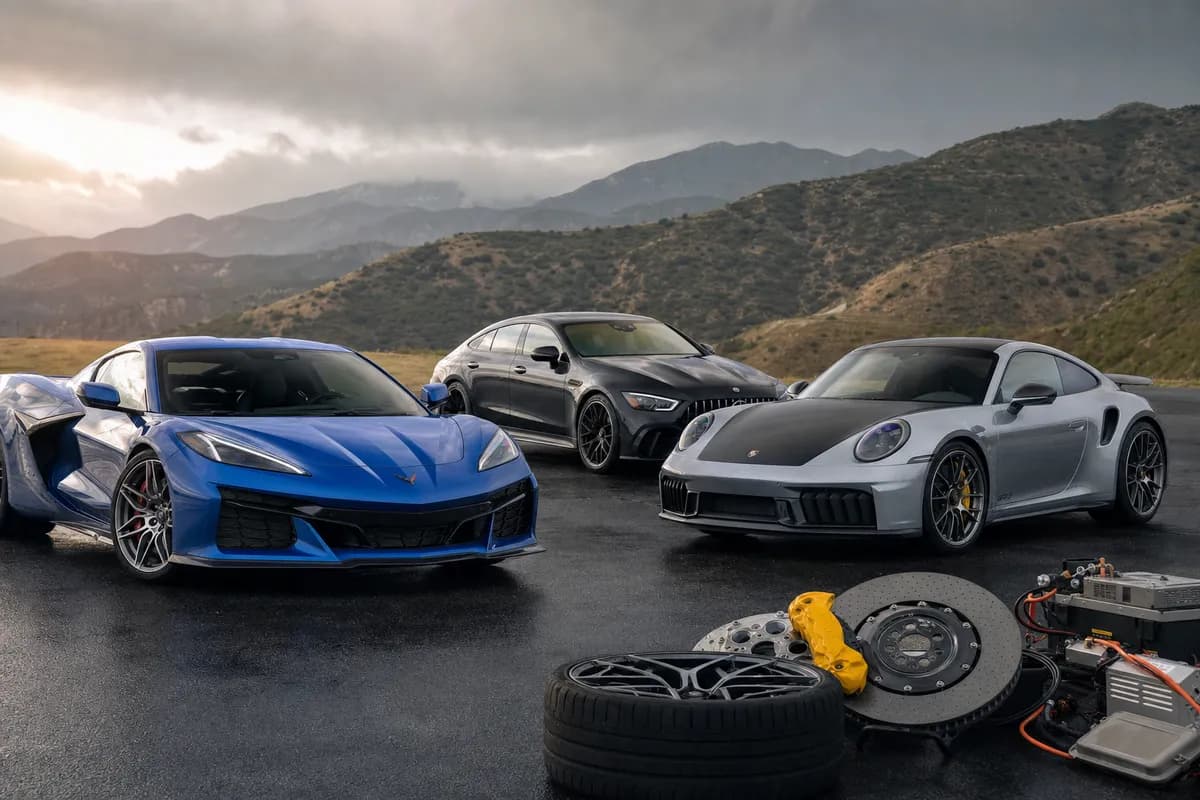
The hybrid performance era is no longer coming. It is parked in enthusiast garages right now, wearing Michelin rubber, charging a 12-volt battery, and waiting for its next track day. Owners of the 2026 and 2027 Chevrolet Corvette E-Ray, Porsche 911 Carrera GTS T-Hybrid, and Mercedes-AMG C63 S E Performance are building a new kind of DIY culture around that reality.
These are fast, complicated, very real enthusiast cars. And the people buying them are learning that electrification does not kill hands-on ownership—it just changes the tool list, the safety rules, and the conversations in the paddock.
Why the Electrified Sports Car Community Is Growing Fast
The old enthusiast script was simple: buy the car, learn the common failures, swap fluids, upgrade pads, and go drive. The new script adds hybrid cooling circuits, lithium-ion battery monitoring, brake-by-wire feel, and strict high-voltage safety boundaries. That has pushed owners of 2026 hybrid performance cars to lean on each other in forums, track groups, Discord servers, and model-specific clubs.
The shared appeal is obvious. The Corvette E-Ray combines a 6.2-liter LT2 V8 with a front-axle electric drive system for a combined 655 horsepower. Porsche’s 911 Carrera GTS T-Hybrid pairs a 3.6-liter flat-six with an electrically assisted turbo system and hybrid hardware for 532 horsepower, while the AMG C63 S E Performance brings a turbocharged 2.0-liter four-cylinder and rear-mounted electric motor together for a staggering 671 horsepower and 752 lb-ft of torque.
Those numbers attract people who actually use performance cars. They also create a new kind of owner question: what can I service myself, what should I leave alone, and what changes actually help on the street or at a lapping day?
- Corvette E-Ray owners tend to focus on wheel-and-tire setups, brake wear, front drive unit awareness, and frequent-use inspections.
- 911 GTS T-Hybrid owners are talking alignment, tire temperature management, brake fluid intervals, and software-aware track prep.
- AMG C63 S E Performance owners are comparing consumable costs, weight-management strategies, and how to keep a very complex sedan happy under repeated hard use.
What Owners Can Safely Do at Home—and Where the Line Is
The biggest shift in the electrified sports car community is not fear. It is discipline. Experienced DIY owners are discovering that these cars still reward careful home maintenance, but only if you respect the line between conventional service work and anything that touches high-voltage components.
For all three models, normal enthusiast jobs still exist. Wheels and tires, brake pad inspection, brake fluid service on systems that follow factory procedures, cabin filters, wiper blades, underbody checks, suspension inspection, and 12-volt battery maintenance are all realistic for skilled owners with proper tools. Track-day inspections are still very much a driveway ritual.
Where the line gets bright red is high-voltage hardware. Orange cables, battery enclosures, power electronics, electric drive units, isolation faults, and hybrid cooling components tied directly to the HV system are not beginner territory. Even many veteran DIYers stop there, and wisely so.
Smart DIY Jobs for Electrified Performance Cars
- Wheel removal, torque checks, and tire rotation only where approved
- Brake pad and rotor visual inspection
- Brake fluid flushes using factory-approved fluid and procedures
- 12-volt battery testing and support charging
- Air filter and cabin filter replacement where accessible
- Track-day pre- and post-event inspections
- Alignment setup changes performed by a trusted specialty shop
Jobs Best Left to Dealer or Hybrid-Certified Specialists
- Any service involving high-voltage cables or battery packs
- Hybrid fault diagnosis and isolation testing
- Power electronics or inverter cooling repairs
- Software updates tied to hybrid drivability or charging strategy
- Electric drive unit service beyond published routine checks
This is where the new community shines. Owners are not trying to prove they can do everything. They are getting good at knowing what not to touch, and that is a mark of a mature enthusiast scene.
Brake Service, Tire Strategy, and the New Consumables Mindset
If you want to understand Corvette E-Ray DIY maintenance or modern hybrid track prep in general, start with consumables. These cars are quick, heavy, and brutally effective at generating speed. That means brakes and tires matter more than ever, even when regenerative systems reduce some traditional wear.
The E-Ray is a great example. It weighs more than a standard Stingray, and the front axle motor changes how the car deploys torque and loads the tires on corner exit. Owners quickly learn that tire strategy is not just about grip. It is about matching compound, pressure, and heat tolerance to a car that can put down huge all-weather pace but still asks a lot from its front tires.
The 911 Carrera GTS T-Hybrid changes the conversation in a different way. Porsche’s hybrid system is packaged with remarkable discipline, so the car does not feel like a science project. But on track, owners are still paying close attention to front-to-rear temperature balance, pad taper, and how the car responds over a session as tire pressures climb.
The AMG C63 S E Performance may be the most demanding of the group from a consumables standpoint. It is immensely powerful, carries substantial mass, and can cook through tires and brakes if driven hard and repeatedly. For AMG C63 S E Performance ownership, tire budget planning is not optional. It is part of the operating cost.
What Owners Are Learning About Brakes and Tires
- Use track-capable brake fluid before your first event, not after a soft pedal scares you.
- Measure pad thickness often, especially on heavy hybrid cars with strong acceleration zones.
- Log hot and cold tire pressures after every session.
- Do not chase aggressive wheel setups blindly; scrub radius, clearance, and load rating matter.
- Expect front tire wear patterns to differ from older ICE-only cars, especially in the E-Ray.
The new rule is simple: if your hybrid performance car saves you a little brake wear with regen, it may still spend that advantage right back through speed, mass, and corner-exit traction.
12-Volt Systems and High-Voltage Awareness Matter More Than Most Owners Expect
Ask any modern technician what sidelines advanced performance cars most often, and the answer is rarely dramatic. It is usually voltage stability, software sensitivity, or a neglected basic system. That is especially true for hybrids, where a weak 12-volt battery can trigger a mess of warnings and strange behavior long before the high-voltage battery is the actual problem.
Owners of these cars are getting serious about battery tenders, voltage checks, and storage habits. A healthy 12-volt system is the gatekeeper for modules, relays, contactors, startup logic, and error-free diagnostics. Ignore it, and the car may act like it has a major failure when it really has a support-system issue.
Best Practices for 12-Volt and High-Voltage Awareness
- Use a quality battery maintainer if the car sits for extended periods.
- Check factory guidance before connecting chargers, jump packs, or tender leads.
- Watch for repeat low-voltage faults after updates or long storage.
- Never probe, disconnect, or “inspect” orange high-voltage wiring.
- Learn the emergency response basics for your model if you track the car.
This is one reason the community is forming around education, not just modification. Owners are sharing service bulletin chatter, charger recommendations, battery registration procedures where applicable, and storage routines that prevent headaches. That kind of knowledge transfer used to live mostly with professional shops. Now it is becoming part of enthusiast ownership culture.
Track-Day Prep for the Hybrid Performance Era
Track-day prep for these cars looks familiar at first glance. Torque the wheels, inspect the brakes, check fluid condition, and monitor tire pressures. Then the electrified layer kicks in, and the checklist gets more nuanced.
For 911 GTS T-Hybrid track prep, owners are paying close attention to cooling behavior, alignment stability, and whether software calibration changes session-to-session performance consistency. For the E-Ray, prep often centers on tire management, brake condition, and making sure the car is free of warning lights or charging-system weirdness before heading out. AMG owners are especially focused on thermal management and consumable life because the car’s performance ceiling is so high.
A Practical Pre-Track Checklist
- Inspect brake pads, rotors, and fluid condition
- Set baseline cold tire pressures and bring a quality gauge
- Check wheel torque to factory spec
- Scan for stored faults if you have model-appropriate tools
- Confirm 12-volt battery health and charging support history
- Inspect cooling system levels and visible leaks only where owner-accessible
- Bring notes from prior sessions on tire wear and brake temps
The mod culture is changing, too. The most useful upgrades are rarely flashy. Owners are seeing better results from disciplined alignment settings, high-temp fluid, proper pads, better data logging, and proven tire choices than from random bolt-ons that promise huge gains but complicate already complex cars.
Verdict: The DIY Spirit Is Alive—Just Smarter Than Before
The most interesting thing about 2026 hybrid performance cars is not that they are fast. It is that they are teaching enthusiasts a new version of mechanical literacy. The Corvette E-Ray, Porsche 911 Carrera GTS T-Hybrid, and Mercedes-AMG C63 S E Performance all demand more respect than older analog toys, but they still reward owners who pay attention, learn the systems, and prep the car with purpose.
The emerging electrified sports car community is not trying to turn every owner into a high-voltage specialist. It is building a practical middle ground: do the safe work yourself, understand the risks, spend money on consumables and data, and use qualified hybrid techs for the dangerous stuff. That is not the end of DIY performance culture. It is the next chapter, and frankly, it looks a lot healthier than the skeptics expected.
Affiliate disclosure: This article contains affiliate links. RevvedUpCars may earn a small commission on qualifying purchases at no extra cost to you.