
You’re halfway to work, rain coming down sideways, and suddenly your wipers freeze mid-swipe. Yeah — that’s not just annoying. That could be part of a Ford recall 2026 issue, and it’s the kind of thing that can turn a normal commute into a white-knuckle ride real fast.
I’ve seen too many folks ignore recall notices because “the truck seems fine.” Here’s the deal: recalls are free repairs. Free. In a world where new car prices keep climbing, you don’t pass up free fixes. In this guide, I’ll show you how to check VIN for recalls, spot warning signs like the windshield wiper recall, and get your Ford service appointment handled without getting upsold on stuff you don’t need.
What You’ll Need
- Tools: 17-digit VIN (from dashboard or registration), smartphone or computer, flashlight
- Parts/Materials: None — recall repairs are free
- Time: 10 minutes to check; 1–3 hours at dealership for repair
- Difficulty: 🔧 (1/5 — easier than checking tire pressure)
- Dealer Cost: $0 vs DIY Cost: $0 — You Save: Potentially $500–$2,000 in future damage
Why This Matters
Recalls aren’t oil changes you can stretch. They’re issued because something can fail — brakes, airbags, fuel systems, electrical wiring. In 20 years of wrenching, I’ve seen ignored recalls lead to engine fires and totaled vehicles.
Take the recent windshield wiper recall affecting certain 2024–2026 Ford F-150s and Explorers. A faulty wiper motor can quit in heavy rain. That’s not inconvenience — that’s a crash risk.
You should check VIN for recalls at least twice a year and anytime you hear about a Ford recall 2026 in the news. It’s also smart before buying used. If you’re new to how the recall system works, read this breakdown on the car recall process and stop-sale orders.
Before You Start
⚠️ WARNING: If your recall involves brakes, steering, fuel leaks, or airbags — limit driving until it’s fixed. Safety systems aren’t optional.
Park somewhere safe and grab your VIN. You’ll find it at the base of the windshield on the driver’s side or on your registration. It’s 17 characters — no guessing.
Head to NHTSA.gov or Ford’s owner site. Both let you check VIN for recalls in seconds. I prefer NHTSA because it shows open campaigns clearly.
Don’t DIY recall repairs unless Ford specifically sends parts and instructions. Most recalls require dealer documentation so the fix is logged nationally.
Step-by-Step Guide
-
Locate Your VIN
Look through the windshield on the driver’s side dash. Use a flashlight if needed. Double-check each character — O and 0 get mixed up a lot. -
Check Official Sources
Enter your VIN at NHTSA.gov or Ford’s recall page. You’re looking for “Open Recalls.” Closed recalls mean the repair was already completed. -
Read the Recall Details
Click the campaign number. It’ll describe the defect, risk, and remedy. For example, the windshield wiper recall lists motor failure and reduced visibility as the safety risk. -
Call for a Ford Service Appointment
Give the dealer your VIN and recall number. Ask: “Do you have the parts in stock?” Some Ford recall 2026 repairs have backorders. -
Ask About Loaners
If the repair takes more than two hours, request a loaner vehicle. Many dealers provide them for safety recalls — but you have to ask. -
Get Documentation
When the work’s done, get a printed repair order showing recall completion. This helps resale value and protects you if issues pop up later.
Pro Tip: Schedule early morning appointments. Dealers are less backed up, and your truck gets into a bay faster.
Common Mistakes to Avoid
- Ignoring recall letters. I’ve seen these stuffed in gloveboxes for years. Meanwhile, the issue gets worse.
- Using third-party VIN check sites. Stick to NHTSA or Ford. Some sites are outdated.
- Paying for recall-related repairs. Recalls are free. If a dealer tries charging diagnostic time for a known recall issue, push back.
- Not checking before buying used. Before signing anything, always check VIN for recalls. It’s like checking a house for termites.
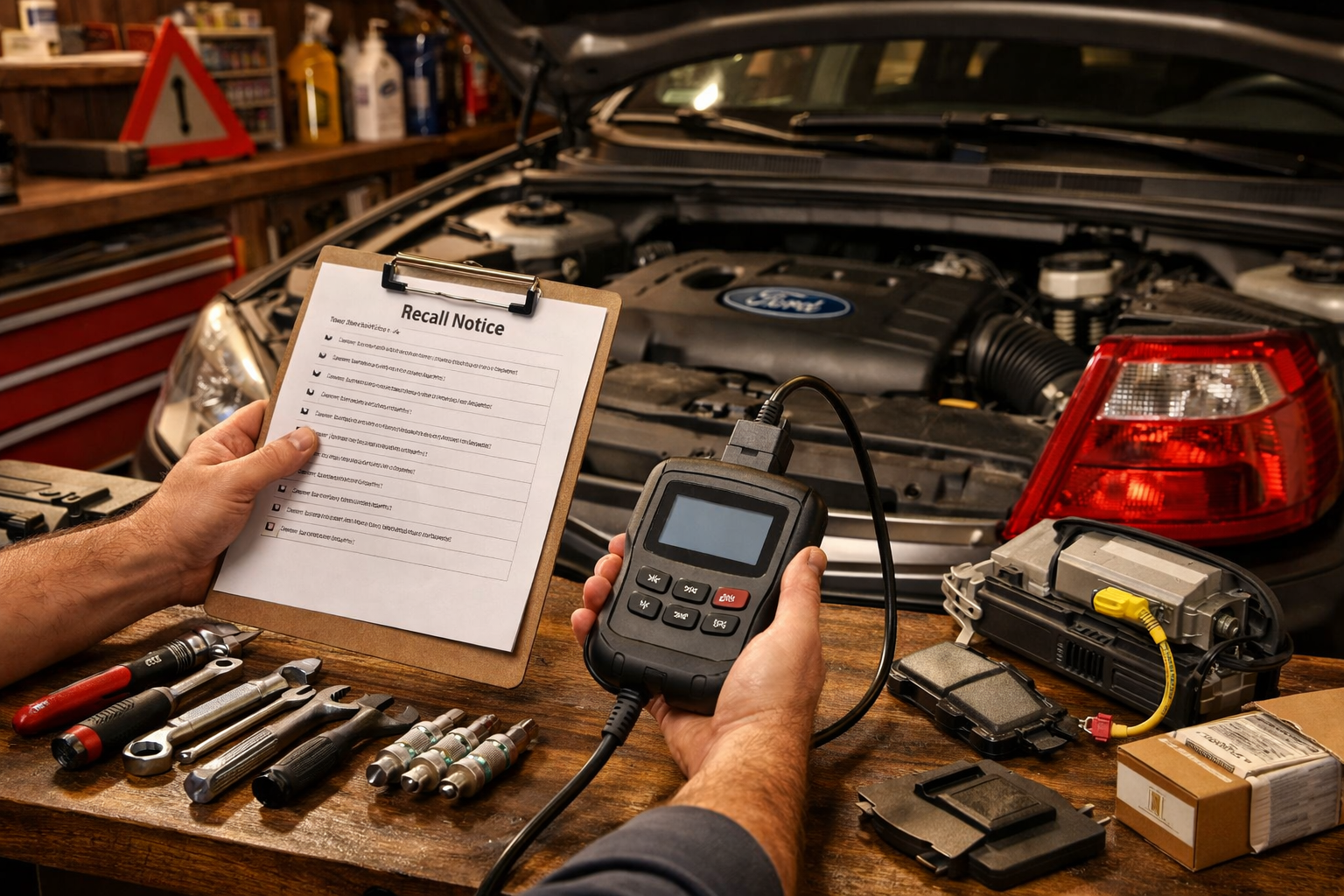
If you want a full safety approach, this car recall checklist is worth bookmarking.
When to Call a Professional
If your Ford shows symptoms — wipers stopping, brake warning lights, fuel smell — and no recall appears, get it diagnosed. Not every defect becomes a recall.
A fair diagnostic fee runs $120–$180 in most regions (2025 pricing). If it turns out to match a newly issued Ford recall 2026, that fee should be reimbursed once the recall is active. Ask.
Red flags at the service desk:
- They recommend $800 in unrelated flushes during a recall visit.
- They won’t provide printed documentation.
- They claim a recall “expired.” (Safety recalls don’t expire.)
If you’re unsure about recall rights, check guidance from ASE.com or NHTSA.
Recommended Products
- OBD2 Scanner (BlueDriver or Autel AL319, $30–$100): Not for fixing recalls, but great for verifying warning lights before your appointment.
- Rain-X Latitude Wiper Blades ($25–$35 each): If you’re waiting on windshield wiper recall parts, good blades improve visibility now.
- Vehicle Service Log Book ($10): Track recall repairs and maintenance in one place.
What I use in my own garage? A basic Autel scanner and a paper folder with every service invoice. Simple beats fancy every time.
Do This
- Check VIN for recalls twice a year
- Schedule early morning service appointments
- Keep printed proof of recall completion
- Ask directly if parts are in stock
Don’t Do This
- Ignore recall notices
- Pay for recall repairs
- Assume used cars are recall-free
- Fall for dealership upsells during recall visits
Bottom line? A Ford recall 2026 notice isn’t junk mail. It’s free protection for your truck, SUV, or Mustang. Take 10 minutes tonight, check VIN for recalls, and schedule that Ford service appointment if needed.
You can handle this. No grease under the fingernails required. Drop your questions in the comments if you hit a snag.
Stay safe out there — and remember, a $20 repair manual saves a $2,000 repair bill.