Sarah Greenfield reports from the 2026 NY Auto Show: analysis of electrification, performance debuts and surprise comebacks. Read expert takeaways now.
In this article
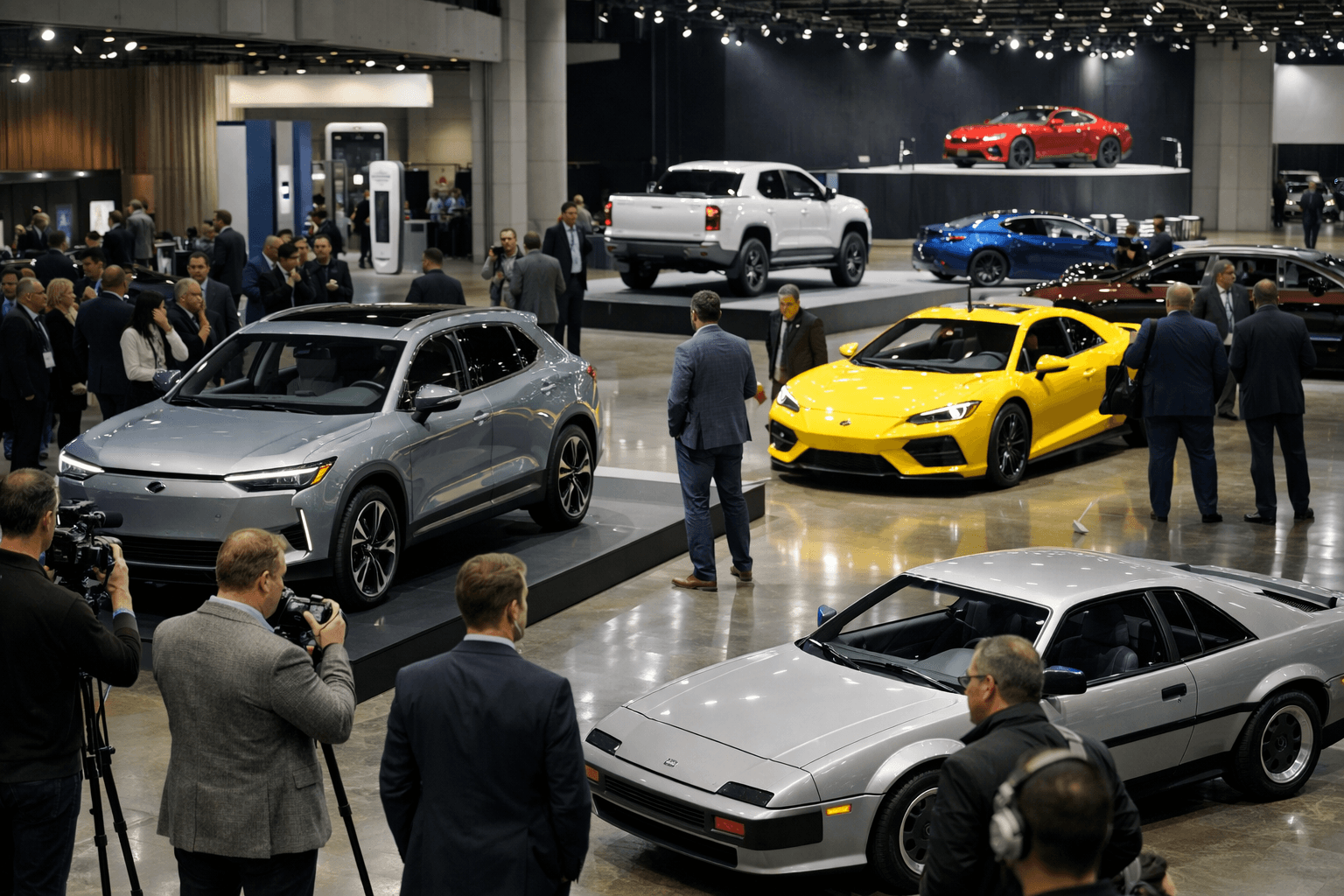
The 2026 New York International Auto Show opened this week with a clear message: electrification is no longer a side story, but neither is performance. The 2026 New York Auto Show recap reveals an industry hedging its bets—doubling down on EVs and software while quietly reviving enthusiast models that executives once wrote off.
Held April 17–26 at the Jacob K. Javits Convention Center, this year’s NYIAS arrives as U.S. auto sales are forecast to dip 2.6% in 2026, according to our latest sales outlook analysis. That softer demand shaped nearly every debut: more flexible powertrains, refreshed hybrids, and strategic “halo” performance cars designed to pull buyers back into showrooms.
Manufacturers from Ford and Hyundai to BMW and Cadillac used the stage to show that the future car technology conversation now spans battery chemistry, software-defined vehicles, and—surprisingly—manual transmissions. Having covered multiple product cycles, I can tell you this mix of pragmatism and passion usually signals a market in transition.
The Headlines
What: Automakers unveiled a wave of EVs, hybrids, and performance revivals at the 2026 NYIAS
Who: Ford, Hyundai, BMW, Cadillac, Kia, and others
When: April 17–26, 2026
Impact: Broader powertrain choices and more software-driven features for 2026–2027 buyers
Key Number: 40% — projected U.S. electrified (hybrid + EV) share by 2028, per IEA estimates
What Happened
The biggest crowd gathered around Hyundai’s refreshed Ioniq 7, now boasting an estimated 350-mile EPA range and a new N performance concept variant. Hyundai confirmed pricing will start “in the low-$50,000 range,” with U.S. deliveries in Q4 2026. Additionally, executives highlighted over-the-air update capability as standard, aligning with its broader software push detailed in corporate filings and prior product plans.
Ford countered with a hybrid-heavy strategy. The automaker introduced a redesigned Escape Hybrid and previewed a Ranger Plug-In Hybrid slated for North America in 2027. According to Ford’s press briefing, hybrids now account for nearly 20% of its U.S. retail mix—up from single digits five years ago.
Meanwhile, BMW brought the production-ready Neue Klasse-based iX3, fresh off its global award circuit, reinforcing momentum we outlined in our BMW iX3 World Car coverage. The German brand claims 20% faster charging and 30% greater energy density using its sixth-generation battery architecture.
Notably, Cadillac surprised attendees with a limited-run CT5-V Blackwing “Final Lap” edition, keeping its supercharged V8 alive for at least one more model year. For buyers still interested in traditional performance, our Blackwing order guide remains relevant. The message: even as GM accelerates toward an all-electric portfolio, it’s monetizing enthusiast demand while it still can.
Why It Matters
The 2026 New York Auto Show recap underscores a strategic pivot. Automakers are no longer talking about full EV transitions by 2030 with the same certainty they did in 2021. Instead, they’re emphasizing “customer choice”—code for a longer runway for hybrids and internal combustion.
According to the International Energy Agency, EVs accounted for roughly 10% of U.S. new car sales in 2025, while hybrids surged past 12%. That hybrid growth is reshaping product planning. In fact, Toyota—still the hybrid leader with over 600,000 electrified sales in the U.S. last year per company data—barely changed its strategy, and now looks prescient.
Advertisement
Furthermore, software-defined vehicle platforms took center stage. Multiple brands highlighted Android Automotive integrations and subscription-ready features, building on trends we examined in our Android Automotive update analysis. The hardware may debut at auto shows, but the real revenue battleground is recurring digital services.
The Bigger Picture
This year’s NYIAS trends reflect broader market recalibration. After aggressive EV investment cycles from 2020 to 2024—totaling over $500 billion globally, according to Reuters auto industry reporting—automakers now face uneven demand and pricing pressure.
Moreover, the policy environment remains fluid. The U.S. Treasury’s evolving EV tax credit guidance, tied to battery sourcing rules under the Inflation Reduction Act, continues to influence sourcing decisions. The U.S. Department of Energy has emphasized domestic battery manufacturing, but supply chains remain globally intertwined.
In contrast to Europe—where EV market share has shown signs of plateauing in early 2026—U.S. buyers appear more hybrid-curious than fully electric. That explains why nearly every major OEM at the show featured at least one hybrid debut alongside its EV flagship.
However, a non-obvious insight emerged: performance cars are evolving into brand anchors during uncertain transitions. Limited-run V8s and manual-transmission specials create urgency and preserve brand identity while companies scale EV platforms behind the scenes.
What the Competition Is Doing
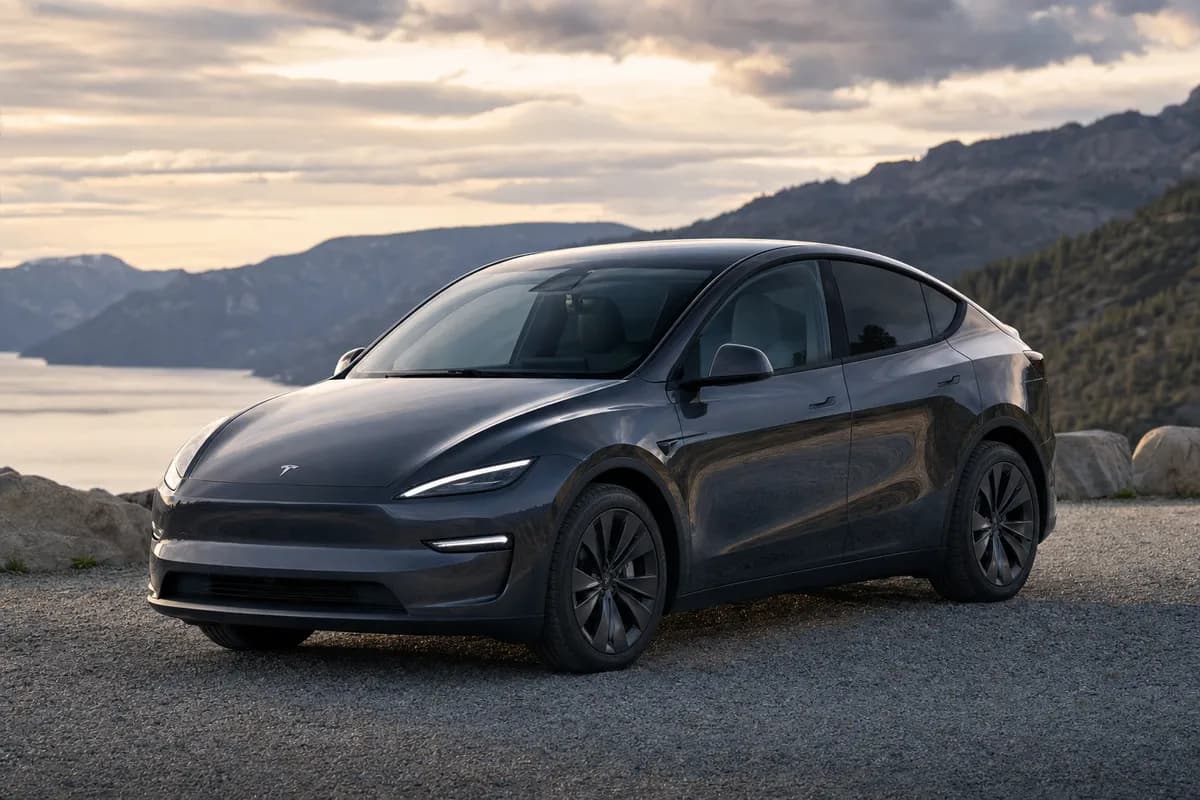
Ford is leaning into hybrids and affordable EV trims to defend market share against Tesla, which still commands roughly 50% of the U.S. EV market, according to industry estimates. However, Tesla’s absence from traditional auto shows highlights a widening cultural gap between legacy automakers and direct-sales EV brands.
Hyundai and Kia, which together surpassed 10% U.S. market share in 2025, are betting on design-forward EVs with competitive pricing. Additionally, Hyundai’s plan to launch 58 models globally by 2030 signals scale ambition, though execution risk remains high.
Meanwhile, BMW and Mercedes are threading the needle—launching advanced EV architectures while publicly defending combustion performance. Mercedes executives reiterated their commitment to select V8 and V12 offerings in limited markets, echoing themes we’ve covered in prior reporting.
Cadillac and Chevrolet, under GM’s Ultium umbrella, continue expanding EV lineups but are clearly pacing the rollout. GM’s Q1 2026 earnings call emphasized profitability per unit over raw EV volume, a notable shift from earlier rhetoric.
What It Means for You
For buyers, the takeaway from this 2026 New York Auto Show recap is simple: you’ll have more powertrain flexibility in 2026 and 2027 than many analysts predicted two years ago. If you’re hesitant about full EV adoption, expect a surge of new hybrid and plug-in options with improved range and smoother integration.
Additionally, performance enthusiasts should pay attention to “final edition” models. These often hold value well, especially if production numbers stay below 2,000 units. However, prices are unlikely to fall; average transaction prices remain near $48,000 industry-wide.
Therefore, timing matters. If federal or state incentives influence your decision, monitor eligibility lists closely. Models shown this week may not qualify in all trims once sourcing rules are finalized.
What to Watch Next
First, watch Q3 2026 production ramp-ups. Several models unveiled in New York won’t reach dealer lots until late Q4, leaving room for supply-chain delays. Additionally, keep an eye on battery plant announcements in the Midwest and Southeast, where joint ventures could alter pricing power.
Moreover, monitor how consumers respond to hybrid-heavy refresh cycles. If hybrid sales continue outpacing EV growth into 2027, expect more capital reallocation away from dedicated EV platforms. Conversely, a spike in charging infrastructure investment could swing sentiment back.
The Upside
Broader mix of EV, hybrid, and performance options
Improved battery density and faster charging claims
Renewed focus on driving engagement and brand identity
Greater software functionality and OTA updates
The Concerns
High average vehicle prices limit affordability
Uncertain federal incentive eligibility
Potential overinvestment in overlapping powertrains
Battery supply chain volatility
Sarah's Industry Impact Rating: 7/10
This matters because: The 2026 show signals a durable shift toward hybrid-dominant electrification rather than an all-EV sprint.
Stepping back, the 2026 New York Auto Show recap doesn’t showcase a single revolutionary breakthrough. Instead, it captures an industry recalibrating in real time—balancing regulatory pressure, consumer hesitation, and shareholder demands.
Over the next two to five years, expect this dual-track strategy—electrification plus enthusiast credibility—to define product planning. Automakers aren’t abandoning the EV future. They’re simply acknowledging that the road there will be longer, and more winding, than the headlines once promised.
Disclosure: This article may contain affiliate links. If you make a purchase through these links, we may earn a small commission at no extra cost to you. This helps support RevvedUpCars.com. Learn more.
Affiliate disclosure: some links on this page earn us a commission at no extra cost to you.
Mike Wrenchworth is the guy you call when something breaks, rattles, or makes a noise it shouldn’t. With 20 years as an ASE-certified master technician and a decade running his own independent shop in Austin, Texas, Mike has seen every automotive disaster imaginable—and fixed most of them. Now he shares his hard-won wisdom with RevvedUpCars readers, covering everything from basic maintenance to weekend restoration projects. Mike believes in doing it right the first time, buying quality tools, and never skipping the torque wrench. His garage currently houses a work-in-progress 1969 Camaro, a bulletproof Toyota Land Cruiser, and whatever his wife is driving this week. Mike’s philosophy: every car can be a great car with proper maintenance and a little mechanical sympathy.
Get the latest car reviews in your inbox
Join thousands of car enthusiasts. No spam, unsubscribe any time.



Comments
Leave a comment