
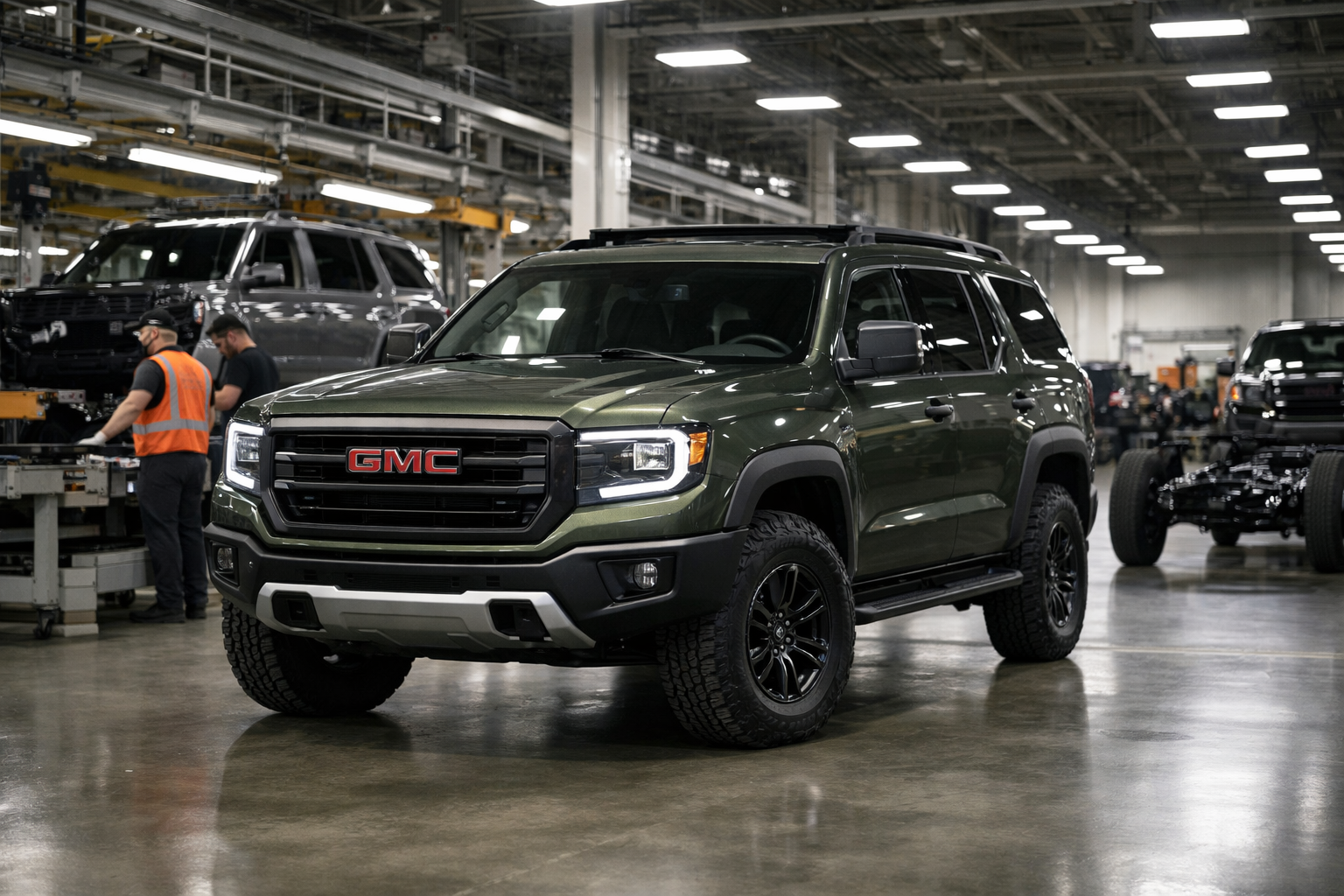
GMC confirmed on April 28, 2026, that it is developing a next-generation Jimmy, marking the long-rumored GMC Jimmy return to a market that suddenly looks very 1995 again. The company shared a teaser image and limited details during a dealer meeting in Texas, later posting a brief statement to its media site. According to executives, the new model will be a two- and four-door body-on-frame SUV aimed squarely at the Ford Bronco and Jeep Wrangler.
This isn’t nostalgia for nostalgia’s sake. Body-on-frame SUVs have quietly become one of the industry’s most profitable niches, even as EV adoption grows. After covering three product cycles of “SUV is dead” headlines, I can tell you this: when margins are strong and demand is steady, automakers double down.
The Headlines
- What: GMC confirms development of a new Jimmy body-on-frame SUV
- Who: GMC (General Motors)
- When: Announcement April 28, 2026; launch expected for 2027 model year
- Impact: Expands off-road SUV market and intensifies Bronco-Wrangler rivalry
- Key Number: 210,000+ U.S. Bronco sales in 2025 (Ford data)
What Happened
GMC said the revived Jimmy will ride on a modified version of GM’s existing truck-based platform, likely shared with the Chevrolet Colorado and GMC Canyon. Executives did not confirm powertrains but indicated turbocharged four-cylinder and V6 options at launch, with “electrified variants under evaluation.” Reports indicate production could take place alongside midsize trucks in Missouri.
In a brief statement, a GMC spokesperson said:
“Jimmy represents a return to authentic, purpose-built SUV capability with modern refinement. We see strong opportunity in the off-road SUV market.”
Notably, GM has not committed to a hybrid or EV Jimmy yet. That restraint stands out as competitors push electrification across their lineups, often with mixed consumer response.
The announcement follows strong Q1 2026 SUV sales across Detroit automakers, as detailed in our Q1 2026 Auto Sales: Winners and Losers analysis. According to company reports, Ford’s Bronco and Jeep’s Wrangler both posted year-over-year gains, even as some EV models slowed.
Why It Matters
The off-road SUV market has become a high-margin refuge in an otherwise volatile industry. Ford sold more than 210,000 Broncos in 2025, according to company disclosures, while Jeep continues to move over 150,000 Wranglers annually in the U.S. These vehicles command transaction prices north of $50,000, per Reuters reporting on industry ATP trends.
Meanwhile, GM lacks a direct midsize, removable-roof competitor. The Chevrolet Blazer is a unibody crossover. The current GMC lineup jumps from the Terrain to the Acadia to the Yukon. The Jimmy fills a clear gap—and likely carries premium GMC pricing.
Additionally, this signals that GM sees sustained demand for traditional body-on-frame SUV architecture despite regulatory pressure. While the EPA continues tightening emissions standards through 2032 under rules outlined at EPA.gov, automakers are balancing fleet averages with profitable gas-powered models.
The Bigger Picture
The GMC Jimmy return fits into a broader comeback narrative for rugged nameplates. The Ford Bronco relaunched in 2021. Toyota revived the Land Cruiser for 2024. Even Nissan refreshed the Frontier and Armada with more off-road credibility. As we noted in our NY Auto Show Recap: Electrification & Comebacks, heritage sells—especially when wrapped in modern tech.
However, this isn’t purely about emotion. Body-on-frame SUVs share components with trucks, spreading development costs across high-volume platforms. GM’s truck business remains its profit engine, contributing billions annually according to GM’s SEC filings. Leveraging that architecture for Jimmy reduces risk.
In contrast, EV-first platforms require massive upfront investment. Our deep dive on EV Architecture Benefits Reshape Car Design Now explains why those costs can take years to recoup. A conventional SUV revival is, ironically, the safer bet in the near term.
Globally, this also reflects diverging market priorities. While Europe pushes aggressive EV mandates, North America still favors larger SUVs and trucks. The International Energy Agency has noted slowing EV growth rates in some mature markets, reinforcing automakers’ need for balanced portfolios.
What the Competition Is Doing
Ford continues expanding the Bronco family, adding Heritage and Raptor trims that push prices above $70,000. Jeep, meanwhile, offers the Wrangler 4xe plug-in hybrid, which accounted for a significant share of Wrangler sales in 2025, according to Bloomberg coverage of Stellantis earnings.
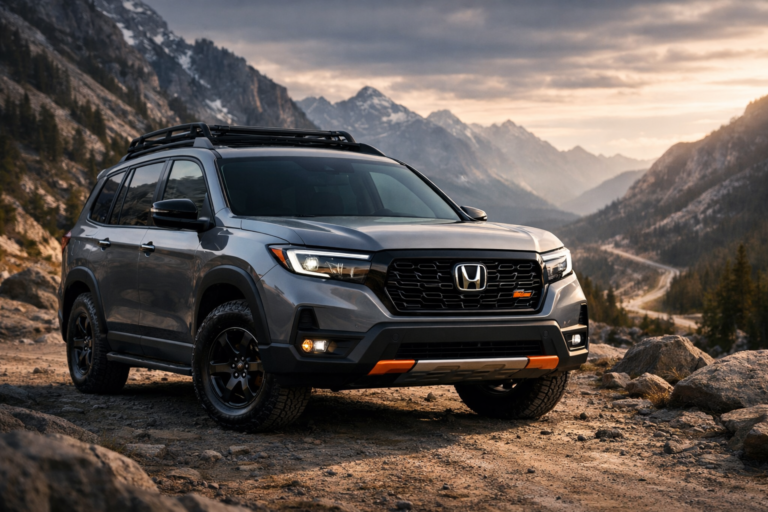
Toyota positions the 2026 Land Cruiser as a hybrid-only, slightly more refined alternative. Additionally, Subaru and Honda compete at the softer edge of the segment, as seen in our 2026 Honda Passport TrailSport Review, though those are unibody crossovers rather than true ladder-frame SUVs.
Therefore, GMC is targeting the core enthusiast: removable doors, solid rear axle, serious off-road hardware. If pricing undercuts the Bronco while offering GMC’s upscale interior treatment, it could siphon buyers from both Ford and Jeep.
What It Means for You
If you’re shopping for an off-road SUV, the Jimmy won’t arrive until at least the 2027 model year. That likely means late 2026 showroom availability. In the meantime, Bronco and Wrangler inventory has stabilized compared to the shortages of 2022–2023.
However, adding a third serious player could moderate pricing power in the segment. As we’ve covered in Budget for Rising Cost of Car Ownership 2026, average transaction prices remain elevated. More competition typically benefits buyers.
Notably, buyers focused on fuel economy should temper expectations. A body-on-frame SUV with aggressive tires and low gearing won’t rival hybrid crossovers. For commuters who just want the look, softer alternatives may make more financial sense.
What to Watch Next
First, watch for powertrain confirmation. Will GM add a hybrid to hedge against tightening EPA standards? Second, monitor pricing strategy. If GMC positions Jimmy above $55,000 base, it risks limiting volume. Third, pay attention to production allocation—truck plant capacity is finite.
Additionally, keep an eye on supplier investments and tooling announcements in Missouri. Those typically precede full production commitments by 12–18 months. Finally, dealer order banks and reservation systems will signal real demand beyond teaser hype.
The Upside
- Expands consumer choice in the off-road SUV market
- Likely strong resale value given segment demand
- Platform sharing reduces development risk
- Could pressure Bronco and Wrangler pricing
The Concerns
- Fuel economy likely trails hybrid competitors
- No confirmed electrified option yet
- Potential high pricing under GMC’s premium positioning
- Production constraints could limit availability
The GMC Jimmy return underscores a truth the industry occasionally forgets: technology shifts, but buyer psychology moves slower. Americans still buy capability, image, and heritage in large numbers. Over the next two to five years, expect more legacy nameplates to resurface—especially if they can share a truck platform and generate healthy margins.
For GM, this is less about looking backward and more about funding the future. Profits from rugged SUVs can bankroll EV development elsewhere. The real question isn’t whether Jimmy will sell—it’s whether GM can resist overpricing it in a segment that suddenly has real competition again.
Disclosure: This article may contain affiliate links. If you make a purchase through these links, we may earn a small commission at no extra cost to you. This helps support RevvedUpCars.com. Learn more.