Discover how to find affordable performance cars in 2026 with this DIY budget sports car buying guide. Save money and drive fun today!
You don’t need a trust fund or a midlife crisis to have fun behind the wheel. The market for sports cars under 35000 in 2026 is actually better than most folks realize — if you know where to look and what to avoid.
With new car prices creeping up (and likely climbing again this year), smart buyers are hunting for affordable performance that won’t torch their savings. Done right, you’ll get sharp handling, real horsepower, and maybe even a manual transmission — without paying Porsche money.
In this budget sports car buying guide, I’ll walk you through the best cheap fun cars, what to inspect before you buy, and how to avoid the “cheap” car that turns into a $6,000 headache. Let’s find you something that makes you take the long way home.
What You'll Need
- Tools: OBD2 scanner ($40), flashlight, tire tread gauge, small mirror, notepad/phone
- Parts/Materials: Pre-purchase inspection ($120–$180), vehicle history report ($30)
- Time: 2–4 weeks shopping smart; 1–2 hours per vehicle inspection
- Difficulty: 🔧🔧 (Buying smart is easier than engine swaps)
- Dealer Cost: $35,000–$42,000 new vs DIY smart buy at $22,000–$35,000 — You Save: $7,000+
Why Sports Cars Under 35000 Are the Sweet Spot in 2026
Right now, $20K–$35K is the golden zone. Below $15K, you’re usually buying someone else’s neglected project. Above $40K, depreciation is still chewing chunks out of value.
In this price range, you’re looking at lightly used 2022–2024 models or well-kept performance trims. Think Mazda MX-5 Miata, Subaru BRZ/Toyota GR86, Ford Mustang GT (2018–2022), Chevrolet Camaro SS, Hyundai Elantra N, and even a C5/C6 Corvette if you shop carefully.
Skip your homework, though, and that “deal” becomes worn clutches, cooked brakes, and suspension parts begging for mercy. I’ve seen $28K Mustangs turn into $5,000 repair bills in six months.
Before You Start
⚠️ WARNING: Never buy a performance car without checking for open recalls. Visit NHTSA.gov and search by VIN. Unfixed recalls can mean safety risks — and headaches at registration.
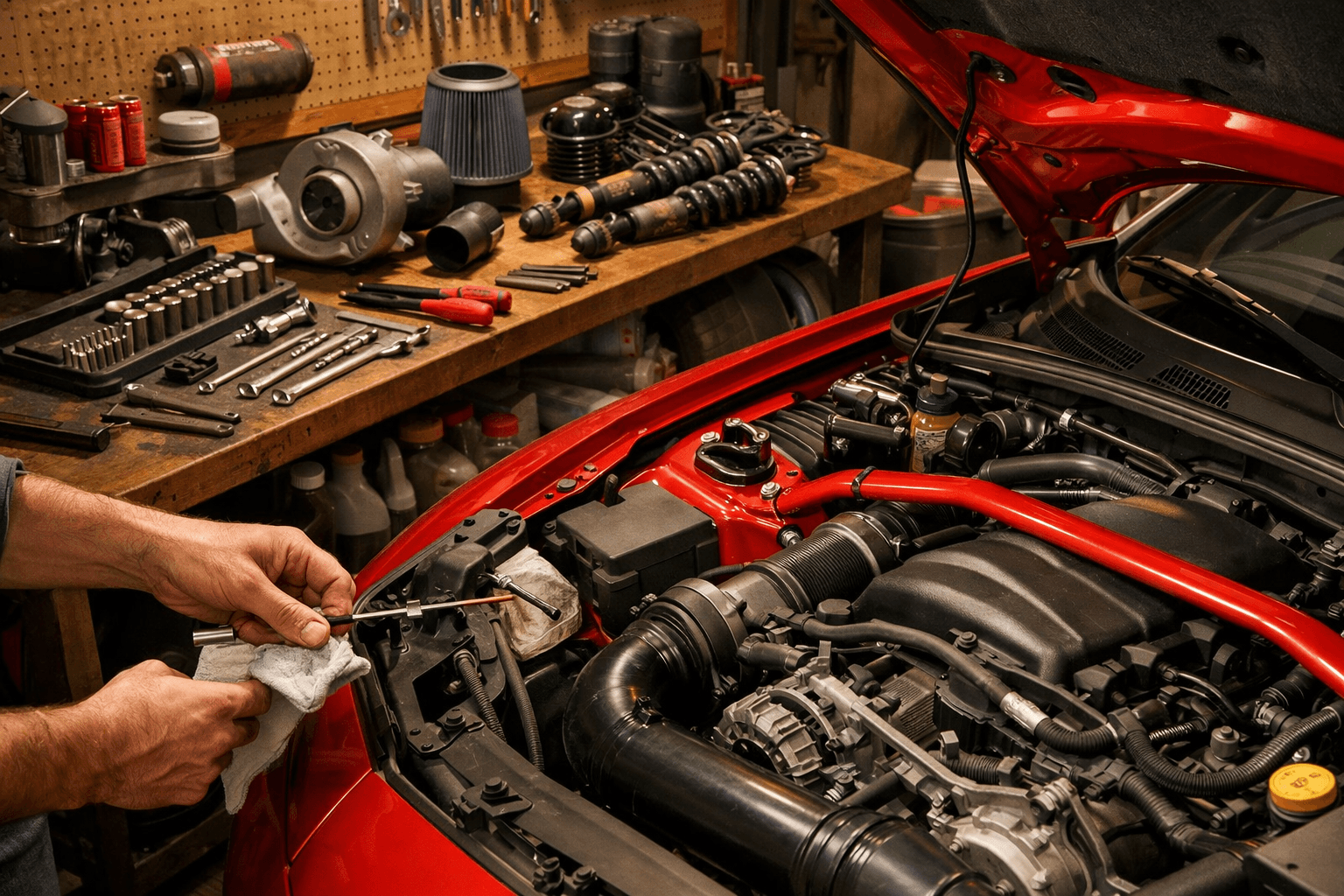
Bring an OBD2 scanner. If you see codes like P0300 (random misfire) or P0420 (catalytic converter efficiency), that’s negotiation leverage — or a reason to walk away.
Know when not to DIY the inspection. If the car has heavy mods — turbo kits, tunes, lowered suspension — spend the $150 for a professional pre-purchase inspection. It’s cheaper than replacing a blown differential.
And before you even start shopping, read up on market trends. Prices are shifting — our breakdown of new car prices in 2026 explains why used performance cars are holding value.
Step-by-Step Guide
-
Set Your Real Budget
Don’t just look at sticker price. Plan for tax, title, insurance (call your agent first), and $1,000–$2,000 in catch-up maintenance. Performance tires alone can run $800–$1,200 a set.
-
Target Reliable Platforms
For affordable performance cars 2026 buyers trust, focus on proven engines: Ford’s 5.0 Coyote V8, GM’s LS/LT V8s, Mazda’s Skyactiv 2.0, Toyota’s FA24 in the GR86. These have track records.
Pro Tip: Stock is gold. The more original the car, the less abuse it’s likely seen.
-
Check Service Records
Oil changes every 5,000–7,500 miles minimum. Brake fluid flushed every 2–3 years. Coolant changed per manufacturer schedule (see official sites like Toyota Owners). No records? Price drops.
-
Inspect Wear Items
Look at brake rotor lips, pad thickness, tire edge wear (track use shows up here), clutch engagement point on manuals. Replacement clutch on a Mustang GT? $1,500–$2,000 at a shop.
-
Test Drive Like You Mean It
Listen for differential whine, grinding shifts, steering vibration under braking. Hard acceleration should be smooth — not hiccuping. If it pulls under braking, you may have caliper or alignment issues.
-
Research Ownership Costs
Check fuel economy at EPA.gov. A Camaro SS drinks more than a Miata — obviously — but know the numbers before you commit.
Common Mistakes to Avoid
- Buying Someone’s Track Toy: I’ve seen this a hundred times. Overheated brakes, tired suspension, cracked bushings. Fun on Instagram, expensive in your driveway.
- Ignoring Insurance Quotes: A 22-year-old in a Mustang GT can pay $250–$400/month. Call first.
- Falling for Cheap Mods: Cold air intakes and loud exhausts don’t add value. They often mean aggressive driving.
- Skipping the Inspection: That $150 check can save $4,000 in engine repairs.
- Overpaying in a Hot Market: Watch trends like we covered in US Auto Sales 2026 Forecast Drops 2.6%. Slower sales mean more negotiating power.
When to Call a Professional
If you hear rod knock (deep metallic tapping that rises with RPM), walk away — or bring a pro. Engine rebuilds on modern performance cars run $5,000–$12,000.
If the title is branded (salvage, rebuilt), have a body shop inspect frame rails and suspension mounting points. Bent structure kills resale and safety.
Fair pre-purchase inspection cost: $120–$180. If a seller refuses? That’s your red flag.
Ask the mechanic: “Any signs of tuning?” “Compression numbers OK?” “Evidence of track overheating?” A good shop will answer clearly, not dodge.
Recommended Products
- BlueDriver OBD2 Scanner ($99): What I use in my own garage. Easy app, solid diagnostics.
- Michelin Pilot Sport All Season 4: Great balance of grip and longevity for daily-driven fun cars.
- NOCO Boost GB40 Jump Pack ($120): Because used sports cars sometimes sit.
- Pre-Purchase Inspection: Local ASE-certified shop (find one via ASE.com).
Do This
- Buy the cleanest, most stock example you can find
- Budget $1,500 for immediate maintenance
- Run the VIN for recalls and history
- Test drive with radio off — listen carefully
Don't Do This
- Don’t max your budget to the dollar
- Don’t trust “never tracked” without proof
- Don’t skip insurance quotes
- Don’t rush because “someone else is coming to see it”
DIY Difficulty: 🔧 2/5
Money Saved: $7,000–$10,000 vs buying new
Shopping smart for sports cars under 35000 isn’t about luck — it’s about patience and inspection. There are fantastic affordable performance cars 2026 buyers can snag right now if they avoid ego buys and do the homework.
You can do this. Take your time, check everything twice, and don’t be afraid to walk away. The right car will show up — and when it does, you’ll know.
Drop your shortlist in the comments and I’ll tell you what I’d look for. Stay sharp out there — and remember, a $150 inspection beats a $6,000 engine rebuild every single time.
Disclosure: This article may contain affiliate links. If you make a purchase through these links, we may earn a small commission at no extra cost to you. This helps support RevvedUpCars.com and keeps Mike's toolbox stocked.
Learn more.
Get the latest car reviews in your inbox
Join thousands of car enthusiasts. No spam, unsubscribe any time.



Comments
Leave a comment