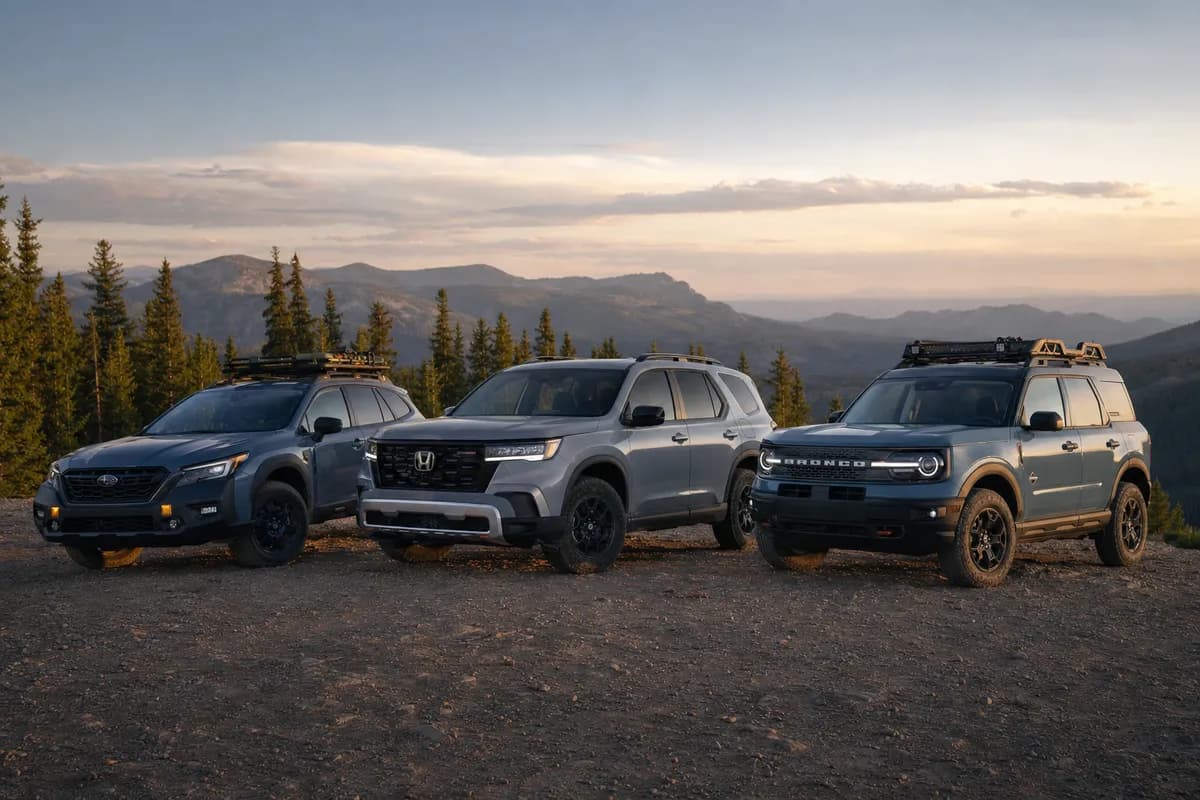
A new soft-road DIY community is turning Subaru Outback Wilderness, Passport TrailSport, and Bronco Sport Badlands into tougher daily adventure rigs.
Not every adventure rig needs a rooftop tent, 40 gallons of water, and a five-figure build sheet. In 2026, a growing group of owners is proving that the sweet spot lives much lower on the lift. They drive their Subaru Outback Wilderness, Honda Passport TrailSport, and Ford Bronco Sport Badlands to work all week, then spend weekends swapping tires, adding skid plates, and trading maintenance tips in a fast-growing soft-road DIY scene.
Why soft-road builds are hitting the sweet spot in 2026
The current wave of adventure builds looks different from the full-overland boom of the last few years. Rising vehicle prices, expensive camping gear, and the simple reality of daily driving have pushed many owners toward lighter, smarter upgrades. The goal is not to cross the Darién Gap. It is to handle forest roads, muddy trailheads, snow-covered access routes, and rocky campsites without wrecking ride quality or reliability.
That shift makes perfect sense with today’s factory soft-roaders. The 2026 Subaru Outback Wilderness, 2027 Honda Passport TrailSport, and Ford Bronco Sport Badlands all arrive with real off-pavement hardware, but they stop short of hardcore body-on-frame truck territory. Owners are seeing that a few carefully chosen, reversible mods can unlock a lot more capability than the stock spec sheet suggests.
These vehicles also attract a different kind of enthusiast. Many are first-time modifiers. They are comfortable doing fluid changes, installing bolt-on protection, and comparing tire sizes in owner groups, but they are not interested in turning a commuter into a dedicated trail toy. That is exactly why the soft roader maintenance community 2026 trend feels so strong right now: it is practical, social, and attainable.
The three rigs leading this DIY movement
The formula is similar across all three vehicles: all-wheel drive, decent ground clearance, factory off-road drive modes, and enough cargo space for real travel. But each one attracts a slightly different owner and a slightly different upgrade path.
- 2026 Subaru Outback Wilderness: roughly 9.5 inches of ground clearance, all-terrain-ready stance, standard AWD, and a loyal owner base already fluent in roof racks, skid plates, and campsite utility. Searches for 2026 Subaru Outback Wilderness mods are climbing because the platform responds well to simple upgrades without losing its daily-driver manners.
- 2027 Honda Passport TrailSport: a larger two-row crossover with a strong V6 tradition, generous cabin room, and improved trail credibility in TrailSport trim. Interest in 2027 Honda Passport TrailSport DIY upgrades is growing among owners who want a family road-trip vehicle that can also survive rutted access roads and moderate trail use.
- Ford Bronco Sport Badlands: the most overtly trail-focused of the group, with twin-clutch rear-drive hardware, terrain modes, and solid aftermarket support. The demand around Ford Bronco Sport Badlands skid plate tires combinations shows how owners are fine-tuning protection and traction rather than chasing giant lifts.
What ties them together is factory capability with a realistic ceiling. None of these models begs for one-ton axles or beadlocks. They benefit most from tires, armor, recovery gear, and disciplined maintenance. That makes them perfect for driveway wrenching and community knowledge-sharing.
The mods owners are actually doing
The best daily driver adventure vehicle mods are the ones you notice on a trail, not on your monthly budget. In this new community, owners are prioritizing upgrades that improve durability and traction while preserving fuel economy, ride comfort, and warranty-friendly service access.
1. Tires first, always
If you want one mod that changes everything, it is tires. A quality all-terrain or trail-oriented all-weather tire improves loose-surface traction, puncture resistance, and confidence far more than most cosmetic add-ons. The trick is staying realistic about size and weight.
- Outback Wilderness owners often stay close to stock diameter and choose lighter A/T options to protect acceleration and CVT behavior.
- Passport TrailSport owners are focusing on sidewall strength and wet-road manners, since many of these vehicles still see family highway duty.
- Bronco Sport Badlands owners tend to push a little harder on tread aggressiveness, but smart builders still avoid oversized setups that hurt gearing and suspension travel.
From the shop side, this is where builds go right or wrong. Add too much tire, and you create rubbing, reduced fuel economy, slower braking response, and wheel-bearing stress. Pick the right tire, and your “soft-roader” suddenly feels much more composed on gravel, snow, and washboard roads.
2. Skid plates and underbody protection
Protection is the most underrated upgrade in this segment. A daily-driven rig does not need rock-crawler armor, but it absolutely benefits from guarding oil pans, rear diffs, transmission cases, and vulnerable plastic undertrays. One bad hit on a hidden rock can end a weekend and drain a bank account.
This is why skid plates are central to the new DIY culture. They are usually bolt-on, often reversible, and easy to inspect after a trip. On the Bronco Sport Badlands especially, owners are actively comparing aluminum versus steel options, balancing weight against impact resistance.
Outback and Passport owners are doing the same math. Aluminum plates are popular because they resist corrosion and keep weight down, which matters on crossovers that spend most of their life on pavement. Steel still makes sense for owners who regularly see sharper ledges and deeper ruts, but for many soft-roaders, lighter protection is the smarter call.
3. Recovery gear that fits the mission
The new soft-road crowd is refreshingly realistic about recovery gear. Instead of building for a solo expedition into nowhere, they are packing for the kinds of mistakes that happen on snow, mud, sand, and steep trail access roads. That means traction boards, recovery straps, shackles, tire deflators, a portable air compressor, and a full-size spare if possible.
- Most useful beginner recovery items:
- Traction boards
- Rated recovery strap or kinetic rope matched to vehicle weight
- Soft shackles or properly rated D-rings where appropriate
- 12-volt air compressor
- Tire repair kit
- Work gloves and a compact shovel
The key difference from the old overland mindset is restraint. Owners are learning when not to add weight. A crossover packed with steel bumpers, fuel cans, drawers, and oversized accessories gets worse at the exact things people bought it for in the first place.
Maintenance is becoming the heart of the community
Here is the part old-school techs love: the smartest DIY trend is not glamorous. Owners are building communities around maintenance schedules, post-trail inspections, and wear prevention. That is a healthy correction for a hobby that sometimes spent too much time on accessories and not enough on fundamentals.
Modern soft-roaders put extra stress on tires, brakes, wheel bearings, bushings, and fluids when they leave pavement. Dust, mud, repeated heat cycles, and rough surfaces accelerate wear in ways suburban commuting does not. Owners who understand that are keeping these rigs more capable for the long haul than plenty of heavily modified builds.
Home-maintenance upgrades and checks owners are sharing
- More frequent tire rotations: especially critical on AWD systems, where uneven tread wear can create driveline headaches.
- Post-trip underbody inspections: look for torn boots, dented exhaust sections, loose splash shields, and fluid seepage.
- Brake service before it is urgent: mud and grit shorten pad and rotor life faster than many new owners expect.
- Differential and transfer case fluid attention: especially for owners who tow, ford water, or run long miles on rough roads.
- Alignment checks after tire and suspension changes: one small deviation can chew through expensive all-terrains in a hurry.
This is where owner groups, forums, and local meetups are earning their keep. People are posting torque specs, sharing lift-point photos, comparing skid plate install time, and warning others about what actually rubs after a tire swap. That kind of ground-level information is gold, and it is helping first-time builders avoid costly mistakes.
The new adventure build ethos is simple: protect the vehicle, improve traction, carry smart recovery gear, and stay on top of maintenance. Do that well, and a modern soft-roader can go much farther than the internet usually gives it credit for.
Verdict: capability without excess is the whole point
The rise of the Outback Wilderness, Passport TrailSport, and Bronco Sport Badlands DIY crowd says a lot about where enthusiast culture is heading. People still want adventure. They just want it in a vehicle that starts every morning, fits in a parking garage, and does not require a second mortgage in accessories.
That is why this movement matters. It is making off-pavement driving more approachable, more mechanical, and frankly more honest. The best 2026 Subaru Outback Wilderness mods, 2027 Honda Passport TrailSport DIY upgrades, and Ford Bronco Sport Badlands skid plate tires setups are not the flashiest ones. They are the builds that survive the commute, handle the weekend, and come home ready for the next trip with nothing more dramatic than a wash, an inspection, and maybe a tire rotation.
If that sounds less glamorous than a full overland transformation, good. That is the point. The new soft-road DIY community is not chasing fantasy. It is building capable, maintainable, daily-driven adventure rigs the smart way.
Affiliate disclosure: This article contains affiliate links. RevvedUpCars may earn a small commission on qualifying purchases at no extra cost to you.