
You’re staring at that cherry-red ’67 Camaro on Bring a Trailer. The photos look flawless, the seller’s story tugs at your heart, and the comments section is hyping it up like it’s the second coming of small-block Chevy. Before you jump in, you need solid Bring a Trailer bidding tips — because once you click “Place Bid,” there’s no cooling-off period and no do-overs.
I’ve seen guys wire $45,000 for a “numbers-matching” classic that turned out to be half bondo and a junkyard engine. Buying classic cars online can be a goldmine or a money pit, depending on how sharp you are. Today, I’ll walk you through how to evaluate a Bring a Trailer car before you bid — like you’ve got a grumpy master mechanic looking over your shoulder.
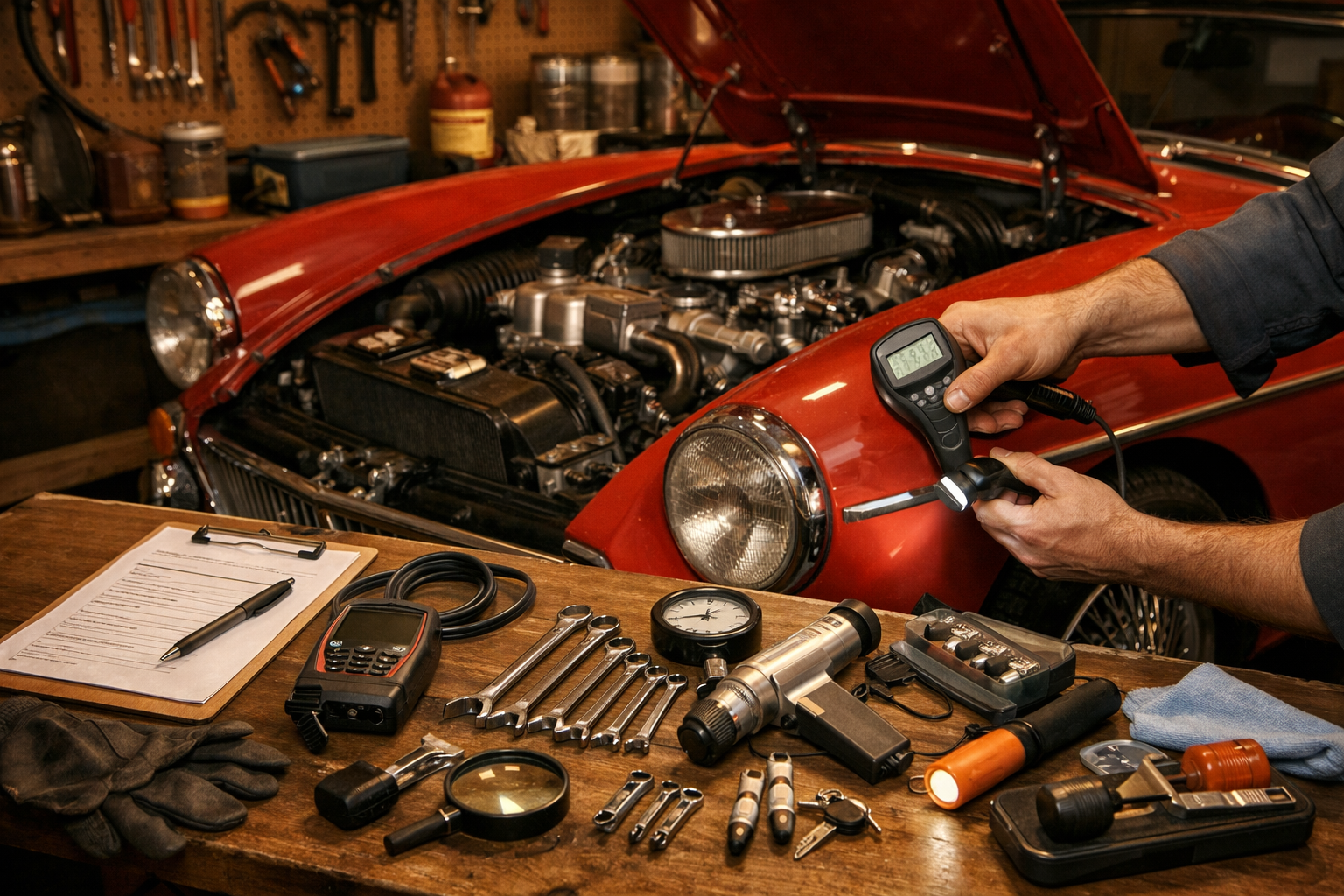
This is your no-nonsense auction inspection guide and collector car checklist. We’re talking rust, paperwork, seller red flags, and how to avoid paying concours money for a driver-quality car.
What You’ll Need
- Tools: Flashlight, magnet wrapped in cloth, notebook, VIN decoder app, vehicle history report (Carfax or AutoCheck)
- Parts/Materials: Pre-purchase inspection ($150–$400), shipping quote ($800–$2,000 average)
- Time: 2–4 hours of research per car
- Difficulty: 🔧🔧🔧 (Moderate — requires patience and skepticism)
- Dealer Cost: Auction broker service $1,000–$2,500 vs DIY Cost: $0 — You Save: $1,000+
Why This Matters
A bad classic car purchase doesn’t just sting — it lingers. Rust repair alone can run $5,000 to $20,000 depending on severity. An engine rebuild? $4,000 for a small-block Chevy, $12,000+ for a vintage Porsche flat-six.
In 20 years of wrenching, I’ve seen “great deals” that needed floor pans, brake lines, and full suspension rebuilds before they were even safe to drive. Skip proper evaluation, and your dream car becomes garage art.
Good Bring a Trailer bidding tips protect your wallet and your safety. And remember — classics don’t have the safety nets of modern cars. No traction control. Sometimes no airbags. You want it mechanically right.
Before You Start
⚠️ WARNING: Never rely solely on auction photos. Photos hide rust, oil leaks, and frame damage better than any shady used car lot.
First, check the VIN in the listing. Run it through NHTSA recall database. Even classics from the ’80s and ’90s can have open recalls. I also recommend reviewing our Car Recall Checklist: Protect Yourself Today before bidding.
Ask the seller directly: “Can I schedule a pre-purchase inspection?” If they dodge the question, that’s a red flag waving in your face.
When NOT to DIY the evaluation? If it’s a six-figure Ferrari or air-cooled 911 and you’re not familiar with that platform. Pay a marque specialist $300–$500. That’s cheap insurance.
Step-by-Step Guide
-
Study the Photos Like a Detective
Zoom in on panel gaps. Uneven spacing around doors or trunk lids often means accident repair. Look at reflections down the body — waves indicate filler.
Pro Tip: Ask for photos of the car on a lift. Frame rails and floor pans tell the real story.
-
Check for Rust — The Silent Killer
Rocker panels, wheel arches, trunk floors, and under the battery tray are usual suspects. Surface rust is manageable. Structural rust? Walk away or budget $10,000+.
A magnet (wrapped in cloth so you don’t scratch paint) helps detect body filler during in-person inspections.
-
Verify “Numbers Matching” Claims
For muscle cars, engine and transmission stampings should match factory records. Ask for close-up photos of casting numbers.
Fake “matching” drivetrains knock $5,000–$20,000 off collector value. This is core in any auction inspection guide.
-
Review Maintenance Records
No records? Assume deferred maintenance. Timing belts (every 60k–100k miles on many classics from the ’80s–’90s) cost $800–$1,500.
Check manufacturer service intervals when available. Many are archived on official brand sites or summarized by Consumer Reports.
-
Budget for Immediate Baseline Service
Plan on changing all fluids: oil, coolant, brake fluid, differential. That’s $200–$400 DIY, $800+ at a shop.
Think of it like buying a house — you change the locks. With cars, you change the fluids.
-
Factor in Market Trends
Classic prices move with the economy. Our Car Prices 2026: Buyer’s Market? breakdown explains how softening demand can work in your favor.
Don’t get caught in auction fever. Set your max bid and stick to it.
Common Mistakes to Avoid
- Bidding emotionally. I’ve seen bidders add $5,000 in the last 30 seconds just to “win.” Auctions are supposed to be fun. Regret isn’t.
- Ignoring shipping costs. Cross-country enclosed transport can hit $2,000. That’s part of your budget.
- Skipping the PPI. I’ve seen hidden head gasket failures that only showed up during compression testing.
- Overlooking insurance costs. Specialty classic insurance runs $400–$1,200 per year. Get a quote first — check our Choose Best Car Insurance 2026: Save Smart Today guide.
- Forgetting emissions laws. States like California have unique rules. Review EPA guidance at EPA.gov and local regulations before buying an out-of-state car.
When to Call a Professional
If the listing mentions “fresh repaint” but no photos of the prep work — get a body shop inspection. If it’s a European exotic with complex fuel injection (looking at you, ’80s Mercedes and Porsche), hire a specialist.
Fair price for a pre-purchase inspection: $150–$400 for domestic classics, $300–$600 for high-end imports. If a shop quotes $1,200 without compression testing or lift time, that’s padding the bill.
Ask: “Will you provide compression numbers? Leak-down results? Undercarriage photos?” If they hesitate, find another shop.
Recommended Products
- BlueDriver OBD2 Scanner ($120): Great for ’96+ classics. What I use in my own garage.
- Innova 5610 Scanner ($350): More advanced diagnostics for modern classics.
- Hagerty Valuation Tools (Free–$60/year): Solid market value tracking.
- LED Inspection Light ($25): Don’t cheap out — bright light exposes sins.
Do This
- Set a hard max bid before auction day
- Pay for a pre-purchase inspection
- Budget 10–15% extra for surprise repairs
- Verify VIN and documentation independently
Don’t Do This
- Trust glossy photos alone
- Assume “restored” means properly rebuilt
- Skip insurance and registration research
- Let auction adrenaline control your wallet
Smart Bring a Trailer bidding tips aren’t about killing the fun — they’re about making sure your dream car doesn’t turn into a financial hangover. Buying classic cars online can absolutely work in your favor if you treat it like a mechanical inspection, not an online shopping spree.
Use this collector car checklist, stay patient, and remember: there will always be another car. You can do this — just keep your head cooler than that small-block after a fresh coolant flush.
Got a specific listing you’re unsure about? Drop it in the comments and I’ll give you my take. Stay smart, bid wisely, and remember — a $20 repair manual saves a $2,000 repair bill.