
Honda executives delivered an unusually blunt message in Shanghai this week: the balance of power with Honda China suppliers has shifted—and the Japanese automaker must adapt or fall behind. Speaking at an April 15, 2026 supplier summit, Honda Motor Co. confirmed it will source a significantly higher share of batteries, semiconductors, and software from Chinese partners for its next wave of electric vehicles.
This isn’t just a regional procurement tweak. It reflects how quickly the Chinese auto industry has moved from low-cost assembler to technology gatekeeper, particularly in EV manufacturing China now dominates. For global automakers navigating tariffs, geopolitics, and slowing demand in the U.S. and Europe, the supplier power shift could redefine cost structures for the next decade.
According to Reuters, Honda aims to cut EV production costs in China by 20% by 2028 through deeper local sourcing. That target tells you everything: price competition is intensifying, and China’s supplier ecosystem now holds many of the cards.
The Headlines
- What: Honda will expand local sourcing from Chinese suppliers to reduce EV costs and accelerate development
- Who: Honda Motor Co. and key Chinese battery, chip, and software suppliers
- When: Announced April 15, 2026; phased in through 2028
- Impact: Signals growing supplier leverage in China and reshapes global EV cost competition
- Key Number: 20% targeted EV cost reduction by 2028
What Happened
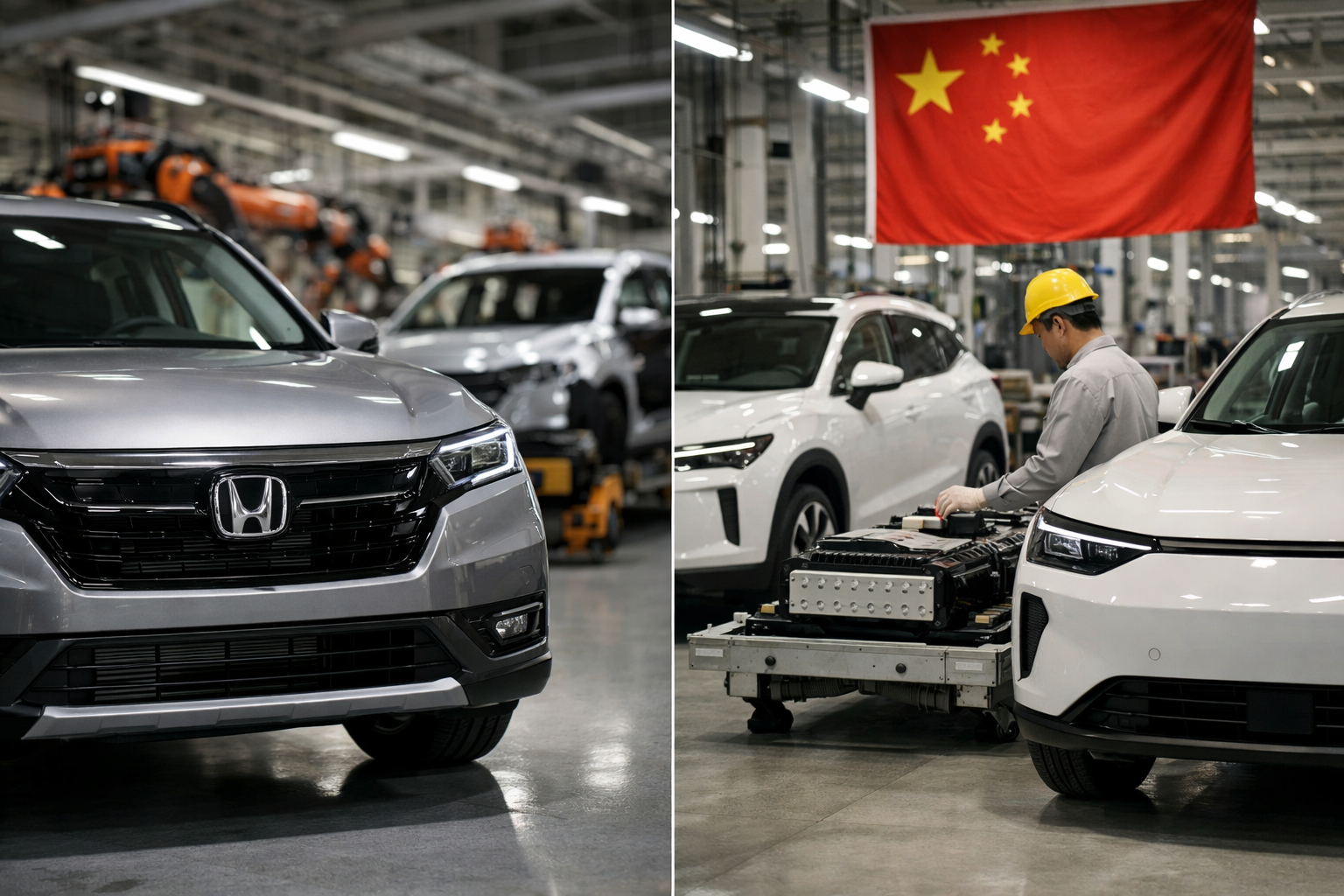
Honda told investors and suppliers that it will increase local content in its China-built EVs from roughly 65% today to more than 80% by 2028, according to company statements and local media reports. That includes battery cells, power electronics, advanced driver-assistance systems, and in-car software stacks.
Additionally, Honda confirmed expanded partnerships with CATL for lithium iron phosphate (LFP) battery supply and with Chinese semiconductor firms for power management chips. The company also hinted at co-developing vehicle operating systems tailored to Chinese consumer preferences—an area where domestic brands like BYD and Nio have moved faster.
“To remain competitive in China, we must leverage the speed and innovation of local suppliers,” a Honda executive said during the Shanghai event.
Notably, Honda’s China sales fell 10% year-over-year in 2025, according to company filings, even as overall Chinese EV sales grew more than 25%, per data cited by Bloomberg. Domestic players now control over 60% of China’s EV market, leaving foreign joint ventures scrambling.
Why It Matters
The shift toward Honda China suppliers underscores a broader reality: China is no longer just the world’s largest car market—it is the epicenter of EV cost innovation. Battery pack prices in China averaged below $100 per kWh in 2025, according to BloombergNEF estimates, undercutting Western costs by 20–30%.
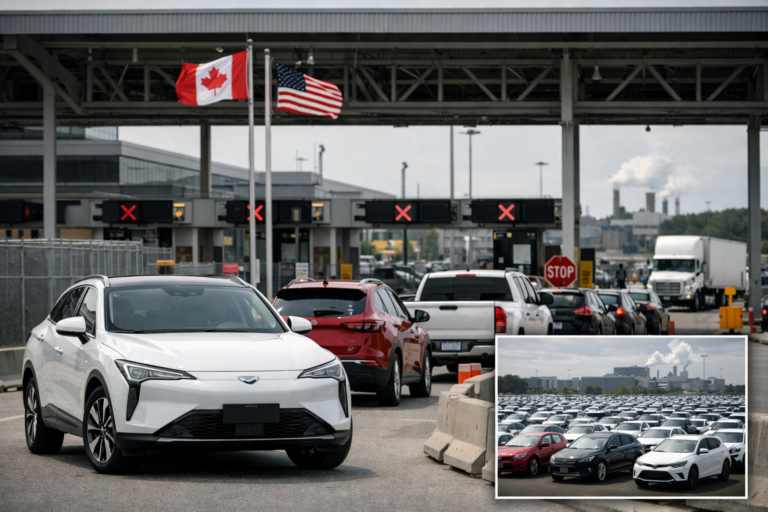
However, deeper reliance on Chinese suppliers creates geopolitical exposure. The U.S. and EU have both tightened trade scrutiny, and Washington’s restrictions on advanced semiconductor exports complicate cross-border technology flows, according to the U.S. Department of Commerce.
For consumers, this is about price. As we’ve reported in New Car Prices 2026 May Rise Again, global cost pressures—from raw materials to tariffs—are pushing MSRPs higher. If Honda can truly trim 20% from EV production costs in China, that could stabilize pricing in its largest market and preserve margins elsewhere.
In contrast, if supplier leverage keeps increasing, automakers may lose negotiating power, squeezing profits even as retail prices remain high. That’s the paradox: cheaper components don’t automatically mean cheaper cars.
The Bigger Picture
The evolution of Honda China suppliers mirrors China’s broader industrial policy. For two decades, Beijing incentivized joint ventures and technology transfer. Now, domestic suppliers lead in batteries, infotainment software, and even vehicle architectures.
Furthermore, China exported more than 5 million vehicles in 2025, surpassing Japan as the world’s largest auto exporter, according to China’s customs data reported by Reuters. Much of that growth came from EV manufacturing China-based firms have scaled at breathtaking speed.
Meanwhile, Western automakers face diverging market realities. Europe’s EV growth has cooled, as detailed in our coverage of the Europe EV Market Share Slows — Feb 2026, while U.S. demand is softening amid higher interest rates. That makes China’s cost base even more attractive—and strategically sensitive.
There’s also a technology angle. As vehicles become software-defined platforms—think over-the-air updates and AI assistants, like those highlighted in Amazon NVIDIA Car AI Sparks Automaker Rush—control over chips and code becomes as critical as engines once were. Increasingly, that expertise sits in Shenzhen and Shanghai, not Detroit or Tokyo.
What the Competition Is Doing
Toyota, Honda’s closest Japanese rival, has taken a more cautious approach. It continues to localize production in China but emphasizes in-house battery development and partnerships with Panasonic. Toyota’s China EV lineup still trails BYD and Tesla in market share, however.
Volkswagen, by contrast, has doubled down. The German automaker invested €2.5 billion in its Hefei innovation hub in 2024 and expanded partnerships with XPeng for software and platform sharing, according to Bloomberg. Yet its Skoda brand recently scaled back China ambitions, as we analyzed in Skoda China Exit Signals Global Auto Slowdown.
Meanwhile, Tesla localizes aggressively in Shanghai, sourcing most components domestically to keep Model 3 and Model Y pricing competitive. BYD, which controls much of its own battery supply chain, enjoys vertical integration that foreign brands struggle to match.
The competitive takeaway: automakers that resist Chinese supplier ecosystems risk higher costs and slower product cycles. However, those that embrace them accept political and strategic trade-offs.
What It Means for You
If you’re shopping for a Honda EV in China, this strategy likely means better feature content at a lower price point over the next two model years. Faster infotainment updates and improved battery range are plausible outcomes of closer local integration.
However, for buyers in the U.S. or Europe, the impact is indirect. Honda may use cost savings from China operations to subsidize global R&D or offset tariff pressures. As a result, it could remain competitive even as overall demand softens, as we outlined in US Auto Sales 2026 Forecast Drops 2.6%.
There’s a less obvious implication: supply chain concentration raises resilience questions. Pandemic-era disruptions showed how fragile global sourcing can be. If geopolitical tensions escalate, heavy dependence on EV manufacturing China could backfire.
What to Watch Next
First, monitor whether Honda hits its 20% cost-reduction target by 2028. If achieved, competitors will feel pressure to match or exceed that benchmark.
Second, watch trade policy. Any new tariffs or export controls from Washington or Brussels could alter the economics overnight. Additionally, track whether Honda expands this sourcing model to Southeast Asia or keeps it China-focused.
Finally, pay attention to consumer reception. If China-built Honda EVs gain market share from BYD, Tesla, and SAIC in 2026–2027, it validates the strategy. If not, it suggests supplier alignment alone isn’t enough.
The Upside
- Lower EV production costs and potential price stabilization
- Faster innovation cycles through close supplier collaboration
- Improved competitiveness in the world’s largest EV market
- Access to advanced battery and software ecosystems
The Concerns
- Increased geopolitical and trade exposure
- Reduced bargaining power for global automakers
- Potential supply chain concentration risk
- Margin pressure if savings don’t translate to pricing power
Having covered multiple EV investment cycles, I can tell you this moment feels pivotal. The rise of Honda China suppliers isn’t a side story—it’s central to how the next generation of vehicles will be designed, priced, and sold worldwide.
The press release language talks about “collaboration” and “efficiency.” The reality is more strategic: power in the global supply chain is shifting east. Automakers that navigate that shift wisely will thrive. Those that miscalculate may find themselves paying more—for parts, and for lost relevance.
Disclosure: This article may contain affiliate links. If you make a purchase through these links, we may earn a small commission at no extra cost to you. This helps support RevvedUpCars.com. Learn more.