Exclusive analysis: US-Canada border blocks on Chinese cars: impacts on Canada imports, Chinese EV tariffs and 2026 auto trade policy. Read analysis.
In this article
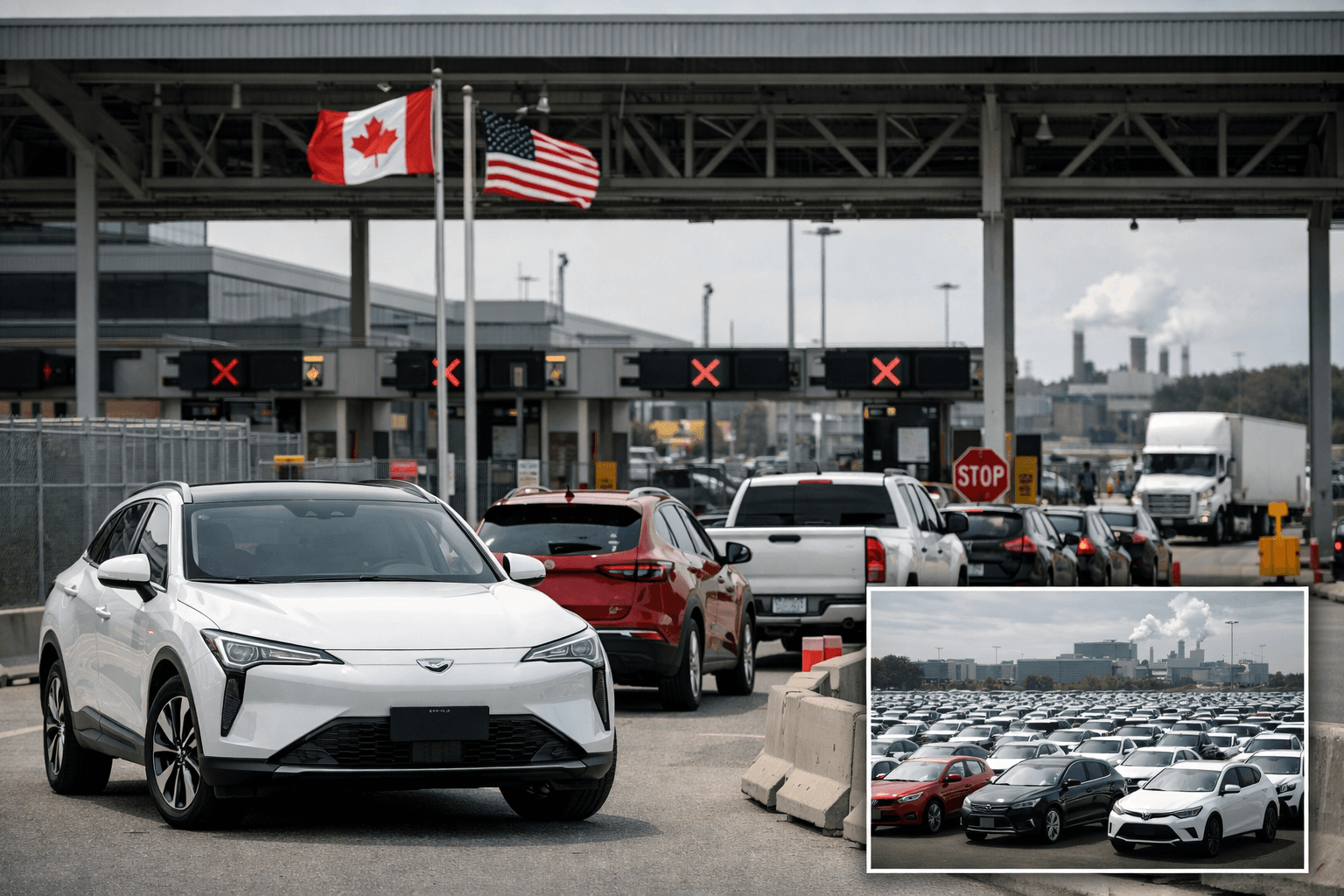
U.S. and Canadian customs officials have begun holding select Chinese-built electric vehicles at ports of entry this week, escalating fresh tensions over Chinese cars US market access and cross-border auto trade. The enforcement actions follow Washington’s confirmation on April 12, 2026, that 100% tariffs on Chinese EVs remain in place for 2026 model-year imports, with Canada signaling parallel reviews of its own import screening process.
Although no blanket “ban” has been formally announced, logistics firms and two automakers told Reuters that shipments routed through Canadian ports are facing additional scrutiny before entering the U.S. market. That matters because several Chinese brands had explored Canada as a potential foothold after being effectively priced out of direct U.S. entry.
However, the real story isn’t about a handful of detained vehicles. It’s about how North American auto trade policy in 2026 is hardening around EV supply chains—and what that means for pricing, competition, and consumer choice over the next five years.
The Headlines
What: U.S. and Canadian officials increase scrutiny of Chinese-built EV imports amid tariff enforcement
Who: U.S. Customs and Border Protection, Canada Border Services Agency, Chinese EV manufacturers
When: Announced and enforced mid-April 2026
Impact: Further limits near-term entry of low-cost Chinese EVs into North America
Key Number: 100% U.S. tariff on Chinese EV imports
What Happened
U.S. Customs and Border Protection (CBP) confirmed April 14 that it is “actively enforcing existing tariff and trade compliance measures” on Chinese-origin electric vehicles. The move follows the Biden administration’s 2024 decision—still in effect—to impose a 100% tariff on Chinese EVs under Section 301 authority, according to the Office of the U.S. Trade Representative.
Meanwhile, Canada Border Services Agency officials stated they are reviewing vehicle origin documentation for shipments arriving in Vancouver and Halifax that are destined for re-export to the U.S. While Canada’s tariff regime differs, Ottawa imposed its own 100% surtax on Chinese EVs in late 2024, per Bloomberg reporting at the time.
According to logistics providers, several 2026 model-year EV shipments from Chinese manufacturers were temporarily held for verification of battery sourcing and assembly origin. That distinction matters because under USMCA rules, vehicles assembled in Mexico or Canada can enter tariff-free—provided they meet regional content requirements.
However, simply routing a Chinese-built vehicle through Canada does not change its country of origin. Customs officials are reportedly scrutinizing documentation to prevent tariff circumvention, especially as Chinese automakers explore CKD (completely knocked down) assembly strategies in North America.
Why It Matters
The immediate effect is symbolic but strategic: it reinforces that the Chinese cars US market door remains effectively closed at scale. With a 100% tariff layered on top of existing 2.5% duties, a $30,000 Chinese EV would theoretically land at $60,000 before dealer markup—erasing its price advantage.
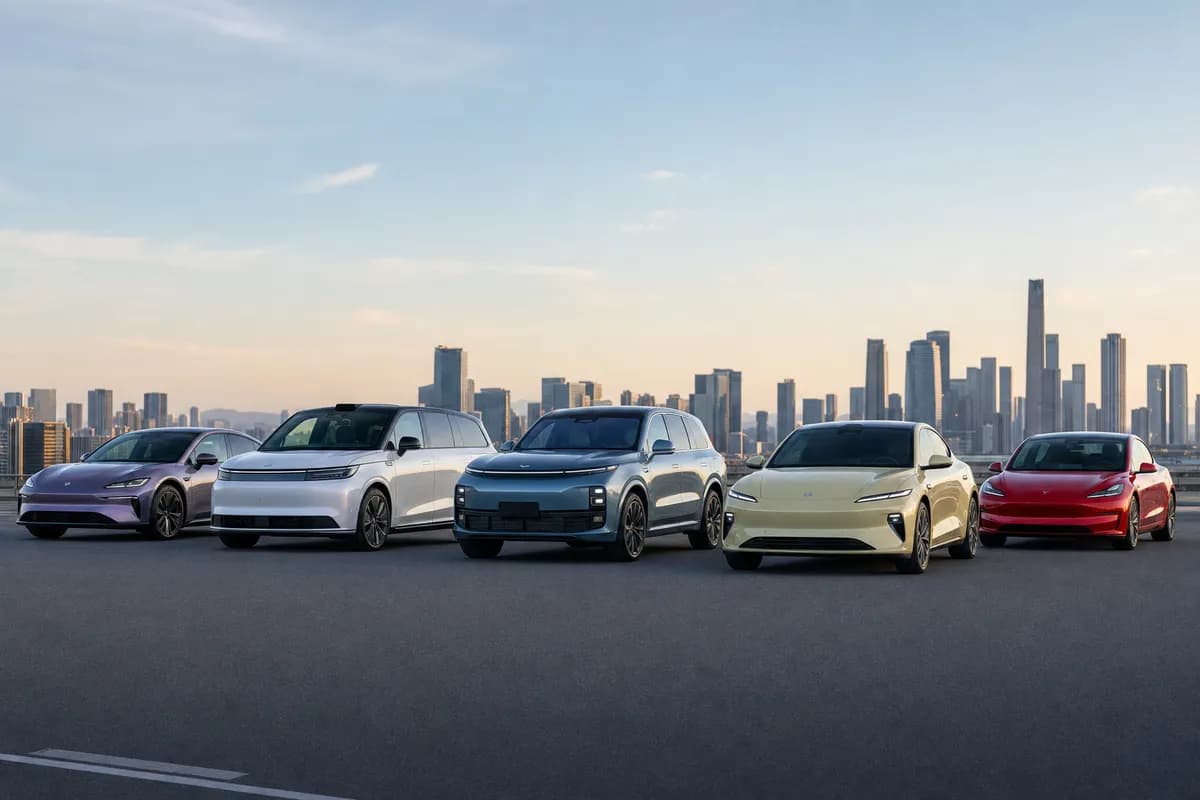
That’s significant because Chinese brands like BYD, SAIC, and Geely have dominated EV growth globally. BYD alone sold over 3 million electrified vehicles in 2025, according to company filings, surpassing Tesla’s global deliveries. However, their U.S. presence remains negligible outside of commercial buses.
Additionally, the crackdown complicates a workaround some analysts expected: entering Canada first, building brand awareness there, and then expanding south. Canada’s EV market is roughly 1.7 million annual vehicle sales—about one-tenth the size of the U.S.—so it’s not enough to justify massive standalone investment.
Advertisement
For consumers, the short-term takeaway is simple: don’t expect a wave of $25,000 Chinese EVs to suddenly appear at your local dealership. As we’ve covered in Chinese cars US ban: What buyers must know, trade policy—not product capability—is the primary barrier.
The Bigger Picture
This tension sits at the intersection of industrial policy and election-year politics. The Inflation Reduction Act ties federal EV tax credits to North American assembly and battery sourcing, per the U.S. Department of Energy. Therefore, even if tariffs disappeared tomorrow, most Chinese-built EVs would still be ineligible for the $7,500 federal incentive.
Moreover, Washington views Chinese EV overcapacity as a strategic threat. The International Energy Agency has warned about global EV manufacturing surplus, with China accounting for more than 60% of global EV production capacity. That imbalance has already contributed to pricing pressure in Europe, where tariffs were also raised in 2025.
In fact, Europe’s EV growth has slowed this year, as detailed in our coverage of Europe EV Market Share Slows — Feb 2026. Trade barriers are part of that story, but so is softening demand and subsidy fatigue. North America appears determined to avoid similar market whiplash by controlling entry more tightly.
The non-obvious insight? Blocking imports may protect domestic automakers in the short term, but it also reduces competitive pressure that historically drives down prices. U.S. EV transaction prices still average above $50,000, according to Cox Automotive estimates.
What the Competition Is Doing
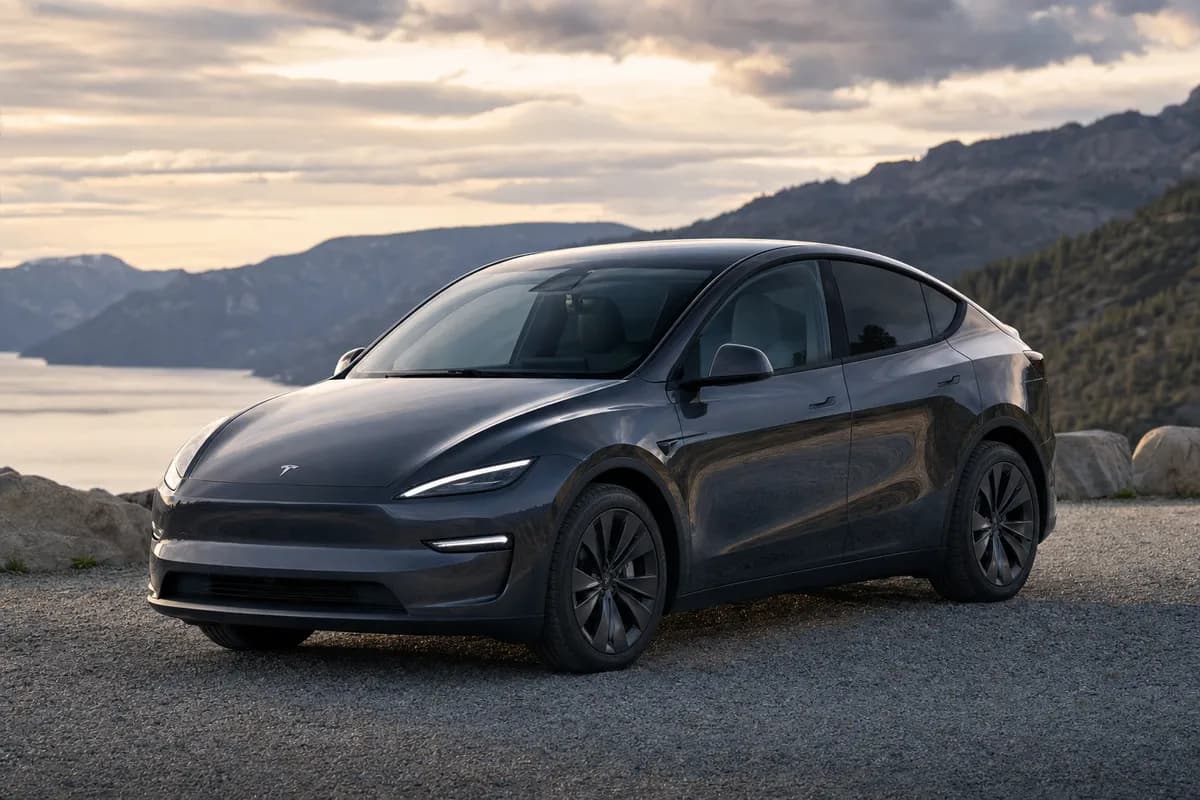
Tesla, which still commands roughly 50% of U.S. EV market share, benefits indirectly from restricted Chinese entry. Although Tesla imports some components from China, its U.S.-sold vehicles are assembled in California and Texas. Therefore, it remains insulated from the 100% tariff on finished Chinese vehicles.
Meanwhile, Ford and General Motors are accelerating domestic battery investments. GM’s Ultium Cells joint ventures and Ford’s BlueOval SK facilities aim to localize battery production and secure IRA credits. Both companies have warned, however, that aggressive low-cost Chinese imports would “destabilize” pricing, according to prior earnings calls.
Hyundai and Kia occupy a more nuanced position. While they assemble EVs in Georgia and Alabama for U.S. sales, they also compete aggressively in price-sensitive segments. If Chinese brands were allowed in at scale, Hyundai’s strategy—outlined in our analysis of Hyundai 58 Models by 2030: Market at Risk?—would face immediate margin pressure.
In contrast, European brands like Volkswagen and Volvo are already contending with Chinese competition on their home turf. VW’s struggles in China, and Skoda’s retreat, underscore how disruptive low-cost EV entrants can be when trade barriers are lower.
What It Means for You
If you’re shopping for an EV in 2026, this policy friction means fewer ultra-low-cost options in the near term. As we’ve outlined in Car Prices 2026: Buyer’s Market?, incentives and inventory levels are improving—but not because of Chinese competition.
However, don’t assume prices will fall dramatically. With limited new entrants and high battery material costs, automakers have little incentive to undercut aggressively. Therefore, buyers should focus on timing incentives, state rebates, and financing terms rather than waiting for a hypothetical $20,000 imported EV.
Additionally, if you’re considering a hybrid instead of a full EV, domestic and Japanese brands remain more accessible under current policy. Trade friction primarily affects fully assembled Chinese EVs, not hybrid imports from established partners like Japan or South Korea.
What to Watch Next
First, monitor whether any Chinese automaker announces North American assembly plans. Building in Mexico under USMCA rules could theoretically bypass tariffs—if content thresholds are met. That would require billions in investment and at least a two- to three-year timeline.
Second, watch the 2026 election cycle. Trade policy can shift quickly with a change in administration, although bipartisan skepticism toward Chinese EV imports suggests tariffs are unlikely to disappear overnight.
Finally, pay attention to enforcement details. If customs scrutiny expands to components—such as battery packs or software modules—it could ripple through global supply chains and affect even non-Chinese brands.
The Upside
Protects domestic EV manufacturing jobs and investments
Supports IRA-aligned North American supply chains
Reduces risk of sudden price undercutting from state-subsidized imports
Provides policy certainty for U.S.-based automakers
The Concerns
Limits consumer access to potentially lower-cost EV options
Reduces competitive pressure to lower U.S. EV prices
Risks retaliatory trade measures from China
May slow overall EV adoption if affordability remains constrained
Sarah's Industry Impact Rating: 8/10
This matters because it effectively locks the Chinese cars US market pathway for the foreseeable future, reshaping EV competition and pricing dynamics across North America.
Having covered three product cycles shaped by tariffs—from steel duties in 2018 to today’s battery sourcing rules—I can tell you this pattern is familiar: trade barriers buy time for domestic industry, but they rarely eliminate competitive pressure permanently. The Chinese cars US market story isn’t over; it’s simply moving to its next phase.
Over the next five years, the real question isn’t whether Chinese automakers can build compelling EVs—they already have. It’s whether they’ll build them in North America. If they do, today’s border tensions will look less like a blockade and more like the opening move in a longer industrial chess match.
Disclosure: This article may contain affiliate links. If you make a purchase through these links, we may earn a small commission at no extra cost to you. This helps support RevvedUpCars.com. Learn more.
Affiliate disclosure: some links on this page earn us a commission at no extra cost to you.
Mike Wrenchworth is the guy you call when something breaks, rattles, or makes a noise it shouldn’t. With 20 years as an ASE-certified master technician and a decade running his own independent shop in Austin, Texas, Mike has seen every automotive disaster imaginable—and fixed most of them. Now he shares his hard-won wisdom with RevvedUpCars readers, covering everything from basic maintenance to weekend restoration projects. Mike believes in doing it right the first time, buying quality tools, and never skipping the torque wrench. His garage currently houses a work-in-progress 1969 Camaro, a bulletproof Toyota Land Cruiser, and whatever his wife is driving this week. Mike’s philosophy: every car can be a great car with proper maintenance and a little mechanical sympathy.
Get the latest car reviews in your inbox
Join thousands of car enthusiasts. No spam, unsubscribe any time.



Comments
Leave a comment