
You roll into Cars & Coffee thinking your ride looks pretty sharp… then you park next to a guy who spent six hours detailing his paint and suddenly your “clean” daily looks like it just survived a pollen storm. I’ve seen it a hundred times. The good news? With the right Cars and Coffee tips, you don’t need a $90,000 build to turn your daily driver into something people circle with coffee cups in hand.
This isn’t about fake carbon fiber and bolting on every shiny part in the catalog. It’s about smart prep, clean details, and a couple of tasteful upgrades that make your car pop without draining your bank account. I’ll walk you through a practical car show preparation guide that works whether you’re driving a 2026 Subaru Outback Wilderness or a 10-year-old Civic.
What You’ll Need
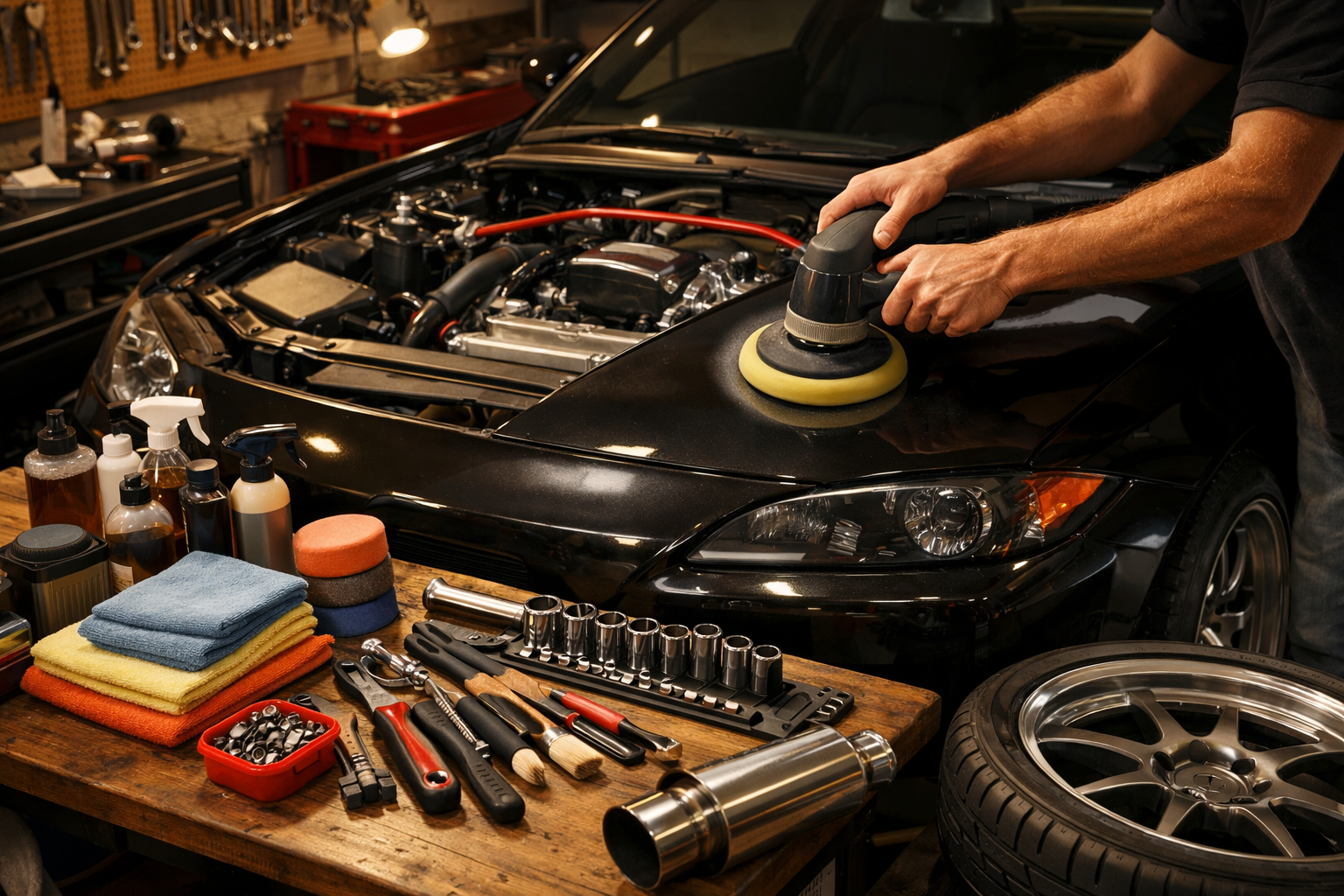
- Tools: 10mm socket set, torque wrench (consult owner’s manual for specs), dual-action polisher, microfiber towels (10+), trim removal tool set, interior vacuum
- Parts/Materials: Car wash soap ($15), clay bar kit ($25), polish ($20–$40), wax/sealant ($25), tire dressing ($10), interior detail spray ($12), basic aftermarket audio components ($200–$800)
- Time: 3–4 hours beginner, 2–3 hours experienced
- Difficulty: 🔧🔧 (mostly elbow grease)
- Dealer Cost: $250–$400 “detail package” vs DIY Cost: $120–$200 — You Save: $150+
Why This Matters (Cars and Coffee Tips That Actually Work)
Cars & Coffee crowds notice the little stuff. Swirled paint, faded trim, brake dust-caked wheels — that’s what kills first impressions. You don’t need a twin-turbo V8; you need attention to detail.
Ignoring cosmetic maintenance also hurts resale value. In 20 years of wrenching, I’ve watched buyers knock $1,000 off a deal just because the paint looked neglected. With used prices still volatile in 2026, presentation matters more than ever — especially if you’re navigating tight inventory like I explain in Navigate Used Car Prices 2026: Tips for Tight Inventory.
Do a deep detail at least twice a year — spring and fall. Before winter salt. Before summer sun bakes everything.
Before You Start
⚠️ WARNING: If you’re using a jack to remove wheels for deep cleaning, always use jack stands on a flat surface. Never rely on a hydraulic jack alone. I’ve seen cars fall. It’s not pretty.
Work in the shade on a cool surface. Hot paint + polish = baked-on mess. Set the parking brake. If you’re disconnecting the battery for audio upgrades, use a 10mm socket and remove the negative terminal first.
⚠️ WARNING: When installing aftermarket audio upgrades, disconnect the battery to avoid airbag or electrical damage. Check for recalls first at NHTSA.gov. Don’t skip that step.
Don’t DIY if you’re uncomfortable removing interior panels or routing wires. Modern 2025–2026 vehicles have fragile clips and side-curtain airbags everywhere.
Step-by-Step Guide
-
Start With a Proper Wash
Use the two-bucket method: one bucket with soap, one with rinse water. Microfiber wash mitt only. No dish soap — that strips protection. Rinse wheels separately with a dedicated brush.
Pro Tip: Clean wheels first so you don’t sling brake dust onto clean paint. -
Clay Bar the Paint
Spray lubricant and gently glide the clay bar across the surface. If it feels rough like sandpaper, contaminants are embedded. Clay removes that junk.
This step alone makes a 5-year-old Camry feel showroom fresh. -
Polish Out Swirls
Use a dual-action polisher with a light-cut pad. Work small sections (2×2 feet). Wipe with clean microfiber.
Dealer detail shops charge $300+ for this. DIY cost? About $40 in product if you already have a polisher. -
Seal or Wax
Apply thin and even. Let haze, then buff. Sealants last 4–6 months; wax looks warmer but lasts 2–3 months.
Think of this like sunscreen for your paint. -
Dial in the Details
Dress tires lightly — not greasy. Clean glass inside and out. Use trim restorer on faded plastic. Remove license plate frames with rusted screws and replace with stainless hardware (10mm socket again). -
Upgrade the Sound (Tastefully)
Simple aftermarket audio upgrades like quality door speakers and a compact powered sub can transform the experience. Budget $300–$600.
Use a trim tool set — not a screwdriver — to avoid scratching panels.
Pro Tip: Don’t go overboard. Clean sound impresses. Rattling trunks don’t.
If you’re showing something unique — maybe inspired by performance sedans like the 2026 Audi RS5 Hybrid — subtle OEM+ upgrades always win over wild body kits.
Common Mistakes to Avoid
- Over-shining tires. I’ve seen sling ruin freshly polished paint in minutes.
- Skipping the engine bay. Light wipe-down only — no pressure washers. Modern sensors hate water.
- Cheap eBay chrome trim. It peels. It looks bad. It screams “AutoZone aisle 3.”
- Forgetting recall checks. Showing off a car with an open recall? Not a great look. Read Car Recall Process: What to Do When Stop Sale Hits so you’re not caught off guard.
- Messy wiring on audio installs. I’ve fixed melted harnesses from bad grounds. Take your time.
When to Call a Professional
If your paint has deep scratches you can catch a fingernail in, that’s beyond basic polishing. A professional paint correction runs $600–$1,200 depending on size and region (2025 pricing).
Audio system integration on newer vehicles with digital dashboards can get tricky fast. Fair install price? $150–$400 labor for basic speaker/sub install.
Ask shops:
- “Will this void any factory warranty?”
- “Are you ASE-certified?” (Verify at ASE.com)
- “Are you using OEM mounting points?”
Red flag: anyone who won’t give you a written estimate.
Recommended Products
- Meguiar’s Gold Class Shampoo ($15) — Budget-friendly and safe.
- Mother’s Clay Bar Kit ($25) — Reliable and beginner-friendly.
- Turtle Wax Hybrid Solutions Ceramic Spray ($25) — Great protection without pro-level cost.
- JBL or Alpine Component Speakers ($200–$350) — Solid aftermarket audio upgrades without going overboard.
- Microfiber Towels (12-pack, $20) — Buy more than you think you need.
What I use in my own garage? Ceramic spray sealant and a mild polish. Simple, effective, affordable.
Do This
- Detail twice a year (spring/fall)
- Use proper microfiber towels
- Keep mods subtle and tasteful
- Check recalls before showing
Don’t Do This
- Install cheap cosmetic mods
- Use dish soap on paint
- Overdress tires
- Ignore loose interior panels after audio installs
Here’s the truth: the best Cars and Coffee tips aren’t about money — they’re about effort. Clean, cared-for cars always draw a crowd. Doesn’t matter if it’s a base-model daily or something exotic with instant torque like we’re seeing in new EV platforms.
You can do this. Give yourself a Saturday, some decent music, and a little patience. Show up early, park smart, wipe down fingerprints, and enjoy the conversations. That’s what it’s about.
Got questions about your specific ride? Drop them in the comments. Stay safe under there, and remember — a $20 repair manual saves a $2,000 repair bill.