Discover if the 2026 Subaru Outback Wilderness still rules as the ultimate off-road wagon. Read our detailed review and explore its AWD capabilities now.
In this article
The trailhead was still wet from an overnight storm when I first pointed the nose of the 2026 Subaru Outback Wilderness toward the dirt. Mud clung to the all-terrain tires, the boxer engine thumped quietly at idle, and that familiar Subaru smell—somewhere between camping gear and damp dog—filled the cabin. I’ve driven everything from 911 GT3s at Laguna Seca to lifted Raptors in Moab, and yet I keep coming back to this lifted wagon with a flannel shirt vibe.
Here’s the thesis: if you want a genuinely usable off-road wagon that won’t punish you on pavement, the 2026 Subaru Outback Wilderness is still the benchmark. Not the fastest. Not the fanciest. But pound-for-pound, it’s one of the smartest adventure buys under $45,000. The question is whether Subaru has done enough to keep it king as crossovers get softer and EVs get heavier.
Key Specs
Starting Price: starting around $41,000 (check manufacturer website for latest pricing)
As-Tested Price: around $44,000
Engine: 2.4L Turbocharged Boxer I4
Power: 260 hp / 277 lb-ft
0-60 mph: 6.1 seconds
Fuel Economy: 21/26/23 mpg (city/hwy/combined)
Transmission: CVT automatic
Drivetrain: Subaru AWD
Curb Weight: 3,946 lbs
Cargo Space: 32.6 cu ft (behind rear seats)
Design & First Impressions
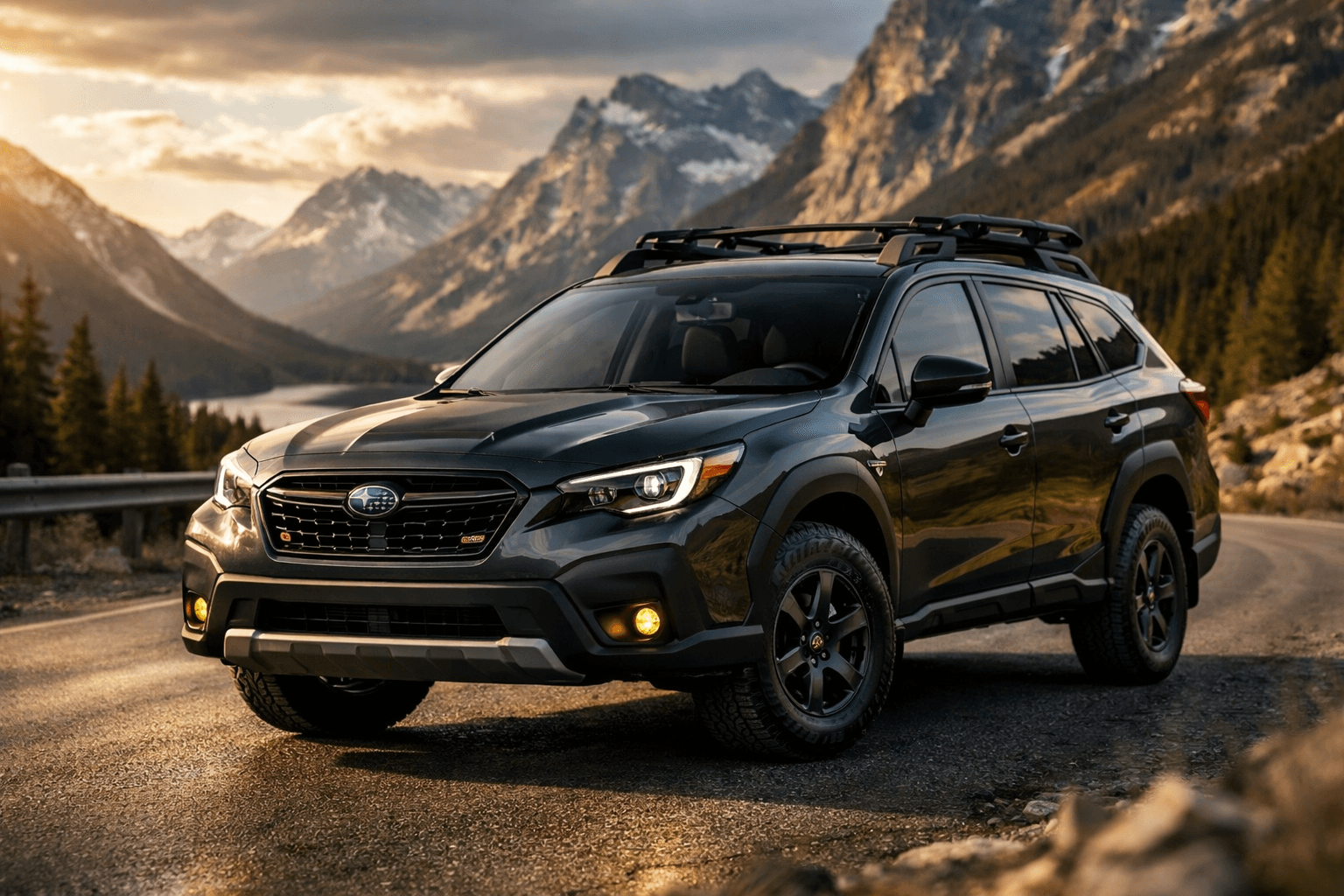
In Wilderness trim, the Outback looks like it just finished a Patagonia catalog shoot. Matte black cladding, copper accents, a more aggressive front bumper, and 9.5 inches of ground clearance give it real presence. Moreover, the raised suspension and Yokohama Geolandar all-terrains aren’t just for show—they change the stance in a way photos don’t fully capture.
Compared to the standard Outback, the Wilderness sits taller and squarer, with a functional front skid plate and beefed-up roof rails rated for 700 pounds static. In contrast to a Toyota RAV4 TRD Off-Road or Ford Bronco Sport Badlands, it looks less bro-y and more utilitarian. It’s an REI member, not a Monster Energy ambassador.
Notably, Subaru hasn’t gone overboard with fake vents or glossy black trim that scratches when you look at it wrong. My hot take? It looks better than most compact SUVs because it still reads like a wagon. Lower, longer, more honest. Crossovers try too hard. This just looks ready.
Interior & Technology
Inside, the Outback Wilderness mixes rugged and refined better than you’d expect. The StarTex water-repellent upholstery feels durable without turning the cabin into a vinyl sauna. Additionally, the copper contrast stitching and Wilderness badging add just enough flair without screaming “special edition.”
The 11.6-inch vertical touchscreen dominates the dash. It’s quicker than early Subaru systems, though still not quite as snappy as a Mazda CX-50’s interface. Apple CarPlay and Android Auto come standard, and the system finally feels intuitive instead of like it was coded during a camping trip.
However, physical climate controls are still partially buried in the screen, which I’ll always criticize. When you’re bouncing down a fire road, you want a knob, not a submenu. On the plus side, Subaru’s EyeSight driver assists remain some of the smoothest in the business—lane centering that doesn’t ping-pong, adaptive cruise that doesn’t brake like a nervous student driver.
Rear-seat space is generous for a wagon. Adults over six feet can sit behind me—5’11” and long torso—without their knees filing a complaint. Meanwhile, the tall greenhouse and slim pillars give you excellent outward visibility, something most modern SUVs sacrifice in the name of “style.”
Behind the Wheel: Driving Experience of the 2026 Subaru Outback Wilderness
Advertisement
Fire it up, and the 2.4-liter turbo boxer settles into a muted burble. With 260 horsepower and 277 lb-ft of torque, it doesn’t explode off the line, but it pulls with a thick, midrange shove. In fact, from 30 to 70 mph, it feels stronger than the numbers suggest—perfect for highway merges loaded with bikes and camping gear.
Yes, it has a CVT. I can hear you groaning from here. However, Subaru has tuned it well; in sport mode it simulates stepped shifts convincingly enough that you forget it’s a belt-and-pulley setup. It’s no dual-clutch like the one in the Audi RS5 Hybrid, but that’s not the mission here.
Steering feel is light but accurate. There’s not much feedback through the wheel—this isn’t a Porsche Macan—but it tracks cleanly and doesn’t wander. Moreover, body roll is present yet controlled; the lifted suspension leans in corners, then settles predictably. Published performance figures suggest it can hustle through a favorite canyon road with impressive composure. No, it’s not fun-sports-car fun—check out our sports cars under $35K guide for that—but it’s composed.
Off-road, though, it’s in its element. X-Mode recalibrates throttle, transmission, and Subaru AWD for mud and snow. Additionally, the 9.5 inches of ground clearance and improved approach angles let you clear ruts that would beach a standard CR-V. I’ve driven 40-plus SUVs off pavement, and this is one of the few that feels engineered for it rather than marketed for it.
Importantly, ride quality remains supple. The long-travel suspension soaks up potholes and washboard surfaces without crashing. On the highway, it’s quiet enough for a four-hour road trip without fatigue. That balance—trail competence without on-road punishment—is why this Outback Wilderness review reads so positively.
Fuel Economy & Running Costs
EPA estimates sit at 21 city / 26 highway / 23 combined mpg, which you can verify via FuelEconomy.gov. In my mixed driving—some highway, some dirt, some enthusiastic canyon runs—I averaged 22 mpg. That’s acceptable given the lift, tires, and permanent AWD.
However, it does require premium fuel for peak performance. You can run regular, but you’ll lose a bit of efficiency and power. Over 15,000 miles a year, that adds up, though still cheaper than feeding a body-on-frame SUV like a 4Runner.
Maintenance costs are typical Subaru: not Toyota-cheap, not German-luxury expensive. Additionally, resale values remain strong thanks to Subaru’s loyal following and the Wilderness trim’s desirability. If you’re debating electrification, our Hybrid vs Plug-In Hybrid vs EV guide is worth a read—but for remote trail access, gas still wins.
Practicality & Daily Living
With 32.6 cubic feet of cargo space behind the rear seats and over 75 cubic feet with them folded, the Outback swallows mountain bikes (front wheel off), coolers, and camping bins without complaint. The wide opening and low load floor beat most compact SUVs for real usability.
Meanwhile, roof rails with integrated crossbars are a stroke of genius. Flip them out, mount a roof box or kayak, and you’re done—no dealer accessories required. That’s clever engineering, the kind I praise because it shows someone at Subaru actually uses this stuff.
Visibility is excellent, parking is easy despite its length, and the turning radius is manageable for city duty. Additionally, the washable seat material and durable plastics make it dog- and kid-friendly. It’s one of the few adventure vehicles that doesn’t feel ridiculous at the grocery store.
How It Stacks Up: Competitive Comparison
The main rivals? Toyota RAV4 TRD Off-Road, Ford Bronco Sport Badlands, and Mazda CX-50 Meridian Edition.
The RAV4 offers better fuel economy and Toyota reliability lore. However, it lacks the Outback’s ground clearance and cargo flexibility. The Bronco Sport feels more rugged and has trick trail tech, yet it’s smaller inside and rides harsher on pavement.
Meanwhile, the CX-50 looks the best and handles sharply on-road. In contrast, it can’t match the Subaru AWD system’s off-pavement composure or approach angles. If you want style and steering feel, Mazda wins. If you want all-around adventure competence, the Outback Wilderness still sets the tone.
Spec
Outback Wilderness
RAV4 TRD Off-Road
Bronco Sport Badlands
Starting Price
$41,000
$38,000
$39,000
Power
260 hp
203 hp
250 hp
0-60 mph
6.1s
8.0s
5.9s
MPG/Range
23 mpg
27 mpg
23 mpg
Cargo Space
32.6 cu ft
37.6 cu ft
32.5 cu ft
Warranty
3 yr/36,000 mi
3 yr/36,000 mi
3 yr/36,000 mi
The Good
Genuinely capable off-road with 9.5 inches of clearance
Strong turbo torque and confident Subaru AWD system
Excellent cargo versatility and roof rail design
Comfortable ride despite lifted suspension
Practical, durable interior materials
The Bad
CVT still lacks engagement for enthusiasts
Premium fuel recommended
Infotainment relies too heavily on touchscreen controls
Starting price creeping toward $45K when loaded
Alex Torque's Verdict: 8.5/10
Best for: Adventurous families who want real trail ability without sacrificing daily comfort.
Look elsewhere if: You crave sharp on-road handling or refuse to live with a CVT.
The 2026 Subaru Outback Wilderness isn’t a rock crawler, and it’s not a canyon carver. However, as a do-everything off-road wagon that you can drive cross-country without a chiropractor on speed dial, it’s still the king of soft-road adventures.
I’ve driven faster. I’ve driven flashier. But when the map turns from asphalt to dotted lines, this is the set of keys I keep reaching for. That tells you everything you need to know.
Disclosure: This article may contain affiliate links. If you make a purchase through these links, we may earn a small commission at no extra cost to you. This helps support RevvedUpCars.com. Learn more.
Affiliate disclosure: some links on this page earn us a commission at no extra cost to you.
Mike Wrenchworth is the guy you call when something breaks, rattles, or makes a noise it shouldn’t. With 20 years as an ASE-certified master technician and a decade running his own independent shop in Austin, Texas, Mike has seen every automotive disaster imaginable—and fixed most of them. Now he shares his hard-won wisdom with RevvedUpCars readers, covering everything from basic maintenance to weekend restoration projects. Mike believes in doing it right the first time, buying quality tools, and never skipping the torque wrench. His garage currently houses a work-in-progress 1969 Camaro, a bulletproof Toyota Land Cruiser, and whatever his wife is driving this week. Mike’s philosophy: every car can be a great car with proper maintenance and a little mechanical sympathy.
Get the latest car reviews in your inbox
Join thousands of car enthusiasts. No spam, unsubscribe any time.



Comments
Leave a comment