Volvo's 32% Q1 sales decline fuels dealer backlash and inventory glut - how it will affect car pricing trends in 2026 and buyer leverage. Read analysis.
In this article
Volvo reported a 32% year-over-year drop in global deliveries for the first quarter of 2026, marking one of the sharpest Volvo sales decline periods in the brand’s modern history. The Swedish automaker delivered just under 142,000 vehicles between January and March, according to its April 26 earnings release, compared with roughly 209,000 units a year earlier. More concerning than the headline number is what’s behind it: swelling dealer inventory and rising tensions between Volvo Cars and its U.S. retail network.
However, this isn’t just a bad quarter. The downturn lands at a moment when the broader U.S. market is already softening—industry forecasts now project total 2026 sales down 2–3% year over year, as we detailed in our US Auto Sales 2026 Forecast Drops 2.6%. For Volvo, which has leaned heavily into electrification and premium pricing, the implications go deeper than one earnings miss.
Impact: Increased incentives and potential pricing pressure for buyers
Key Number: 32% year-over-year sales drop
What Happened
Volvo Cars confirmed in its Q1 2026 earnings statement that global deliveries fell to approximately 142,000 vehicles, with North America down an estimated 28% year over year. The company attributed the slump to “challenging macroeconomic conditions” and a “temporary inventory adjustment,” according to its official newsroom release.
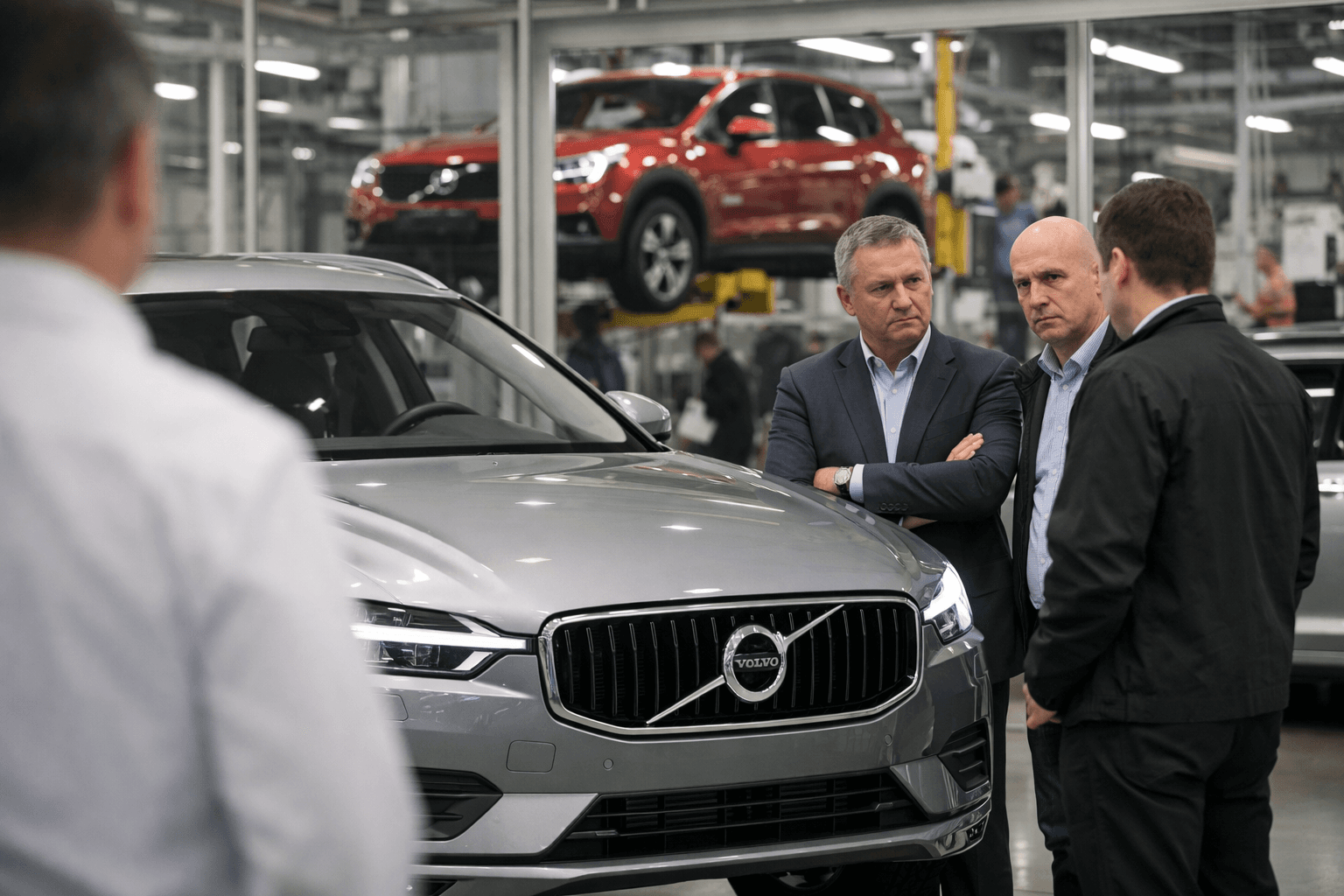
Meanwhile, multiple dealer groups told Reuters that unsold inventory of 2025 and early 2026 models—particularly the electric EX90 and C40 Recharge—has risen above 90 days’ supply in several U.S. regions. Industry analysts typically view 60 days as healthy. That gap suggests production outpaced demand.
In a statement accompanying the results, CEO Jim Rowan said:
“We are proactively aligning production with market realities while maintaining our long-term electrification strategy.”
However, dealers argue privately that aggressive EV allocation targets did not match local demand, especially in states without strong charging infrastructure or state-level incentives. That tension sits at the heart of this Volvo sales decline.
Why It Matters
Inventory gluts usually lead to one thing: incentives. Already, Volvo is advertising 1.9% APR financing and lease credits exceeding $7,500 on select EVs—stacked on top of federal tax credits where applicable, according to dealer listings and manufacturer promotions.
Therefore, this is less about brand collapse and more about pricing power erosion. Volvo has spent the past five years repositioning itself as a premium, safety-forward EV leader. A spike in rebates risks diluting that carefully managed image.
Advertisement
Additionally, the situation highlights the mismatch between automaker electrification timelines and consumer adoption rates. While EVs represented about 8% of U.S. new vehicle sales in 2025, per estimates from the International Energy Agency, growth has slowed compared with the 2022–2023 surge. Buyers remain sensitive to price and charging convenience.
The Bigger Picture
Volvo committed to becoming a fully electric brand by 2030, one of the industry’s most aggressive transitions. That pledge, first announced in 2021, assumed steady EV demand growth and supportive policy from regulators like the EPA. However, 2026 looks different: interest rates remain above pre-pandemic norms, and consumer sentiment has cooled.
In fact, this Volvo sales decline mirrors broader struggles among EV-first or EV-heavy portfolios. Tesla’s global deliveries also slipped earlier this year, and Ford slowed F-150 Lightning production in late 2025, according to Bloomberg. The industry is discovering that scaling EV production is easier than sustaining demand at premium price points.
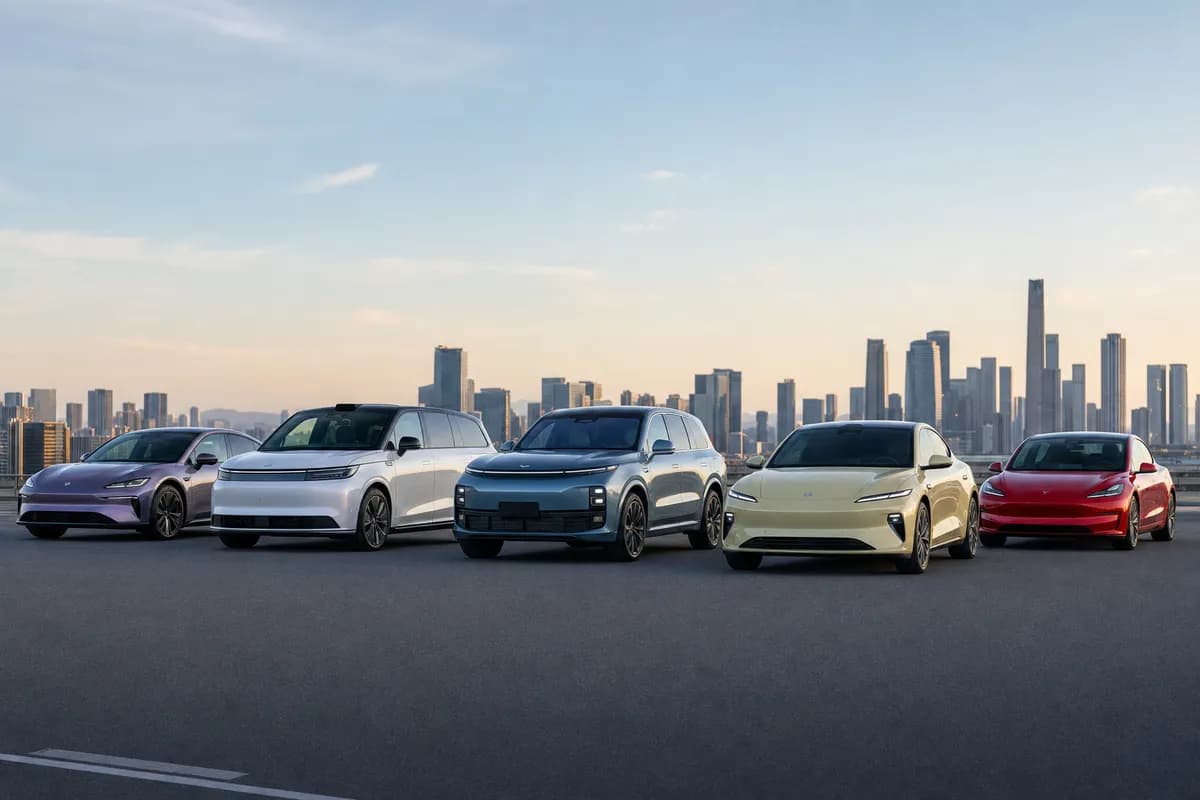
Moreover, Chinese automakers continue expanding globally, intensifying competitive pressure. As we explored in Are Chinese Cars in America a Real Threat in 2026?, brands like BYD are reshaping pricing expectations worldwide—even if U.S. tariffs limit their immediate impact domestically.
What the Competition Is Doing
BMW, which grew U.S. EV sales by double digits in 2025, has taken a more flexible approach. Rather than committing to an all-EV deadline, it continues offering ICE, hybrid, and EV options on shared platforms—a hedge that appears prudent now.
Meanwhile, Mercedes-Benz has scaled back its earlier “EV-only by 2030 where market conditions allow” language, emphasizing profitability over volume. In contrast, Hyundai and Kia are pushing forward aggressively with high-volume EV rollouts, backed by U.S. manufacturing investments that help secure federal tax credits.
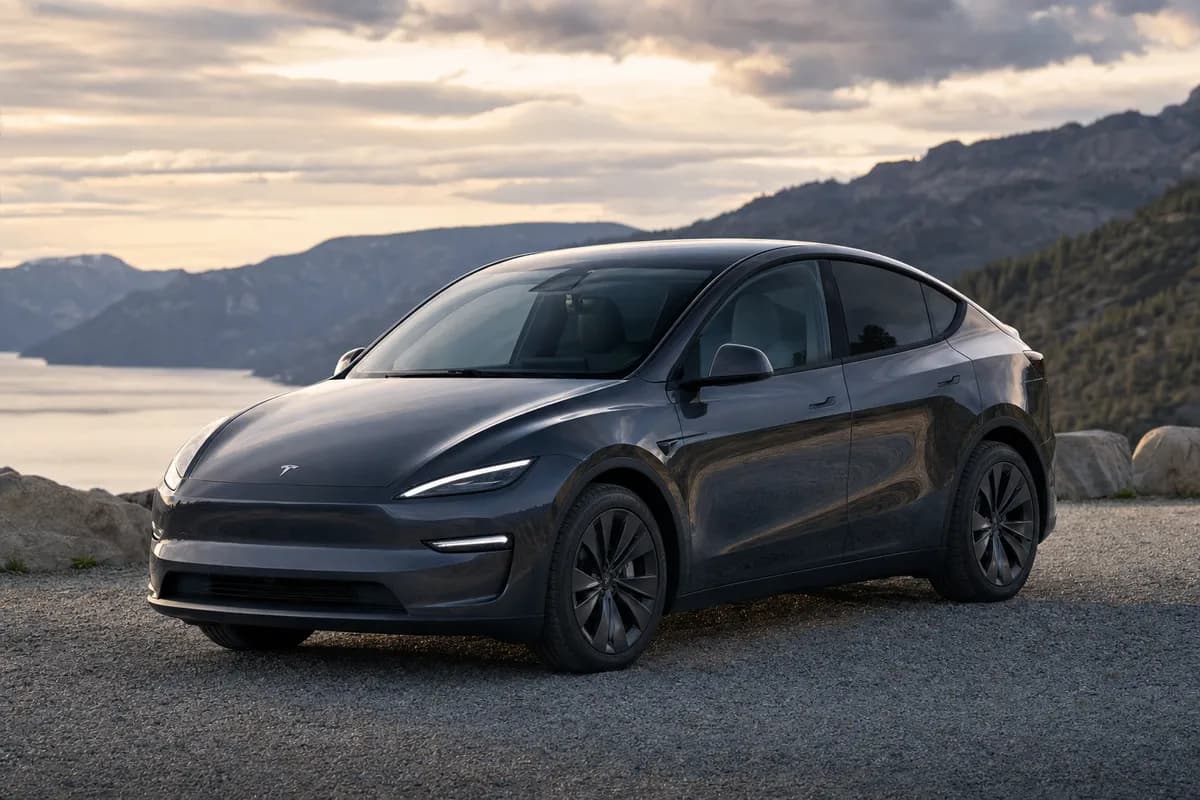
Tesla remains the pricing wildcard. Its history of rapid price cuts—sometimes multiple times per quarter—forces legacy brands like Volvo to respond quickly or lose share. With Volvo’s U.S. market share hovering around 1.1% in 2025, according to industry estimates, it lacks the scale cushion that Toyota (14%) or Ford (13%) enjoy.
What It Means for You
If you’re shopping for a 2025 or 2026 Volvo, particularly an EV, you likely have leverage. Dealers facing a 90-day-plus supply are motivated to negotiate on price, trade-in value, or financing terms. Pairing those offers with guidance from our How to Score Car Finance Deals 2026 guide could unlock substantial savings.
However, buyers should also consider resale value. Heavy discounting today can depress used prices tomorrow. Given that used vehicle prices are already volatile, as discussed in our coverage of 2026 pricing swings, locking in favorable financing may matter more than chasing the absolute lowest sticker.
Additionally, if you’re undecided between hybrid and fully electric, Volvo’s situation underscores the importance of matching the powertrain to your real-world usage. Incentives can mask higher long-term ownership costs if charging access is limited.
What to Watch Next
First, watch Volvo’s Q2 production guidance. If the company cuts output significantly, that signals a longer correction cycle. Second, monitor dealer relations—formal franchise disputes or public letters would indicate deeper structural tension.
Third, pay attention to pricing strategy through summer 2026. Sustained incentives into Q3 would confirm that this Volvo sales decline reflects demand softness rather than a one-quarter anomaly.
The Upside
Stronger buyer leverage on pricing and financing
Potential for improved feature content at same MSRP
Production adjustments could stabilize supply by late 2026
Dealer competition may improve customer service
The Concerns
Resale values may weaken due to heavy discounting
Dealer-manufacturer tension could affect inventory mix
Electrification timelines may face delays
Brand perception risk from aggressive incentives
Sarah's Industry Impact Rating: 7/10
This matters because: It exposes the fragility of premium EV demand just as automakers commit billions to electrification.
Having covered multiple product cycles, I’ve seen this pattern before: ambitious production targets meet cautious consumers, and dealers become the pressure valve. The difference now is the scale of investment behind electrification—Volvo alone has committed tens of billions globally.
Ultimately, this Volvo sales decline is less about one brand stumbling and more about the industry recalibrating expectations. For buyers, that recalibration often translates into opportunity. For automakers, it’s a reminder that transformation timelines rarely move in straight lines.
Disclosure: This article may contain affiliate links. If you make a purchase through these links, we may earn a small commission at no extra cost to you. This helps support RevvedUpCars.com. Learn more.
Affiliate disclosure: some links on this page earn us a commission at no extra cost to you.
Mike Wrenchworth is the guy you call when something breaks, rattles, or makes a noise it shouldn’t. With 20 years as an ASE-certified master technician and a decade running his own independent shop in Austin, Texas, Mike has seen every automotive disaster imaginable—and fixed most of them. Now he shares his hard-won wisdom with RevvedUpCars readers, covering everything from basic maintenance to weekend restoration projects. Mike believes in doing it right the first time, buying quality tools, and never skipping the torque wrench. His garage currently houses a work-in-progress 1969 Camaro, a bulletproof Toyota Land Cruiser, and whatever his wife is driving this week. Mike’s philosophy: every car can be a great car with proper maintenance and a little mechanical sympathy.
Get the latest car reviews in your inbox
Join thousands of car enthusiasts. No spam, unsubscribe any time.



Comments
Leave a comment