BMW's fight to preserve manual transmissions: analysis of strategy, market demand and what it means for enthusiast cars in 2026. Read more. Quick analysis.
In this article
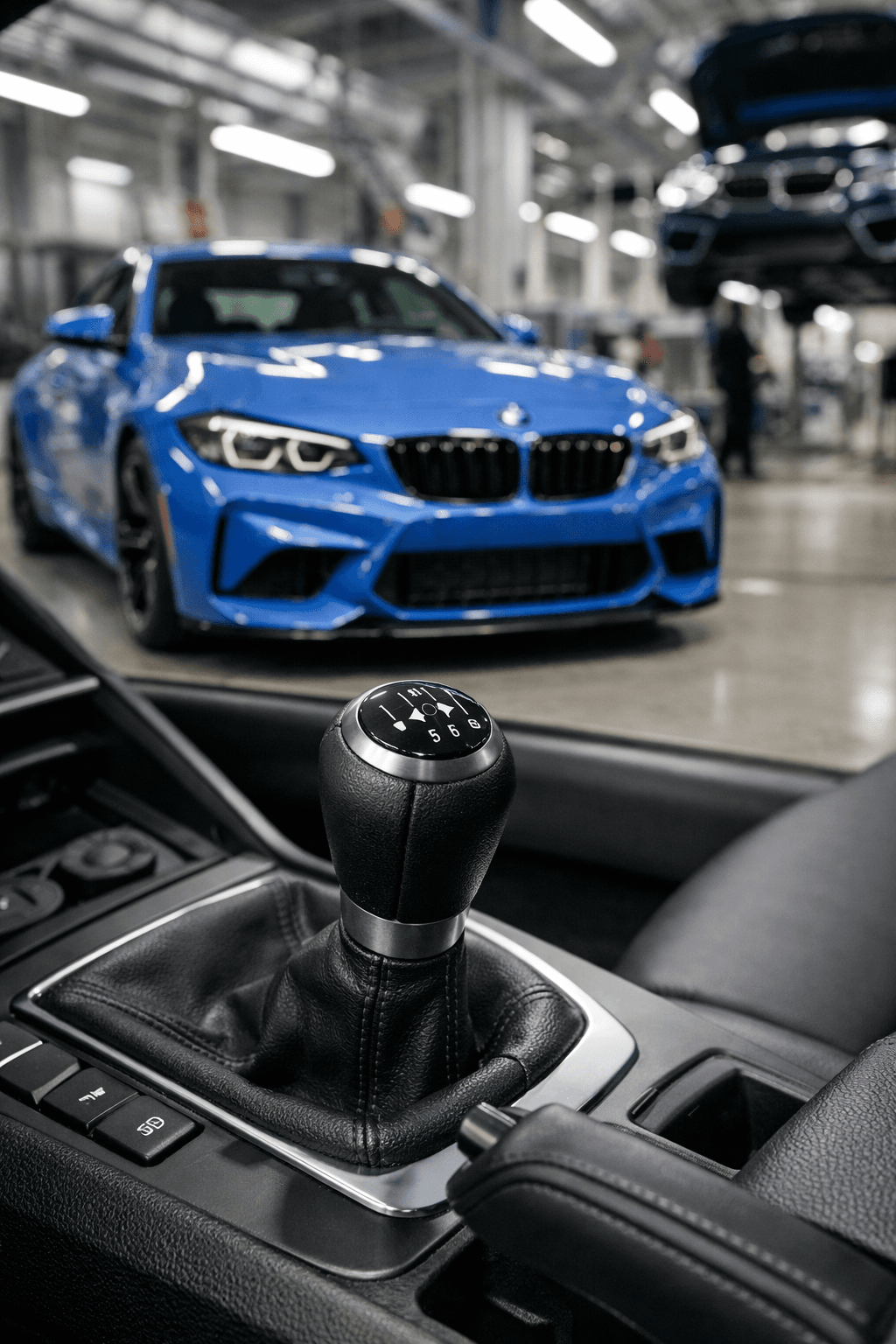
BMW confirmed this week that it will keep offering a BMW manual transmission in key M models beyond 2026, even as most of the industry phases out the stick shift. The announcement, made during an April 15 media roundtable in Munich, signals that the German automaker sees strategic value in serving driving purists — not just nostalgia.
That matters because manuals now account for less than 2% of new-car sales in the U.S., according to EPA and manufacturer data. Yet in BMW’s M2 and M3 lineup, take rates are dramatically higher — roughly 40% for the current-generation M2 in North America, per company officials. In a market increasingly defined by electrification and software, BMW is betting that engagement still sells.
The Headlines
What: BMW commits to keeping manual transmissions in select M performance models beyond 2026
Who: BMW M division
When: Announcement April 15, 2026; applies to upcoming product cycle
Impact: Enthusiast buyers retain stick-shift option while rivals pivot to automatic and electric-only lineups
Key Number: ~40% manual take rate on U.S.-spec M2 models
What Happened
BMW M CEO Frank van Meel told journalists that the company will “continue to offer manual transmissions where customer demand justifies the engineering investment,” specifically naming the M2 and hinting strongly at the next-generation M3. According to BMW’s official newsroom, the current G87 M2’s six-speed manual will carry forward into the model’s Life Cycle Impulse update expected in 2027.
“The manual gearbox is part of our brand DNA,” van Meel said. “As long as regulations allow and customers order it in meaningful numbers, we will keep it.”
Notably, BMW is one of the few premium automakers still engineering manual gearboxes in-house. Mercedes-AMG dropped manuals years ago, and Audi’s S and RS lines have been automatic-only for more than a decade. Porsche still offers a manual 911 and 718, but the upcoming electric Cayman will abandon it entirely, as we explored in our Electric Porsche Cayman guide.
However, BMW was clear about limitations. Stricter EU7 emissions standards in Europe and tightening U.S. fleet CO2 targets make certifying manual variants more complex. Additionally, integrating advanced driver assistance systems with manuals adds engineering cost. Reports from Reuters note that compliance costs are climbing sharply as Europe finalizes post-2026 emissions frameworks.
Why It Matters
The BMW manual transmission decision isn’t about volume; it’s about brand equity. BMW sold roughly 2.2 million vehicles globally in 2025, according to company filings, and manuals represent a tiny fraction of that. Yet M models generate outsized margins and shape brand perception.
In fact, BMW’s M division posted record sales of over 200,000 units globally in 2025, per the automaker’s annual report. Even if manuals account for just 10–15% of M production globally, that’s enough to justify tooling amortized over several years — especially when those buyers skew loyal and vocal.
Meanwhile, the broader market is shifting. As we reported in US Auto Sales 2026 Forecast Drops 2.6%, overall U.S. auto demand is softening amid higher interest rates and rising transaction prices. Enthusiast cars, paradoxically, often perform well in flat markets because they target buyers less sensitive to financing costs.
Therefore, keeping manuals serves as a hedge. While BMW aggressively expands EVs — including the award-winning iX3 highlighted in our BMW iX3 World Car: 2026 Win Shakes EV Market coverage — it preserves credibility with core enthusiasts who may not be ready for full electrification.
Advertisement
The Bigger Picture
Manual transmissions have been in steady decline for two decades. According to EPA fuel economy data, manuals represented more than 20% of U.S. sales in the early 2000s; today they barely register. Automatics now outperform manuals in both acceleration and fuel economy, largely due to eight- and ten-speed designs and sophisticated software calibration.
However, the future of manual cars isn’t purely technical — it’s regulatory. Electrification mandates in Europe and California push automakers toward hybrid and EV architectures that don’t physically accommodate traditional gearboxes. The EPA’s latest greenhouse gas standards, detailed at EPA.gov, effectively force higher fleet efficiency averages through 2032.
Additionally, the rise of software-defined vehicles — think over-the-air updates and AI-driven driving aids — prioritizes seamless integration. As we covered in “300GB RAM Cars: The Next Software-Defined Leap,” modern architectures increasingly resemble rolling computers. Manuals complicate that equation.
Yet there’s a countertrend. Enthusiast buyers value mechanical simplicity and perceived reliability. In a world of touchscreens and subscription features, a clutch pedal becomes a symbol of control. That emotional factor doesn’t show up in emissions spreadsheets, but it absolutely shows up in brand loyalty metrics.
What the Competition Is Doing
Porsche remains BMW’s closest philosophical rival. The 911 Carrera T and certain 911 GT3 variants still offer manuals, with take rates reportedly above 50% in some U.S. trims, according to dealer data cited by Bloomberg. However, Porsche’s EV transition is accelerating, and the electric 718 replacement will not include a manual option.
In contrast, Mercedes-AMG has fully embraced automatic and hybridized performance. The C63 S E Performance uses a four-cylinder plug-in hybrid setup paired with a multi-clutch automatic — no manual in sight. Audi Sport follows a similar path with its RS models, prioritizing dual-clutch gearboxes and quattro all-wheel drive.
Toyota offers a different angle. The GR86 and GR Supra still provide manual options, and the GR Corolla is manual-only. However, Toyota’s performance sub-brand operates at lower price points, often below $50,000, while BMW’s M models frequently exceed $75,000. BMW is effectively the last premium German automaker making manuals central to its performance identity.
The winners here are niche enthusiast brands and divisions that treat manuals as halo features. The losers are mainstream automakers that already abandoned them and can’t easily pivot back without major reengineering costs.
What It Means for You
If you’re shopping for performance sedans manual fans still crave, BMW just extended your runway. The current 2026 M2 starts around $64,000 in the U.S., while the M3 begins near $76,000, according to BMW’s configurator. Choosing a manual doesn’t typically change the base price, but it may affect resale values positively due to scarcity.
However, timing matters. Reports indicate that future emissions cycles could narrow availability to specific markets, particularly North America. If you want a stick-shift M car, the next two to four years likely represent your best window.
Additionally, manuals require more driver engagement — and potentially higher insurance premiums for performance trims. Before signing, review broader ownership costs using resources like our Budget for New Cars: Average Payments 2026 Tips guide.
For buyers cross-shopping EVs, understand the trade-off. Electric performance delivers instant torque and lower maintenance, but it eliminates the tactile experience entirely. The choice is philosophical as much as financial.
What to Watch Next
First, monitor regulatory developments in Europe and California. If emissions or safety integration rules tighten further, even BMW’s commitment may face limits. Second, watch manual take rates on the 2026–2027 M2 and M3 updates; if they drop below 20%, the business case weakens.
Meanwhile, keep an eye on how electrified M models perform. BMW plans hybridized M cars later this decade, and customer reception will influence how long combustion-plus-manual combinations survive. Finally, competitor moves — particularly Porsche’s EV transition — will test whether enthusiasts truly follow brands into electric-only territory.
The Upside
Preserves driving engagement in an increasingly automated market
Strengthens BMW M brand loyalty and resale values
Differentiates BMW from Mercedes-AMG and Audi
Provides enthusiasts a shrinking but meaningful choice
The Concerns
Rising regulatory and certification costs
Potential incompatibility with future hybrid/EV platforms
Low overall market demand for manuals
Risk of being perceived as nostalgic rather than innovative
Sarah's Industry Impact Rating: 7/10
This matters because: BMW’s commitment to manuals signals that enthusiast identity still influences product strategy, even in an era dominated by electrification mandates.
Having covered three BMW product cycles, I’ve seen this pattern before: when the brand leans into its enthusiast roots, it strengthens long-term loyalty even if short-term volumes stay small. The BMW manual transmission may not save the stick shift industry-wide, but it keeps the conversation alive.
Over the next five years, the future of manual cars will hinge less on demand and more on regulation and platform design. BMW is buying time — and goodwill — by fighting for the clutch pedal. Whether that bet pays off will depend on how many drivers still want to shift for themselves.
Disclosure: This article may contain affiliate links. If you make a purchase through these links, we may earn a small commission at no extra cost to you. This helps support RevvedUpCars.com. Learn more.
Affiliate disclosure: some links on this page earn us a commission at no extra cost to you.
Mike Wrenchworth is the guy you call when something breaks, rattles, or makes a noise it shouldn’t. With 20 years as an ASE-certified master technician and a decade running his own independent shop in Austin, Texas, Mike has seen every automotive disaster imaginable—and fixed most of them. Now he shares his hard-won wisdom with RevvedUpCars readers, covering everything from basic maintenance to weekend restoration projects. Mike believes in doing it right the first time, buying quality tools, and never skipping the torque wrench. His garage currently houses a work-in-progress 1969 Camaro, a bulletproof Toyota Land Cruiser, and whatever his wife is driving this week. Mike’s philosophy: every car can be a great car with proper maintenance and a little mechanical sympathy.
Get the latest car reviews in your inbox
Join thousands of car enthusiasts. No spam, unsubscribe any time.



Comments
Leave a comment