
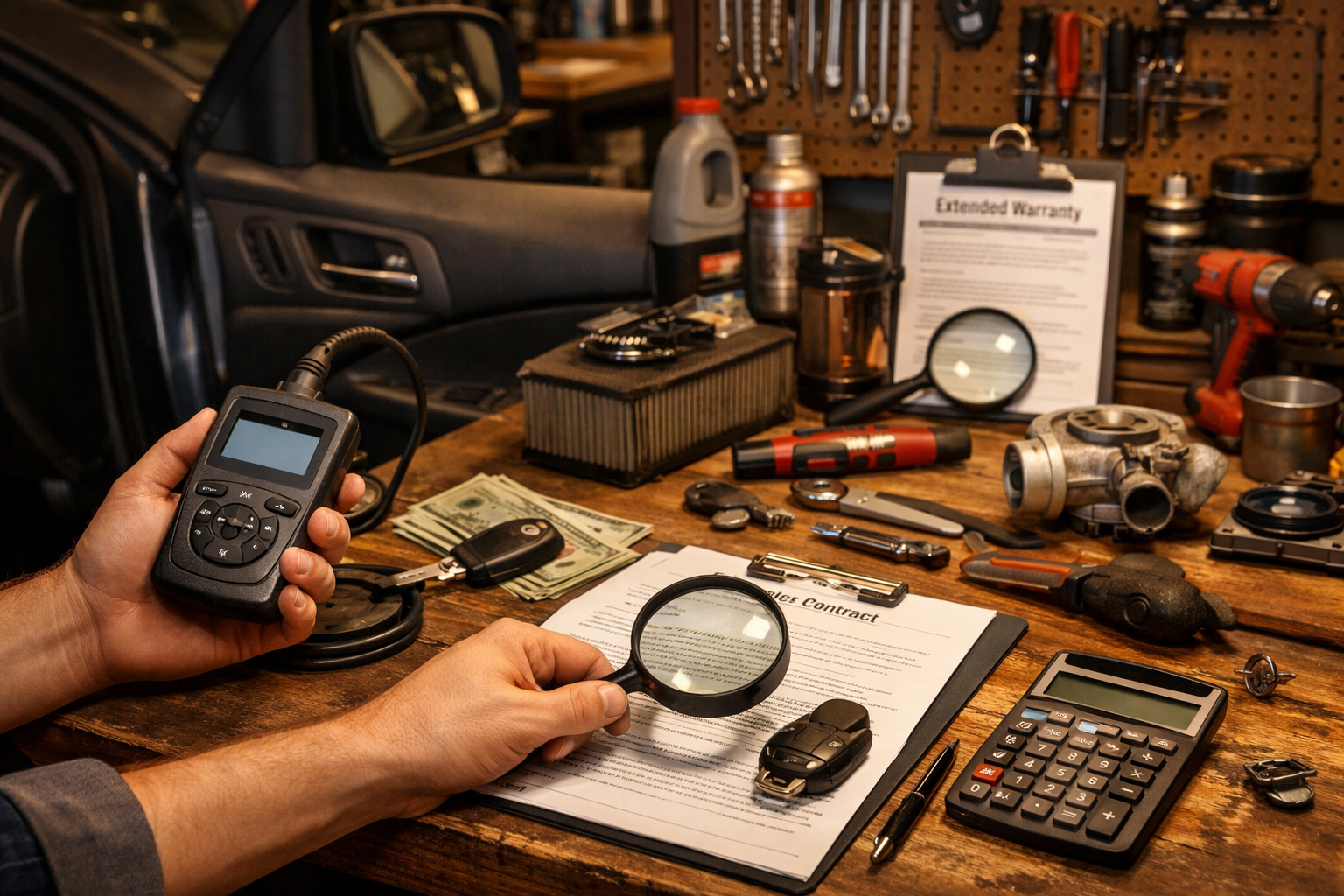
You ever sit down in a dealership finance office, sign a stack of papers taller than a brake rotor, and drive home wondering what just happened? That sinking feeling is exactly how car dealer scams get good, honest folks every single day. In 2026, the games have gotten slicker — digital contracts, “market adjustments,” mystery add-ons — but the hustle is the same.
I’ve spent 20 years fixing cars people overpaid for, and let me tell you — the wrong deal can cost you more than a blown transmission. This guide will show you how to spot car dealer scams, how to avoid dealership fraud, and how to handle buying a car safely without getting steamrolled in the finance office.
Grab a coffee. This isn’t about wrenching — it’s about protecting your wallet.
What You’ll Need
- Tools: Smartphone with calculator, credit score access (Experian/Equifax), notebook, pre-approval letter from bank or credit union
- Parts/Materials: Vehicle history report ($25–$40), independent pre-purchase inspection ($120–$200)
- Time: 2–6 hours research; 2–4 hours at dealership
- Difficulty: 🔧🔧 (more patience than skill)
- Dealer Cost: Hidden markups can add $2,000–$7,000 vs DIY research cost: $200 — You Save: Thousands
Why This Matters
Ignore car dealer scams, and you’re not just overpaying — you’re locking yourself into years of bad payments. I’ve seen customers upside-down $8,000 on a vehicle because they didn’t question add-ons or financing tricks.
In 2025–2026, with rising interest rates and tight inventory, dealerships are padding deals harder than ever. If you haven’t read our breakdown on budgeting for rising car ownership costs in 2026, do that next. Payments are climbing, and dealers know most buyers shop by monthly number — not total cost.
This isn’t a one-time lesson either. Whether you’re buying new, used, gas, hybrid, or EV, auto fraud prevention should be part of every deal you make.
Before You Start
⚠️ WARNING: Never sign anything you don’t understand. If they rush you, that’s your cue to slow down.
Before stepping onto a lot:
- Check your credit score. Know your real number.
- Get pre-approved at a credit union. Typical rates are 1–3% lower than dealer financing.
- Research fair pricing using multiple sources.
- Check recalls at NHTSA.gov.
If you’re buying used, read our guide on navigating used car prices in 2026. Inventory is tight, and desperation leads to bad decisions.
When NOT to DIY the deal: If you feel pressured, confused by financing math, or the dealer refuses to give you paperwork to review — walk. There are 10 other dealerships within 20 miles.
Step-by-Step Guide
-
Separate the transaction into three parts.
Price of car. Trade-in value. Financing rate. Negotiate each independently. Dealers love blending numbers like a bad smoothie so you can’t taste the overcharge. -
Demand the Out-the-Door (OTD) price in writing.
This includes taxes, title, documentation, and all fees. If they won’t print it, they’re hiding something.
Pro Tip: Compare OTD pricing between two dealerships by email before you visit. -
Watch for add-ons.
Paint protection: $895 (actual value: $50 DIY kit).
VIN etching: $299 (DIY kit: $25).
Nitrogen in tires: $199 (air is 78% nitrogen already — free). -
Check the interest rate markup.
Dealers often mark up your approved rate by 1–2% and pocket the difference. If your bank approves 5.5% and the dealer offers 7.5%, that extra 2% could cost $2,000–$4,000 over a 60-month loan. -
Decline unnecessary extended warranties — at least initially.
Some are valuable. Many are junk. You can usually buy a manufacturer-backed plan later before factory coverage ends. Verify details on the automaker’s official site. -
Get a pre-purchase inspection on used cars.
$150 today can save you a $3,500 transmission next month. I’ve seen shiny cars with fresh detail jobs hiding oil leaks and frame damage. -
Review the final contract line by line.
Look for payment packing — small extras rolled into monthly payments so you don’t notice.
This is the core of how to avoid dealership fraud: slow everything down. If they say the deal “expires today,” smile and head for the door.
Common Mistakes to Avoid
- Shopping by monthly payment. I’ve seen buyers extend loans to 84 months just to hit a number. That’s how you stay broke.
- Skipping the vehicle history report. Flood cars are still circulating in 2026. $30 beats a lifetime of electrical gremlins.
- Believing “mandatory” add-ons. Dealer-installed accessories are negotiable. Period.
- Not checking recalls. Use NHTSA or read about the car recall stop-sale process so you understand your rights.
- Letting excitement override math. That new 2026 performance model looks amazing — but numbers don’t lie.
I’ve seen this in the shop a hundred times: someone overpays by $4,000, can’t afford maintenance, skips oil changes, and the engine pays the price. Bad deals lead to bad maintenance.
When to Call a Professional
If the contract language feels like it was written by NASA engineers, consider:
- A trusted credit union loan officer
- A local attorney for high-dollar purchases
- An independent mechanic for inspections
A fair doc fee in 2026 ranges from $100–$500 depending on state. If you see $899+, ask why. If they say “that’s just how we do it,” that’s a red flag.
Questions to ask:
- “Is this rate marked up from my approval?”
- “Are any of these products optional?”
- “Can I see the buy rate from the lender?”
If they dodge direct questions, walk. Buying a car safely means being willing to leave.
Recommended Products
- Vehicle History Report (Carfax or AutoCheck): $25–$40. Non-negotiable for used cars.
- OBD2 Scanner (BlueDriver or Autel): $80–$120. Check for hidden codes before buying.
- Credit Union Pre-Approval: Usually free. Often saves 1–3% APR.
- Consumer Reports Subscription: Solid reliability data — see Consumer Reports.
What I use in my own garage? BlueDriver scanner and my local credit union. Simple. Transparent. No drama.
Do This
- Get pre-approved before stepping on the lot
- Negotiate total price, not monthly payment
- Compare OTD pricing from multiple dealers
- Walk away if pressured
Don’t Do This
- Assume add-ons are mandatory
- Skip inspection on used vehicles
- Sign paperwork without reading every line
- Let excitement override common sense
Car dealer scams only work when buyers feel rushed or uninformed. Now you’re neither. Take your time, trust your math, and remember — there’s always another car.
If you’ve got a deal you’re unsure about, drop the numbers in the comments. I’ll help you break it down like we’re standing over a workbench together.
Stay sharp out there, and remember — a $20 repair manual saves a $2,000 repair bill… and five minutes with a calculator can save you five grand in the finance office.