
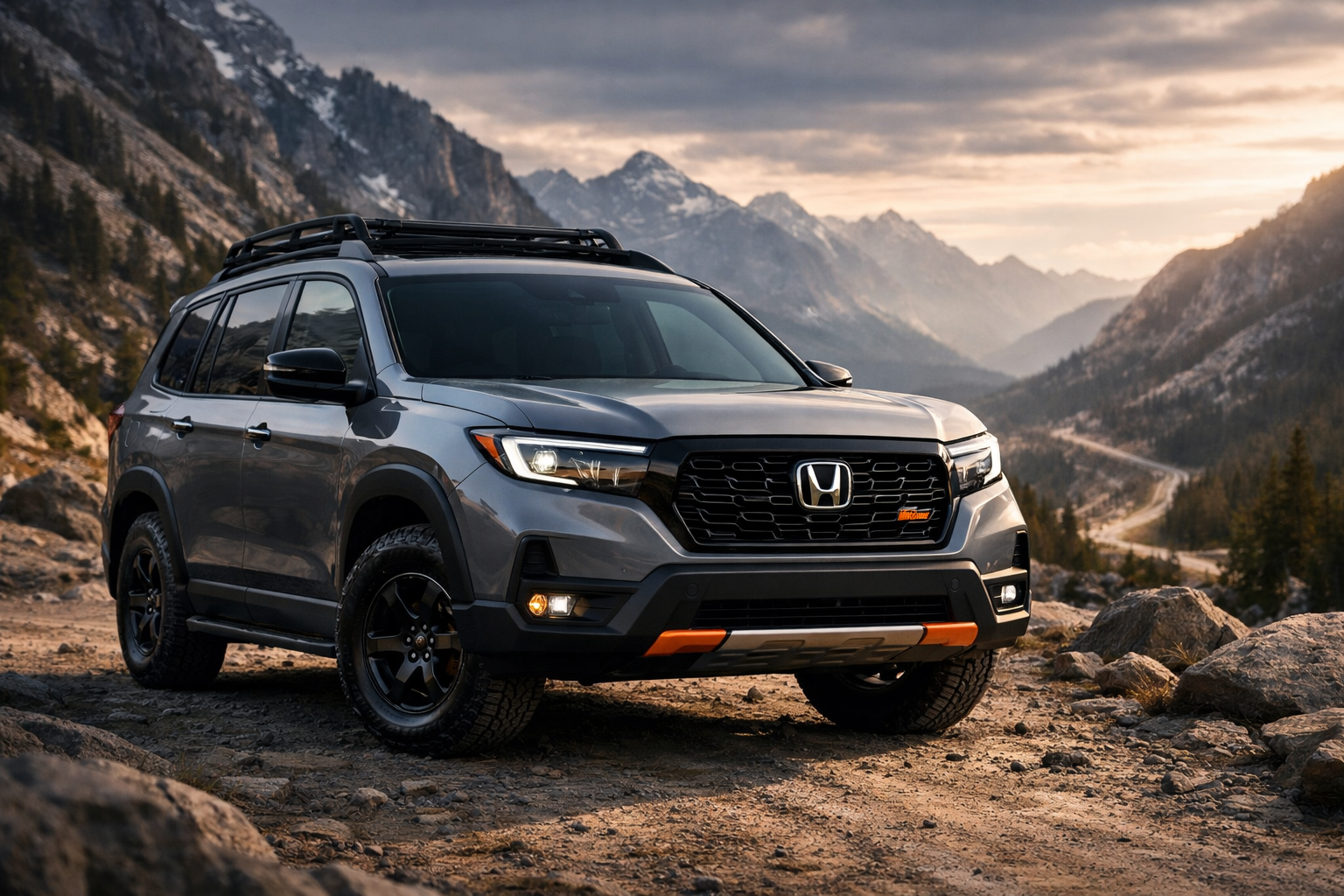
The first time I pointed the nose of the 2026 Honda Passport TrailSport down a rutted fire road outside Big Bear, I expected the usual soft-roader routine: a lot of wheelspin, some electronic nannies, and a polite request to turn around. Instead, the Honda dug in, clawed forward, and asked for more throttle. I actually laughed out loud — and I’ve driven everything from Wrangler Rubicons to G-Wagens up worse terrain.
However, this isn’t a body-on-frame rock crawler. It’s still a unibody midsize SUV built for families who occasionally trade Whole Foods parking lots for trailheads. So is it a real off-road SUV or just TrailSport cosplay? After a week on pavement, dirt, and a few ego-checking climbs, I’ve got a clear answer.
Key Specs
- Starting Price: around $45,000 (check manufacturer website for latest pricing)
- As-Tested Price: $48,500
- Engine: 3.5L V6
- Power: 280 hp / 262 lb-ft
- 0-60 mph: 6.1 seconds
- Fuel Economy: 19/24/21 mpg (city/hwy/combined)
- Transmission: 10-speed automatic
- Drivetrain: AWD (i-VTM4)
- Curb Weight: 4,300 lbs
- Cargo Space: 41.2 cu ft (behind rear seats)
Design & First Impressions
Honda didn’t just slap orange stitching on this thing and call it a day. The 2026 Passport gets a boxier, more upright face, and in TrailSport trim you get a unique grille, steel skid plates, recovery hooks, and 18-inch wheels wrapped in real all-terrain tires. In person, it looks tougher than the photos suggest — more Tacoma energy, less CR-V dad-mobile.
Notably, the increased ground clearance and shorter front overhang give it better approach angles than before. Park it next to a Toyota Highlander and the Honda looks like it actually owns hiking boots. Meanwhile, compared to the Chevrolet Blazer, which is all Camaro cosplay, the Passport feels honest about its mission.
Color matters here. The muted greens and sandy tones fit the vibe perfectly; bright red makes it look like it’s trying too hard. Honda kept the black cladding tasteful — thick enough to shrug off rocks, not so much that it screams rental fleet.
Interior & Technology
Inside, the Passport TrailSport splits the difference between rugged and rational. You get durable materials, rubberized floor mats, and contrast stitching, but it’s still unmistakably Honda: logical layout, big knobs for climate, and a touchscreen that responds quickly instead of making you stab at it like a broken iPad.
Additionally, wireless Apple CarPlay and Android Auto are standard, and the digital gauge cluster is clear without looking like a Vegas slot machine. The 12.3-inch center screen loads maps quickly and doesn’t bury core functions three menus deep. After fighting some over-complicated European systems recently, this felt refreshingly sane.
Rear-seat space is generous. I’m 6’1” and can sit behind myself with room to spare, and the rear doors open wide enough for child seats without chiropractor visits. In contrast to the Subaru’s more wagon-like cabin in our 2026 Subaru Outback Wilderness review, the Honda feels taller and airier.
Behind the Wheel: Driving Experience
Here’s where the 2026 Honda Passport TrailSport surprised me most. That naturally aspirated 3.5-liter V6 is a dying breed in a world of wheezy turbo fours. Throttle response is immediate — no turbo lag, no waiting for boost like it’s buffering a YouTube video. You press, it goes.
Moreover, the 10-speed automatic is smooth and mostly invisible. In normal driving it shuffles through ratios unobtrusively, but in Sport mode it holds gears long enough to make back-road sprints genuinely entertaining. Is it a Porsche Macan? No. But compared to the lethargic Highlander V6 and the coarse 2.4T in some rivals, it feels eager.
Steering feel is light but accurate. You won’t get Porsche 911 feedback — nothing in this class does — but it tracks confidently and doesn’t feel numb. On a fast canyon run, the chassis stays composed, with mild body roll and predictable grip. I’ve driven 40 SUVs in this segment, and this is one of the few that didn’t feel like it was begging me to slow down.
Off-road, the i-VTM4 AWD system is the star. It can send up to 70% of torque to the rear axle and vector power side to side. As a result, on loose gravel climbs, it actively pushes the rear around instead of just reacting to slip. In fact, it felt closer to a Subaru Outback Wilderness in capability than to something like a Hyundai Santa Fe XRT, which is mostly aesthetic.
However, let’s be clear: articulation is limited, and you don’t get low range. This is for dirt roads, snow, mud, and moderate trails — not Moab’s Hell’s Revenge. If you need locking diffs and rock sliders, buy a 4Runner and accept the prehistoric ride.
Fuel Economy & Running Costs
EPA estimates sit at 19 mpg city and 24 highway, and over my mixed week I averaged 20.8 mpg. That’s acceptable for a 280-hp AWD SUV on all-terrain tires, but it’s not class-leading. If efficiency is your priority, read our Hybrid vs Electric SUV 2026 guide before signing anything.
Additionally, the V6 runs happily on regular unleaded, which helps offset the middling mpg. Insurance costs are reasonable for the segment, and Honda’s reliability track record still carries weight — especially in a market where some brands are struggling, as highlighted in our coverage of Q1 2026 auto sales winners and losers.
For official numbers, check FuelEconomy.gov, and for safety ratings visit NHTSA. You can also spec your own on Honda’s official site at Honda.com.
Practicality & Daily Living
With 41.2 cubic feet behind the second row, the Passport swallows camping gear, hockey bags, or a Costco run without drama. Fold the seats and you get over 77 cubic feet — enough for bikes with the front wheels off. The load floor is low and wide, which matters more than marketing claims about “lifestyle.”
Visibility is excellent thanks to a tall greenhouse and relatively slim pillars. Meanwhile, the 360-degree camera system makes tight parking easy despite the 190-inch length. It feels smaller than it is, which is high praise in the midsize SUV comparison game.
On road trips, the seats stay comfortable after three hours, and road noise is well controlled even with chunky tires. However, wind noise creeps in at 75 mph, and the all-terrains hum faintly on certain pavement. It’s the price of looking and performing the part.
How It Stacks Up: Competitive Comparison
Against the Toyota 4Runner, the Passport TrailSport is dramatically more comfortable and modern. The Toyota wins in hardcore off-road durability and resale value, but it rides like a farm implement and drinks fuel like a V8 muscle car from 2003.
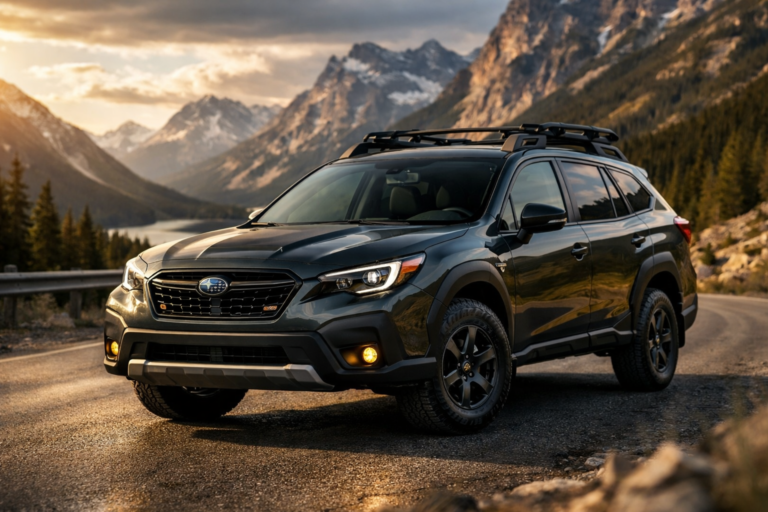
Compared to the Subaru Outback Wilderness, the Honda offers more power and a stronger V6 character. The Subaru counters with better fuel economy and a lower center of gravity. If you live in snow country and prioritize efficiency, the Subaru makes sense; if you want effortless passing power and towing confidence, Honda takes it.
Meanwhile, the Ford Edge ST (while it lasts) is quicker in a straight line but less capable off pavement. The Hyundai Santa Fe XRT undercuts on price but can’t match the Honda’s AWD sophistication or V6 smoothness.
| Spec | Honda Passport TrailSport | Toyota 4Runner | Subaru Outback Wilderness |
|---|---|---|---|
| Starting Price | $45,000 | $42,000 | $41,000 |
| Power | 280 hp | 270 hp | 260 hp |
| 0-60 mph | 6.1s | 7.5s | 6.3s |
| MPG/Range | 21 mpg | 18 mpg | 23 mpg |
| Cargo Space | 41 cu ft | 47 cu ft | 33 cu ft |
| Warranty | 3 yr/36,000 mi | 3 yr/36,000 mi | 3 yr/36,000 mi |
Hot take: for 80% of buyers who think they need a 4Runner, the Passport TrailSport is the smarter choice. It does 90% of the trails with 150% of the comfort.
The Good
- Strong, responsive V6 with smooth 10-speed automatic
- Genuinely capable AWD system with torque vectoring
- Spacious, practical cargo area
- Comfortable ride without feeling sloppy
- User-friendly tech and solid build quality
The Bad
- Fuel economy trails hybrid rivals
- No low-range gearing for serious rock crawling
- Road noise from all-terrain tires at highway speeds
- Interior design is functional, not exciting
The 2026 Honda Passport TrailSport isn’t pretending to be a Wrangler, and that’s exactly why it works. It’s a well-engineered, thoughtfully upgraded midsize SUV that actually backs up its rugged styling with real hardware.
After a week of dirt, pavement, and one overly ambitious hill climb, I’d happily park it in my driveway — right next to something far less practical that I take to the track. And that’s high praise from a guy who measures fun in apexes and braking zones.
Disclosure: This article may contain affiliate links. If you make a purchase through these links, we may earn a small commission at no extra cost to you. This helps support RevvedUpCars.com. Learn more.