
You’re standing on the lot staring at a shiny new EV, wondering if buying an EV 2026 is a smart move — or a $50,000 science experiment. Your neighbor says range anxiety is real. The dealer says you’ll “never buy gas again.” And your cousin swears the tax credits are disappearing tomorrow.
I’ve been turning wrenches for 20 years, and here’s what I’ll tell you straight: electric cars aren’t magic. They’re machines. Great ones, in many cases. But you need to understand incentives, real-world range, and charging before you sign anything.
In this guide, I’ll break down EV tax incentives, explain what that EPA range number really means, and help you figure out if an electric car fits your life — not just your driveway.
What You’ll Need
- Tools: Calculator, smartphone (for charging apps), access to your electric bill
- Parts/Materials: Level 2 home charger ($500–$900) + installation ($800–$2,000 typical)
- Time: 2–3 hours research; 1–2 weeks if installing home charging
- Difficulty: 🔧🔧 (mostly homework)
- Dealer Cost: Markups & add-ons can add $2,000–$5,000 vs DIY research Cost: $0 — You Save: Thousands
Why This Matters
Pick the wrong EV and you’ll hate it by February. I’ve seen folks buy a 220-mile range crossover, then realize winter knocks it down to 160. That’s a stressful commute.
Ignore incentives and you could leave $7,500 in federal EV tax incentives on the table — plus state rebates worth $1,000–$5,000 depending on where you live.
According to the EPA, EV efficiency and range ratings are improving every year, and the latest EPA automotive trends report shows steady gains in battery performance. Still, real-world driving, climate, and charging access matter more than brochure numbers.
Bottom line: buying smart means fewer regrets, better resale, and thousands saved over ownership.
Before You Start
⚠️ WARNING: If you plan to install a Level 2 charger yourself, you’re dealing with 240 volts. That can kill you. Hire a licensed electrician unless you’re trained and permitted to do it.
First, check your driving habits. Daily commute under 40 miles? Almost any modern EV works. Regular 300-mile road trips? Now we’re talking charging networks and fast-charge speeds.
Second, confirm home charging feasibility. Do you have a garage? Dedicated parking? A 200-amp electrical panel with spare capacity? If not, installation costs climb fast.
Third, research recalls and reliability. Check NHTSA.gov for open recalls. Every brand has them — what matters is how they handle fixes.
If you’re torn between gas, hybrid, or full electric, read our breakdown on Hybrid vs Electric 2026: Cost & Range Guide. It’ll clear up a lot of confusion.
Step-by-Step Guide
-
Check Federal and State EV Tax Incentives
Federal credits are still up to $7,500 in 2026, but income limits and battery sourcing rules apply. Verify eligibility at FuelEconomy.gov before assuming you qualify.
Pro Tip: Some dealers apply the credit at point of sale — others make you wait until tax time. That’s a cash flow difference of $7,500. -
Understand Real-World Range
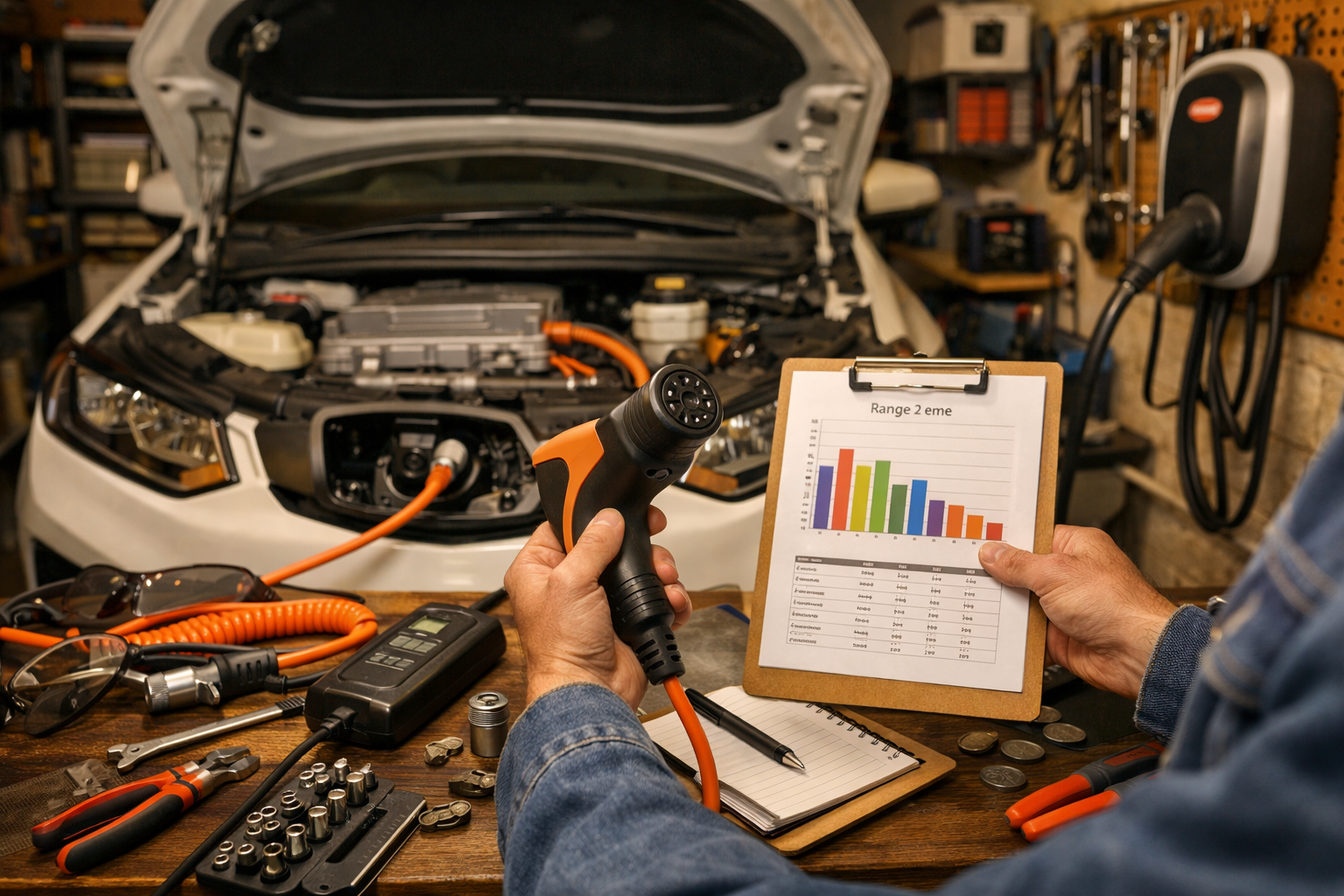
That 300-mile EPA rating? Expect 10–20% less in winter, especially in cold states. Heat drains batteries like a space heater running off a flashlight battery.
In 20 years of wrenching, I’ve learned this: numbers on paper and real life aren’t twins — they’re cousins. -
Compare Charging Speeds (Not Just Range)
Look at DC fast-charging rates: 150 kW vs 250 kW is a big deal. A Hyundai Ioniq 5 or Tesla Model Y can add 200+ miles in about 20–30 minutes under ideal conditions. Some cheaper EVs take nearly an hour.
If you road trip, this matters more than peak range. -
Budget for Home Charging
A Level 2 charger typically costs $1,500–$3,000 installed. Dealers love to gloss over this.
DIY cost for the unit: $500–$900. Electrician labor: $800–$2,000 depending on panel upgrades. -
Watch Market Trends and Pricing
EV prices are shifting due to tariffs and global competition. Read our Auto Tariffs Buying Guide: Save on Car Prices 2026 so you don’t overpay.
Also check broader Car Buying Tips 2026: Avoid Overpaying Smartly before stepping into a showroom. -
Factor in Long-Term Costs
Electricity averages $0.12–$0.20 per kWh in most states. That’s roughly $12–$18 to “fill up” for 250–300 miles. Gas equivalent? $40–$60 in a 30 MPG SUV.
Over 5 years, that can mean $4,000–$6,000 saved in fuel alone.
Common Mistakes to Avoid
- Buying based only on tax credits. I’ve seen folks grab a model just because it qualified, then hate the ride quality or cargo space.
- Ignoring winter range loss. Cold weather can reduce range 15–30%. That’s physics, not brand failure.
- Skipping home charging plans. Public charging only? That gets old fast.
- Overpaying dealer add-ons. Nitrogen tires on an EV? Come on. That’s a $300 air fill.
- Not checking insurance rates. Some EVs cost 10–20% more to insure due to battery repair costs.
I’ve seen these mistakes in the shop a hundred times — mostly in the form of “I wish I’d known that before I signed.”
When to Call a Professional
If your electrical panel is under 150 amps, talk to an electrician before buying. A panel upgrade can run $2,000–$4,000.
If you’re confused about financing, compare rates before dealer financing. Our guide to Get Best Car Loan Interest Rates 2026 Today can save you thousands in interest.
Fair dealer doc fees: $200–$500 depending on state. If you see $1,200 in “processing,” ask questions. If they dodge them, walk.
Red flags? Mandatory add-ons, refusing outside financing, or pressure tactics. That’s when you leave.
Recommended Products
- ChargePoint Home Flex (Level 2) – Reliable, adjustable amperage. Around $750. What I’d install at my own house.
- Grizzl-E Classic – Budget tank of a charger, about $550. Simple and durable.
- Tesla Universal Wall Connector – Great if you want flexibility for multiple brands. About $595.
- Emporia Energy Monitor – Tracks electricity use so you know your true charging cost. About $150.
Do This
- Verify EV tax incentives before negotiating
- Plan home charging early
- Test drive at highway speeds
- Budget for insurance and installation
Don’t Do This
- Assume EPA range equals winter range
- Rely only on public chargers
- Let dealers rush your decision
- Forget resale value trends
Buying an EV 2026 doesn’t have to be complicated. Do the homework, understand real-world range, and make sure charging fits your life. When you line it up right, it’s one of the cheapest vehicles to run per mile I’ve ever seen.
You can do this. Take a weekend, crunch the numbers, and don’t let shiny paint rush your brain. Drop your questions below — I’ll help you sort through them.
Stay smart in the showroom, and remember — a $20 repair manual saves a $2,000 repair bill.