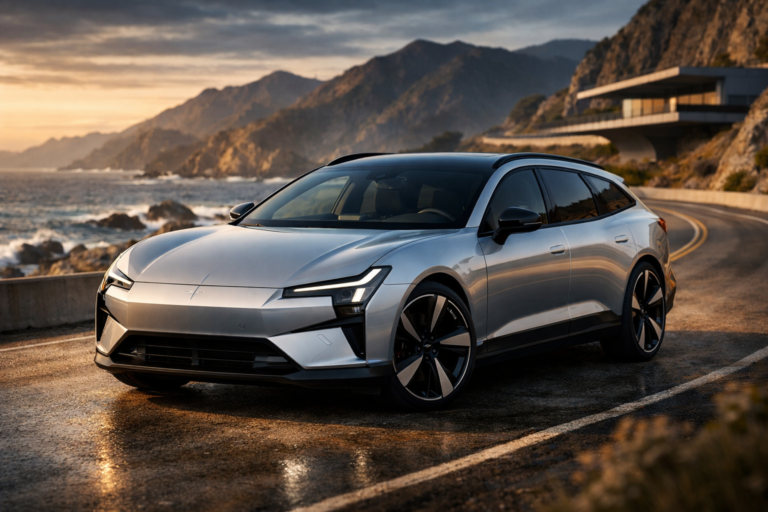

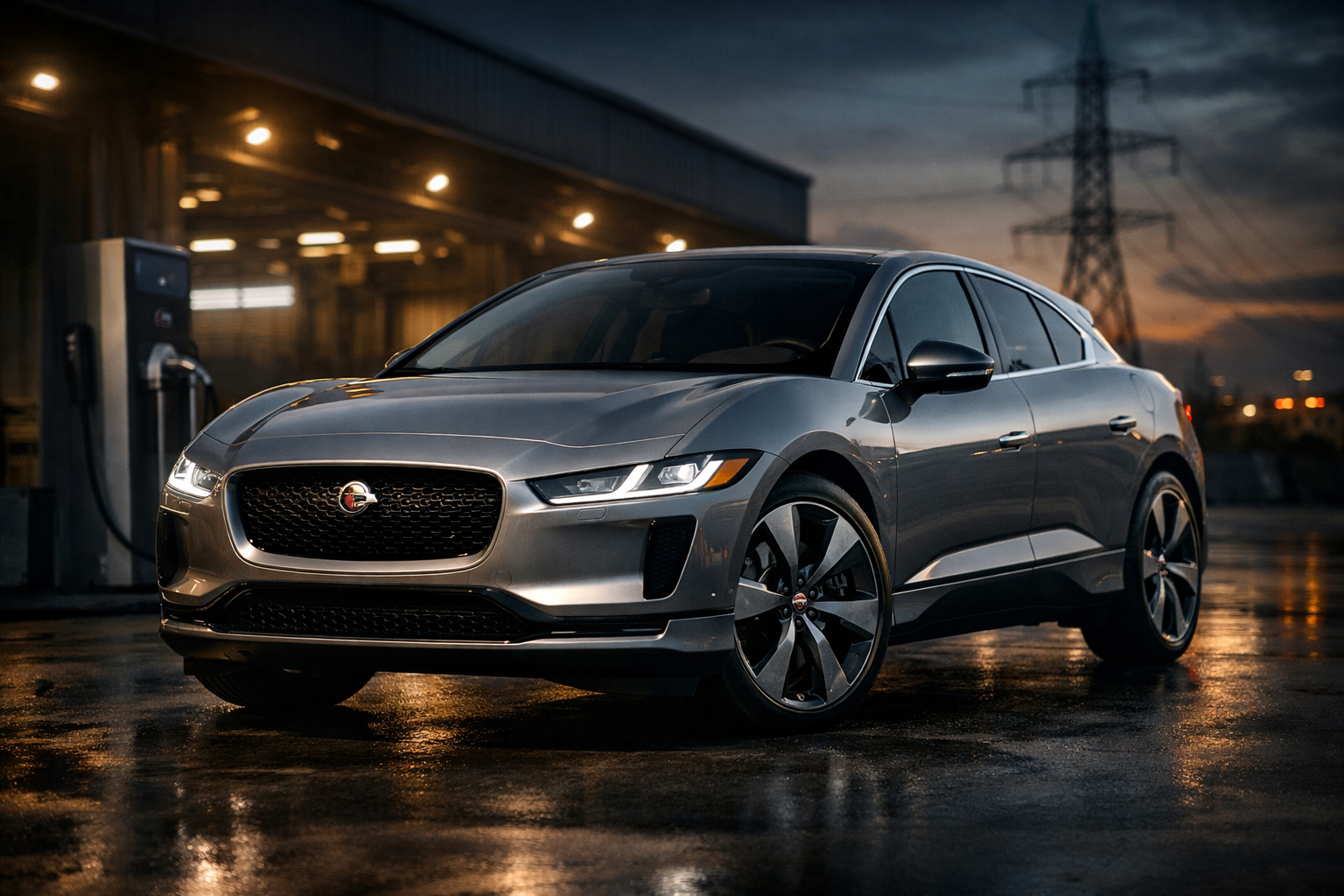
Here’s a spicy thought to ruin your dry January: Jaguar might be quietly admitting that pure EV absolutism was a bit… optimistic. The Jaguar range extender rumor matters because it hints at a strategic swerve, not a U-turn, and that’s huge for a brand betting its entire future on electricity. If you’re an enthusiast who still remembers when Jaguars had actual engines and actual character, this could be the most interesting Jaguar news in years.
Why now? Because real-world EV ownership in 2025 and 2026 has exposed a dirty secret: charging anxiety isn’t dead, it’s just better dressed. A hybrid generator EV—basically an electric car with a small petrol engine acting like a mobile power bank—might be the most honest solution nobody wants to admit they need. And if Jaguar, the company that once gave us the snarling F-Type, is considering it, everyone else is paying attention.
This is why the Jaguar range extender chatter isn’t just pub gossip; it’s an EV strategy analysis moment. Jaguar doesn’t leak accidentally, and this smells like controlled curiosity testing rather than wild speculation. The question isn’t “will it happen,” but “what does it say about the future of luxury EVs?”
Quick Specs
- Starting Price: approximately $90,000 (check manufacturer website for latest pricing)
- Engine: Electric motor with small turbocharged petrol generator
- Power: approximately 450 hp / 500 lb-ft (combined system estimate)
- 0-60 mph: around 4.0 seconds
- Fuel Economy: 300-mile EV range + 200-mile extended range (estimate)
Jaguar Range Extender: A Quiet Rebellion Against EV Purity
The Jaguar range extender idea flies directly in the face of the brand’s 2021 “all-electric or bust” manifesto. Back then, executives spoke in corporate haikus about “zero-compromise luxury” while quietly ignoring infrastructure reality. Fast-forward to 2026, and suddenly a petrol-powered generator doesn’t sound like heresy—it sounds pragmatic.
Think BMW i3 REx, but done properly, with a generator that doesn’t wheeze like an asthmatic hamster on a motorway. This isn’t a plug-in hybrid pretending to be green; it’s an EV that refuses to strand you at a broken charger in rural France. That distinction matters, especially in the luxury segment.
Why This Matters Right Now for Buyers
I’ve driven dozens of EVs in the last five years, and the best ones still fall apart when the charging network does. Winter range drops 20–30%, fast chargers are busy, and suddenly that 350-mile promise feels like a marketing intern’s optimism. A hybrid generator EV fixes that without turning back the clock.
This is especially relevant if you’ve been cross-shopping Jaguar against a Porsche Taycan, Tesla Model S, or Mercedes EQS. Those cars are brilliant when everything works, but merciless when it doesn’t. Jaguar sensing this pain point suggests they’re finally listening to owners instead of PowerPoint slides.
The Competitive Landscape Isn’t Waiting
Let’s name names. BMW is quietly perfecting extended-range logic in China, Mazda’s MX-30 R-EV uses a rotary generator, and even Ram has teased range-extended electric trucks. Jaguar ignoring this trend would be like watching everyone bring umbrellas while insisting the weather app promised sunshine.
Meanwhile, brands like Volvo are doubling down on pure EV confidence, as we explored in our Volvo EX60 range analysis. Jaguar zigging while others zag could either look visionary or desperate, depending on execution. My hot take: it’s smarter than pretending charging utopia is already here.
Engineering Honesty vs Marketing Fantasy
The beauty of a range extender is philosophical as much as mechanical. The wheels are always driven by electricity, which means throttle response stays sharp, smooth, and gloriously silent. The engine never touches the drivetrain, so it can run at peak efficiency instead of chasing revs like a caffeinated squirrel.
Done right, this setup delivers EV refinement with ICE security. Done wrong, it’s extra weight, extra complexity, and a warranty department’s worst nightmare. Jaguar’s recent reliability record makes this the riskiest part of the plan.
Interior, Tech, and the Luxury Question
Jaguar’s reborn EV interiors have been minimalist to the point of emotional emptiness. Screens everywhere, personality nowhere—something we criticized in broader industry trends, similar to points raised in Audi’s tech-first interior debate. A range extender won’t fix bad UX, but it might refocus priorities.
Luxury buyers don’t want to plan routes like a military operation. They want leather that smells expensive, software that doesn’t lag, and a car that just works. If Jaguar pairs a range extender with genuinely intuitive tech, that’s a competitive edge no OTA update can fake.
The Controversial Hot Take: EVs Aren’t the Endgame Yet
Here’s the bit that’ll annoy Twitter: full EVs are still transitional tech for many buyers. Battery density, charging speed, and grid reliability aren’t where marketing claims they are. A hybrid generator EV is not a step backward; it’s an admission of reality.
Jaguar embracing this could actually strengthen its brand reset. It signals confidence, not weakness—confidence to say, “We care more about your experience than ideological purity.” That’s refreshingly adult in an industry addicted to buzzwords.
How This Fits Jaguar’s Broader EV Strategy Analysis
Jaguar’s future lineup is rumored to include a flagship electric GT and luxury SUVs starting around $100,000. Adding a range extender variant would broaden appeal without diluting the EV-first message. Think of it as a safety net, not a crutch.
We’ve seen similar strategic hedging discussed in our coverage of shifting EV economics, like in this EV sourcing analysis. Flexibility is becoming the new luxury, and Jaguar seems to be catching on.
Regulatory and Ownership Realities
From an emissions standpoint, range extenders still qualify for favorable treatment in many markets. Insurance, resale value, and long-term usability also improve when a car isn’t entirely dependent on charging infrastructure. That matters if you keep cars longer than a lease cycle.
For safety and efficiency benchmarks, buyers should still consult NHTSA and FuelEconomy.gov once official data exists. And yes, always check Jaguar’s official site for final specs.
Pros
- Eliminates range anxiety without sacrificing EV driving feel
- More realistic for winter and rural use
- Potentially stronger resale value than pure EVs
- Signals pragmatic, customer-first thinking
Cons
- Added complexity and weight
- Jaguar reliability reputation under scrutiny
- Could confuse brand’s all-electric messaging
The Jaguar range extender rumor matters because it suggests maturity, not retreat. If Jaguar pulls this off, it won’t just survive the EV transition—it might actually make electric cars feel human again. And frankly, that’s more revolutionary than another press release promising “bold electrified futures.”