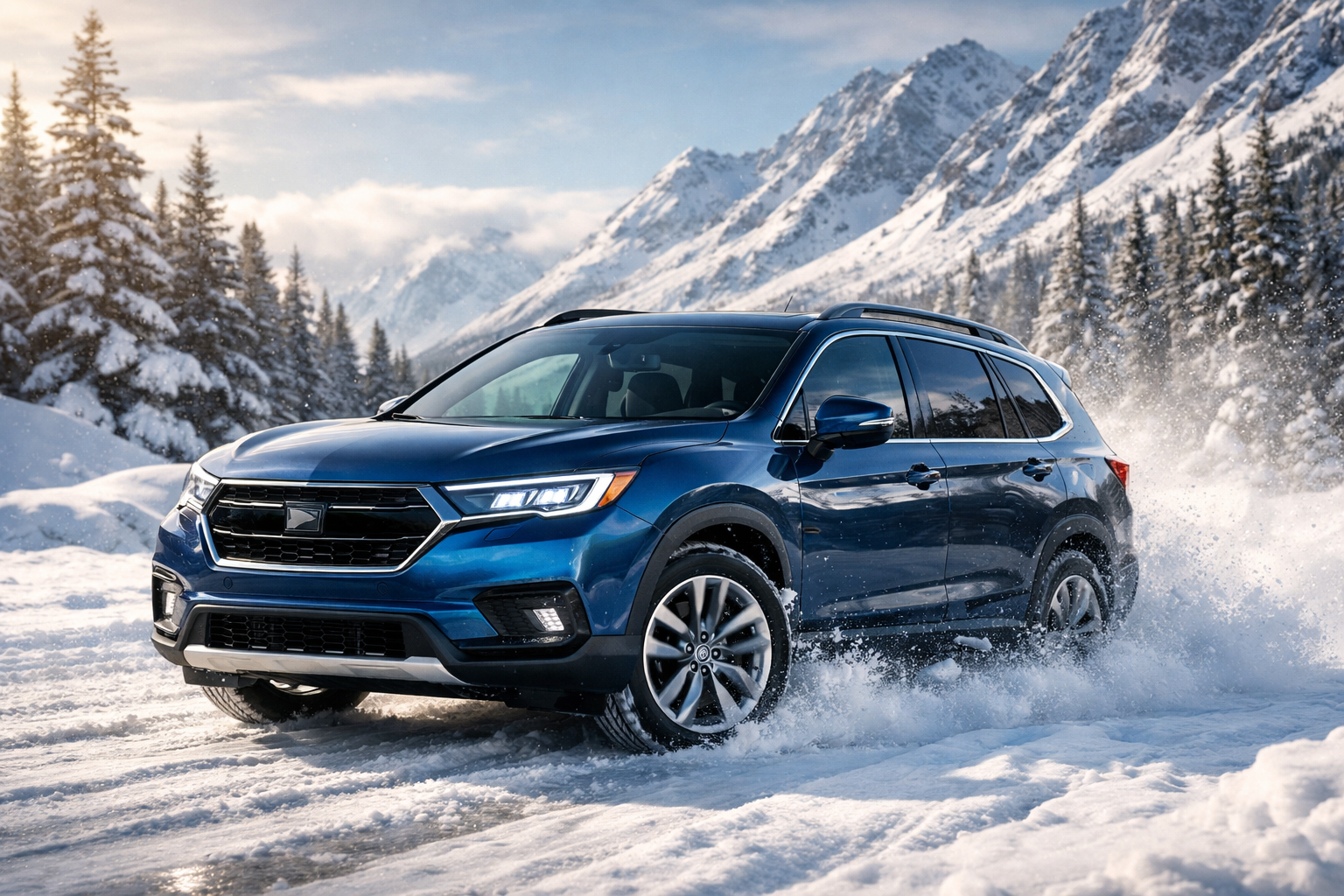

If you think all-wheel drive is just a marketing sticker for “slightly less terrifying in snow”, you’ve never experienced a truly great system in a proper blizzard. The difference between average and brilliant AWD winter driving is the difference between confidently powering up an icy hill and sliding backwards like a YouTube fail compilation.
With winter storms getting nastier and SUVs outselling everything short of Taylor Swift tickets, knowing the best AWD cars snow can’t faze isn’t just nerd trivia—it’s survival. I’ve driven Subarus sideways on frozen lakes, Audis through Alpine passes, and more crossovers than I care to admit in slushy car parks. Some systems are engineering masterpieces; others are about as useful as heated cupholders in a snowstorm.
So here it is: the best AWD winter driving setups you can buy in 2025 and 2026, what makes them brilliant, and which ones are coasting on reputation.
Why AWD Winter Driving Isn’t All Created Equal
Here’s the uncomfortable truth: not all AWD systems are full-time, mechanical marvels. Many are front-wheel-drive cars that send power rearward only after the front wheels have already spun like a Labrador on a hardwood floor.
The gold standard uses proactive torque distribution, smart braking-based torque vectoring, and rapid-response clutches or differentials. Systems from Subaru, Audi, and certain BMW M Performance models actively predict slip rather than react to it. That’s the difference between gliding forward and scrabbling for dignity.
And before you write angry comments—yes, tires matter more. If you’re still on all-seasons, read our brutally honest take on snow tires vs all season. AWD without winter tires is like wearing hiking boots on an ice rink.
Subaru Symmetrical AWD: The Snowbelt King
If winter were a religion, Subaru would be its pope. The 2026 Subaru Outback (starting around $29,000; check manufacturer website for latest pricing) uses a full-time symmetrical AWD system paired with a longitudinal boxer engine for better balance.
In real numbers? The Outback Wilderness makes 260 hp, hits 0–60 mph in about 6.1 seconds, and delivers roughly 22 city / 26 highway mpg. But specs don’t tell the whole story—the system constantly varies torque split and works seamlessly with X-Mode for deep snow and mud.
Compared to the Toyota RAV4 AWD, Honda CR-V AWD, and Hyundai Tucson HTRAC, Subaru feels less reactive and more planted. It’s why ski towns look like Outback dealership overflow lots.
Hot take: for pure AWD winter driving confidence under $40,000, nothing beats Subaru’s consistency. Yes, even over some luxury brands charging $15k more.
Audi Quattro: The Tech Nerd’s Blizzard Weapon
Audi practically built its reputation by humiliating rally stages in the 1980s, and modern Quattro still carries that DNA. In the 2026 Audi A4 Allroad (starting approximately $46,000), the system can send up to 85% of torque to the rear axle when needed.
The 2.0-liter turbo makes 261 hp, 273 lb-ft, and manages 0–60 mph in about 5.5 seconds. Fuel economy hovers around 23 city / 30 highway mpg, according to FuelEconomy.gov.
Quattro feels intelligent rather than intrusive. There’s minimal wheelspin drama—just relentless traction. Against the BMW xDrive 3 Series and Mercedes 4MATIC C-Class, Audi’s calibration in slippery corners feels the most natural, almost rear-biased.
Controversial? I’d take a well-specced A4 Allroad in snow over most body-on-frame SUVs. Height doesn’t equal grip—engineering does.
BMW xDrive: For People Who Still Like to Drive
Some AWD systems numb the experience. BMW’s xDrive, especially in the 2026 M340i xDrive (starting around $60,000), does the opposite. It keeps the rear-drive character but adds winter traction like a safety net under a tightrope walker.
You get 382 hp from a turbocharged inline-six, 0–60 mph in a ridiculous 4.1 seconds, and around 23/32 mpg. The system can fully decouple front or rear axles depending on conditions.
Compared to the Genesis G70 AWD and Acura TLX SH-AWD, BMW feels more alive mid-corner. Acura’s torque-vectoring SH-AWD is clever—arguably the most advanced in this group—but BMW balances fun and stability better.
If you believe winter means you must surrender driving joy, you haven’t tried modern xDrive.
Toyota RAV4 AWD and Hybrid e-AWD: The Sensible Option
Not everyone wants a rally legend or a Bavarian sports sedan. The 2026 Toyota RAV4 AWD (starting around $30,000) and RAV4 Hybrid e-AWD (approximately $33,000) are the pragmatic heroes of the suburbs.
The gas model makes 203 hp; the hybrid bumps to 219 hp and delivers an impressive 41 city / 38 highway mpg. The hybrid’s rear axle is powered by a separate electric motor—no driveshaft required.
It’s not thrilling. It’s not rear-biased. But it’s predictable, efficient, and massively popular for a reason. If you’re cross-shopping, our breakdown of the Mazda CX-5 vs RAV4 explains why enthusiasts still lean Mazda for steering feel.
For AWD winter driving on a budget with strong reliability history, Toyota remains a safe bet. Boring? Yes. Effective? Also yes.
Electric AWD: Instant Torque, Instant Grip
Here’s where things get spicy. Dual-motor EVs like the 2026 Tesla Model Y Long Range AWD (starting around $49,000) and Ford Mustang Mach-E AWD use one motor per axle. No driveshaft. No mechanical lag. Just instant torque split.
The Model Y does 0–60 mph in about 4.8 seconds and offers roughly 310 miles of range. In snow, that instant torque can be both blessing and curse—throttle inputs must be smooth, or you’ll trigger traction control faster than a TikTok trend.
Against the Hyundai Ioniq 5 AWD and Subaru Solterra, Tesla’s software is quicker to react, but Subaru’s chassis tuning feels more confidence-inspiring. For more on EV trade-offs, see our Hybrid vs Electric buyer’s guide.
Hot take: dual-motor EVs are the future of AWD winter driving—but only if manufacturers tune them for finesse, not drag-strip bragging rights.
Common AWD Winter Driving Mistakes
First mistake: assuming AWD helps you stop. It doesn’t. Braking performance depends on tires and ABS calibration, not how many wheels are powered. Check safety ratings at NHTSA.gov if you’re comparing models.
Second mistake: ignoring ground clearance. A Subaru Crosstrek with 8.7 inches of clearance will outlast a low-slung sport sedan in deep snow, regardless of torque wizardry.
Third mistake: forgetting maintenance. Winter salt is a silent killer—read our guide on road salt protection before your underbody looks like a shipwreck.
Pros
- Improved traction during acceleration on snow and ice
- Greater confidence on hills and unplowed roads
- Enhanced stability when paired with winter tires
- Wide variety of options from $30k crossovers to $60k sport sedans
Cons
- Higher upfront cost (typically $1,500–$3,000 extra)
- Often slightly lower fuel economy
- Can create false sense of security without proper tires
The best AWD winter driving systems aren’t about flashy badges or corporate buzzwords like “Dynamic Traction Management Pro Max.” They’re about smart engineering, balanced chassis tuning, and pairing the right hardware with the right tires. Choose wisely, and winter becomes an inconvenience—not an obstacle.
Frequently Asked Questions
What is the best AWD system for winter driving in 2026?
Subaru’s Symmetrical AWD and Audi’s Quattro remain top choices for AWD winter driving due to proactive torque distribution and balanced chassis design. Dual-motor EV systems also perform well thanks to instant torque control.
Do you still need winter tires with AWD?
Yes. AWD helps you accelerate, but winter tires dramatically improve braking and cornering. Studies show winter tires can reduce stopping distances on ice by over 30% compared to all-seasons.
Is AWD better than 4WD in snow?
For daily driving, AWD is usually better because it operates automatically and works well on mixed conditions. Traditional 4WD is ideal for deep snow or off-road use but less convenient on dry pavement.
Are electric AWD cars good in snow?
Yes. Dual-motor EVs provide precise torque control and fast response. However, smooth throttle inputs and proper winter tires are crucial to prevent wheelspin on icy surfaces.