
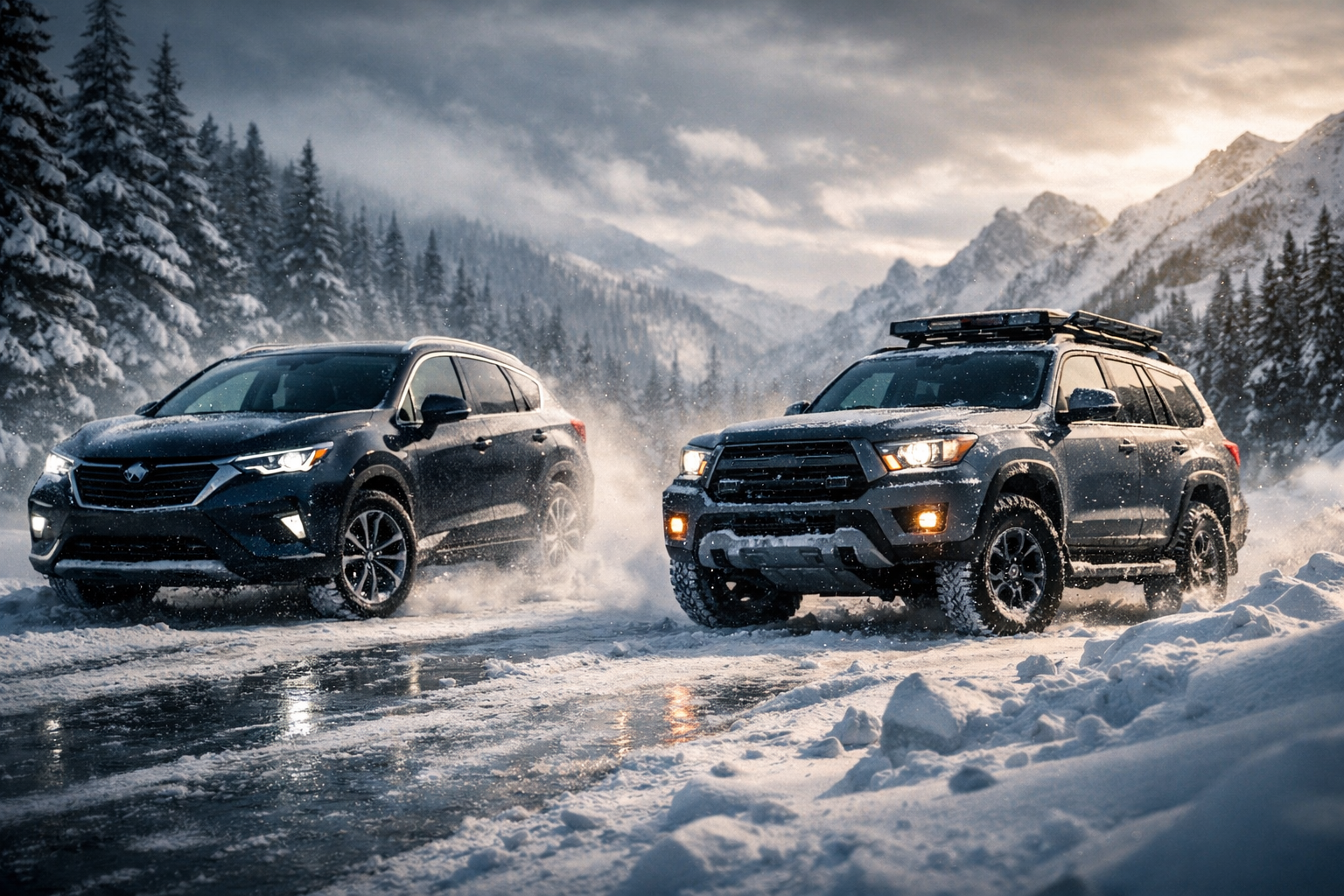
The dirtiest secret of winter driving is this: most people who brag about their “four-wheel drive” have no idea what’s actually happening underneath them. I’ve watched more SUVs pirouette into snowbanks than I care to admit, usually driven by someone convinced their badge alone defies physics. That’s why the AWD vs 4WD winter debate matters right now, especially if snowflakes are already clogging your weather app.
If you’re shopping a 2025 or 2026 vehicle, salespeople will happily blur the line between AWD and 4WD like it’s a TikTok filter. They’ll tell you both “send power to all wheels,” which is technically true in the same way a tricycle and a Ducati both have handlebars. Understanding the difference could save you thousands of dollars, or at least save your pride when the road turns icy.
I’ve driven everything from Subaru Outbacks in Colorado blizzards to Jeep Wranglers clawing through unplowed roads in Michigan, and here’s the blunt truth: AWD vs 4WD winter isn’t about which system is tougher, it’s about which one fits how you actually drive. And yes, I’m going to upset a few truck bros along the way.
Why Winter Traction Is Mostly About the Boring Stuff
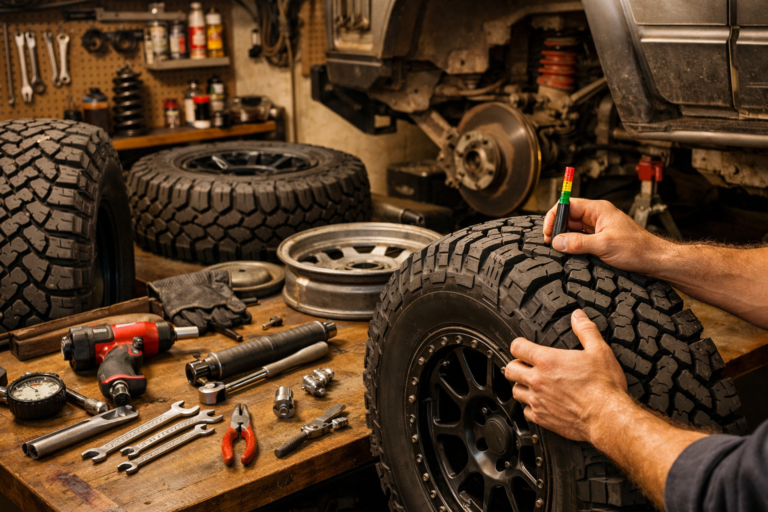
Here’s my first hot take: tires matter more than drivetrain, full stop. A front-wheel-drive Honda Civic on proper winter rubber will embarrass a 4WD Ford Bronco on bald all-seasons, and I’ve seen it happen. If you want the science behind that, our winter tires tread guide lays it out beautifully.
Drivetrains only decide how effectively your tires are used, not how much grip exists. Snow and ice don’t care about marketing slogans or chrome badges. They care about rubber compound, tread depth, and how gently you apply throttle.
What AWD Actually Does in the Snow
All-wheel drive is the sensible, slightly nerdy choice, like wearing Gore-Tex instead of a leather jacket. Systems in cars like the 2025 Subaru Outback, Toyota RAV4 AWD, and Honda CR-V AWD constantly shuffle power between axles, reacting faster than your right foot. Most are biased toward efficiency, sending maybe 90 percent of torque to the front until slip is detected.
On snow-covered roads, AWD feels confidence-inspiring and idiot-resistant, which is exactly why it’s so popular. You just point, squeeze the throttle, and the car sorts itself out with minimal drama. The downside is that many AWD systems are reactive, not proactive, meaning the wheels have to slip before help arrives.
What 4WD Brings to the Ice Party
Four-wheel drive is the gym-bro of winter traction: strong, loud about it, and sometimes wildly inappropriate. Traditional 4WD systems in vehicles like the Jeep Wrangler, Toyota 4Runner, and Ford Bronco use a transfer case to mechanically lock front and rear axles. That’s brilliant off-road and on deep, unplowed snow.
But here’s the catch nobody mentions in commercials: locked 4WD on icy pavement can actually reduce control when turning. I’ve felt trucks push straight ahead like shopping carts with one stuck wheel, especially above 40 mph. It’s phenomenal in specific conditions, but clumsy the rest of the time.
AWD vs 4WD Winter: Control vs Capability
This is where AWD vs 4WD winter really splits into personality types. AWD excels on mixed conditions, think plowed highways, slushy intersections, and surprise black ice at 6 a.m. It’s why crossovers dominate ski resort parking lots from Vermont to Utah.
4WD, meanwhile, is about brute force. If you regularly drive unmaintained roads or live where snowplows are more myth than reality, a Wrangler Rubicon with locking differentials is king. Just don’t pretend it’s automatically safer at speed, because that’s how YouTube crash compilations are born.
The MPG and Cost Reality Nobody Likes
AWD usually costs around $1,500 to $2,500 extra on mainstream vehicles, with a fuel economy penalty of 1 to 3 mpg. A 2025 Toyota RAV4 AWD, for example, still manages approximately 27 mpg combined, according to FuelEconomy.gov. That’s palatable.
4WD systems add more weight, more complexity, and more thirst. A Toyota 4Runner 4WD hovers around 17 mpg combined, and that’s before winter fuel blends make things worse. Starting prices also jump, often north of $40,000, so check manufacturer websites for latest pricing before getting starry-eyed.
Electronic Nannies: The Unsung Heroes
Modern traction control and stability systems deserve more credit than they get. Even the best drivetrain can’t save you if stability control is switched off because “real drivers don’t need it.” That’s nonsense, and the data backs it up via NHTSA crash statistics.
AWD vehicles tend to integrate better with these systems, smoothing power delivery wheel by wheel. 4WD rigs often assume a more skilled driver, which is flattering but optimistic. Chris Harris could dance a 4WD truck on ice; most of us are not Chris Harris.
The EV Curveball
Electric vehicles complicate the AWD vs 4WD winter conversation in a fascinating way. Dual-motor AWD EVs like the Tesla Model Y or Volvo EX60 deliver instant torque with millisecond precision. That makes snow driving almost eerily easy, as long as you respect the throttle.
The downside is range loss, often 20 to 30 percent in freezing temps. If you’re curious how to manage that, our winter EV survival guide is essential reading. Controversial take: for icy cities, AWD EVs are already better than most gas-powered 4WD trucks.
Common Winter Mistakes I See Every Year
The biggest mistake is thinking AWD or 4WD helps you stop. It doesn’t. Braking is tire-dependent, and no drivetrain magically shortens stopping distances on ice.
The second mistake is overconfidence. AWD vs 4WD winter arguments usually ignore the nut behind the wheel, which remains the biggest variable. Smooth inputs beat aggressive hardware every single time.
Pros
- AWD offers seamless, user-friendly traction on mixed winter roads
- 4WD excels in deep snow and unplowed conditions
- Modern electronics dramatically improve safety in both systems
- AWD generally delivers better fuel economy
Cons
- AWD systems can be reactive rather than proactive
- 4WD can reduce control on icy pavement if misused
- Both are pointless without proper winter tires
Final Word on AWD vs 4WD Winter
After 15 years of winter testing, my verdict is refreshingly simple. For 90 percent of drivers dealing with snow, ice, and slush, AWD is the smarter, safer, and cheaper solution. 4WD is a specialized tool, brilliant when needed, but overkill for school runs and salted highways.
If you remember nothing else, remember this: AWD vs 4WD winter debates should start with tires, not torque. Get good rubber, drive smoothly, and you’ll outperform half the lifted trucks at the stoplight.
Snow doesn’t reward bravado, it rewards preparation, and the right drivetrain is just one piece of that puzzle.