
You know that feeling when the sun finally shows up, you load the cooler, punch in the GPS… and your car starts making a noise it definitely didn’t make last fall? That’s why a solid spring car maintenance checklist isn’t optional — it’s the difference between a smooth road trip and waiting three hours for a tow truck on the shoulder.
Winter is brutal on cars. Salt eats metal, cold kills batteries, potholes hammer suspension parts. If you’re planning road trips, camping weekends, or hauling the family in your SUV, now’s the time to give your ride some attention.
In this guide, I’ll walk you through real-world road trip car prep — what to check, what it costs, what the dealer will try to upsell you on, and what you can handle in your own driveway with basic tools.
What You’ll Need
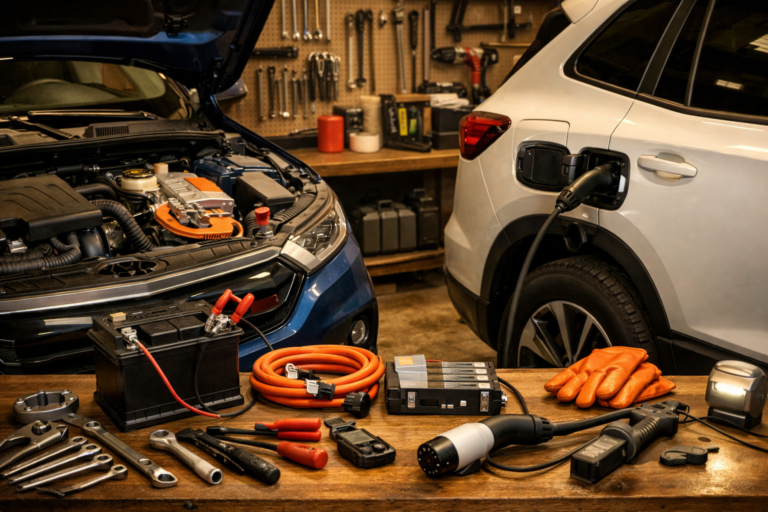
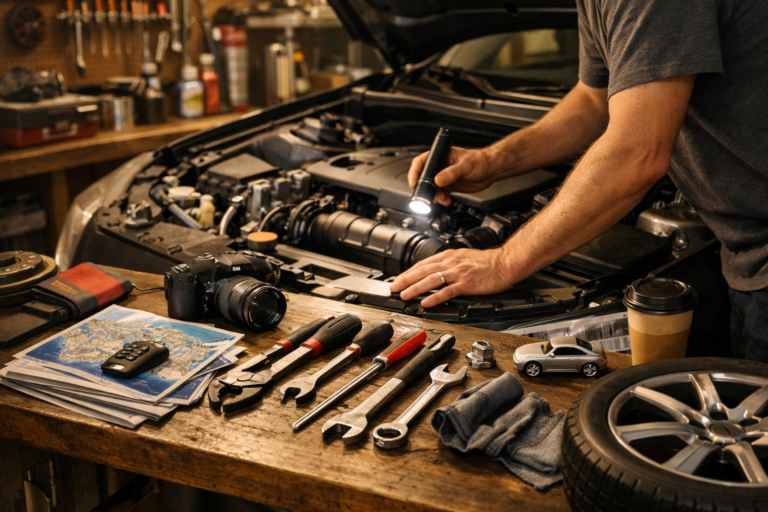
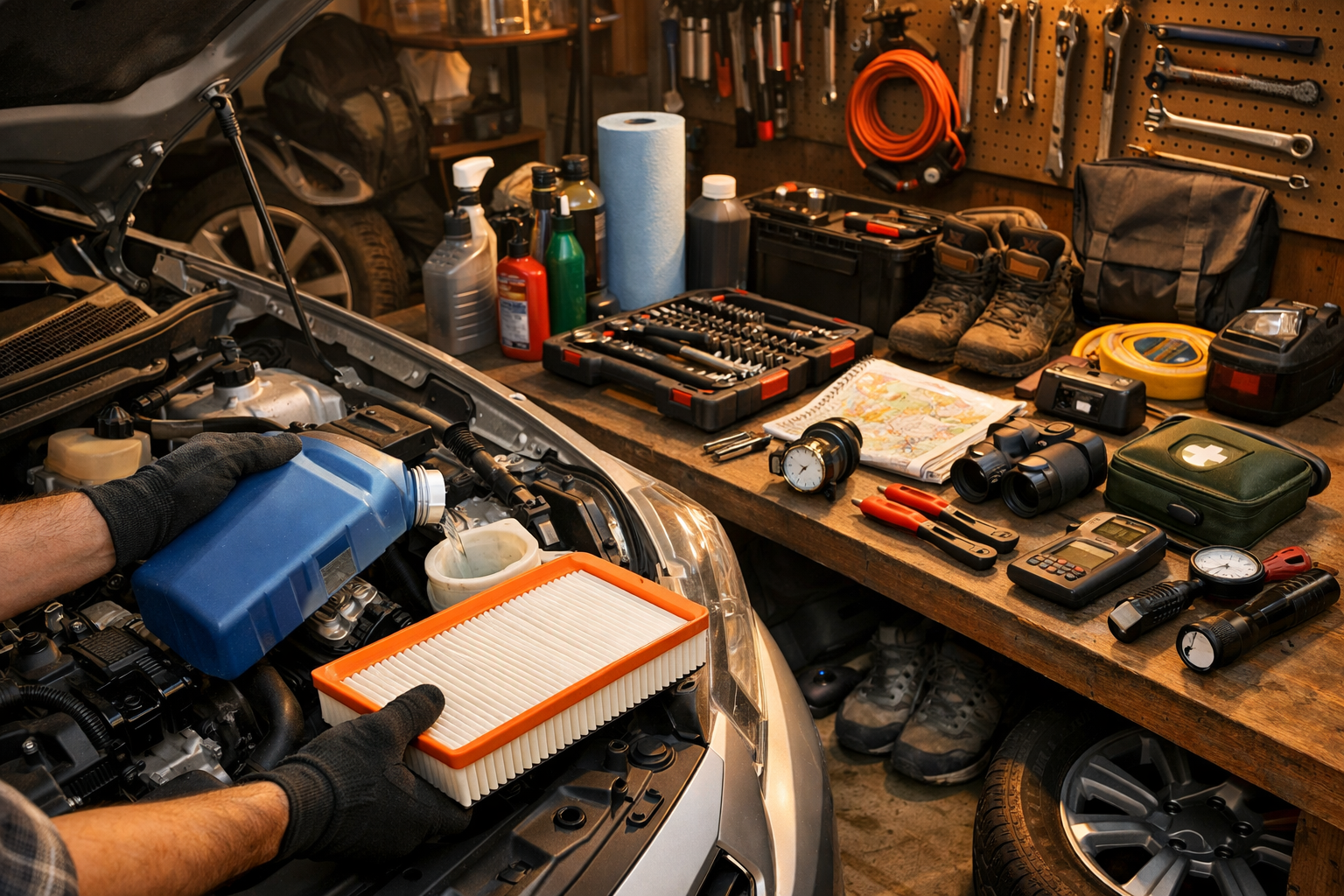
- Tools: Tire pressure gauge, tread depth gauge, 10mm socket, ratchet, torque wrench, floor jack, jack stands, flashlight, battery terminal brush
- Parts/Materials: Engine oil ($25–$60), air filter ($15–$30), cabin filter ($12–$25), wiper blades ($20–$40), coolant ($20–$30)
- Time: 1–2 hours beginner / 45 minutes experienced
- Difficulty: 🔧🔧 (2/5)
- Dealer Cost: $250–$600 service package vs DIY Cost: $80–$150 — You Save: $170–$450
Why This Matters
Skipping your spring car maintenance checklist is like skipping a physical before running a marathon. The car might survive… or it might leave you stranded 200 miles from home.
I’ve seen worn serpentine belts snap on family vacations. I’ve seen bald tires hydroplane in spring rain. In 20 years of wrenching, most breakdowns weren’t “sudden” — they were ignored maintenance.
At minimum, do this once a year or every 5,000–7,500 miles depending on your vehicle. Check your manufacturer’s maintenance schedule — you can find it on official brand sites like Toyota or Ford, or through NHTSA.gov for recall and safety info.
Before You Start
⚠️ WARNING: Always work on a flat surface. Use jack stands — NOT just a hydraulic jack. I’ve seen cars fall. It’s not pretty.
Let the engine cool completely before checking coolant or oil. Set the parking brake. Chock the rear wheels if you’re lifting the front.
Don’t DIY if you notice: severe brake grinding, flashing check engine light, coolant leaks, or steering play. Those can turn into safety issues fast.
If you’re driving something newer (2025–2026 models especially), check for open recalls. For example, here’s how to handle a current issue like the Hyundai Palisade recall and seat belt fix.
Step-by-Step Guide
-
Check Your Tires
Use a digital tire pressure gauge — not the gas station stick that’s been run over 50 times. Inflate to the PSI listed on the driver’s door sticker (usually 32–38 PSI for most sedans, 35–42 for SUVs).Minimum tread depth is 2/32”, but for road trips I want 4/32” or more. Pro Tip: Uneven wear means you probably need an alignment ($120 shop cost).
-
Inspect Brakes
Look through the wheel spokes. You want at least 3–4mm of pad material. If you hear grinding, you’re already into rotor damage.Dealer brake job: $450–$900 per axle. DIY pads and rotors: $180–$350.
-
Change Engine Oil (If Due)
Use the oil weight listed in your owner’s manual (commonly 0W-20 or 5W-30). Most engines take 4–6 quarts.Use a 17mm socket for many drain bolts (Honda/Toyota common size). Torque to spec — consult your manual.
Pro Tip: Replace the crush washer on the drain plug. It’s a $1 part that prevents leaks.
-
Replace Engine & Cabin Air Filters
Engine filter: usually clips or 8mm screws.
Cabin filter: behind glove box in most vehicles.Dealer charges $120 for both. Parts cost you about $35.
-
Test the Battery
If it’s over 3–4 years old, have it load-tested (free at most auto parts stores). Corrosion? Clean it with a battery terminal brush and baking soda solution.Spring heat finishes off weak batteries. I replace anything under 12.4 volts at rest.
-
Top Off Fluids
Coolant, brake fluid, washer fluid. Coolant capacity varies (1.5–3 gallons typical).⚠️ WARNING: Never open a hot radiator cap. Steam burns are no joke.
-
Wiper Blades & Lights
Winter kills rubber blades. Replace them now ($25). Check all exterior lights — especially brake lights.
If you’re planning camping trips, roof racks, or hauling gear, check out our SUV camper conversion guide for smart setup ideas.
Common Mistakes to Avoid
- Ignoring tire age. I’ve seen tires with good tread but 8-year-old dry rot. Check the DOT date code.
- Overfilling oil. Too much oil foams and damages seals. I’ve seen this destroy engines.
- Using the wrong coolant type. Mixing types causes sludge. Check your manual.
- Skipping torque specs on wheels. Lug nuts too tight warp rotors. Use a torque wrench.
- Falling for dealer “fuel injection cleaning.” Unless you have symptoms, it’s often a $189 upsell you don’t need.
When to Call a Professional
If you notice vibration at highway speeds, brake pulsation, fluid leaks, or suspension clunks — get it checked.
A fair spring inspection should cost $80–$150. If they quote $900 worth of “urgent” work, ask for photos and measurements.
Red flags: vague explanations, refusing to show old parts, scare tactics. Use certified techs — you can verify credentials through ASE.com.
Planning longer drives? Review coverage options in our 2026 car insurance savings guide before you hit the road.
Recommended Products
- Michelin Defender2 Tires — Long tread life, excellent for SUVs. Premium but worth it.
- FRAM Extra Guard Air Filter — Budget-friendly and reliable.
- Mobil 1 Full Synthetic Oil — What I use in my own garage.
- Bosch Icon Wiper Blades — Quiet and long-lasting.
- NOCO Boost Jump Pack — Every road trip should have one.
Do This
- Check tire pressure monthly
- Replace filters yourself
- Inspect belts and hoses visually
- Follow your factory maintenance schedule
Don’t Do This
- Rely on dashboard warnings alone
- Ignore small fluid leaks
- Mix coolant types
- Let shops upsell unnecessary services
A thorough spring car maintenance checklist isn’t complicated — it’s just deliberate. Give your car an hour or two now, and it’ll give you a summer of smooth road trips in return.
You can absolutely handle this. Take your time, use the right tools, and double-check your work. Got questions? Drop them in the comments and I’ll help you out.
Stay safe under there, and remember — a $20 repair manual saves a $2,000 repair bill.