
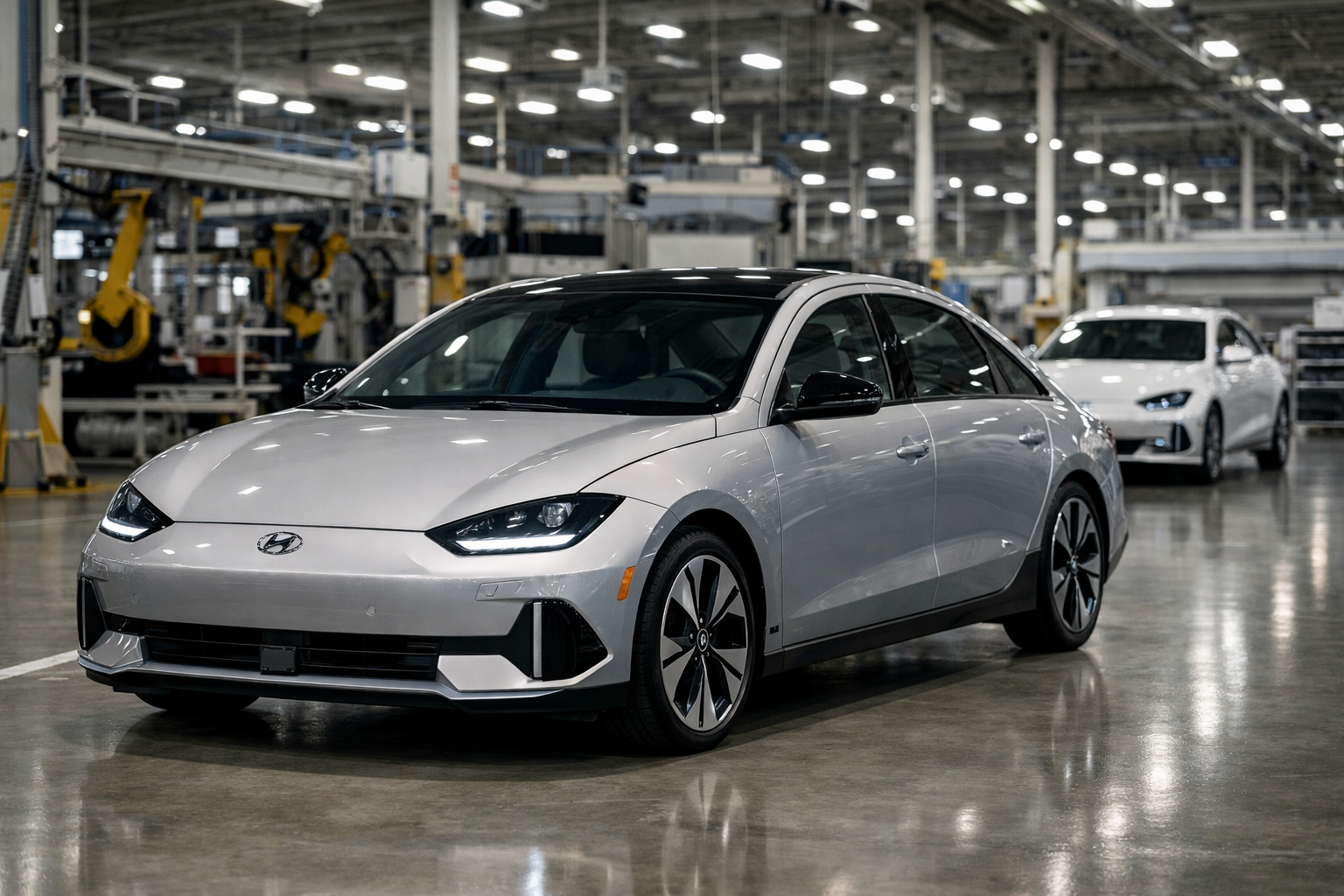
Hyundai confirmed on March 13, 2026 that the Hyundai Ioniq 6 discontinued decision is official for the U.S. market—at least in its standard form. The streamlined electric sedan will exit most trims after the 2026 model year, leaving the upcoming high-performance Ioniq 6 N as the sole version headed stateside.
This isn’t a routine mid-cycle refresh. Hyundai is effectively pulling its most affordable electric sedan from a market that’s already short on reasonably priced EV sedans. According to the company’s U.S. media statement and reporting from Reuters, Hyundai cited “shifting consumer demand toward SUVs” and a strategic focus on higher-margin models.
However, the timing raises bigger questions. With federal EV policy in flux and pricing pressure intensifying from Tesla and Chinese automakers globally, Hyundai’s move signals a broader recalibration in the affordable electric sedans 2026 landscape.
The Headlines
- What: Hyundai will discontinue the standard Ioniq 6 in the U.S., keeping only the performance-focused Ioniq 6 N.
- Who: Hyundai Motor America
- When: After the 2026 model year
- Impact: Fewer affordable EV sedan options for U.S. buyers
- Key Number: $38,650 — starting MSRP of the 2026 Ioniq 6 SE (before incentives)
What Happened
Hyundai told dealers this week that it will wind down U.S. sales of the standard Ioniq 6 by late 2026. Production for North America will taper off as the company reallocates capacity toward SUVs like the Ioniq 5 and the three-row Ioniq 9, according to people familiar with the plan cited by Bloomberg.
The Ioniq 6 launched in 2023 as Hyundai’s answer to the Tesla Model 3. Built on the E-GMP platform, it offered up to 361 miles of EPA-estimated range in SE RWD form, per EPA data. Pricing for 2026 starts at $38,650 including destination, though transaction prices have fluctuated amid incentives.
Notably, Hyundai will still bring the Ioniq 6 N to the U.S., a performance variant expected to exceed 600 horsepower, based on Hyundai’s N division previews. Executives positioned it as a halo product rather than a volume seller.
“We are aligning our sedan strategy with evolving customer demand and focusing on segments with the greatest growth potential,” Hyundai Motor America said in its statement.
Translation: crossovers sell, sedans don’t—at least not in the numbers Hyundai needs.
Why It Matters
The Hyundai Ioniq 6 discontinued decision removes one of the few sub-$40,000 EV sedans left in the U.S. Tesla’s Model 3 now starts around $39,000 before incentives. Meanwhile, the Chevrolet Bolt sedan never materialized, and Ford exited the Fusion years ago.
According to Cox Automotive data, sedans account for less than 20% of U.S. light-vehicle sales in 2025, down from over 30% a decade ago. In contrast, compact and midsize SUVs dominate. Therefore, Hyundai is following consumer demand—but it’s also conceding a segment to Tesla.
Additionally, margin pressure plays a role. EV price wars in 2023 and 2024 squeezed profitability across the industry. Hyundai doesn’t break out Ioniq 6 margins, but analysts at J.P. Morgan estimated most non-Tesla EV sedans were near breakeven at best during peak discounting.
The reality behind the PR language: affordable EV sedans are tough business in America right now.
The Bigger Picture
Hyundai’s move fits a global pattern. Automakers are trimming slower-selling EVs and doubling down on crossovers and hybrids. We recently saw a similar recalibration when Lamborghini delayed its EV plans amid soft demand, as covered in our analysis of the Lamborghini EV cancellation.
Meanwhile, U.S. emissions policy remains uncertain. The EPA’s current standards push automakers toward electrification, but political debate continues, as outlined in our breakdown of the U.S. tailpipe rollback. That uncertainty makes long-term sedan investments riskier.
Globally, however, sedans are far from dead. In China and Europe, EV sedans remain competitive, and Chinese brands like BYD are gaining share, according to recent European sales data. Hyundai will continue offering the Ioniq 6 in select overseas markets.
The non-obvious insight: Hyundai isn’t abandoning electric sedans altogether—it’s reallocating scarce U.S. capital toward segments with clearer returns.
What the Competition Is Doing
Tesla remains the dominant EV sedan player, with the Model 3 representing roughly 40% of U.S. EV sedan sales in 2025, according to registration data from S&P Global Mobility. Tesla’s cost structure and scale give it room to adjust pricing aggressively.
Ford, in contrast, has shifted almost entirely to trucks and SUVs in the U.S. Its electric strategy centers on the Mustang Mach-E and F-150 Lightning. General Motors is betting on Ultium-based crossovers like the Equinox EV, which starts around $34,995.
Meanwhile, Toyota and Honda are leaning heavily into hybrids rather than pure EV sedans. If you’re weighing options, our Hybrid vs Electric 2026 guide breaks down the cost and range trade-offs.
In short, Hyundai is not alone. The entire industry is prioritizing higher-riding vehicles.
What It Means for You
If you’re shopping for affordable electric sedans 2026, your shortlist just got shorter. The Ioniq 6 offered competitive range, fast 800-volt charging, and distinctive design. With it exiting, Tesla’s Model 3 becomes the default choice for many buyers.
However, dealers may discount remaining 2026 Ioniq 6 inventory to clear lots. Therefore, this could be a smart moment to negotiate—especially before production winds down. Pair that with guidance from our Car Buying Tips 2026 to avoid overpaying.
Additionally, if financing costs concern you, rates remain elevated compared to pre-2022 levels. Check current trends in our Best Car Loan Interest Rates 2026 overview before committing.
The Ioniq 6 N, meanwhile, will target enthusiasts, not value seekers. Expect pricing well north of $50,000.
What to Watch Next
First, monitor Hyundai’s U.S. EV sales mix over the next 12 months. If Ioniq 5 and Ioniq 9 volumes accelerate, this decision will look financially prudent. If not, Hyundai risks ceding too much sedan territory to Tesla.
Second, watch federal and state incentives. Changes to tax credits or emissions standards could reshape the economics of affordable EV sedans 2026 almost overnight.
Finally, keep an eye on whether Hyundai revisits the segment later this decade with a lower-cost, U.S.-built sedan. The Hyundai Ioniq 6 discontinued call may not be permanent—but reviving a nameplate is expensive and rare.
The Upside
- Hyundai can focus capital on higher-margin SUVs
- Potential discounts on remaining Ioniq 6 inventory
- Ioniq 6 N keeps a performance halo in the lineup
- Simplified product strategy in a volatile EV market
The Concerns
- Fewer affordable EV sedan choices for buyers
- Greater dominance for Tesla in the segment
- Signals weak profitability for non-Tesla EV sedans
- Uncertainty about long-term sedan strategy
Having covered multiple EV product cycles, I can tell you this pattern is familiar: bold sedan launch, initial buzz, then a quiet pivot to SUVs when margins disappoint. The Hyundai Ioniq 6 discontinued decision doesn’t kill electric sedans—but it narrows the field at a time when consumers need more competition, not less.
Over the next two to five years, the winners will be the automakers that crack the profitability code on sub-$40,000 EVs. For now, Hyundai is betting that code won’t be solved by a low-slung sedan in America.
Disclosure: This article may contain affiliate links. If you make a purchase through these links, we may earn a small commission at no extra cost to you. This helps support RevvedUpCars.com. Learn more.