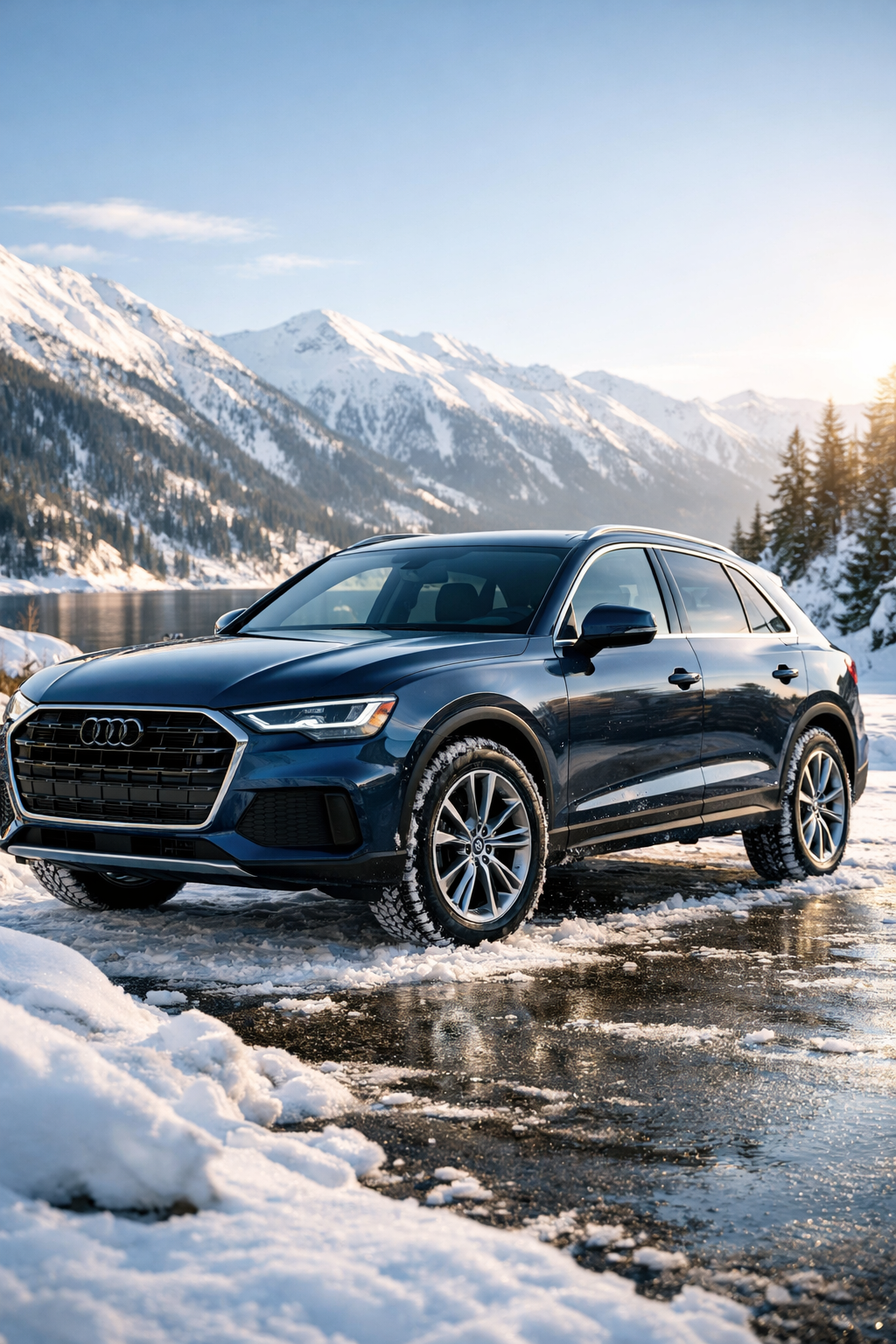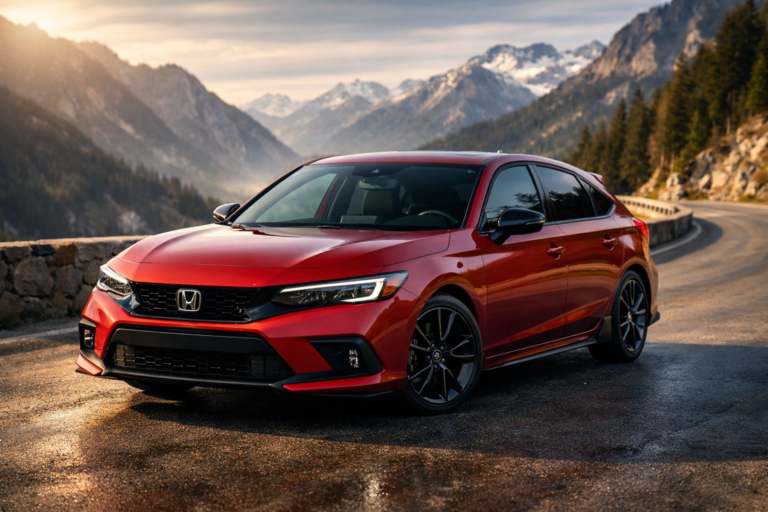

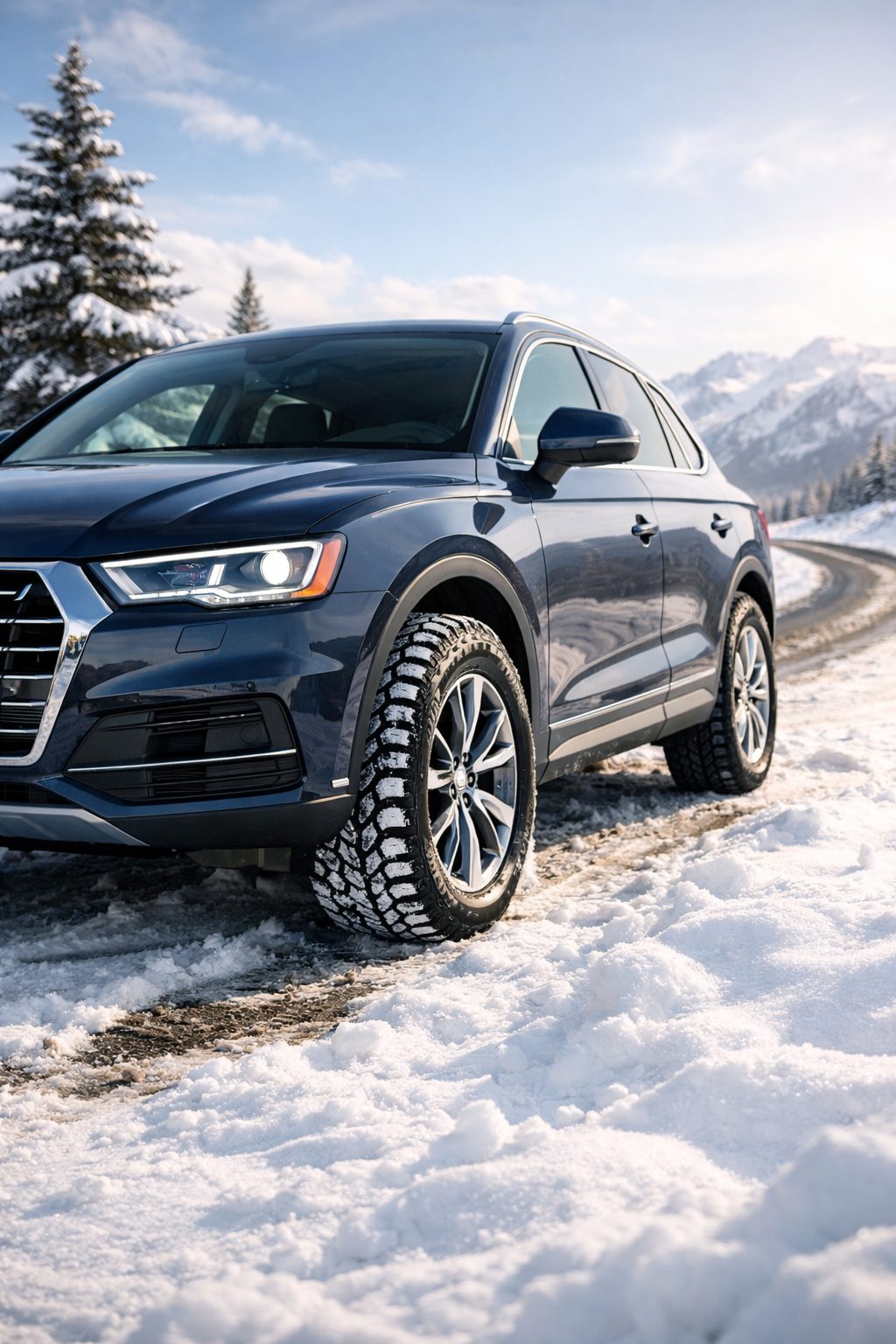
If you live somewhere that sees three snowflakes a year and a mild panic on the evening news, do you really need a second set of tires stacked in your garage like automotive firewood? The snow tires vs all season debate has become the winter equivalent of “manual vs automatic” — loud, tribal, and often missing the point. I’ve driven everything from a rear-drive BMW 3 Series to a Subaru Outback through Midwest slush and Northeast ice, and here’s the uncomfortable truth: most people either massively overestimate winter tires… or dangerously underestimate them.
With winters getting weirder — 45°F one week, a surprise ice storm the next — the decision isn’t as black and white as it was in 1998. Modern all-season compounds are better than ever. But physics still hasn’t been updated with over-the-air software.
Why This Matters More Than You Think
Tires are the only thing connecting your 4,000-pound crossover to the road. That’s four contact patches roughly the size of your palm. You can have a 2026 Toyota RAV4 with AWD, 203 horsepower, and more drive modes than a PlayStation — but if the rubber is wrong, it’s like wearing flip-flops to climb Everest.
I’ve tested AWD systems extensively — and as we’ve explained in our AWD Winter Driving: Best Systems for 2026 breakdown — traction systems help you go. They don’t help you stop. Tires do that. And stopping is the bit that keeps your insurance premium from doubling.
Snow Tires vs All Season: What’s Actually Different?
Let’s strip away the marketing waffle. Winter tires (I prefer that term to “snow tires”) use a softer rubber compound that stays pliable below 45°F. All-season tires, by contrast, start to stiffen up when temperatures drop, reducing grip even on dry but cold pavement.
Then there’s tread design. Winter tires have more aggressive siping — those tiny zig-zag cuts — that bite into snow and ice. In independent tests by Tire Rack, winter tires can stop up to 30-40 feet shorter than all-seasons from 30 mph on packed snow. That’s nearly two car lengths. In a panic stop, that’s the difference between a near-miss and an awkward chat with your bumper.
But What If Your Winters Are Mild?
Here’s the controversial hot take: if you live in a climate where temperatures rarely dip below 40°F and snowfall is measured in “dustings,” dedicated winter tires might be overkill. If your roads are plowed quickly and you’re not commuting at 6 a.m. during storms, a high-quality all-season or all-weather tire can be perfectly adequate.
Think places like parts of Tennessee, coastal Virginia, or even southern Pennsylvania. You’ll see more cold rain than proper snow. In those conditions, a premium all-season from Michelin, Continental, or Bridgestone is leagues ahead of the bargain-bin rubber that came on your base-model SUV starting around $28,000 (check manufacturer website for latest pricing).
However — and this is crucial — “mild” doesn’t mean “never icy.” One surprise freeze, one untreated overpass, and your confidence evaporates faster than a startup’s EV promises.
The AWD Myth That Refuses to Die
I can’t tell you how many times someone has said, “I’ve got AWD, I’m fine.” No, you’re not. AWD helps you accelerate. It does precisely nothing magical for braking and only marginally helps cornering if the tires can’t generate grip.
Put summer-biased all-seasons on a 2026 Subaru Outback and it’ll slide just as embarrassingly as a rear-drive BMW 330i when it’s 20°F and icy. Meanwhile, a front-wheel-drive Honda Civic on proper winter tires will feel like it’s running studded cheat codes. We’ve covered more winter basics in Winter Driving 101: Car Prep for Deep Cold, and tires are always step one.
Cost Breakdown: Is It Really That Expensive?
A set of four quality winter tires will run you approximately $800 to $1,400, depending on size. Add another $400 to $800 if you buy a separate set of wheels. Yes, that sounds painful — like spec’ing the larger wheels on a Mazda CX-5 instead of reading our Mazda CX-5 vs RAV4 comparison and realizing grip matters more than gloss-black rims.
But here’s the math people ignore: you’re not “doubling” your tire cost. You’re splitting wear between two sets. Your all-seasons last longer because they’re not grinding through freezing asphalt for four months. Over 4-5 years, the cost difference shrinks dramatically.
When You Absolutely Should Buy Winter Tires
If you regularly see temperatures below 32°F for weeks at a time, get winter tires. If you live in the Midwest, New England, upstate New York, Colorado, or anywhere that measures snowfall in feet, not inches, stop overthinking it.
Likewise, if your driveway resembles a ski jump or you commute before plows are out, winter tires are non-negotiable. I’ve driven performance cars with 400+ horsepower that felt safer in January on winter rubber than a 150-hp crossover on mediocre all-seasons.
Smart Compromise: The Rise of All-Weather Tires
Here’s where the snow tires vs all season debate gets interesting. There’s a third option: all-weather tires. These carry the three-peak mountain snowflake rating but can stay on year-round without melting into marshmallows in July.
For mild but unpredictable winters, they’re the Goldilocks solution. You won’t match a true winter tire on sheer ice grip, but you’ll outperform traditional all-seasons when temperatures plunge. For many suburban drivers, that’s the sweet spot.
Common Mistakes That Make Winter Driving Worse
First: assuming tread depth equals winter performance. A half-worn all-season with 5/32” tread is nowhere near as effective as a fresh winter tire at 10/32”. Rubber compound matters more than Instagram-worthy tread blocks.
Second: ignoring maintenance. Underinflated tires lose grip and increase stopping distances. Check pressures monthly, especially when temps swing wildly. And for heaven’s sake, protect your car from salt — our road salt protection guide explains how rust can quietly murder resale value.
Pros
- Significantly shorter stopping distances below 45°F
- Better traction on ice and packed snow
- Increased driver confidence in storms
- Reduces wear on summer/all-season set
Cons
- Upfront cost of $800–$1,400+
- Storage space required
- Overkill in consistently warm climates
So, do you need them? In the great snow tires vs all season argument, the answer depends on temperature more than snowfall. If winter in your area means actual cold — not just festive Instagram posts — proper winter tires are worth every penny. Because when the road turns into a skating rink, you’ll want grip, not optimism.
Frequently Asked Questions
Are snow tires worth it in mild winters?
If temperatures rarely drop below 40°F and snowfall is minimal, high-quality all-season or all-weather tires are often sufficient. However, even occasional icy conditions can justify winter tires for added safety.
What’s the real difference in snow tires vs all season performance?
Winter tires use softer rubber that stays flexible below 45°F and have more aggressive siping. They can stop 30–40 feet shorter on snow from 30 mph compared to typical all-season tires.
Do I need winter tires if I have AWD?
Yes, if you drive in frequent snow or ice. AWD improves acceleration, but it does not significantly improve braking. Tires have the biggest impact on stopping and cornering grip.
Can I use winter tires all year?
It’s not recommended. Winter tires wear faster and reduce handling precision in warm temperatures above 50°F. All-weather tires are a better year-round compromise in mixed climates.