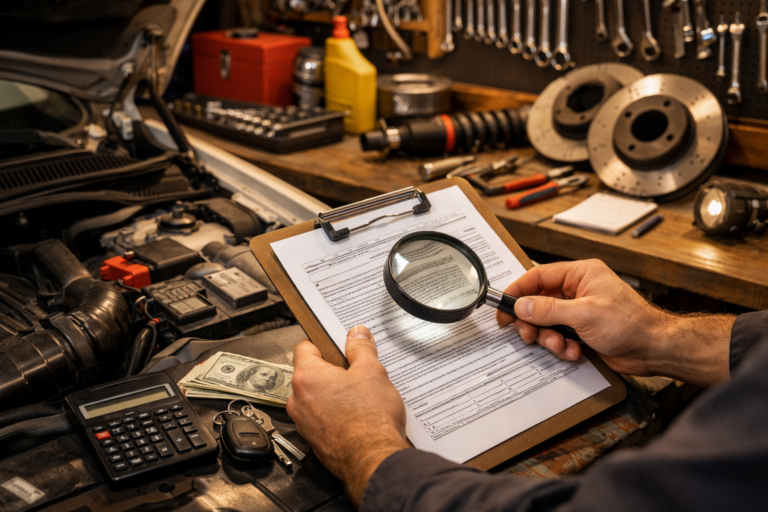

You’re scrolling your phone and see the words VW Jetta recall 2026 next to something about a transmission fire risk. Now your stomach drops. You’ve got a Jetta sitting in the driveway, maybe it’s your commuter, maybe it’s your kid’s college car — and “fire risk” isn’t exactly small talk.
Recalls aren’t just paperwork. They’re about safety, reliability, and protecting the resale value of your car. Ignore one, and you could be risking a breakdown — or worse — while also handing the next buyer a reason to knock $1,500 off your asking price.
In this guide, I’ll walk you through how to do a proper VIN recall check, where to look, what the transmission fire risk actually means, and how to handle it without getting upsold at the dealership. You can do this in 10 minutes from your kitchen table.
What You’ll Need
- Tools: Your smartphone or computer, vehicle registration (for VIN), flashlight (to read VIN through windshield)
- Parts/Materials: None — recall repairs are free
- Time: 10 minutes to check; 1–3 hours at dealer if repair needed
- Difficulty: 🔧 (1/5 — easier than checking tire pressure)
- Dealer Cost: $0 for recall repair vs DIY Cost: $0 — You Save: Potential $1,000+ in prevented damage
Why This Matters
If your Jetta is part of the VW Jetta recall 2026 involving transmission fire risk, we’re talking about possible fluid leaks contacting hot components. Transmission fluid is flammable. Mix that with exhaust heat and you’ve got a campfire you didn’t plan.
In 20 years of wrenching, I’ve seen small leaks turn into toasted wiring harnesses and melted underbody shields. What could’ve been a free recall fix became a $2,400 repair because someone ignored the notice.
Recalls should be checked at least twice a year — especially before summer heat or winter cold. Temperature swings make small problems worse. If you’re driving a 2019–2025 Jetta, or even a newer 2026 model, it’s worth verifying your status.
Before You Start
⚠️ WARNING: If you smell burning fluid, see smoke from under the hood, or notice transmission slipping, do not continue driving. Park safely and have it towed. Fire risk is not something to “monitor.”
Make sure your car is parked on a flat surface with the engine off. You’ll need your 17-character VIN. You can find it:
- At the base of the windshield on the driver’s side (use a flashlight)
- On your registration card
- Inside the driver’s door jamb sticker
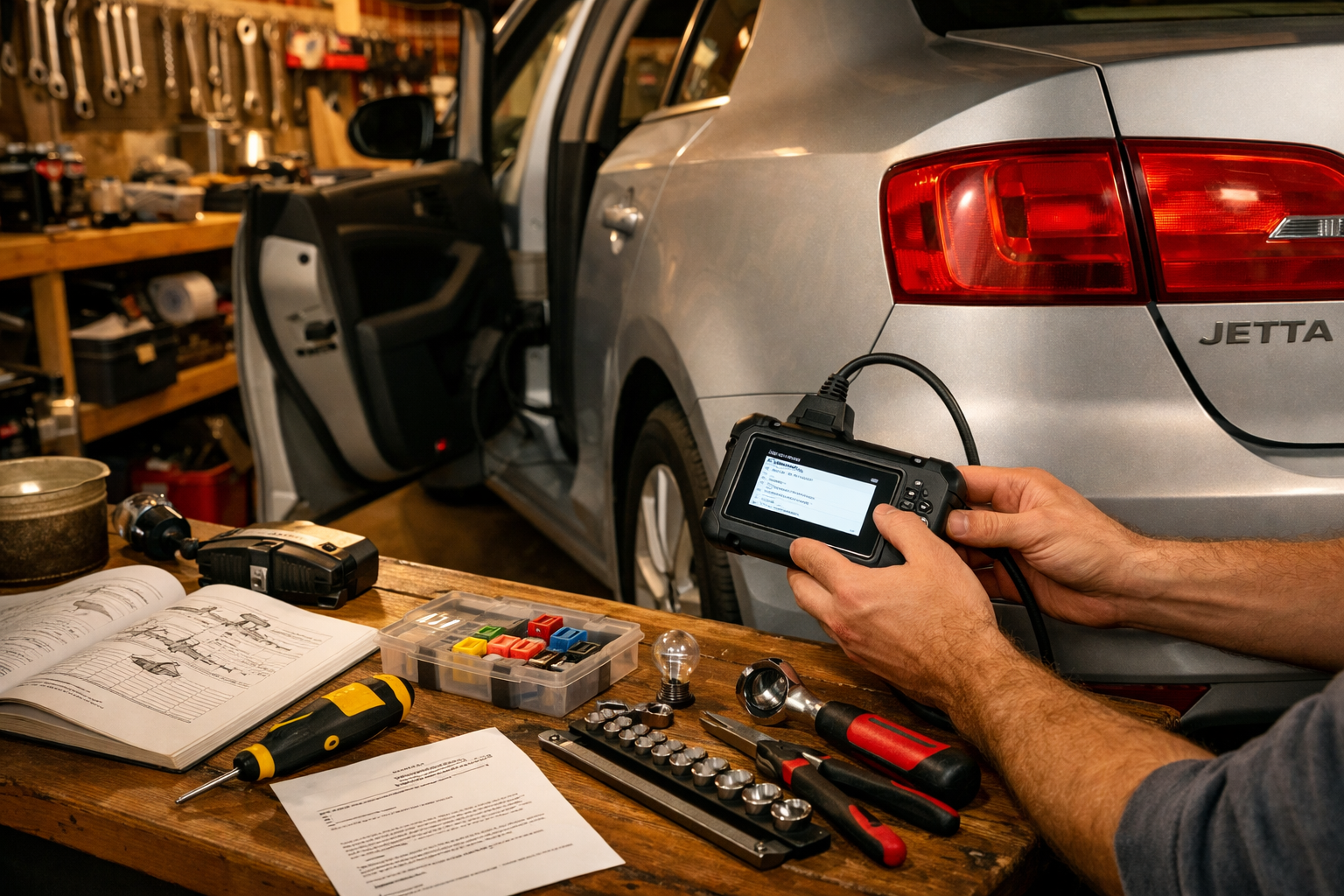
If you’re already experiencing check engine lights or transmission warning messages, jot down any codes from a basic OBD2 scanner. Codes like P0700 (transmission control system) can support a recall-related issue.
Step-by-Step Guide
-
Locate Your VIN
Stand outside the driver’s side and look through the lower corner of the windshield. Write down all 17 characters carefully — mix up an “O” and a zero and you’ll get the wrong result. -
Go to the Official NHTSA Website
Visit NHTSA.gov recall lookup. This is the government database. It’s free and updated daily. -
Enter Your VIN
Type it in exactly as shown. Hit search. Within seconds, you’ll see open recalls tied to your specific vehicle — not just your model, but your exact car. -
Check Volkswagen’s Website Too
Head to Volkswagen’s recall page for confirmation. Manufacturers sometimes list campaign details faster than third-party sites. You can also compare broader recall trends like we discussed in Ford recalls 2026: What’s Going Wrong? — same principle applies. -
Read the Recall Details Carefully
Look for language mentioning transmission fluid leaks, faulty seals, or heat shielding. If it references a transmission fire risk, schedule service immediately. -
Call Your Local Dealer’s Service Department
Give them your VIN and recall number. Ask: “Is this repair parts-available, and how long will the car be in the shop?” Typical turnaround is 1–3 hours.
Pro Tip: Ask if a software update is part of the recall. Many modern recalls involve reprogramming control modules — similar to what we covered in our Car Software Recall Guide. Those usually take under an hour.
Common Mistakes to Avoid
- Ignoring “No Open Recalls” Once and Forgetting: Recalls are issued year-round. Check every 6 months.
- Using Third-Party Paid VIN Sites: I’ve seen folks pay $29.99 for info that’s free on NHTSA.
- Waiting for a Mailed Notice: Mail gets lost. Owners move. Check yourself.
- Letting the Dealer Upsell You: They may suggest “recommended services” while you’re there. Read Spot Dealership Pricing Tricks & Save Money before you go.
I’ve seen this in the shop a hundred times — customer comes in for a free recall and leaves with a $600 cabin air filter and throttle body cleaning they didn’t need.
When to Call a Professional
If your recall status shows closed but you’re still smelling burning fluid or experiencing shifting issues, it’s time for a real inspection.
A fair diagnostic fee in 2025 runs $120–$180. Ask upfront: “If this is related to a recall, will the diagnostic be covered?” Get that in writing.
Red flags at the repair shop:
- They refuse to show you the recall bulletin.
- They claim recall repairs cost money.
- They pressure you into unrelated services.
You can verify recall legitimacy through NHTSA or even check broader vehicle reliability insights from sources like Consumer Reports.
Recommended Products
- BlueDriver Bluetooth OBD2 Scanner ($99): Great for reading transmission codes before heading to the dealer.
- Ancel AD310 Code Reader ($39): Budget option that gets the job done.
- LED Inspection Flashlight ($15): Makes reading VINs and checking for leaks easier.
What I use in my own garage? A mid-range Autel scanner and a rechargeable Streamlight. Nothing fancy — just reliable.
Do This
- Check your VIN twice a year
- Schedule recall repairs immediately
- Document all recall service for resale value
- Verify info on official government sites
Don’t Do This
- Ignore transmission fluid smells
- Pay for recall repairs
- Rely only on mailed notices
- Fall for dealership upsells
Checking your VW Jetta recall 2026 status takes less time than brewing a pot of coffee. If there’s a transmission fire risk tied to your VIN, get it handled — free repair, safer car, better peace of mind.
You’ve got this. Ten minutes today could save you from a driveway disaster tomorrow. Drop your Jetta’s model year in the comments if you want help figuring out what you’re seeing.
Stay safe under there — and remember, a $20 repair manual saves a $2,000 repair bill.