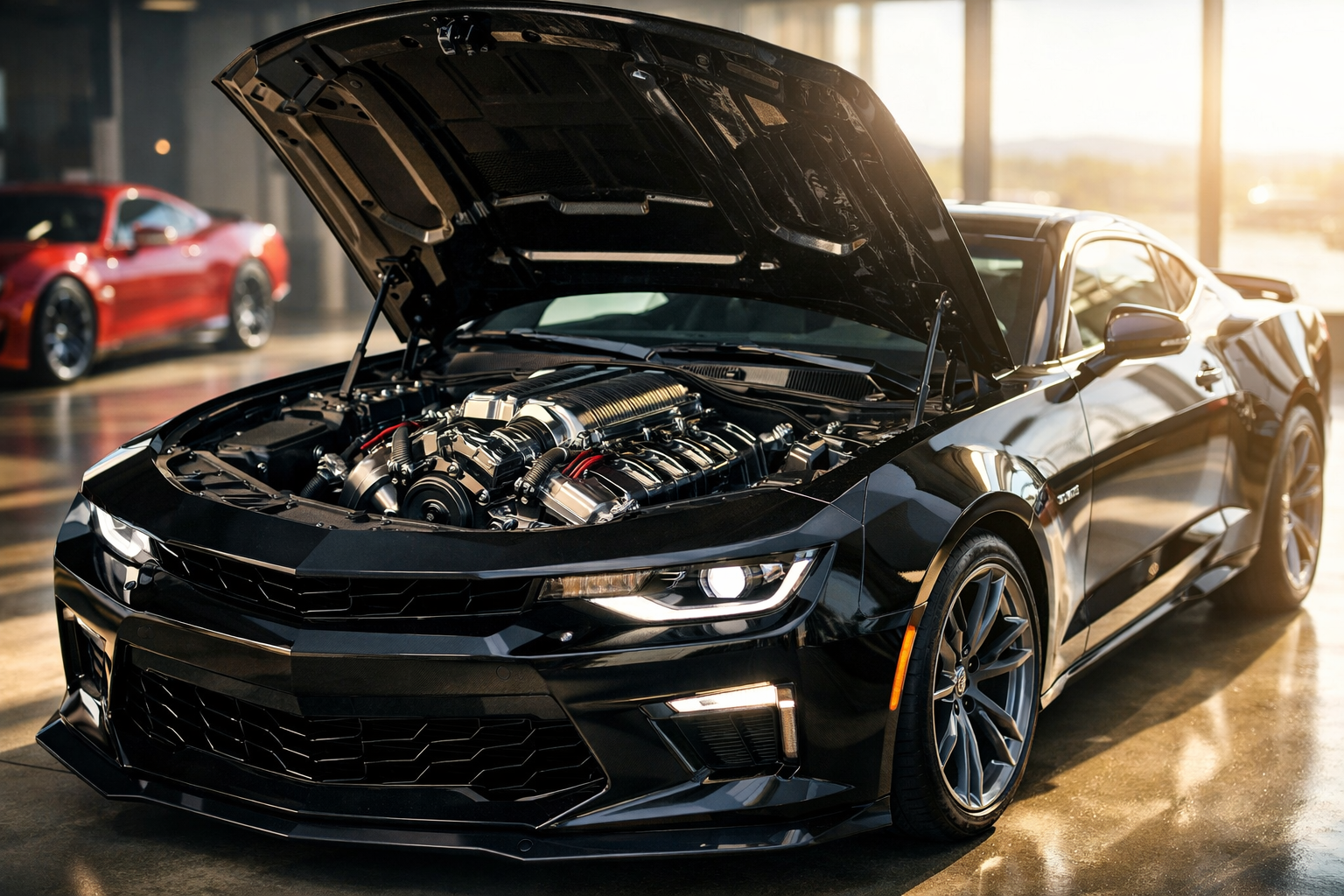

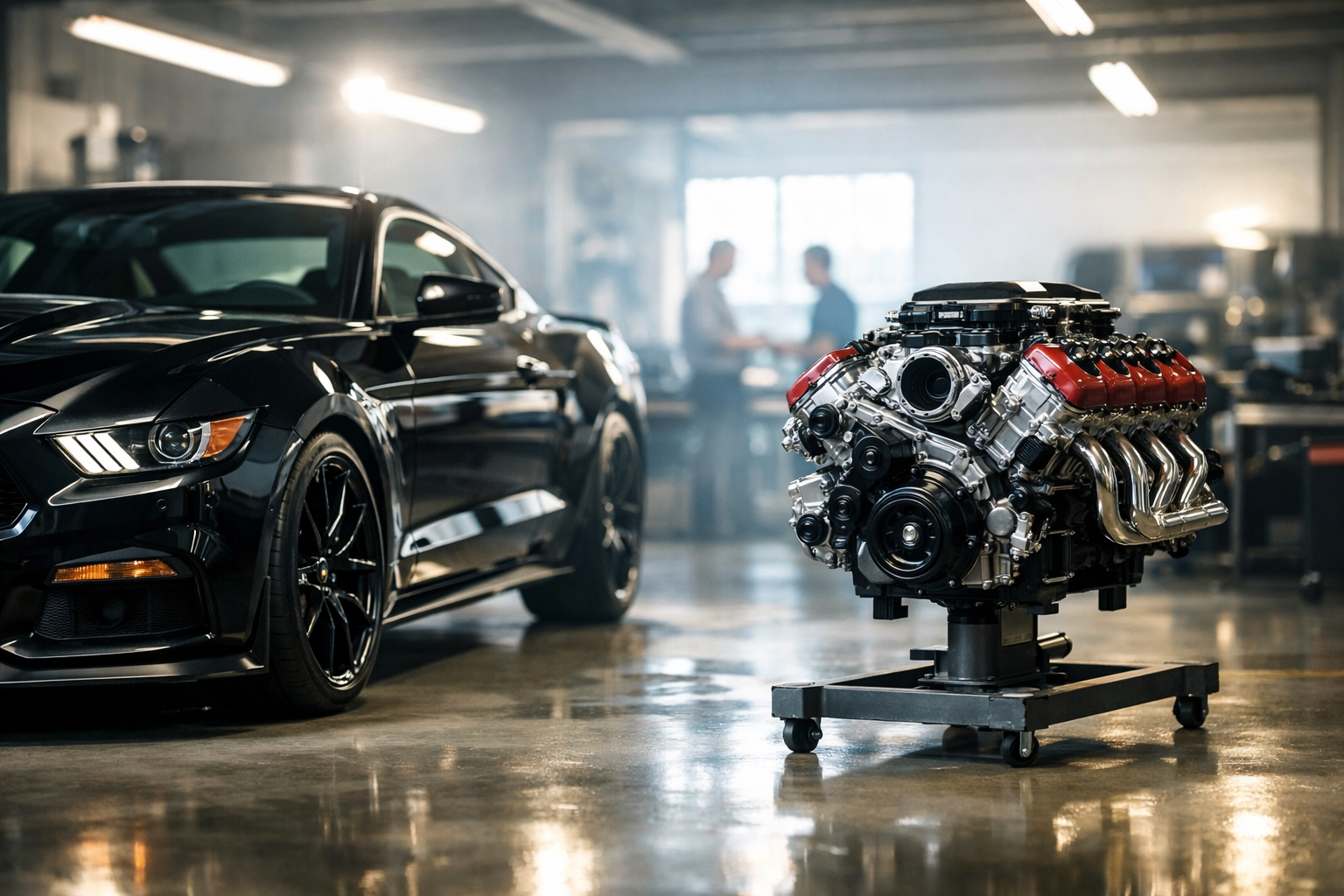
The V8 was supposed to be dead by now, quietly smothered by compliance officers and lithium-ion spreadsheets, yet here we are in 2026 with automakers still clinging to it like a beloved pub stool. The V8 engine future matters because while EVs dominate headlines, the cars enthusiasts actually buy posters of still thump out eight-cylinder thunder. I’ve driven dozens of performance cars in the last decade, and nothing else punches you in the spine quite like a naturally aspirated V8 clearing its throat.
This isn’t nostalgia goggles or a midlife crisis with a burnout problem. It’s about engineering reality, customer demand, and the uncomfortable truth that electrification alone hasn’t solved the emotional side of driving. If you think carmakers keep V8s alive purely out of sentiment, you’ve been drinking too much corporate sustainability Kool-Aid.
Right now, buyers are cross-shopping 2025 and 2026 models like the Ford Mustang Dark Horse, BMW M5, and Mercedes-AMG GT alongside EVs from Tesla and Lucid. The shocker is how many still walk out with gasoline keys, proving the V8 engine future isn’t just stubbornness—it’s strategy.
Why the V8 Refuses to Die
Automakers love to say they’re “transitioning portfolios,” which is PR code for hedging their bets. A V8 costs millions to certify, yet brands like Ford, GM, and Mercedes-AMG keep writing those checks because margins on performance trims are fat. A $75,000 Mustang or $120,000 AMG GT prints money in ways entry-level EVs simply don’t.
There’s also global reality to consider. In the U.S., Middle East, and Australia, fuel prices and regulations still allow big engines to thrive, while China and Europe quietly carve out exceptions for low-volume performance cars. That loophole is the V8’s life support, and it’s stronger than Twitter doomers want to admit.
The Numbers Still Make Sense
Look at raw stats, not marketing slides. A 2025 Ford Mustang 5.0 makes around 480 hp, hits 0–60 mph in about 4.0 seconds, and starts around $43,000—check the official Ford website for latest pricing. To match that performance in an EV without subsidies, you’re often north of $60,000.
Fuel economy isn’t even the villain it once was. Modern V8s with cylinder deactivation can crack 24–25 mpg highway, verified by FuelEconomy.gov, which is barely worse than turbocharged sixes driven hard. The idea that V8s are gas-guzzling dinosaurs ignores how clever these engines have become.
Performance Cars Need Drama
Here’s my controversial hot take: silent speed is boring after five minutes. Yes, a Tesla Model S Plaid will embarrass a Dodge Challenger off the line, but it delivers thrills like a microwave heats leftovers—efficient and utterly soulless. The V8’s soundtrack, vibration, and throttle response are part of the performance equation.
YouTube creators like SavageGeese and Chris Harris have said it plainly: engagement matters. A V8 revving to 7,500 rpm forces you to work for speed, and that effort is the fun. That’s why Porsche still sells GT cars with screaming engines while letting Taycans handle daily-driver duty.
Brand Identity Is on the Line
Kill the V8, and some brands lose their soul overnight. Chevrolet without a small-block V8 is like Harley-Davidson without potato-potato idle. This ties directly into our take on electric design reshaping brand identity, where homogenized EV platforms risk making everything feel the same.
BMW’s M division, Mercedes-AMG, and even Lexus with its LC coupe understand this. When enthusiasts walk away, brand loyalty crumbles, something we explored in how brand loyalty shapes buying choices. The V8 isn’t just an engine; it’s a rolling billboard for engineering credibility.
Regulations Aren’t the Final Nail—Yet
Yes, emissions rules are tightening, and agencies like NHTSA aren’t exactly handing out free passes. But regulators still allow low-volume exemptions and synthetic fuel experimentation. That’s why companies like Porsche and Ferrari are investing heavily in e-fuels.
This creates a fascinating middle ground where the V8 engine future isn’t mass-market, but it’s not extinct either. Think of it like mechanical watches in the age of smartwatches—obsolete on paper, priceless in practice.
The Hybrid Lifeline
If the V8 survives long-term, it’ll wear a hybrid badge. Look at the 2025 BMW M5: twin-turbo V8 plus electric assistance, roughly 717 hp, and 0–60 mph in about 3.4 seconds. That’s absurd performance with emissions low enough to keep regulators placated.
Purists will moan, but I’ll take a heavier hybrid V8 over a soulless EV any day. The torque fill actually sharpens throttle response, making old-school lag feel like a bad memory from 2009.
What Enthusiasts Actually Want
Despite loud online noise, most buyers aren’t anti-EV; they’re anti-boring. That’s why articles like the gasoline case after 2030 resonate so strongly. People want choice, not mandates disguised as innovation.
The V8 gives automakers credibility to sell EVs. It’s the halo that draws crowds into showrooms, even if they leave in a crossover. Lose that halo, and you’re just another appliance brand.
The Realistic V8 Timeline
Expect V8s to shrink in volume, not vanish. By the early 2030s, they’ll likely exist only in performance flagships, limited editions, and trucks where towing still matters. Think Ford F-150, Chevy Silverado, and niche sports cars.
The V8 engine future is less about mass adoption and more about cultural preservation. Automakers know that once it’s gone, there’s no reboot button.
Pros
- Unmatched sound and emotional engagement
- High profit margins fund future tech
- Hybridization improves efficiency without killing character
- Strong brand identity and enthusiast loyalty
Cons
- Increasing regulatory pressure worldwide
- Rising development and certification costs
- Limited long-term scalability
The V8 won’t dominate the future, but it will haunt it—in the best possible way. As long as people crave mechanical drama, automakers will keep finding excuses to bolt eight cylinders together and call it progress.
Frequently Asked Questions
Is the V8 engine future really secure after 2030?
Secure in niche form, yes. Expect limited production models and hybrids rather than mass-market V8s.
Are V8 engines worse for the environment than EVs?
On average, yes, but modern V8s with hybrid tech and e-fuels can significantly reduce emissions.
Which brands are most committed to keeping V8s?
Ford, GM, Mercedes-AMG, and Ferrari continue investing heavily in V8 development.
Will V8s become more expensive?
Almost certainly. Lower volumes and higher compliance costs will push prices up over time.