
You finally booked that hypercar track event — maybe not a Bugatti Bolide, but something close — and now you’re staring at your own car thinking, “Is this thing ready for 130 mph?” That right there is why you need a solid track day preparation guide. The track is where weak batteries, old brake fluid, and half-bald tires go to die.
A single overlooked issue can turn a $300 weekend into a $3,000 repair bill. I’ve seen guys cook brakes in two sessions because they figured “it’ll be fine.” In this guide, I’ll walk you through how to prep your car the right way — safely, smartly, and without paying dealership prices for stuff you can handle in your own garage.
What You’ll Need
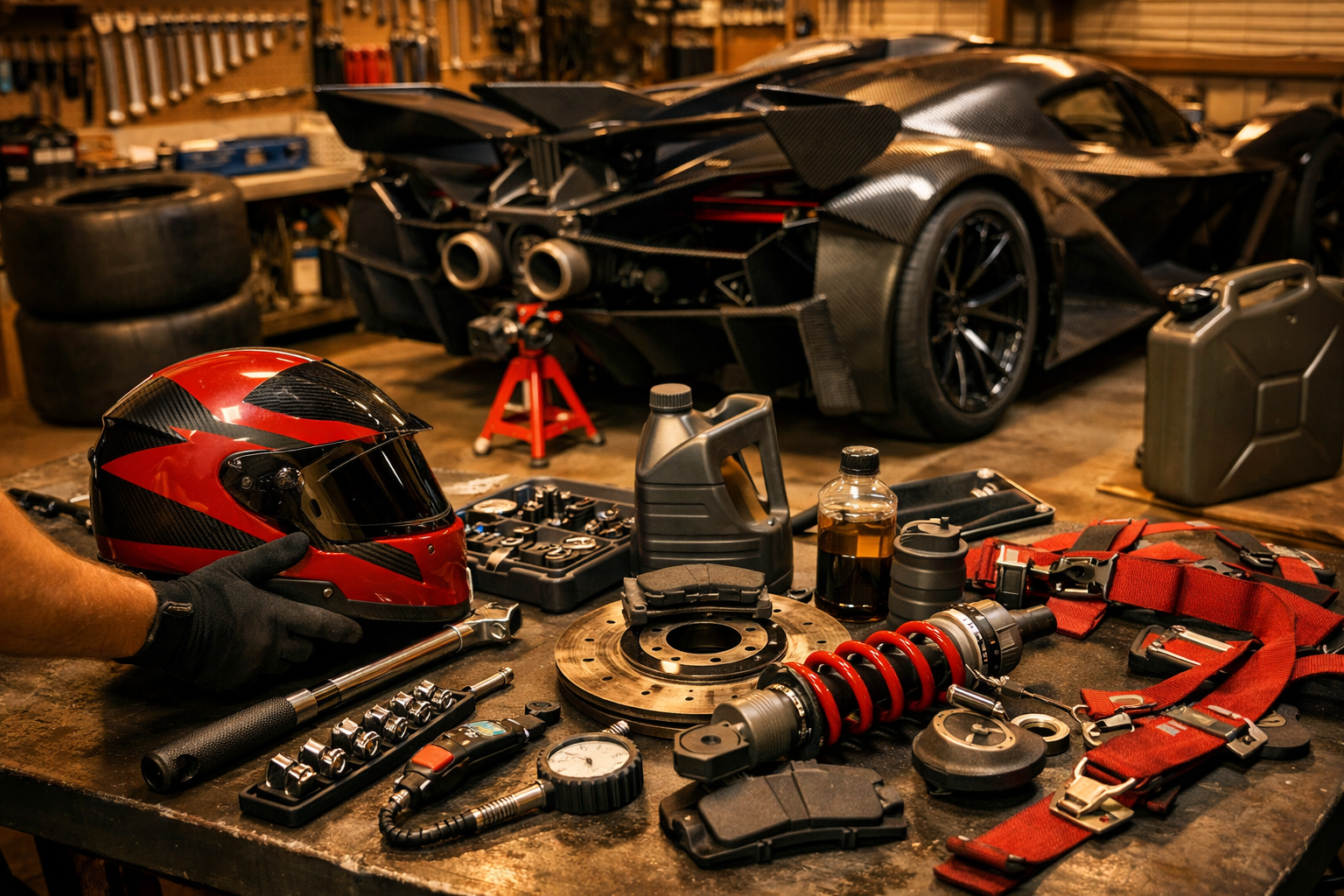
- Tools: 1/2-inch drive torque wrench, 19mm or 21mm deep socket (lug nuts), tire pressure gauge (digital), brake bleeder kit, OBD2 scanner, floor jack (3-ton), jack stands, flashlight
- Parts/Materials: High-temp brake fluid ($25–$40), performance brake pads ($150–$400), engine oil (5–8 quarts, $35–$90), brake cleaner ($6), blue painter’s tape ($5)
- Time: 2–3 hours beginner / 90 minutes experienced
- Difficulty: 🔧🔧🔧 (3/5)
- Dealer Cost: $600–$1,200 prep service vs DIY Cost: $200–$450 — You Save: $400–$800
Why This Matters
A proper track day preparation guide isn’t about going faster — it’s about surviving the day. Track driving stresses your car 10 times harder than daily commuting. Brakes hit 1,000+ degrees. Oil temps spike. Tires get chewed like bubble gum.
Skip prep and you risk brake fade, blown hoses, overheating, or worse — losing control at speed. In 20 years of wrenching, I’ve seen neglected brake fluid boil and send cars straight into gravel traps.
Do this inspection one week before any track event. Even if you’re driving something mild like a 2026 Toyota C-HR, the track doesn’t care what badge is on the hood.
Before You Start
⚠️ WARNING: Never work under a car supported only by a jack. Always use rated jack stands on solid, level ground.
⚠️ WARNING: Brakes and exhaust components can stay hot for over an hour after driving. Let the car cool completely.
Park on a flat surface, engage the parking brake, and chock the wheels. If you’ve had recent recalls, check NHTSA.gov before hitting the track. Suspension or brake recalls are a hard stop.
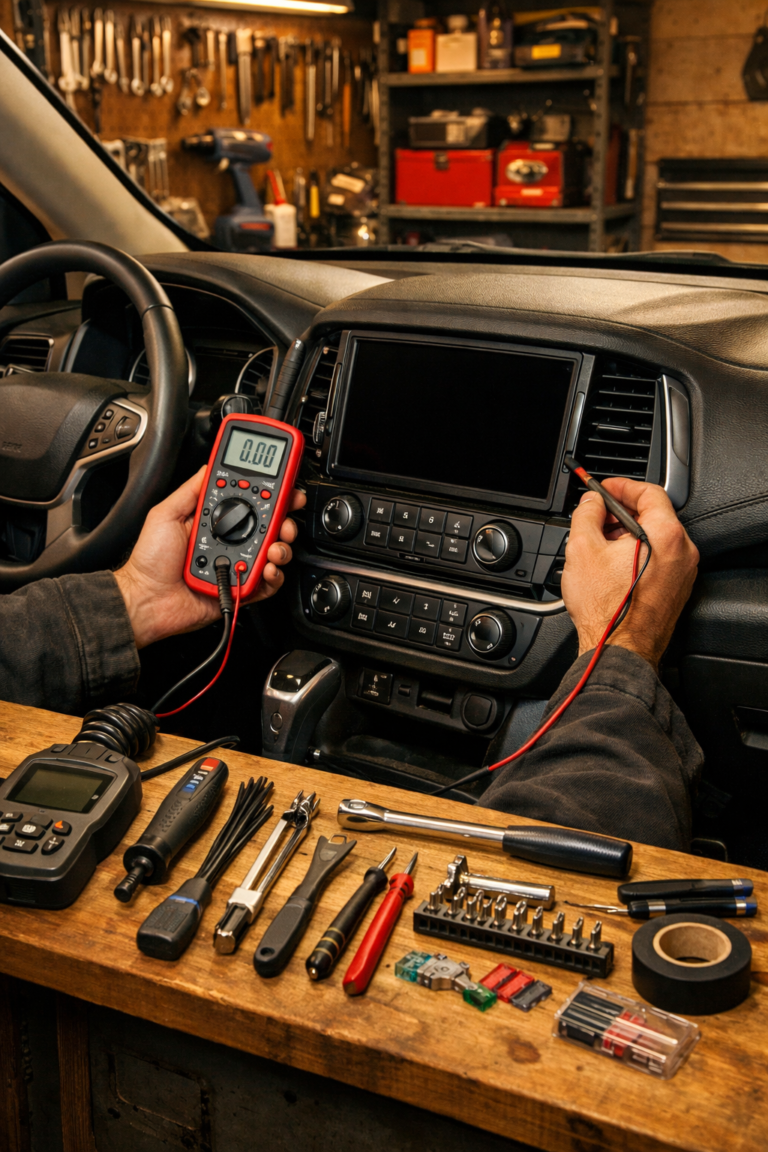
Scan for codes with an OBD2 reader. Misfire codes (P0300 series), overheating warnings, or brake system alerts? Fix those first. This isn’t the day to “see if it clears itself.”
Step-by-Step Guide
-
Inspect Your Brakes
Remove wheels using a 19mm or 21mm deep socket (most Hondas are 19mm, many BMWs 17mm bolts). Check pad thickness — minimum 50% life for track use. Inspect rotors for cracks or deep grooves.
Pro Tip: If pads are under 6mm thick, replace them. Track days eat thin pads alive. -
Flush or Upgrade Brake Fluid
Use DOT 4 high-temp fluid (Motul 600 or similar). Bleed each corner starting farthest from the master cylinder. Consult your owner’s manual for exact sequence and torque specs.
Expect to use 1–2 liters depending on system size. -
Check Tires and Set Pressures
Inspect for cracks, cords, or uneven wear. Set cold tire pressures 2–4 PSI below street spec — they’ll rise as they heat up. Use a digital gauge, not the $2 gas station stick. -
Torque Lug Nuts Properly
Use a torque wrench — not an impact gun. Most passenger cars range 80–100 ft-lbs. Consult your owner’s manual for exact spec. Re-check torque after your first session. -
Change Engine Oil (If Near Interval)
Track driving shears oil fast. If you’re within 1,000 miles of your change interval, do it now. 5–8 quarts typical. Check manufacturer schedule or ASE.com for service standards. -
Inspect Hoses and Belts
Squeeze coolant hoses. Cracks or mushy spots? Replace them. A $25 hose beats a $1,500 overheated engine. -
Remove Loose Items
Empty trunk and cabin. Floor mats out. At 100 mph, a water bottle becomes a projectile. -
Check Battery Security
Make sure it’s tightly secured. Tracks will black-flag you for a loose battery.
Common Mistakes to Avoid
- Running street brake fluid. I’ve seen it boil in 15 minutes. Pedal goes soft, and suddenly you’re praying.
- Overinflating tires. Hot pressures skyrocket and reduce grip.
- Skipping torque checks. Wheels can loosen after heat cycling. Yes, I’ve seen one pass a car.
- Ignoring small leaks. Minor oil seep? On track, that turns major fast.
- Trusting dealership “multi-point inspections.” They’re built for commuting, not racing.
When to Call a Professional
If you notice cracked rotors, brake pulsation, heavy oil leaks, or overheating — stop. A performance shop inspection runs $150–$300. Worth every penny if you’re unsure.
Fair pricing for track brake pad install: $250–$400 labor. Full brake fluid flush: $120–$180. If a dealer quotes $800 for “track prep,” ask exactly what they’re doing.
Watch for upsells like injector cleaning or cabin air filters. That’s the same nonsense I warn about in how to spot shady dealers.
Recommended Products
- Motul RBF 600 Brake Fluid – $30/bottle. What I use in my own garage.
- Hawk HP+ Brake Pads – Great entry-level track pad, $180–$250 per axle.
- Tekton 1/2-Inch Torque Wrench – $60. Reliable and accurate.
- Longacre Digital Tire Gauge – $40. Precise readings matter.
If you’re tracking something exotic or electric, especially with rising prices tied to things like the Iran conflict auto industry impacts, protecting that investment is even more critical.
Do This
- Upgrade brake fluid before every season
- Check torque before and after sessions
- Inspect tires between runs
- Change oil early, not late
Don’t Do This
- Don’t rely on factory pads for heavy track use
- Don’t skip safety checks to save time
- Don’t ignore warning lights
- Don’t leave loose items in the cabin
A proper track day preparation guide isn’t about being obsessive — it’s about being smart. You don’t need a Bugatti Bolide to take this seriously. Prep your car right, and you’ll spend the day chasing apexes instead of tow trucks.
You’ve got this. Take your time, double-check your work, and ask questions in the comments if something feels off. Stay safe under there, and remember — a $20 repair manual saves a $2,000 repair bill.