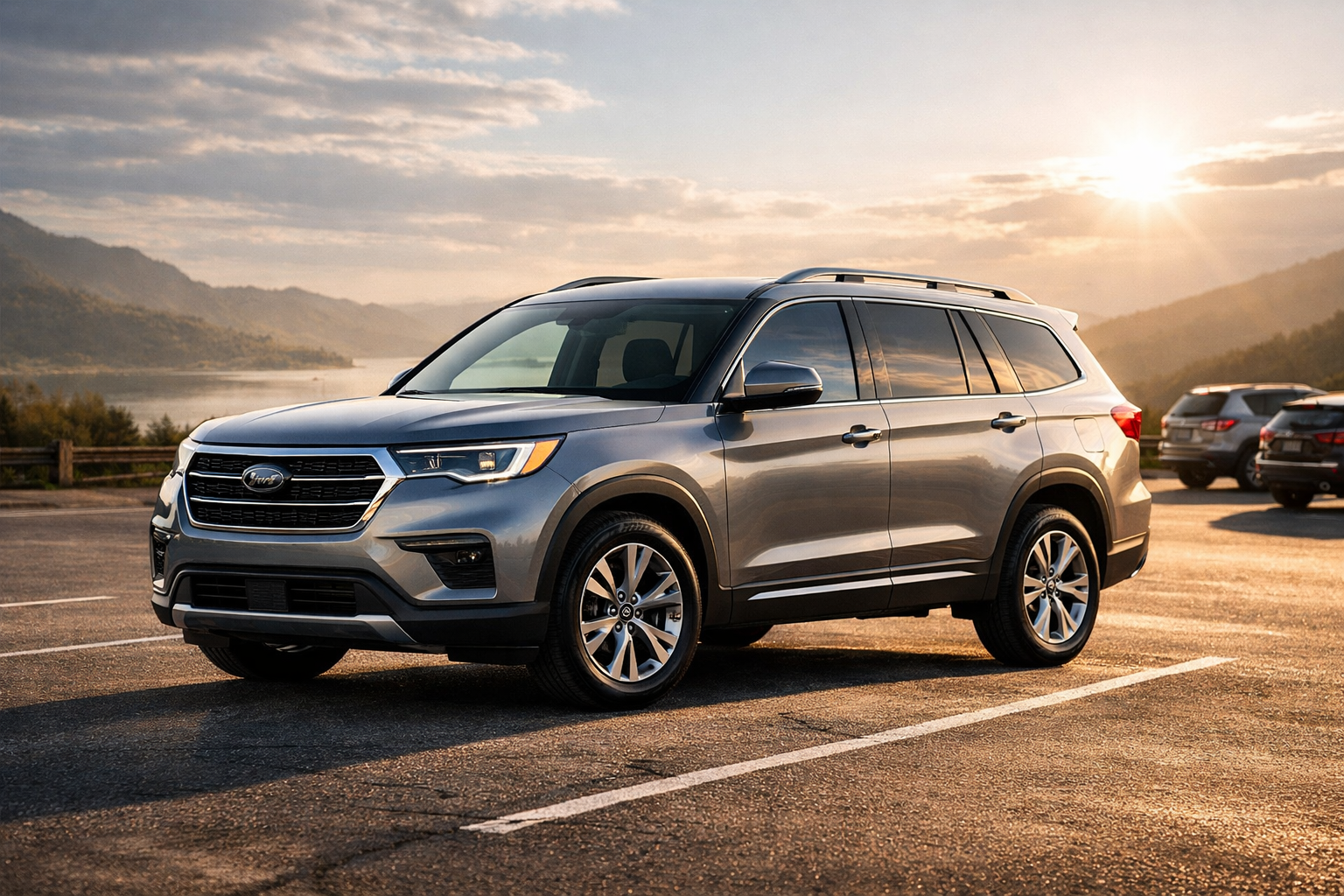

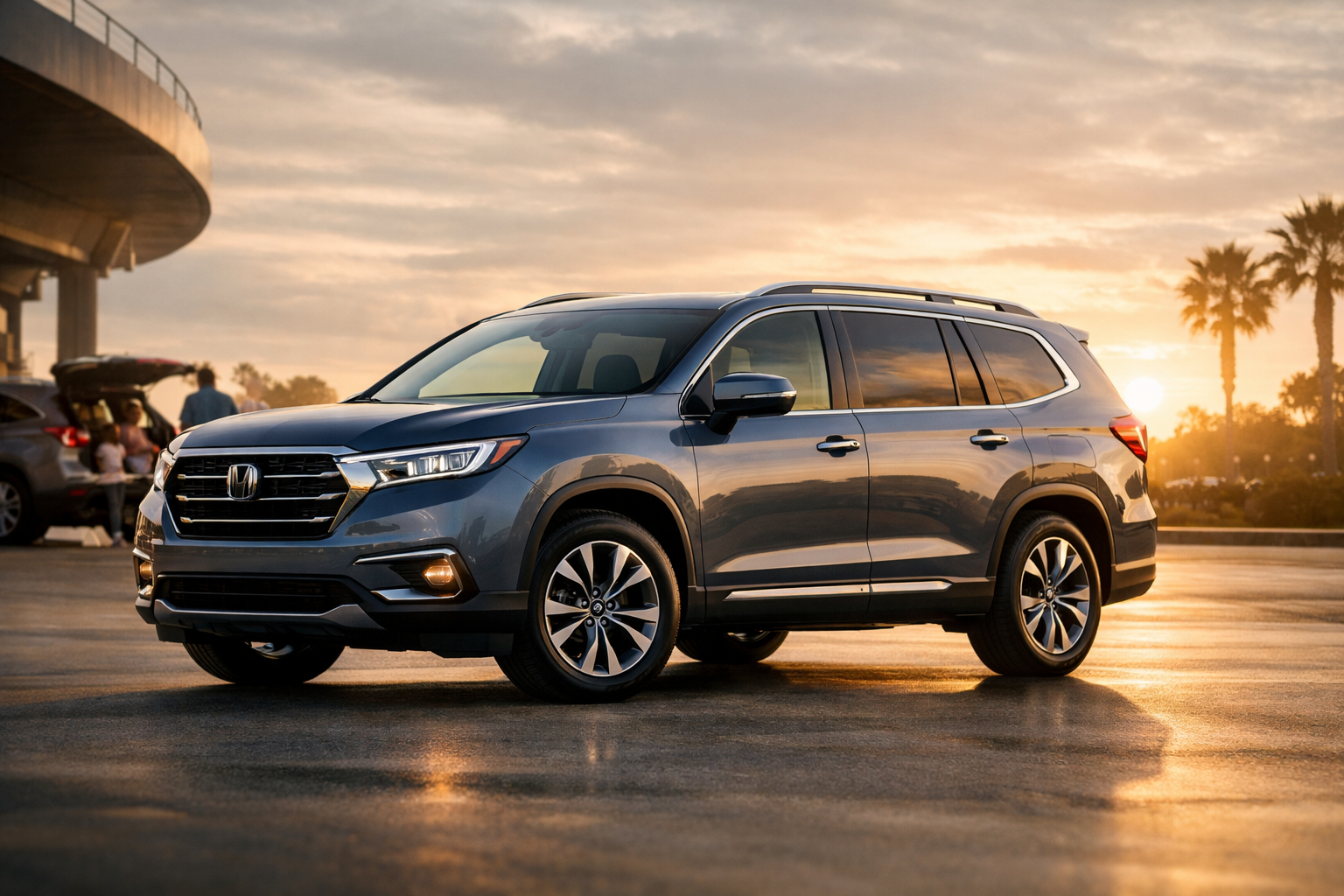
Here’s a spicy truth bomb: the three-row SUV trend is the automotive equivalent of beige wallpaper. Safe, profitable, utterly everywhere. Automakers aren’t chasing passion anymore; they’re chasing the family with two kids, a dog, and a monthly payment tolerance of approximately $650.
This matters right now because 2025 and 2026 product plans are basically locked, and guess what keeps getting greenlit while sedans and wagons get quietly taken behind the shed? Yep, another three-row crossover with a “bold new grille” and an interior that smells like focus-group coffee. I’ve driven dozens of SUVs this year alone, and the sameness is becoming deafening.
The three-row SUV trend isn’t just about hauling kids; it’s about risk avoidance. When Toyota, Ford, Hyundai, and even Mazda are all doubling down, you know this isn’t enthusiasm—it’s corporate comfort food. The question is whether this strategy is still smart, or if automakers are overfeeding a market that’s already full.
Why Automakers Keep Betting on the Three-Row SUV Trend
Follow the money, and it leads straight to suburbia. Three-row SUVs like the Toyota Grand Highlander, Honda Pilot, and Ford Explorer routinely start around $40,000 and balloon past $55,000 with options, which is catnip for profit margins. Compare that to a Camry or Accord, and suddenly you understand why sedans are treated like forgotten middle children.
They also tick every regulatory box without trying too hard. A 2.4-liter turbo four making around 265 hp, mild hybrid tech, and EPA numbers hovering around 21 city / 28 highway mpg keep the accountants happy. From a balance-sheet perspective, the three-row SUV trend is basically a license to print money.
Toyota SUV Strategy: Ruthlessly Sensible, Painfully Boring
Toyota’s SUV strategy is a masterclass in conservative brilliance. The Grand Highlander Hybrid Max cranks out approximately 362 hp, does 0–60 mph in about 6.0 seconds, and still manages mid-20s mpg, according to FuelEconomy.gov. Starting around $44,000 (check manufacturer website for latest pricing), it’s objectively excellent and emotionally sterile.
Here’s my controversial hot take: Toyota doesn’t care if you love it. They care that it lasts 200,000 miles, never scares you, and makes you buy another one. As a business plan, it’s flawless; as a car enthusiast, it makes me want to rewatch old Chris Harris videos just to feel something.
Safety Sells, Even If Driving Joy Doesn’t
Safety is the trump card, and three-row SUVs play it relentlessly. NHTSA five-star ratings, standard adaptive cruise, lane centering that practically drives for you—it’s all there, and you can verify the crash data straight from NHTSA.gov. Parents don’t ask about steering feel; they ask about IIHS Top Safety Pick badges.
But here’s the uncomfortable bit: bigger doesn’t automatically mean safer. Physics still applies, and a 4,800-pound SUV with numb brakes can be more dangerous when pushed than a lighter, better-sorted wagon. The three-row SUV trend survives because perception beats nuance every single time.
The Competition Is a Parking Lot of Similarity
Park a Kia Telluride, Hyundai Palisade, Toyota Grand Highlander, and Chevy Traverse side by side, and play spot-the-difference. Prices range from approximately $38,000 to $52,000, power hovers between 290–310 hp for gas models, and 0–60 mph times cluster around 6.8–7.5 seconds. Doug DeMuro would have a field day with the quirks, but even he’d struggle to remember which switchgear belongs to which brand.
This sameness isn’t accidental; it’s risk management. Automakers watched the minivan die socially, not functionally, and decided never again. Three-row SUVs are minivans in cooler sneakers, and everyone knows it.
Electrification Hasn’t Killed the Formula—Yet
You’d think EVs would disrupt this segment, but nope. The Kia EV9 and Volvo EX90 prove you can electrify the three-row without changing the mission: big, quiet, and reassuring. Expect ranges around 270–300 miles and prices starting near $55,000, which still slots neatly into the same family-budget math.
The irony is delicious. EVs were supposed to usher in radical design freedom, yet they’ve doubled down on the same boxy silhouettes. If you want proof that innovation often stops at the spreadsheet, look no further.
What Enthusiasts Lose When Everything Is a Three-Row
Every three-row SUV sold is another nail in the coffin for interesting cars. Wagons, hot hatches, affordable coupes—gone or going. We’ve already talked about how this broader shift hurts enthusiasts in our analysis of the new-car luxury shift, and the three-row SUV trend is the poster child.
Manufacturers will tell you it’s “meeting customer demand.” Translation: enthusiasts don’t buy in sufficient volume. It’s not wrong, but it’s still depressing.
Is the Market Reaching Saturation?
Here’s where I’ll stick my neck out. By 2028, I think we’ll see three-row SUV fatigue. Not collapse—fatigue. When every driveway has one, differentiation gets harder, incentives creep in, and suddenly that guaranteed profit looks a bit thinner.
Toyota will weather it best thanks to reliability cred and hybrids, while brands like Chevy and Nissan may struggle unless they inject actual personality. If you want a deeper dive into how buyer habits lock this in, read our piece on brand loyalty and pricing.
So, Is the Three-Row SUV Still the Safest Bet?
Short answer: yes, and that’s the problem. The three-row SUV trend remains the safest bet because it offends no one, prints money, and keeps regulators, dealers, and families happy. It’s the automotive equivalent of ordering a lager you’ve had a hundred times.
Long answer: it’s safe until it isn’t. When everyone makes the same play, the first brand brave enough to offer something genuinely different—and still practical—might just steal the show.
Pros
- High profit margins for automakers
- Strong safety tech and crash ratings
- Broad consumer appeal across demographics
- Hybrid and EV options expanding
Cons
- Design and driving experience increasingly bland
- Market saturation risk by late decade
- Enthusiast vehicles continue to disappear
Frequently Asked Questions
Why is the three-row SUV trend so popular with automakers?
They offer high transaction prices, strong margins, and broad appeal. Starting prices around $40,000 with easy upsells make them financially safer than sedans or coupes.
Are three-row SUVs actually safer than smaller vehicles?
They often score well in crash tests, but size alone doesn’t guarantee safety. Modern safety tech matters more than sheer weight.
Which brands benefit most from this segment?
Toyota, Hyundai/Kia, and Honda lead thanks to reliability reputations and competitive pricing. Ford and GM remain strong but face tougher competition.
Will EVs replace gas-powered three-row SUVs?
Not entirely. EVs like the Kia EV9 will grow, but gas and hybrid models will dominate through the late 2020s due to cost and infrastructure.