
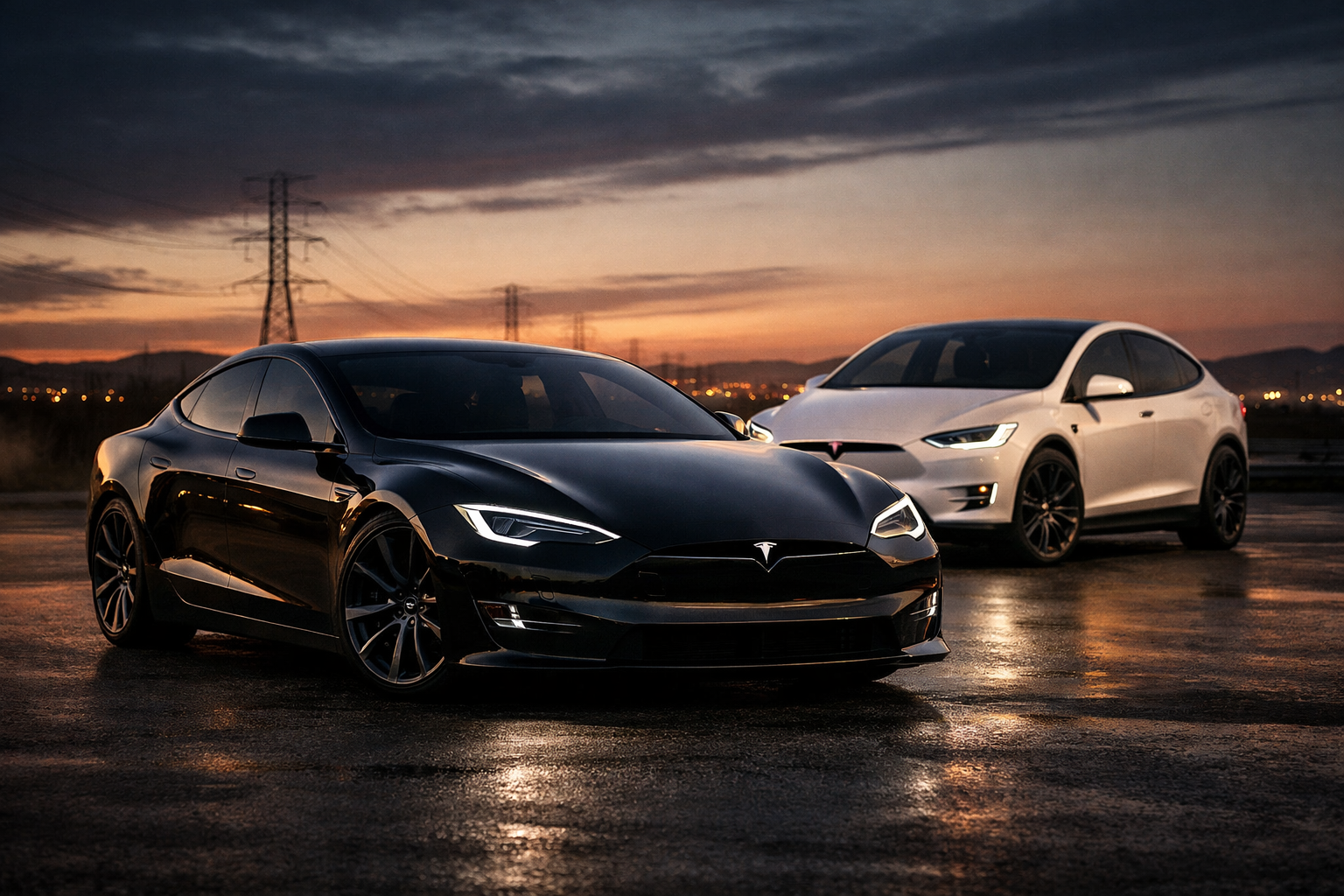
The rumor that won’t die is suddenly wearing a suit and holding a press badge: Tesla Model S discontinued isn’t just pub gossip anymore, it’s a strategic chess move with a sledgehammer. I’ve driven dozens of luxury EVs, and the idea that Tesla would quietly shuffle off the car that embarrassed Ferraris at traffic lights feels mad. Yet here we are, watching the brand that invented the modern EV decide its flagship sedans and SUVs are… baggage.
This matters right now because if you’re shopping a $90,000-plus electric luxo-barge in 2026, the ground is moving under your loafers. Dealers are discounting 2025 inventory, residuals are wobbling, and Tesla’s attention has wandered toward robots and robo-taxis like a YouTuber chasing the next algorithm hit. If you’re cross-shopping a Model S, Model X, Porsche Taycan, BMW i7, Mercedes EQS, or Lucid Air, the endgame just changed.
Let’s be clear: this isn’t about one model line going quietly into the good night. The potential Tesla Model S discontinued moment is a referendum on where Tesla thinks the EV market is heading, and spoiler alert—it’s not toward leather-lined steering wheels and hand-stitched dashboards.
Quick Specs
- Starting Price: approximately $75,000 (Model S), $80,000 (Model X) — check manufacturer website for latest pricing
- Engine: Dual or Tri Electric Motors
- Power: up to 1,020 hp (Plaid)
- 0-60 mph: as quick as 1.99 seconds (Model S Plaid)
- Fuel Economy: up to ~405-mile range (EPA estimate)
Why the Tesla Model S Discontinued Narrative Exists at All
The brutal truth is that the Model S and X are old dogs in a kennel full of puppies. The Model S launched in 2012, the Model X in 2015, and despite refreshes, the bones are ancient by EV standards. Meanwhile, Tesla sells every Model Y it can screw together, making around $10,000 profit per unit while the S and X reportedly scrape by with boutique margins.
When Sandy Munro starts talking about manufacturing efficiency like it’s a religion, you know Tesla is listening. Low-volume, high-complexity cars don’t fit Elon’s gospel anymore, especially when shareholders want growth, not nostalgia. Hot take: the S and X survived longer than they deserved purely because they were good PR.
The Model X End Is Even More Telling
The whisper of a Tesla Model X end stings more because it exposes Tesla’s weakness in the premium SUV game. Those falcon-wing doors still impress at Whole Foods, but they’re engineering solutions in search of a problem, adding weight, cost, and warranty headaches. Against a BMW iX, Mercedes EQE SUV, or even a Rivian R1S, the X feels like yesterday’s concept car.
I’ll say the controversial bit out loud: the Model X is a triumph of gimmickry over good taste. Doug DeMuro loves quirks, but even he’d admit that practicality beats party tricks when you’re hauling kids and Costco runs. Killing it off frees Tesla from pretending it cares about luxury nuance.
Tesla Isn’t a Car Company Anymore (And That’s the Point)
If you’re still thinking this is about sedans and SUVs, you’ve missed the plot. Tesla robots, AI training, and autonomy are now the headline acts, with cars as the cash-generating side hustle. The S and X don’t train neural nets better than a Model 3, and they certainly don’t move the stock price like Optimus demos.
We’ve seen this movie before—remember when Google Glass mattered until it didn’t? Tesla’s EV market shift is about scale and data, not walnut trim. If that sounds cold, it is, but it’s also ruthlessly logical.
What This Means for Buyers Sitting on the Fence
If you’re eyeing a used or leftover-new Model S, this could be your moment. Values may dip short-term, but long-term cult status is real, especially for Plaid models that still nuke supercars to 60 mph. Just understand that future updates and support may slow, a risk we’ve explored deeper in our analysis of the Model S and X endgame.
Cross-shoppers should widen the net. Porsche Taycan offers steering feel Tesla can only dream of, Lucid Air demolishes range anxiety, and BMW i7 finally understands that luxury buyers want buttons that feel expensive. I’d also read our 2026 Model S farewell review before signing anything.
The EV Market Shift Tesla Is Betting On
Here’s the bigger picture: mass-market EVs are winning, premium niches are thinning, and global trends back that up. In Europe, EVs already outsell gas cars in several markets, a shift we covered in our EV sales strategy breakdown. Tesla wants to be the Toyota Corolla of EVs, not the Lexus LS.
Hot take number two: legacy luxury brands will own the high-end EV space Tesla is vacating. Mercedes, BMW, and Porsche actually care about ride quality at 120 mph, not just drag-strip TikToks.
Is Tesla Making a Mistake or a Masterstroke?
Emotionally, binning the cars that made Tesla cool feels wrong. Rationally, it’s the same logic that killed manual Ferraris and V12 BMWs—progress doesn’t ask permission. The Tesla Model S discontinued conversation is less about loss and more about evolution.
If autonomy cracks Level 4 in the next five years, nobody will care what happened to the Model X. If it doesn’t, Tesla may regret abandoning the cars that gave it credibility among enthusiasts.
Pros
- Clears focus for mass-market and autonomy projects
- Model S Plaid remains a performance benchmark
- Potential bargains for savvy used buyers
- Simplifies Tesla’s manufacturing complexity
Cons
- Leaves premium buyers to rivals like Porsche and Mercedes
- Dilutes Tesla’s enthusiast credibility
- Signals less commitment to luxury craftsmanship
The final word is this: if Tesla Model S discontinued becomes official, it won’t be the end of Tesla’s relevance—it’ll be the end of its adolescence. The S and X taught the world EVs could be fast, desirable, and disruptive; now Tesla wants them invisible, autonomous, and everywhere. Progress is brutal like that, and it doesn’t wait for applause.
For official updates and pricing, keep an eye on Tesla’s website, safety data via NHTSA, and range estimates from FuelEconomy.gov.