
The Trump administration has formally proposed a start stop feature ban that could eliminate automatic engine shutoff systems from new vehicles as part of a broader rollback of federal fuel-economy enforcement. The draft language, released February 14, 2026, by the Department of Transportation and the EPA, frames the move as reducing “unnecessary driver annoyance” and compliance burdens on automakers.
However, this isn’t just about an irritating engine cutting out at traffic lights. Start/stop systems are embedded in how manufacturers meet Corporate Average Fuel Economy (CAFE) standards. Removing or de-incentivizing the technology could ripple through pricing, emissions targets, and even powertrain strategies for 2026 and beyond.
The Headlines
- What: Proposed federal rule would effectively block or penalize automatic engine start/stop systems in new vehicles
- Who: U.S. Department of Transportation, EPA, automakers including Ford, GM, Toyota
- When: Proposal announced February 14, 2026; public comment period open through April 2026
- Impact: Could alter how automakers meet fuel economy targets and affect real-world MPG for gas vehicles
- Key Number: 3%–5% typical fuel-economy improvement from start/stop, according to EPA estimates
What Happened
The Department of Transportation, working with the EPA, issued a notice of proposed rulemaking that would revise how fuel-saving technologies are credited under CAFE calculations. According to the draft, regulators may no longer allow automatic engine stop/start systems to count toward compliance credits in the same way they have since the mid-2010s.
Additionally, officials signaled they are considering labeling requirements or default-off mandates, arguing that many drivers disable the systems. Reuters first reported the administration’s intent earlier this month, citing unnamed officials familiar with the plan.
“Consumers consistently express frustration with automatic engine shutoff systems,” a DOT spokesperson said in a statement. “Our goal is to ensure regulations align with driver preferences and real-world usage.”
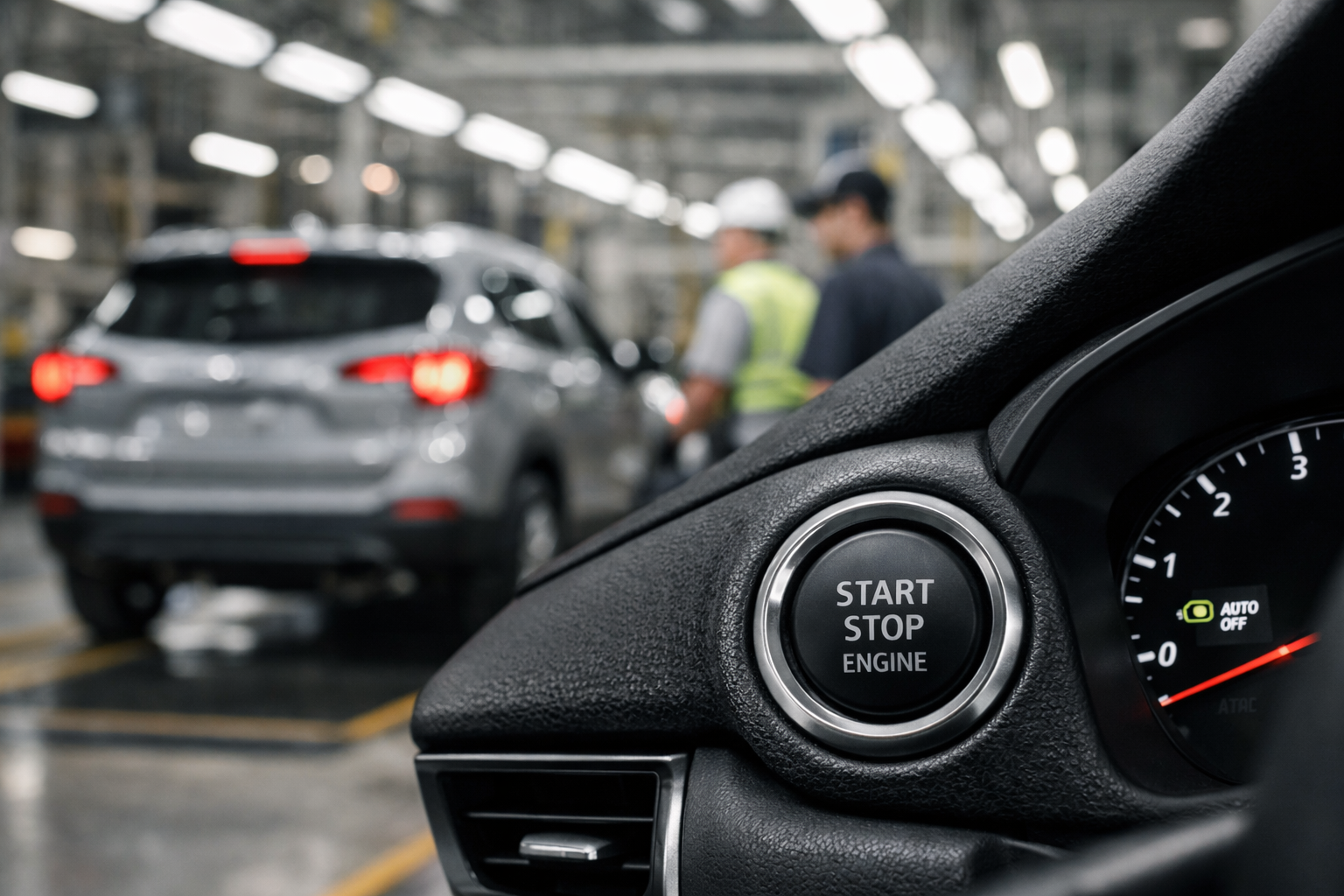
Start/stop systems shut off the engine when a vehicle comes to a complete stop and restart it when the driver lifts off the brake. The EPA has previously estimated the technology improves fuel economy by 3% to 5% in city driving, depending on vehicle size and duty cycle, per agency documentation at EPA.gov.
However, the proposal does not outright ban the hardware. Instead, it removes the regulatory incentive that made start/stop nearly universal across 2025 and 2026 model-year gas vehicles.
Why It Matters
At first glance, eliminating a sometimes-annoying feature seems minor. In reality, start/stop has been a low-cost compliance tool for automakers facing tightening fleet averages. Compared to hybrid systems that add thousands of dollars in hardware, start/stop costs manufacturers an estimated $100–$300 per vehicle, according to industry analysts cited by Bloomberg.
Therefore, if the credits disappear, automakers must either accept lower fuel economy ratings, invest more heavily in hybridization, or pay potential CAFE penalties. NHTSA, which oversees CAFE standards, details penalty structures on NHTSA.gov, where fines can reach $14 per 0.1 mpg under target, multiplied across fleet volume.
For consumers, the impact could show up in two ways: slightly worse window-sticker MPG on gas-only models or higher prices if manufacturers pivot faster to mild-hybrid systems. In compact sedans like the 2026 Kia K4 GT-Line Turbo, a few MPG points can influence buying decisions in a cost-sensitive segment.
Moreover, this move intersects with broader auto regulations 2026 debates, as the administration has also signaled a reassessment of EV tax credit enforcement and emissions targets. The start/stop discussion is part of a wider philosophical shift in Trump auto policy toward deregulation.
The Bigger Picture
Start/stop systems became mainstream in the U.S. after 2012, when CAFE targets tightened under the Obama administration. By 2024, more than 65% of new internal-combustion vehicles sold in the U.S. included the feature, according to IHS Markit estimates.
In fact, European regulators mandated even stricter fleet CO2 averages, making start/stop virtually universal overseas. U.S. automakers adopted it not because customers demanded it, but because regulators rewarded it.
However, critics argue the real-world fuel savings often fall short because many drivers disable the system. That behavioral gap weakens the environmental case. Still, from a lifecycle emissions perspective, even a 3% reduction across 10 million vehicles annually adds up.
Notably, the administration’s approach echoes other recent regulatory reversals, including reconsideration of emissions waivers and a slower EV adoption curve. We’ve already seen how shifting policy signals influence product plans in areas like diesel’s tentative comeback, as explored in our coverage of the Stellantis diesel return.
What the Competition Is Doing
Ford and GM have publicly remained neutral, stating they are “reviewing the proposal.” Both companies rely heavily on start/stop in high-volume trucks and SUVs like the F-150 and Chevrolet Equinox. Losing compliance credits would push them toward more 48-volt mild-hybrid systems.
Meanwhile, Toyota is less exposed. The company already sells a high percentage of hybrids—over 30% of its U.S. volume in 2025, according to company filings. In models like the RAV4 and Camry, Toyota can meet fleet targets without leaning heavily on start/stop alone.
In contrast, Hyundai and Kia sit somewhere in the middle. They’ve expanded hybrid offerings but still depend on fuel saving technology such as start/stop in entry-level trims to hit fleet averages at competitive prices.
Additionally, European brands like BMW and Mercedes-Benz have integrated start/stop deeply into their global architectures. Removing U.S. credit may create complexity in calibration and certification rather than immediate hardware changes.
What It Means for You
If you dislike the engine cutting off at red lights, you may see more vehicles default to “off” or eventually drop the feature. However, don’t expect dramatic price cuts. Automakers adopted start/stop because it was cheap insurance against fines, not a major cost driver.
Therefore, the more realistic outcome is a gradual shift toward mild hybrids in mainstream segments. Vehicles like the 2026 Honda Civic Sport Hybrid show where the market is headed: smoother operation, better fuel economy, and no awkward restarts.
For buyers prioritizing maximum MPG, this potential start stop feature ban makes hybrid and plug-in options more attractive. Conversely, if you’re shopping for a traditional gas SUV and hate the system, waiting for 2027 model-year updates could bring relief.
What to Watch Next
The public comment period runs through April 2026. Automakers, environmental groups, and consumer advocates will weigh in, and revisions are likely before any final rule. According to Reuters, several industry groups are urging a phased approach rather than immediate credit removal.
Additionally, watch how the EPA adjusts fleet emissions modeling. If regulators simultaneously soften overall CAFE targets, the impact of removing start/stop credits shrinks. If they don’t, manufacturers will need a Plan B quickly.
The Upside
- Improved driver satisfaction for those who dislike engine restarts
- Simpler powertrain calibration and potentially lower warranty complexity
- Push toward smoother mild-hybrid systems instead of basic stop/start
- Reduced regulatory burden for automakers under revised rules
The Concerns
- 3%–5% potential drop in city fuel economy for gas-only vehicles
- Higher compliance costs if CAFE targets remain unchanged
- Increased CO2 emissions across large vehicle fleets
- Regulatory uncertainty complicating 2027–2028 product planning
Having covered multiple regulatory cycles, I can tell you this pattern is familiar: small technical changes often foreshadow bigger philosophical shifts. The debate over a start stop feature ban isn’t really about a momentary engine shutoff. It’s about how aggressively the U.S. intends to push fuel saving technology in the second half of the decade.
If the administration pairs this move with looser overall targets, gas vehicles may stick around longer in their current form. However, if market forces and global rules continue tightening, automakers will electrify anyway—just with different tools. Either way, 2026 is shaping up to be a pivotal year for how Washington defines efficiency.
Disclosure: This article may contain affiliate links. If you make a purchase through these links, we may earn a small commission at no extra cost to you. This helps support RevvedUpCars.com. Learn more.