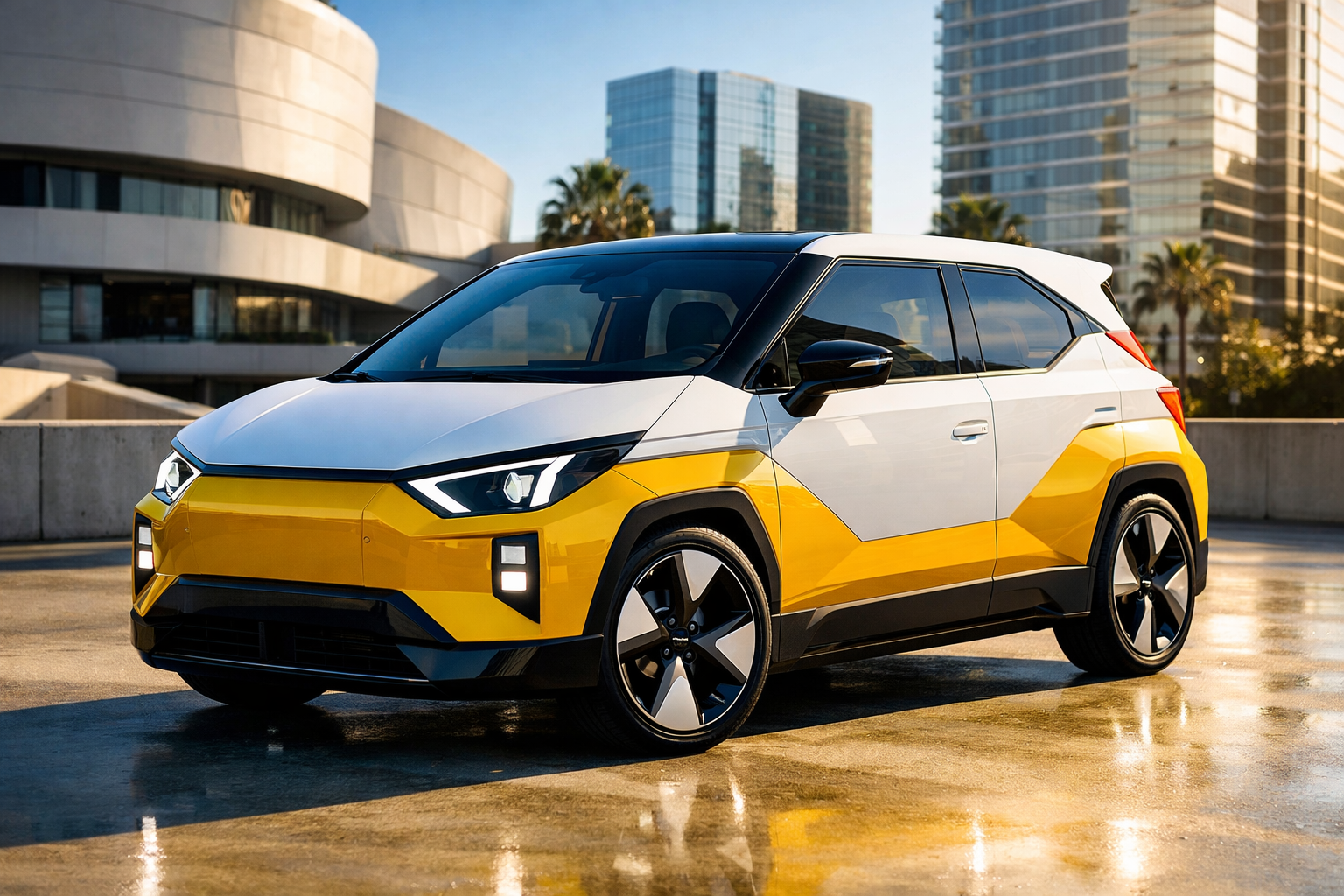

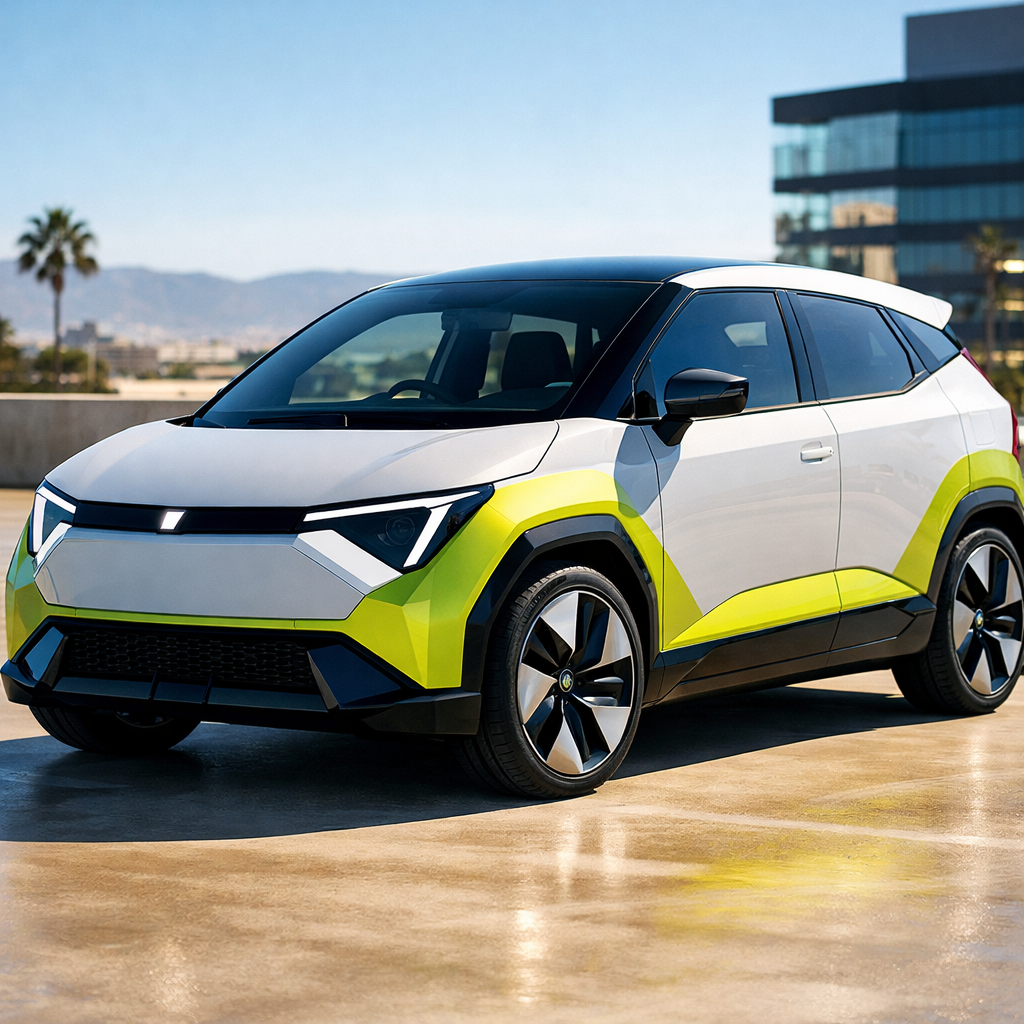
Here’s a heresy that will get me banned from a few design committees: entry-level EVs should be weird, and the ones trying desperately to look “normal” are missing the point. When you’re selling a $25,000 electric hatch with 150 horsepower and a 0–60 time hovering around 8 seconds, blending in like a gray office printer is design cowardice. Entry-level EV design matters right now because this is the first electric car millions of buyers will ever touch, and first impressions stick harder than cheap vegan leather.
I’ve driven dozens of affordable EVs over the past five years, from the Nissan Leaf to the Chevy Bolt, and the most forgettable ones all share the same sin: visual beige. They’re shaped by wind tunnels, focus groups, and a fear of offending anyone, which is hilarious because nobody dreams about buying a sensible appliance. If EVs are supposed to represent the future, why do so many entry-level models look like they’re already apologizing for it?
This is where entry-level EV design becomes more than styling fluff; it’s brand-building, identity, and emotional buy-in. Think about it like this: if Tesla hadn’t made the Model 3 look vaguely sci‑fi in 2017, would anyone have queued overnight? Exactly.
Why Entry-Level EV Design Is the First Impression That Counts
Entry-level cars have always been a manufacturer’s handshake with the public. The original Mini, the Fiat 500, even the first-gen VW Golf weren’t beautiful because they were cheap; they were beautiful because they were honest. Modern EVs, however, often look like melted soap bars because designers are obsessed with aerodynamic drag coefficients instead of personality.
Yes, aerodynamics matter when you’re chasing a 250-mile range from a 50 kWh battery. But there’s a difference between efficient and anesthetized, and too many brands choose the latter. A drag coefficient of 0.28 instead of 0.30 won’t sell cars, but a face people recognize in traffic absolutely will.
The Audi A2: Proof That Weird Ages Better Than Safe
If you want a masterclass in brave design, dust off the Audi A2 from the early 2000s. It was a tiny aluminum jellybean with exposed fasteners and wheels pushed to the corners, and everyone laughed at it. Twenty years later, it looks fresher than half the crossovers clogging Costco parking lots.
Audi seems to have remembered this, which is why the rumored electric revival of the A2 has enthusiasts buzzing, as we covered in our deep dive on the Audi A2 EV return. If that car lands around $30,000 with roughly 180 hp and a 260-mile range, its design will matter as much as its spec sheet. Weird, it turns out, has excellent resale value in the cultural sense.
The Competitors Playing It Safe (Too Safe)
Look at today’s entry-level EV crowd: Nissan Leaf, Chevy Bolt EUV, Hyundai Kona Electric, and the BYD Dolphin overseas. Competent? Absolutely. Memorable? About as much as the terms and conditions on a lease agreement.
The Leaf’s face looks perpetually surprised, the Bolt EUV resembles a shrunken crossover someone sat on, and the Kona Electric is just… a Kona with different badges. None of these cars spark the kind of emotional response that makes a buyer forgive compromises like 230-mile range or DC fast-charging speeds capped around 100 kW.
Why Young Buyers Actually Want Bold Electric Car Styling
Here’s the controversial hot take: young buyers don’t want their first EV to look grown-up. They want it to look like something out of a concept sketch, even if it’s slow and made of recycled yogurt cups.
You only have to look at the popularity of kei cars in Japan or the obsession with old Renault Twingos on TikTok to see this. Style forgives flaws, especially when we’re talking about cars starting around $22,000–$28,000, where nobody expects Tesla Model Y performance anyway.
Driving Experience: Design Influences How We Perceive Performance
I’ve noticed something fascinating after years behind the wheel: bold-looking cars feel faster, even when they’re not. A 150 hp EV with chunky wheel arches and upright glass feels eager, while the same drivetrain wrapped in smooth, anonymous surfacing feels sluggish, even if the stopwatch disagrees.
This psychological trick matters because most entry-level EVs do 0–60 mph in 7.5–8.5 seconds and top out around 95 mph. That’s fine for daily driving, but design is what makes you smile while doing it, and smiles sell cars.
Cost, Regulations, and the Myth That Weird Is Expensive
Automakers love claiming bold design costs more, which is corporate nonsense of the highest order. Flat panels, simple lighting signatures, and honest proportions are often cheaper than complex, over-sculpted bodywork.
The real issue is risk aversion, especially in a regulatory environment already strained by tariffs and battery sourcing, something we unpacked in our analysis of EV tariffs in Europe. Playing safe feels easier in boardrooms, but it’s killing showroom traffic.
Lessons From Concept Cars That Never Made It
Every auto show is littered with brilliant EV concepts that die on the way to production, smothered by accountants. That’s tragic, because concepts are where brands actually remember how to dream, as we explored in why car design concepts still matter.
Entry-level EVs are the perfect place to keep 70 percent of that concept energy. Nobody expects perfection at this price point, but they do expect personality.
The Case For Entry-Level EV Design Being Bold, Not Bland
Let’s bring this home: entry-level EV design isn’t about shocking for shock’s sake. It’s about giving buyers something to emotionally latch onto while accepting compromises in range, charging speed, and interior materials.
If your $26,000 EV goes 240 miles, charges from 10–80 percent in 35 minutes, and has 160 hp, that’s acceptable. If it also looks cool doing it, that’s memorable. And memorable cars become cult classics, not clearance inventory.
Pros
- Bold design creates emotional attachment
- Helps entry-level EVs stand out in crowded segments
- Improves perceived performance and value
- Builds long-term brand identity
Cons
- Risk of polarizing buyers
- Conservative markets may resist change
- Design bravery requires strong brand confidence
Entry-level EV design should be brave, slightly odd, and unapologetic. The future doesn’t need another anonymous blob on wheels; it needs cars that make us argue at the pub, point in traffic, and say, “What the hell is that?” And then secretly want one.
Frequently Asked Questions
Why does entry-level EV design matter so much?
It’s often a buyer’s first EV experience. Bold design creates emotional connection, helping buyers overlook compromises like 230–260 mile range or slower charging.
Are weird-looking EVs harder to resell?
Not always. Cars with distinctive design often gain cult followings, which can stabilize resale values over time.
Does bold electric car styling increase costs?
No, simple shapes and honest surfaces can be cheaper than over-sculpted designs. The barrier is usually corporate risk, not manufacturing cost.
Which entry-level EVs are the boldest right now?
Internationally, models like the BYD Dolphin and upcoming retro-inspired EVs stand out more than conservative options like the Leaf or Kona Electric.