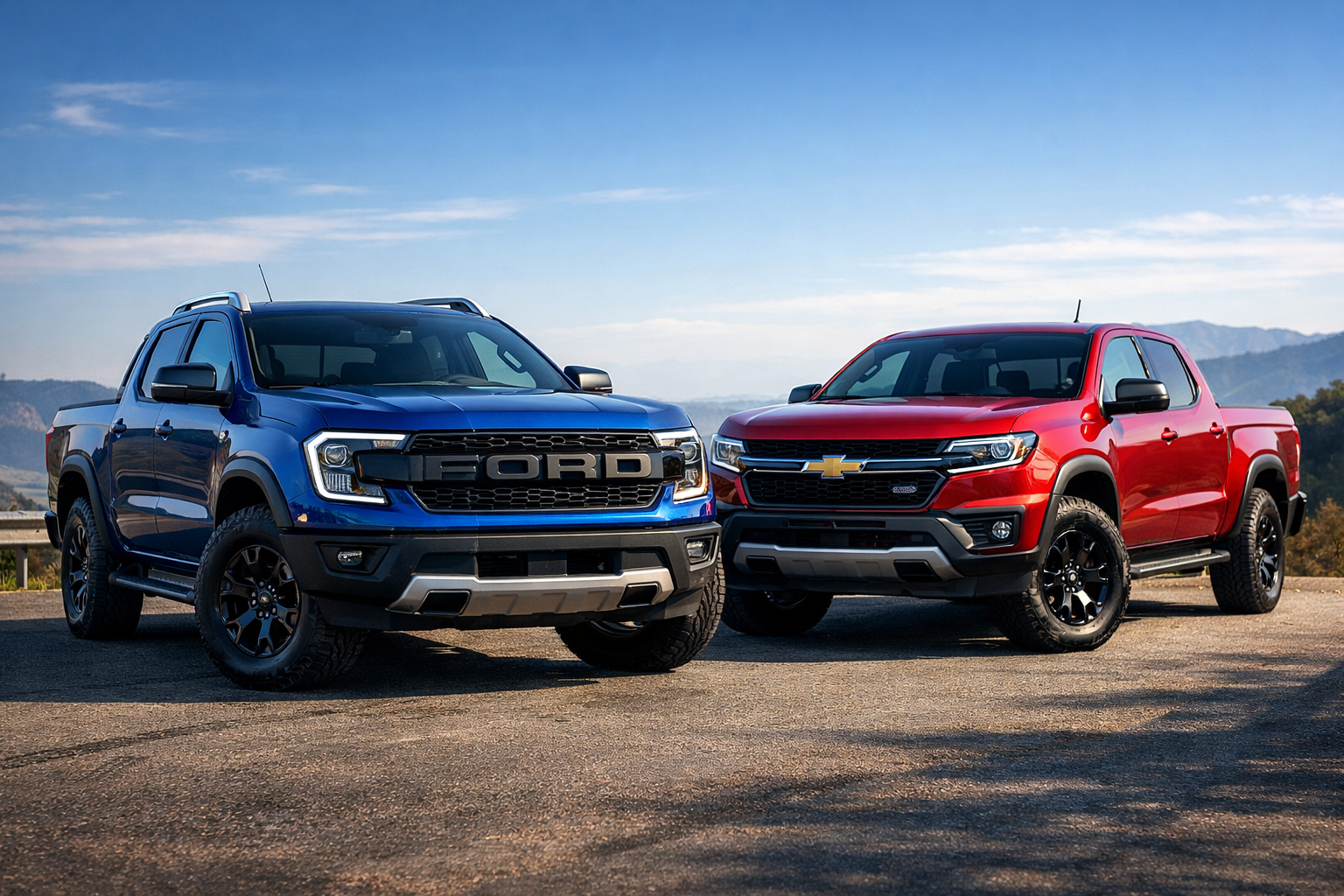

Here’s the uncomfortable truth: the midsize pickup is now the default “do-everything” vehicle for people who swear they don’t want a full-size truck but secretly do. And that’s exactly why the Ford Ranger vs Chevy Colorado debate matters so much in 2026, because these two are fighting over buyers who tow on weekends, commute all week, and still want something that doesn’t feel like a barge in the Costco parking lot.
I’ve driven dozens of trucks over 15 years, and I’ll say this upfront: one of these feels engineered by people who actually use trucks, while the other sometimes feels like a marketing committee’s idea of “rugged lifestyle.” That difference shows up the second you mash the throttle, hook up a trailer, or live with the infotainment for a week.
If you’re cross-shopping a Toyota Tacoma, Nissan Frontier, Jeep Gladiator, or even flirting with the idea of downsizing from a Silverado or F-150, this Ford Ranger vs Chevy Colorado breakdown will save you from buyer’s remorse and a few pub arguments.
Quick Specs
- Starting Price: Ranger approx. $34,000 / Colorado approx. $33,500 (check manufacturer website for latest pricing)
- Engine: 2.3L turbo I4 (Ranger) / 2.7L turbo I4 (Colorado)
- Power: 270 hp / 310 lb-ft (Ranger) | 310 hp / 430 lb-ft (Colorado)
- 0-60 mph: ~6.5 sec (Ranger) | ~6.0 sec (Colorado)
- Fuel Economy: ~21 city / 26 highway mpg (Ranger) | ~19 city / 24 highway mpg (Colorado)
The Contenders: Ranger vs Colorado in 2026
The Ranger returned from the dead like a muscle car reboot done right, borrowing heavily from the global T6 platform that Australians have been thrashing in the Outback for years. Chevy’s Colorado, meanwhile, went all-in on one engine strategy, ditching V6 options entirely and betting the farm on turbo torque.
Both are sold as 2025 and 2026 models with light refreshes rather than ground-up redesigns. That means the real differences aren’t about headline specs, but how these trucks behave when you actually live with them.
Design Face-Off: Function vs Flex
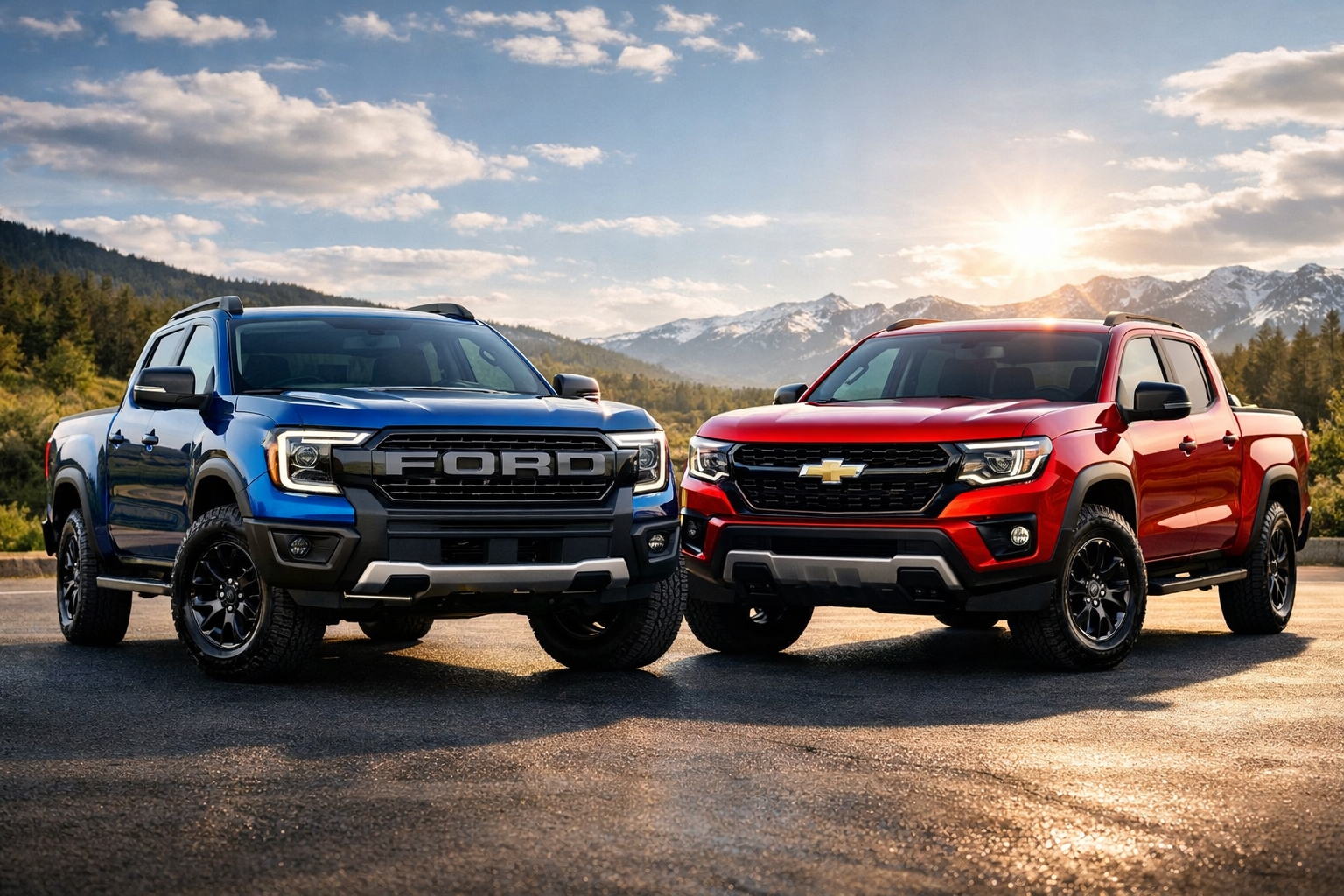
The Ranger looks like it was carved out of a single block of determination, with squared-off fenders and a stance that finally says “real truck” instead of “large hatchback cosplay.” It’s not flashy, but it looks honest, which I value more than LED light signatures that resemble angry eyebrows.
The Colorado leans harder into lifestyle branding, especially in Z71 and ZR2 trims. My hot take: Chevy’s front-end design is trying too hard, like a YouTuber thumbnail face frozen in permanent shock.
If design matters deeply to you, go Colorado. If you want something that’ll age better than a TikTok trend, the Ranger wins.
Interior & Tech: Screens vs Switchgear
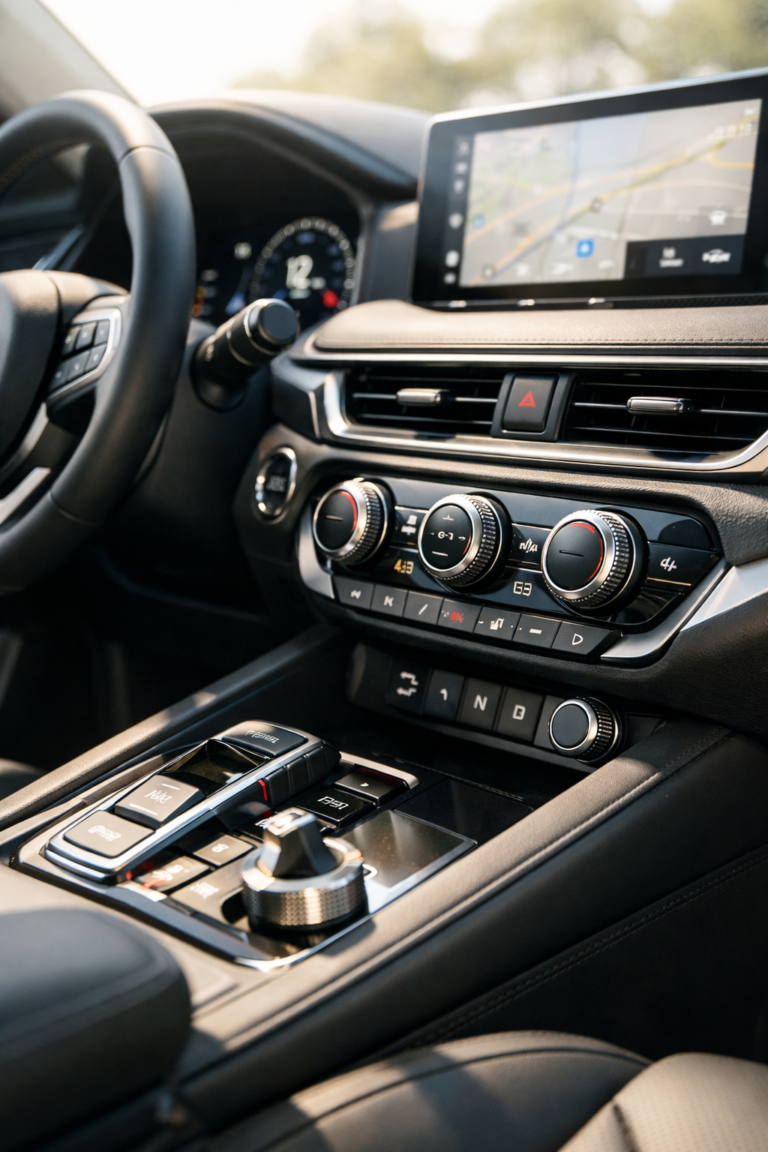
Inside, Ford finally figured out that truck buyers don’t want Fisher-Price plastics everywhere. The Ranger’s vertical touchscreen is big, bright, and mostly intuitive, with physical knobs where they matter.
Chevy’s Google-based infotainment system is slick and fast, and I’ll give it that. But burying basic climate controls in menus should be a crime punishable by forcing executives to daily-drive their own creations.
Both offer wireless CarPlay, solid driver-assist tech, and decent materials, but the Ranger feels more like a tool, while the Colorado feels like a gadget.
Performance & Driving: Torque Talks
This is where the Ford Ranger vs Chevy Colorado fight gets spicy. The Colorado’s 2.7-liter turbo makes a meaty 430 lb-ft of torque, and you feel it immediately; it surges forward like it’s late for something important.
The Ranger’s 2.3-liter isn’t slow, but its throttle response is lazier than a cat in a sunbeam unless you’re in Sport mode. On the flip side, the Ranger’s steering and chassis feel more composed on twisty roads, something Chris Harris would quietly appreciate.
Off-road trims like the Ranger Tremor and Colorado ZR2 are a separate argument entirely, but for normal humans, both are more capable than their owners.
Towing, Payload & Real Truck Stuff
Numbers matter here, and Ford knows it. The Ranger tows up to 7,500 lbs when properly equipped, matching the Colorado and beating the Tacoma.
Payload hovers around 1,700 lbs for the Ranger and slightly less for most Colorado trims. Translation: both will haul dirt bikes, mulch, or regrettable Facebook Marketplace furniture without breaking a sweat.
If towing is your life, also read this Silverado vs Sierra comparison to sanity-check whether midsize is enough.
Fuel Economy & Running Costs
Neither of these trucks is sipping fuel like a hybrid Corolla, but the Ranger’s slightly better MPG adds up over time. Expect low-to-mid 20s combined if you’re gentle, high teens if you drive like you enjoy life.
Maintenance costs are broadly similar, though Ford’s dealer network is larger in rural areas. For EPA data, cross-check numbers on FuelEconomy.gov.
If you’re tempted by electrification, pause and read our Hybrid vs Electric buyer’s guide before assuming batteries solve everything.
Value Breakdown & Competitors
Starting around $34,000, the Ranger isn’t cheap, but it feels engineered to justify its price. The Colorado undercuts it slightly and throws in more torque, which will sell a lot of trucks.
Against competitors like the Toyota Tacoma, Nissan Frontier, and Jeep Gladiator, both look modern and powerful. Controversial take: the Tacoma’s reliability halo no longer excuses its ancient-feeling drivetrain.
Resale values still favor Toyota, but Ford and Chevy have closed the gap enough that it’s no longer decisive.
| Spec | Ford Ranger | Chevy Colorado |
|---|---|---|
| Starting Price | ~$34,000 | ~$33,500 |
| Power | 270 hp | 310 hp |
| 0-60 mph | ~6.5s | ~6.0s |
| MPG | ~23 mpg combined | ~21 mpg combined |
| Cargo Space | ~43 cu ft bed | ~41 cu ft bed |
| Warranty | 3 yr/36,000 mi | 3 yr/36,000 mi |
Pros
- Ranger has better on-road balance
- Colorado delivers massive turbo torque
- Both tow up to 7,500 lbs
- Modern tech and safety features
Cons
- Prices climb fast with options
- Colorado’s infotainment can frustrate
- Ranger engine feels less exciting
The Ford Ranger vs Chevy Colorado question comes down to personality. The Colorado is the louder, punchier option that wins stoplight sprints and Instagram polls. The Ranger is the quieter overachiever that you’ll still respect after 100,000 miles.
If I were spending my own money in 2026, I’d take the Ranger keys and never look back. It’s the truck equivalent of a good pair of boots: not flashy, but absolutely trustworthy.
Frequently Asked Questions
Which is better in the Ford Ranger vs Chevy Colorado comparison?
The Ranger feels more balanced and refined, while the Colorado offers stronger torque and faster acceleration. Your choice depends on whether you value driving feel or straight-line punch.
Is the Chevy Colorado more powerful than the Ford Ranger?
Yes. The Colorado’s 2.7L turbo makes up to 310 hp and 430 lb-ft, compared to the Ranger’s 270 hp and 310 lb-ft.
Which truck tows more?
Both the Ranger and Colorado can tow up to approximately 7,500 lbs when properly equipped.
Are these trucks safe?
Both offer modern driver-assist systems. Check crash ratings on NHTSA.gov for the latest results.