
You hear that weather alert buzz on your phone. Golf-ball-sized hail incoming. Your first thought isn’t the roof — it’s your hood. Hail damage repair can turn a five-minute storm into a $3,000 body shop bill faster than you can say “comprehensive deductible.”
I’ve seen perfectly good trucks and family SUVs come into the shop looking like someone attacked them with a ball-peen hammer. The good news? There are real, practical ways to protect your car from hail before the storm hits — and smart moves to make after. I’ll walk you through both so you’re not handing the body shop your vacation fund.
What You’ll Need
- Tools: Moving blankets, bungee cords, zip ties, thick car cover (hail-rated), microfiber towels, basic trim tools (plastic pry set), 10mm socket set
- Parts/Materials: Hail car cover ($80–$250), PDR (paintless dent repair) kit ($60–$150), touch-up paint ($25–$40)
- Time: 10–20 minutes to prep before storm; 1–3 hours for minor DIY dent work
- Difficulty: 🔧🔧 (prevention) / 🔧🔧🔧 (minor dent repair)
- Dealer Cost: $1,500–$4,500 body shop repair vs DIY Cost: $100–$300 — You Save: $1,200+
Why This Matters
Hail doesn’t just make your car ugly. It kills resale value. I’ve watched trade-in offers drop $2,000 overnight because a hood looked like a golf ball. If you’re already dealing with today’s crazy car prices — and yes, $800 car payments are becoming the new normal — you don’t want cosmetic damage dragging you further underwater.
Ignored dents can also crack paint. Once paint fails, water sneaks in. That’s when rust starts chewing through metal like termites in a deck. In 20 years of wrenching, I’ve seen small hail damage turn into full panel replacement because someone “waited it out.”
If you live in hail-prone states like Texas, Colorado, Nebraska, or parts of the Midwest, this is seasonal maintenance. Spring and early summer are prime time. Do your prep before storm season — not during the sirens.
Before You Start
⚠️ WARNING: Never attempt storm prep on a metal ladder in lightning conditions. Your car isn’t worth becoming a lightning rod.
If a storm’s minutes away, your best protection is simple: get under solid cover. A garage is king. A sturdy carport is second. Parking under a highway overpass can work in emergencies — but only if it’s legal and safe.
No cover available? Avoid parking under trees. Branches plus hail equals smashed glass. And if your windshield does crack, check for open recalls at NHTSA.gov — sometimes related issues are covered.
After the storm, inspect in daylight. Look for chipped paint, cracked glass, and roof dents. If you drive something newer like a 2026 BMW X5 M Competition or other aluminum-bodied vehicle, understand aluminum panels require specialized repair tools. That’s often pro territory.
Step-by-Step Guide
How to Protect Your Car from Hail (Before the Storm)
- Move to Covered Parking
Garage first. Parking deck second. Even a gas station canopy is better than open sky. Five minutes of relocation can save $3,000 in hail damage repair. - Install a Hail-Rated Car Cover
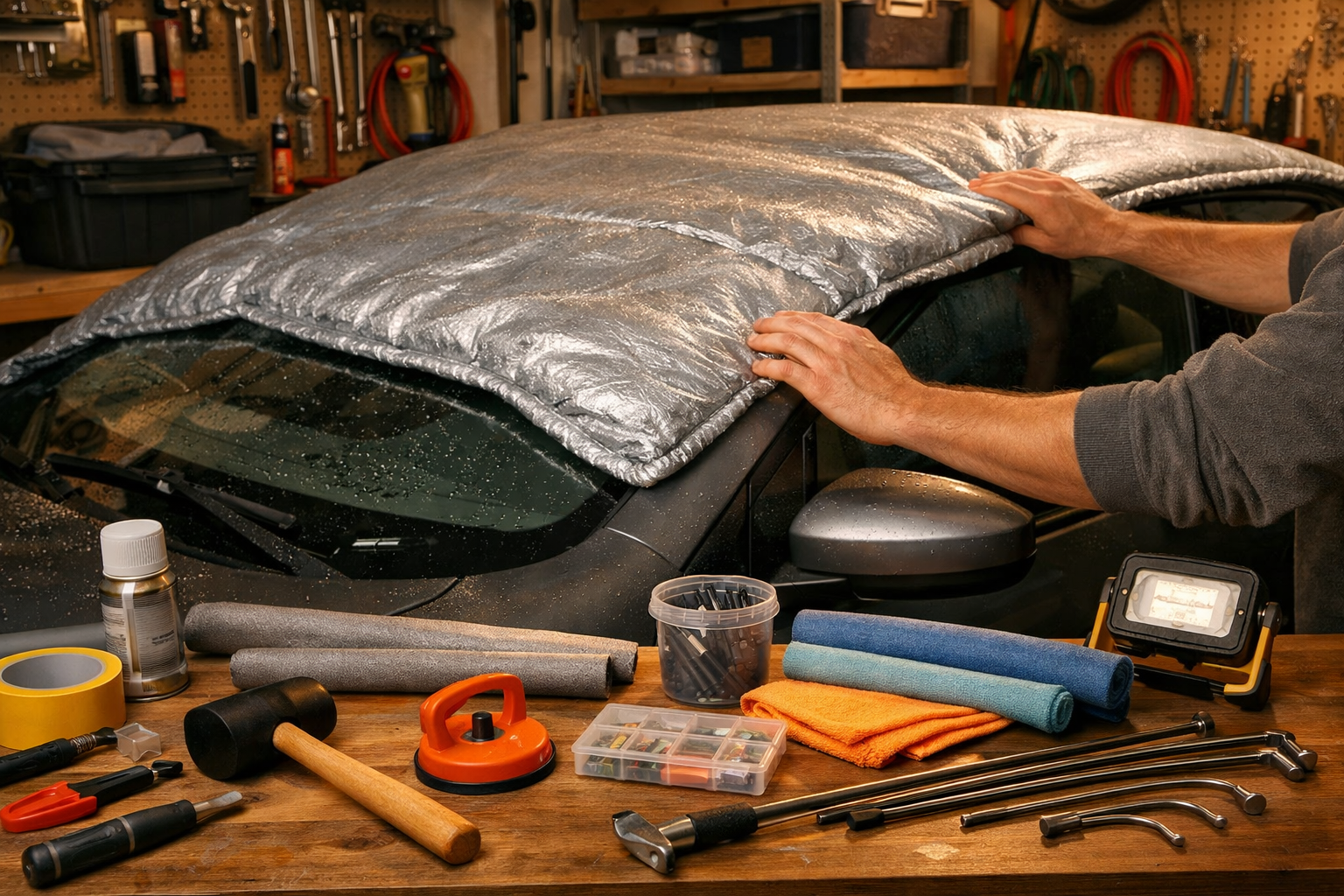
Use a padded cover specifically labeled for hail protection (look for 5mm+ padding). Secure with bungee cords under the chassis — not around suspension parts.
Pro Tip: Put a pool noodle along the windshield edge under the cover for extra glass protection. - DIY Padding (If You’re Stuck at Home)
Lay thick moving blankets over the roof, hood, and trunk. Add cardboard underneath for rigidity. Secure tightly with ratchet straps or bungees so wind doesn’t turn it into a parachute.
What to Do After a Storm
- Wash the Car First
Dirt hides dents. Use automotive soap — not dish soap. Dry with microfiber towels. - Mark Every Dent
Use painter’s tape to circle dents. Body shops do this during hail damage repair estimates, and it helps you assess severity. - Check for Paint Cracks
If paint is chipped to bare metal, apply touch-up paint immediately. A $30 kit now prevents a $600 rust repair later. - Try Paintless Dent Repair (Small Dents Only)
Use a glue-pull PDR kit. Clean surface with isopropyl alcohol. Attach glue tab, let cure, pull slowly.
Pro Tip: Work in shade. Hot panels make glue too soft. - Inspect Glass Carefully
Small windshield chips can be filled for $15 with a DIY kit. Long cracks? Insurance claim time.
If damage is extensive — 50+ dents across panels — this becomes an insurance play. Comprehensive coverage typically handles hail. Deductibles usually run $500–$1,000. Compare that with full hail damage repair bills often hitting $3,000–$5,000.
Common Mistakes to Avoid
- Using Thin Tarps
I’ve seen this in the shop a hundred times. Blue hardware-store tarps do nothing. Hail punches right through. - Waiting Weeks to Fix Paint Chips
Rust spreads under paint like mold under carpet. Small chip today, bubbling panel next year. - Trying Dry Ice Dent Removal
Internet myth. Rapid temperature change can crack modern clear coat. Then you’re repainting. - Not Documenting Damage
Take clear photos immediately for insurance. Date-stamped. Every panel. - Ignoring Roof Damage
Roof dents hurt resale big time. Check before reading guides like how to maximize your trade-in value.
When to Call a Professional
If dents are sharp (not smooth), paint is cracked, or panels are aluminum, call a pro. Same if you see structural creases along body lines.
Fair pricing? Paintless dent repair typically runs $75–$150 per panel for light damage, $1,500–$3,000 for full-vehicle hail work (2025 pricing, varies by region). Traditional body shop repair with repainting can exceed $4,000.
Ask the shop:
- “Are you doing true PDR or repainting panels?”
- “Will this show on Carfax?”
- “Is there a warranty on the repair?”
Red flag: Shops chasing storms door-to-door demanding upfront cash. Legit techs don’t operate like that. Check certifications at ASE.com.
Recommended Products
- Budge Hail Protector Car Cover – Around $180. Thick padding. Solid mid-range option.
- Hail Protector Inflatable Cover – $400+. Expensive but serious protection if you live in hail alley.
- Super PDR Glue Puller Kit – About $90. Good starter kit for small dents.
- Dr. ColorChip Touch-Up Kit – $35. Blends better than cheap paint pens.
What I use in my own garage? Moving blankets from Harbor Freight ($8 each) and a quality fitted cover. Cheap insurance.
Do This
- Park under solid cover whenever possible
- Use padded, hail-rated car covers
- Fix paint chips immediately
- Document damage before insurance claims
Don’t Do This
- Trust thin tarps or bed sheets
- Try extreme heat/cold dent tricks
- Ignore roof and hood dents
- Pay storm chasers upfront
Hail damage repair doesn’t have to wreck your budget if you prepare smart and act fast. A $200 investment in protection beats a $3,000 body shop invoice every single time.
You’ve got this. Keep a cover ready before storm season, check your paint after every hit, and don’t let cosmetic damage snowball into rust. Drop your questions below if you’re staring at dents right now. Stay safe out there — and remember, a $20 repair manual saves a $2,000 repair bill.