
You just brought home a shiny new electric pickup, plugged it into the same outlet you use for your leaf blower… and the dash says “Full Charge: 38 hours.” Yeah. That’s when most folks realize electric truck charging at home isn’t as simple as it sounds.
I’ve been wrenching on trucks for 20 years — gas, diesel, hybrid — and now EVs are rolling into the shop every week. The good news? Electric pickups like the 2025 Ford F-150 Lightning, Rivian R1T, and Chevy Silverado EV are tough, capable rigs. The better news? If you prepare your garage and driving habits right, you’ll save thousands and avoid range anxiety.
In this guide, I’ll walk you through electric truck charging at home, what towing does to your range, and how to prepare for electric pickup ownership without getting upsold by the dealer or an electrician who sees dollar signs.
What You’ll Need
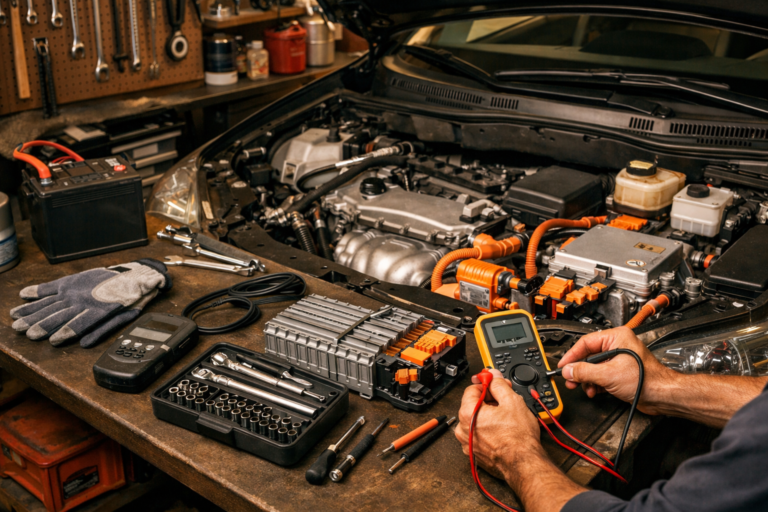
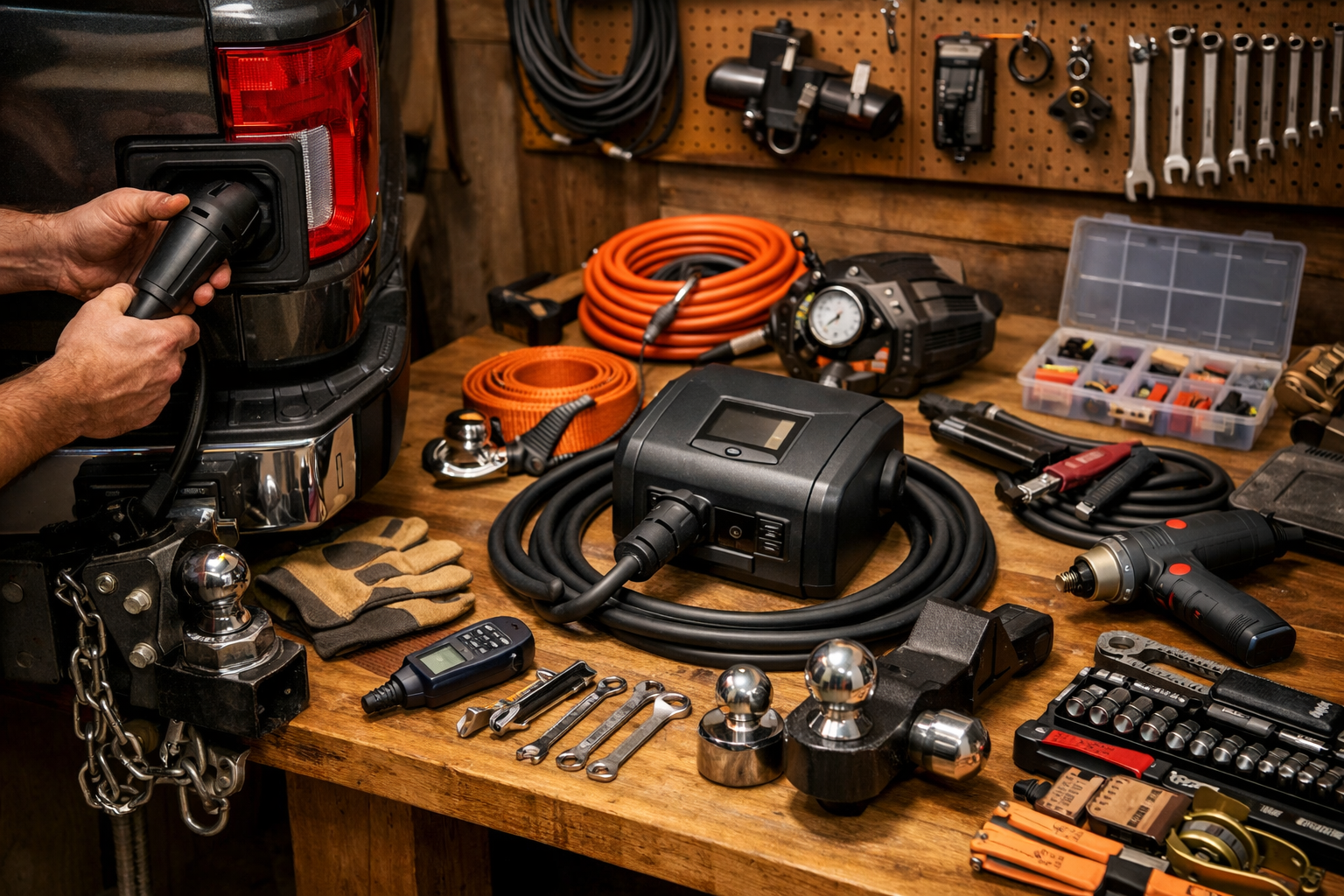
- Tools: Voltage tester ($25), 6-gauge wire (if upgrading circuit), 50-amp breaker, torque screwdriver, drill with masonry bit (for wall mounting charger)
- Parts/Materials: Level 2 home charger ($450–$800), NEMA 14-50 outlet ($60), weatherproof conduit ($40)
- Time: 2–4 hours install (pro electrician); 1 hour setup/config
- Difficulty: 🔧🔧🔧 (moderate — electrical work requires skill)
- Dealer Cost: $1,500–$2,500 install vs DIY/independent electrician: $700–$1,200 — You Save: $800+
Why This Matters
An electric truck without proper home charging is like owning a 36-gallon fuel tank but only filling it with a turkey baster. Level 1 charging (standard 120V outlet) adds about 2–4 miles of range per hour. That’s fine for a Prius. Not fine for a 7,000-pound pickup.
And let’s talk EV truck towing range. That 320-mile EPA estimate? Hook up a 7,000-pound camper and you might see 140–180 miles. I’ve seen it firsthand with Lightning owners who thought something was “wrong” with the truck. Nope — physics is undefeated.
If you plan to tow, commute 40+ miles daily, or live in cold climates, proper setup is mandatory. Batteries lose 10–30% range in freezing temps. Do this prep before next winter — trust me.
Before You Start
⚠️ WARNING: Working inside your home electrical panel can kill you. If you’re not 100% confident identifying breakers and wire gauges, hire a licensed electrician.
First, check your service panel. Most newer homes have 200-amp service. If you’ve got 100-amp service and an electric dryer, range, and HVAC already pulling load, you may need a service upgrade ($1,500–$3,000).
Next, verify your truck’s onboard charger rating. A 2025 Ford Lightning with the extended-range battery can accept up to 80 amps with Ford’s Charge Station Pro. Many other EV trucks max out at 48 amps. Check your owner’s manual or the manufacturer site like Ford Owner Support.
If your panel is full or you notice flickering lights when big appliances run, don’t DIY this. That’s when you call a pro.
Step-by-Step Guide
Part 1: Setting Up Electric Truck Charging at Home
- Determine your charging level.
Level 1 = 120V (slow). Level 2 = 240V (what you want). For most electric truck charging at home setups, install a 240V 50-amp circuit with a NEMA 14-50 outlet. - Check panel capacity.
Turn off the main breaker. Remove panel cover using a #2 Phillips screwdriver. Confirm space for a 50-amp double-pole breaker.
Pro Tip: Take a picture before touching anything. Saved my bacon more than once. - Run 6-gauge copper wire.
From breaker panel to garage outlet location. Use proper conduit and secure every 3–4 feet. Torque connections per breaker specs (consult manufacturer). - Install NEMA 14-50 outlet.
Mount 18–48 inches off the ground. Tighten terminals securely — loose connections cause heat and fire risk. - Mount and configure charger.
Most Level 2 chargers mount with four lag bolts. Connect to Wi-Fi and set charge schedule for off-peak hours (saves 10–30% on electric bill).
Expect about 25–35 miles of range per hour on a 48-amp Level 2 charger. Overnight, you’re full.
Part 2: Managing EV Truck Towing Range
- Expect 40–50% range reduction.
Wind resistance is the killer. A tall camper is like dragging a parachute. - Use tow mode.
Adjusts regen braking and cooling strategy. - Plan charging stops 30% sooner than GPS suggests.
In 20 years of wrenching, I’ve learned: never trust “estimated range” when towing. - Slow down.
65 mph vs 75 mph can mean 20 extra miles of range. That’s the difference between making it or calling roadside.
If you regularly tow heavy loads, compare with diesel options like those discussed in 2026 Stellantis Diesel SUVs & Trucks Reviewed. EVs are great — but match the tool to the job.
Common Mistakes to Avoid
- Using extension cords. I’ve seen melted cords and scorched outlets. Direct plug only.
- Skipping load calculation. Overloaded panels trip breakers or worse.
- Ignoring tire choice. Aggressive off-road tires kill range. Check our Off Road Tire Guide before swapping wheels.
- Charging to 100% daily. Most manufacturers recommend 80–90% for daily driving to preserve battery life. See battery longevity insights similar to hybrids at Hybrid Battery Life Tips & Costs.
- Not checking recalls. Always verify via NHTSA.gov for charging system updates.
I’ve seen this in the shop a hundred times — someone blames the truck when it’s really setup error.
When to Call a Professional
Call an electrician if:
- Your home has 100-amp service
- You need a panel upgrade
- You see aluminum wiring
- You’re installing an 80-amp Ford Charge Station Pro
A fair price for a straightforward 50-amp install in 2025 is $800–$1,200 depending on wire run length. If someone quotes $3,000 without a panel upgrade, ask why.
Ask the installer:
- “Did you perform a load calculation?”
- “What wire gauge are you using?” (Answer should be 6 AWG copper for 50-amp)
- “Is this permitted and inspected?”
Red flag: They say, “We always just tap into the dryer outlet.” Nope. That’s a shortcut.
Recommended Products
- Emporia Level 2 Charger ($399–$499): Budget-friendly, reliable. Great app control.
- ChargePoint Home Flex ($699): Adjustable amperage, strong track record.
- Ford Charge Station Pro ($799+ install): Best for extended-range Lightning owners needing 80 amps.
- Lectron NEMA 14-50 Outlet ($60): Solid brass contacts. Don’t cheap out here.
In my own garage? I use a hardwired ChargePoint on a 60-amp breaker. Set to charge after 9 p.m. when rates drop.
Do This
- Install a 240V Level 2 charger
- Plan towing routes with extra buffer
- Charge to 80–90% for daily use
- Check panel capacity before buying truck
Don’t Do This
- Rely on 120V long-term
- Use extension cords
- Ignore winter range loss
- Let dealers upsell unnecessary install packages
Preparing for electric pickup ownership isn’t complicated — but it’s different. Get electric truck charging at home set up right, understand EV truck towing range realities, and you’ll love the torque, quiet ride, and low maintenance.
You can do this. Take your time, respect electricity, and don’t be afraid to call a pro for the panel work. Got questions about electric truck charging at home or your specific Ford EV truck tips? Drop them in the comments.
Stay safe under there — and remember, a $20 repair manual saves a $2,000 repair bill.