
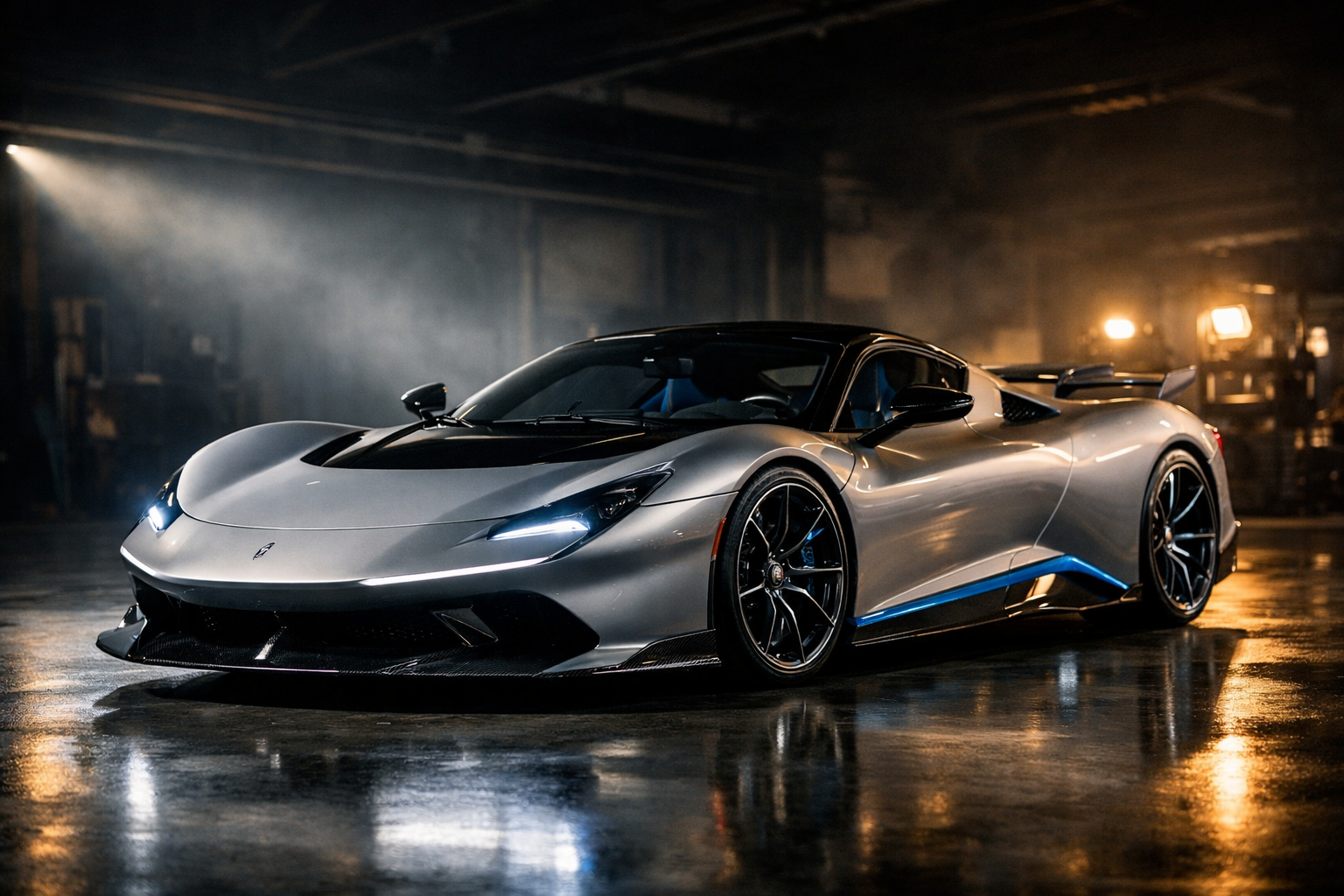
Here’s a number that should make petrolheads choke on their pint: 1,900 horsepower. That’s not a typo, not a marketing “system output” fudge, but the actual combined shove of the Pininfarina Battista, an electric hypercar that treats Bugatti owners like they’re still on dial-up. I’ve driven dozens of absurdly fast machines, and this thing doesn’t just rewrite the EV rulebook, it sets fire to it and laughs.
Why does this matter right now? Because the Battista proves electric cars don’t have to be beige, soulless appliances designed by committee. The Pininfarina Battista is rolling proof that electrons can deliver drama, terror, and genuine engineering passion, even as Ferrari, McLaren, and Porsche tiptoe nervously into the EV era.
This is the 2026 Battista review enthusiasts have been waiting for, because it answers the uncomfortable pub question: can an electric hypercar actually replace internal combustion madness? Short answer: yes, but it’ll upset a lot of traditionalists along the way.
Quick Specs
- Starting Price: approximately $2,200,000 (check manufacturer website for latest pricing)
- Engine: Quad electric motors
- Power: 1,900 hp / 1,696 lb-ft
- 0-60 mph: 1.79 seconds
- Fuel Economy: approximately 300-mile range (WLTP)
Design & First Impressions
The first time you see the Battista in the metal, you realize most hypercars are trying far too hard. It’s low, wide, and muscular without resorting to origami wings or fake aggression, like an Italian tailor who doesn’t need logos to prove his worth. Compared to a Rimac Nevera, Lotus Evija, or even the Bugatti Chiron Super Sport, the Battista looks elegant rather than violent.
Hot take: this is the best-looking electric hypercar on sale, full stop. Pininfarina understands proportion in a way most modern design studios simply don’t, and it shows in every carbon-fiber curve. The aerodynamics are serious, but never scream about it, which is refreshing in an era of cosplay race cars.
Interior & Tech
Inside, the Battista feels like a cockpit, not a Silicon Valley lounge. There are three digital displays, but mercifully they’re focused on driving data, not mood lighting or wellness scores. The steering wheel buttons fall perfectly to hand, unlike the fiddly nonsense you’ll find in some McLarens.
Materials are properly exotic: carbon weave you can feel, leather that smells expensive, and metal switches that click with intent. If you’ve read our thoughts on modern interiors losing physical controls, this car quietly agrees, much like we praised in why Kia still uses buttons. Yes, it’s tech-heavy, but it never forgets this is a driver’s car first.
Driving Experience
Let’s be blunt: the acceleration is obscene. 0–60 mph in 1.79 seconds means your internal organs briefly question their loyalty, and 0–186 mph arrives in under 12 seconds. The throttle response is instant, savage, and relentless, like being rear-ended by the future.
Here’s the surprise though: it handles. Thanks to torque vectoring from four motors and a low-slung 120 kWh battery, the Battista corners with composure that puts the Nevera on notice. Chris Harris would appreciate this: it’s not just fast in a straight line, it’s properly adjustable on a circuit, with steering feel that’s shockingly communicative for an EV.
Sound, or Lack Thereof
Yes, it’s silent, and yes, some people will moan. Personally, I think the absence of noise makes the speed more terrifying, like watching a horror film with the sound muted. Pininfarina wisely avoided pumping fake V12 noises through the speakers, a trap too many EVs fall into, as discussed in our take on synthetic engine sounds.
Controversial hot take: silence suits a hypercar like this better than fake theatrics. When you’re demolishing straights faster than a Koenigsegg Jesko, you don’t need noise to feel special. The G-forces do the talking.
Range, Charging & Running Costs
Range is quoted at around 300 miles WLTP, but let’s be honest, nobody buys a $2 million hypercar to hypermile. Drive it hard and expect closer to 220 miles, which is still respectable given the output. DC fast charging tops out around 180 kW, meaning a 20–80% charge takes roughly 25 minutes.
Running costs are hilariously irrelevant at this price point, but servicing is simpler than a Bugatti’s engine-out nightmares. For EV ownership realities, even at saner price points, our guide to charging on any network is worth a read.
Practicality (Yes, Really)
Practicality is a silly word in this context, but bear with me. There’s a small front trunk for soft bags, the doors open theatrically without smashing your shins, and visibility is better than a Lamborghini Aventador. Compared to an Evija, it’s practically a family hatchback.
You could, in theory, daily-drive this if you’re brave, wealthy, and slightly unhinged. The ride in its softer modes is compliant enough for real roads, which can’t be said for many hypercars that confuse stiffness with sportiness.
Value vs Competitors
At approximately $2.2 million, the Battista isn’t cheap, but then neither is a Rimac Nevera at around $2.4 million or a Bugatti Chiron north of $3 million. What you’re paying for here is exclusivity, design pedigree, and a powertrain that’s already rewriting records. Only 150 units exist, making it rarer than most Ferraris.
Here’s the spicy bit: pound for pound, this is better value than a Chiron. You get more power, similar real-world pace, and a fraction of the mechanical complexity. That will annoy traditionalists, which is half the fun.
Engineering Philosophy
Pininfarina didn’t just bolt batteries to a pretty shell. The Battista shares its underpinnings with Rimac, but the tuning, calibration, and design philosophy are distinctly Italian. Think tailored suit over gym wear.
This is what happens when engineers are allowed to chase excellence instead of quarterly targets. In an era where corporate buzzwords dominate, the Battista feels refreshingly sincere.
Pros
- Mind-bending 1,900 hp performance
- Stunning, timeless design
- Surprisingly engaging handling
- Exclusivity that actually means something
Cons
- Eye-watering price
- Limited charging infrastructure at tracks
- Silence won’t please purists
The Pininfarina Battista isn’t just the most powerful production EV ever made, it’s a statement. It proves electric hypercars can have soul, style, and spine, not just spreadsheets. If this is the future, sign me up, just don’t expect me to stop missing the smell of petrol entirely.