
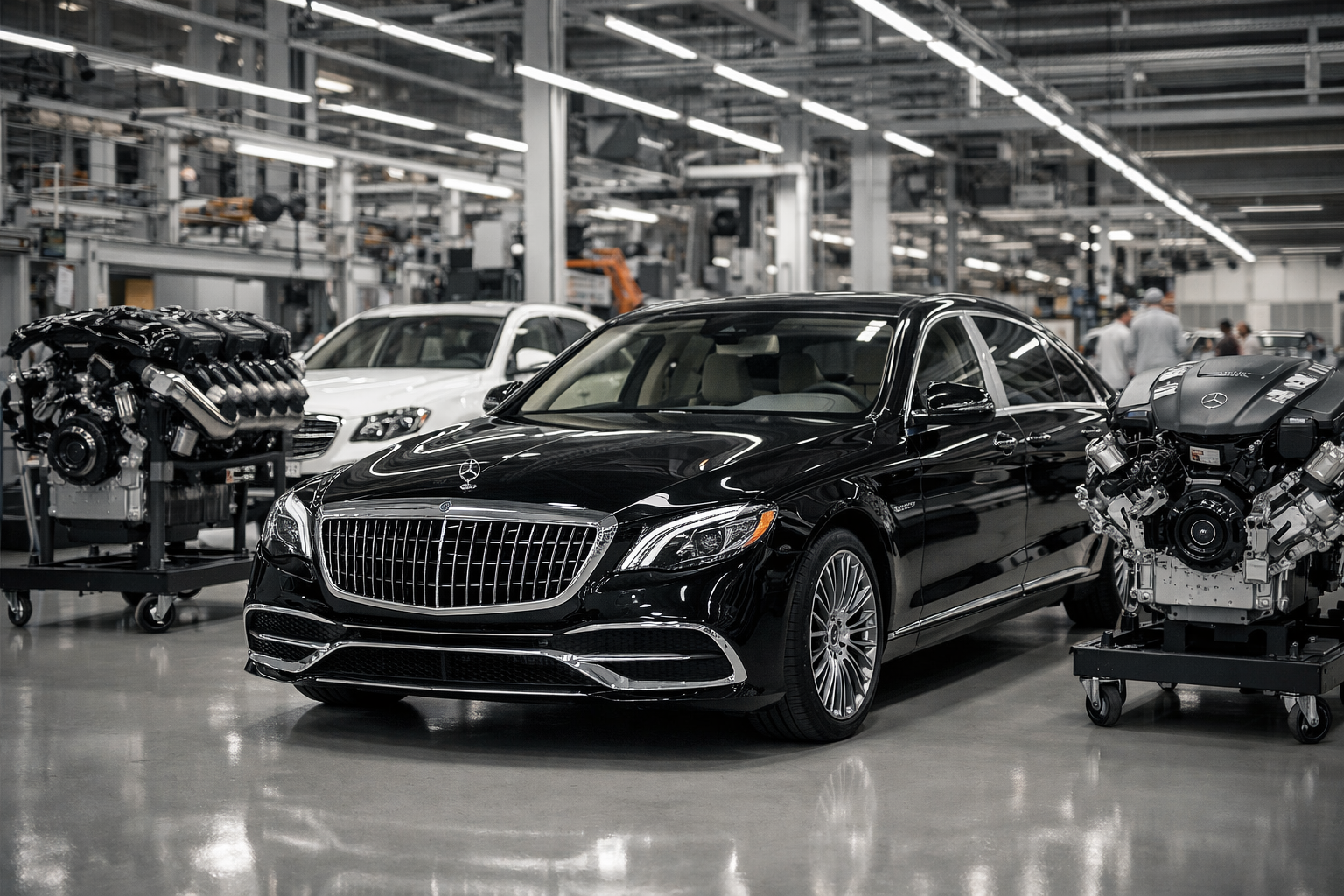
Mercedes-Benz has confirmed it will keep building its flagship 6.0‑liter twin‑turbo V12—just not for most of the world. The company’s latest product update, released April 4, 2026, makes clear that the Mercedes V12 future hinges on a handful of ultra-luxury models and carefully selected markets, even as AMG phases out its V12 offerings.
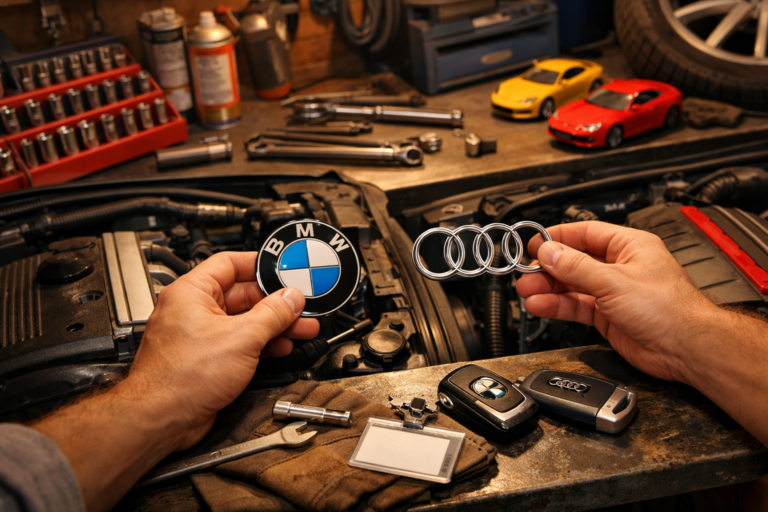
That’s a significant pivot. While BMW exited the V12 segment in 2022 and Audi never fielded a modern twelve-cylinder of its own, Mercedes is effectively becoming the last major German automaker still producing a V12 in series production. However, it’s doing so with tighter emissions controls, limited volumes, and a laser focus on customers willing to pay well into six figures.
The decision underscores a broader truth about luxury performance engines in 2026: electrification may dominate headlines, but at the very top of the market, tradition still sells—at least for now.
The Headlines
- What: Mercedes confirms continued production of its twin‑turbo V12 in select S-Class and Maybach models
- Who: Mercedes-Benz, Mercedes-Maybach, AMG
- When: Announcement April 4, 2026; production continues through at least 2028
- Impact: V12 survives in limited global markets despite broader AMG V12 discontinued strategy
- Key Number: Estimated base price above $200,000 for V12-powered Maybach S680 in the U.S.
What Happened
Mercedes confirmed that its M279 6.0‑liter twin‑turbo V12 will remain in production for the 2026 and 2027 model years, primarily in the Mercedes-Maybach S680 and select armored Guard variants. According to the company’s official newsroom statement, deliveries will focus on the U.S., Middle East, and parts of Asia where regulatory environments still permit low-volume, high-emissions engines.
Notably, AMG will no longer offer standalone V12 performance models. The SL65 and S65 are long gone, and the AMG V12 discontinued shift is now complete. Instead, AMG’s top-tier offerings rely on electrified V8s and four-cylinder hybrid systems producing up to 671 horsepower in models like the C63 S E Performance.
“The V12 remains an important part of our top-end portfolio, especially for Maybach customers,” a Mercedes spokesperson told Reuters in a follow-up email.
However, volumes are expected to remain extremely low. Industry analysts estimate annual global production of Mercedes V12 models at fewer than 3,000 units—tiny compared to Mercedes’ total global sales of roughly 2 million vehicles in 2025, according to company filings.
Why It Matters
The survival of the V12 isn’t about volume; it’s about branding and margin. Maybach competes directly with Rolls‑Royce and Bentley, both of which still offer twelve-cylinder engines in certain markets. Rolls-Royce, owned by BMW, continues to build its 6.75‑liter V12, though the company has committed to going fully electric by 2030.
Meanwhile, Bentley has already ended production of its iconic W12 as of 2024, replacing it with hybrid V8 powertrains. In contrast, Mercedes is betting that a small subset of global ultra-high-net-worth buyers still equate cylinder count with status.
There’s also a regulatory chess match at play. The U.S. Environmental Protection Agency allows low-volume manufacturers certain flexibilities under emissions rules, particularly for niche vehicles, according to EPA.gov. Therefore, keeping the V12 alive in limited numbers is legally viable—if politically sensitive.
From a business perspective, each Maybach S680 reportedly carries six-figure profit margins. In a year when mass-market margins are tightening and incentives are creeping back—see our analysis on Car Prices 2026: Buyer’s Market?—ultra-luxury profitability matters more than ever.
The Bigger Picture
To understand the Mercedes V12 future, you have to look at where the broader market is heading. Globally, EVs accounted for roughly 18% of new car sales in 2025, according to the International Energy Agency. In China, that number exceeds 35%. Even luxury buyers are increasingly choosing electric flagships like the Mercedes EQS SUV and BMW i7.
However, the ultra-luxury segment plays by different rules. Buyers spending $200,000 to $500,000 often own multiple vehicles. For them, a V12 isn’t daily transportation—it’s a statement piece.
Moreover, Mercedes is aggressively investing in software-defined vehicles and EV platforms, aligning with trends we explored in 300GB RAM Cars: The Next Software-Defined Leap. Against that backdrop, the V12 functions almost as a halo artifact—proof of engineering capability rather than a core revenue driver.
Historically, flagship engines signal brand hierarchy. When BMW ended its V12 7 Series, it quietly conceded that electrification—not displacement—would define its future. Mercedes, by contrast, is attempting to straddle both eras.
What the Competition Is Doing
BMW has shifted entirely to electrified six- and eight-cylinder engines, with the i7 positioned as its technological flagship. According to Bloomberg, BMW aims for EVs to represent 50% of global sales by 2030.
Audi never fielded a modern V12 in its A8 lineup and is accelerating its EV roadmap under the PPE platform shared with Porsche. Porsche, notably, is preparing electric replacements even for sports cars, as detailed in our Electric Porsche Cayman Guide.
Meanwhile, Ferrari and Lamborghini still produce V12 engines, but in far lower volumes and at significantly higher price points—often north of $400,000. Mercedes occupies a unique middle ground: ultra-luxury, but still within the realm of chauffeured sedans rather than exotic supercars.
The non-obvious insight? Mercedes’ biggest competitive threat in the flagship space may not be another V12—it’s the all-electric Rolls‑Royce Spectre, which delivers silent torque and zero tailpipe emissions without sacrificing prestige.
What It Means for You
If you’re shopping for a six-figure luxury sedan in 2026, the V12 option remains available—but only barely. Expect limited allocations, higher customization costs, and long lead times. Dealers are unlikely to discount these vehicles, especially given their rarity.
However, for most buyers, this news changes nothing. The overwhelming majority of Mercedes models now rely on turbocharged four- and six-cylinder engines, mild hybrids, or full EV setups. If anything, the company’s investment focus remains firmly on electrification and digital features.
Additionally, resale values for V12-powered Maybach models could strengthen if production truly ends by 2028. Limited supply plus regulatory pressure often equals collectible status. But that’s a speculative play, not a guaranteed return.
What to Watch Next
First, watch European Union emissions policy. If Euro 7 regulations tighten further, Mercedes may find it harder to justify even limited V12 production in certain regions. Second, monitor U.S. regulatory shifts, especially amid ongoing trade and policy debates covered in our Auto Tariffs 2026 analysis.
Additionally, pay attention to Maybach sales mix. If customers increasingly opt for EQS-based electric Maybach models, the business case for the V12 weakens quickly. Finally, keep an eye on Rolls-Royce’s EV transition timeline—if its electric models outsell V12 variants decisively, the symbolic value of twelve cylinders may erode faster than expected.
The Upside
- Preserves brand prestige at the very top of the lineup
- High profit margins on ultra-low-volume models
- Maintains competitive parity with Rolls-Royce in select markets
- Potential future collectibility for buyers
The Concerns
- Regulatory risk from tightening global emissions rules
- Extremely limited market demand
- Signals strategic tension between electrification and legacy engineering
- High development and compliance costs for shrinking volumes
The Mercedes V12 future isn’t about resisting electrification—it’s about stretching the farewell tour. Having covered three product cycles, I can tell you this pattern is familiar: niche engines linger at the top long after the mainstream has moved on.
However, gravity always wins. Whether the V12 lasts two more years or five, the center of gravity in luxury performance engines 2026 has already shifted to electrified torque and software-defined prestige. The real story isn’t that the V12 survives—it’s that it survives on borrowed time.
Disclosure: This article may contain affiliate links. If you make a purchase through these links, we may earn a small commission at no extra cost to you. This helps support RevvedUpCars.com. Learn more.