
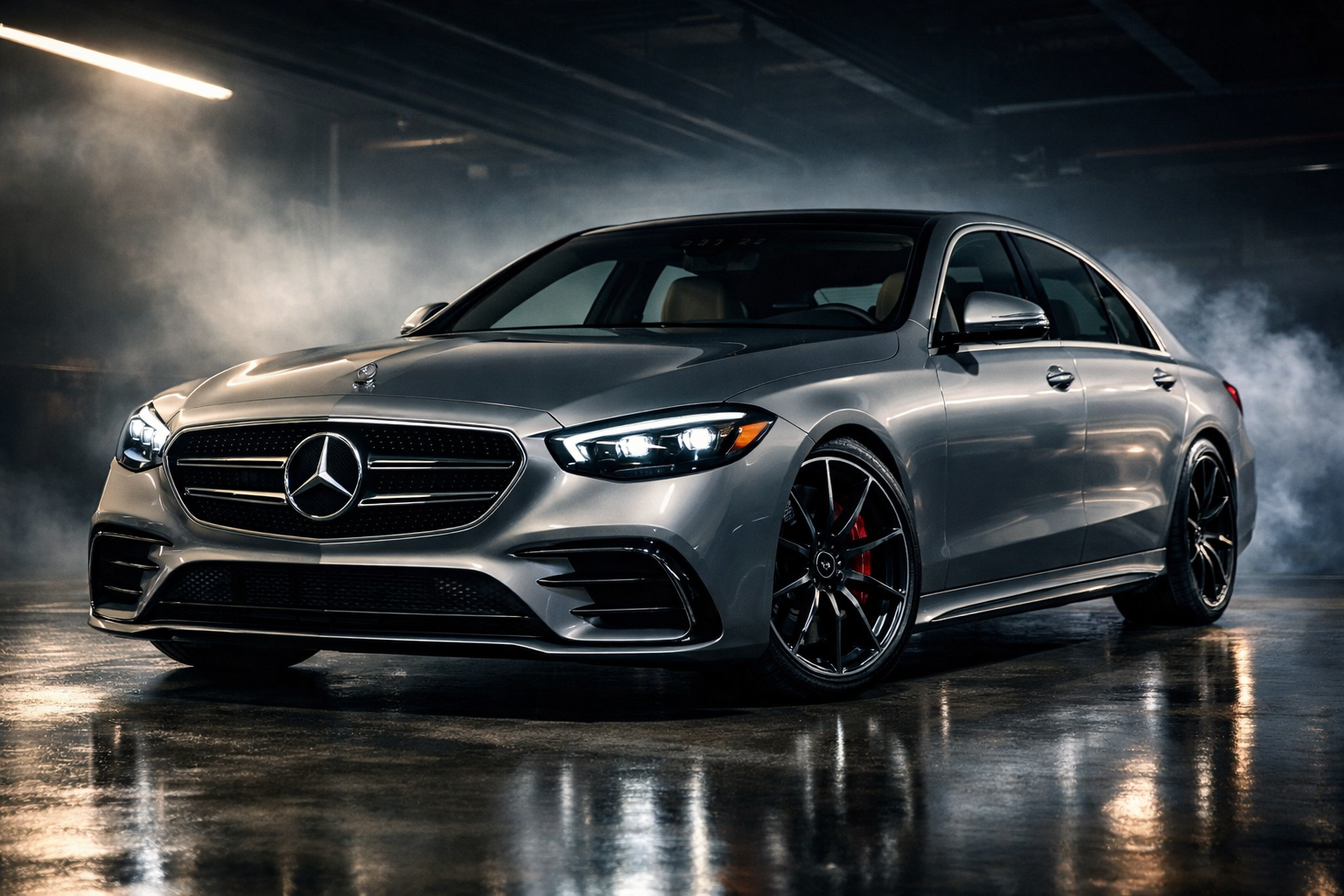
Mercedes is flirting with heresy, and I love it. The idea of a Mercedes S-Class V8 using a flat-plane crank sounds like Stuttgart spiking the champagne with Red Bull, but here’s the twist: it actually makes sense. Not sense in a Nürburgring-lap-time, AMG-GT-Black-Series way, but in a future-proofing, emissions-lawyer-appeasing, still-makes-your-spine-tingle way.
This matters right now because the S-Class is at a crossroads. Buyers are staring at electric luxo-barges like the Tesla Model S and thinking silence equals sophistication, while enthusiasts quietly mourn the death of characterful engines. A flat-plane V8 could be Mercedes’ way of saying, “You can have progress without putting the soul in a recycling bin,” and yes, the Mercedes S-Class V8 is central to that argument.
I’ve driven dozens of S-Classes over the years, from buttery V12s to turbocharged torque monsters, and the one thing they all shared was effortlessness. If Mercedes is serious about a flat-plane setup for 2027, it’s because effortless doesn’t have to mean boring, and luxury doesn’t have to whisper like a librarian.
Quick Specs
- Starting Price: approximately $115,000 (check manufacturer website for latest pricing)
- Engine: 4.0L Twin-Turbo Flat-Plane V8 (rumored)
- Power: approximately 600 hp / 590 lb-ft
- 0-60 mph: approximately 3.5 seconds
- Fuel Economy: approximately 18 city / 26 highway mpg
Why a Flat-Plane V8 in an S-Class Isn’t Madness
Flat-plane V8s get a bad rap for being shouty, vibrational little gremlins, but that’s outdated thinking. Modern engine mounts, active noise cancellation, and hybrid assistance can smooth out the rough edges while keeping the razor-sharp throttle response. Ferrari’s been doing this for years, and if anyone can civilize controlled chaos, it’s Mercedes engineers with a blank check.
The payoff is response. A flat-plane V8 revs quicker than a YouTube comment section catching fire, and in a 5,000-pound luxury sedan, that immediacy matters more than outright noise. It turns the S-Class from a rolling boardroom into something that actually reacts when you prod the throttle.
The Emissions Elephant in the Room
Here’s the controversial hot take: this engine is about survival, not soundtracks. Flat-plane designs are lighter and can integrate more efficiently with hybrid systems, which means lower CO₂ numbers without downsizing to a wheezy four-cylinder. Regulators see grams per kilometer, not nostalgia, and Mercedes knows it.
Pair this V8 with a mild-hybrid or plug-in setup similar in philosophy to what we’ve seen in the Audi RS5 PHEV, and suddenly the S-Class keeps eight cylinders without being blacklisted in half the world. That’s clever engineering, not marketing fluff.
Luxury Buyers Still Want Drama
Spend time around actual S-Class owners, not Twitter pundits, and you’ll hear the same thing: they want presence. A whisper-quiet EV is impressive for five minutes, then it becomes white noise. A flat-plane Mercedes S-Class V8 offers restrained drama, like a Savile Row suit with bright red lining.
Competitors get this. BMW’s 7 Series still dangles V8 temptation, Bentley’s Continental GT S Hybrid proves performance and plush can coexist, and even Lexus keeps the LC relevant with character engines. Mercedes can’t afford to be the boring one at the billionaire dinner party.
But What About NVH, Mercedes’ Sacred Cow?
This is where everyone panics, clutching their Burmester speaker grilles. Yes, flat-plane V8s traditionally vibrate more, but we’re not in 2005 anymore. Active engine mounts and torque-fill electric motors can mask low-speed harshness better than a bartender hiding cheap whiskey in a fancy cocktail.
At cruising speeds, the engine would likely fade into the background, while under load it delivers a sharper, more exotic note. Frankly, if Ferrari can make a flat-plane V8 feel civilized on Italian autostradas, Mercedes can manage it on the Autobahn.
Why Not Just Go Full Electric?
Because EV fatigue is real, and Mercedes sees it. The discontinuation chatter around big sedans, echoed in our breakdown of the Tesla Model S end, shows that not every luxury buyer wants a rolling smartphone. Some still want pistons doing violent, wonderful things.
An ICE halo S-Class also buys Mercedes time. Time to perfect EV tech, time to improve charging infrastructure, and time to let customers ease into electrification instead of shoving them headfirst.
Engineering Cred Beats Marketing Buzzwords
Mercedes has been guilty of slapping “EQ” on things and calling it innovation. A flat-plane V8 is the opposite: hard, expensive engineering that nerds respect. It’s the kind of move that makes Chris Harris grin and Doug DeMuro start counting quirks.
This also differentiates the S-Class from AMG’s other offerings. Instead of just more boost, it’s a fundamentally different character, and that’s worth real money in a segment where uniqueness is currency.
Competitors Mercedes Is Aiming Squarely At
Let’s be clear about the battlefield. BMW 760i, Audi A8 L with the W12’s spiritual successors, and the Bentley Flying Spur Hybrid are all circling the same buyers. A flat-plane V8 gives Mercedes a talking point none of them have.
It also keeps the S-Class relevant against ultra-luxury hybrids like the Bentley Continental GT S Hybrid, which proves that efficiency doesn’t have to neuter excitement. Mercedes needs that same swagger in sedan form.
Pros
- Sharper throttle response than traditional cross-plane V8s
- Better hybrid integration potential for future regulations
- Distinctive character in a crowded luxury segment
- Keeps the S-Class emotionally relevant
Cons
- Higher development and repair costs
- Risk of alienating traditional luxury purists
- Still faces long-term regulatory uncertainty
So Yes, This Actually Makes Sense
The Mercedes S-Class V8 with a flat-plane crank isn’t a midlife crisis; it’s a calculated rebellion. It balances emotion with responsibility in a way few luxury cars dare to attempt. Mercedes isn’t chasing Ferrari; it’s reminding the world it still knows how to build engines with a pulse.
If Stuttgart pulls this off, the 2027 S-Class won’t just be a luxury sedan, it’ll be a statement. One that says progress doesn’t have to be silent, and the future can still rev.
For official details as they emerge, keep an eye on Mercedes-Benz, verify safety expectations via NHTSA, and check efficiency data on FuelEconomy.gov when final specs drop.